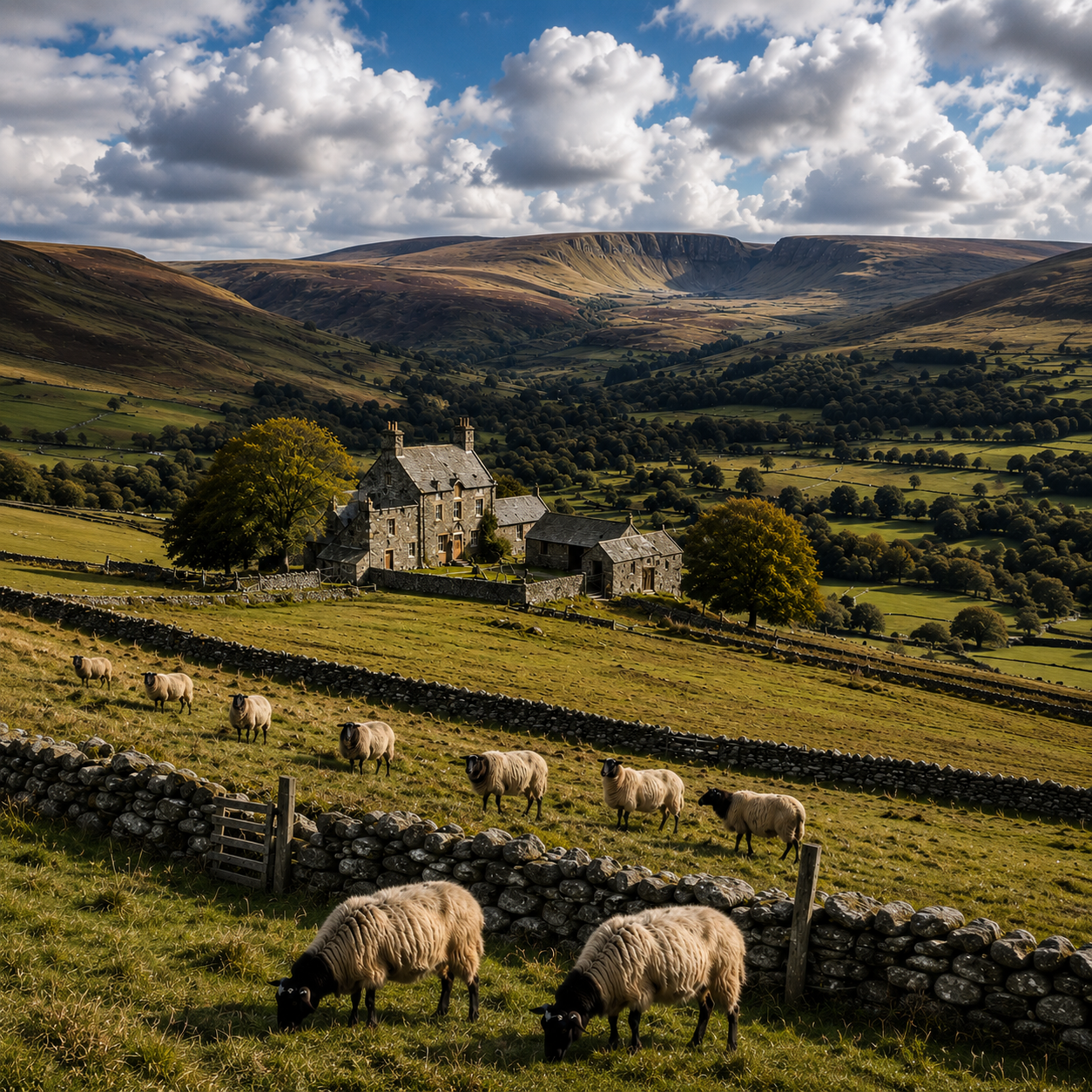
Scotland’s sheep
Krysta Abesamis Krysta Abesamis

Scotland’s sheep

“The lands surrounding Breconside derived much of their value from sheep husbandry and wool production. The upland pastures above Annandale were ideally suited to grazing, and generations of families relied upon sheep, cattle, and smaller agricultural holdings for their livelihood. Wool from the district moved through regional markets centered around Moffat, which became known throughout southern Scotland as a wool-trading town. Alongside livestock, tenants and estate households cultivated oats and other subsistence crops while managing the challenging conditions of the Southern Uplands.”

Read More
The Devil’s Beef Tub
Krysta Abesamis Krysta Abesamis

The Devil’s Beef Tub

“The name “Devil’s Beef Tub” is believed to have emerged during the violent frontier years of the sixteenth and early seventeenth centuries, when reiving families used the hollow as a temporary hiding place for stolen cattle. Raiding parties moving through the Borders could drive livestock into the concealed basin where the animals remained hidden among the hills until pursuit faded. In Border country, cattle were wealth. A successful raid could determine whether a family survived winter or collapsed into poverty. Livestock theft became deeply embedded within frontier life along the Anglo-Scottish marches where centralized authority remained weak and survival often depended upon kinship alliances, mounted mobility, and retaliation.”

Read More