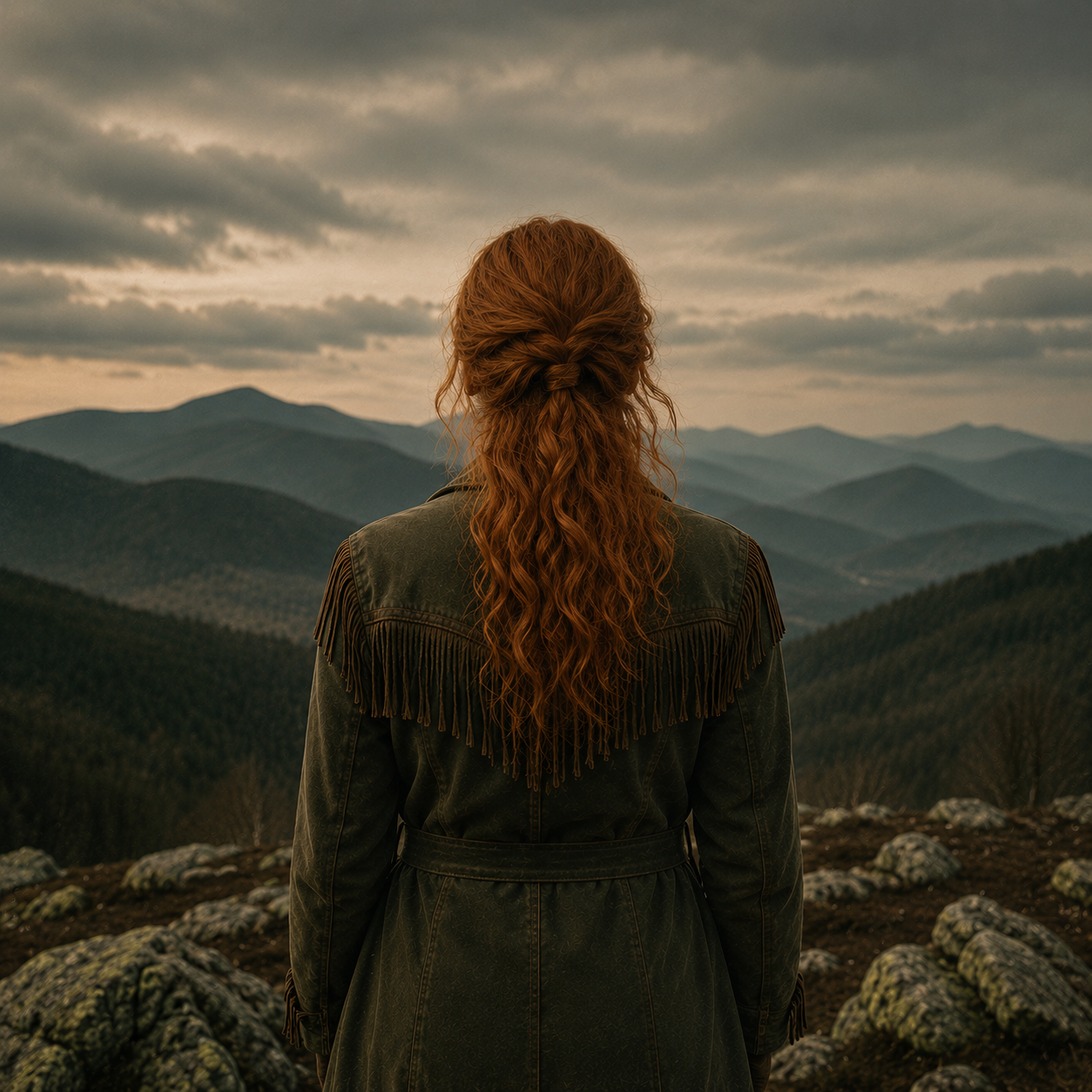
The Cumberland Plateau
beyond the Appalachian settlements and into the rugged highlands
By the opening years of the nineteenth century, the American frontier was once again shifting westward. The Revolutionary War had ended only decades earlier, but its aftermath continued reshaping the lives of thousands of veteran families who carried military land grants into the interior wilderness of Tennessee and Kentucky. Among them was Scots-Irish farmer Robert Jimerson Carruthers, son of James Carruthers of Scotland and Mary Caldwell Morrison from Ireland, whose family had already left Scotland for Ulster, later Pennsylvania, and the Carolina backcountry through generations of migration. Now, the frontier pushed farther still — beyond the Appalachian settlements and into the rugged highlands of the Cumberland Plateau.
The Cumberland Plateau in 1800 remained a raw and difficult frontier region stretching across present-day eastern and middle Tennessee. Dense hardwood forests blanketed the ridges and valleys while steep escarpments, rocky outcroppings, narrow passes, and isolated hollows made travel dangerous and slow. Unlike the open farmland of the Carolina piedmont, the plateau felt older, wilder, and more isolated. Wolves, black bears, panthers, elk, and deer still moved heavily through the forests. Rivers and creeks cut through deep ravines while heavy fog settled across the mountains during cool mornings.
For families arriving with military grants, the land offered both opportunity and hardship. Veterans of the Revolution were often compensated through western acreage rather than money, encouraging settlement into territories the young United States hoped to secure and populate. Robert Jimerson Carruthers entered this world as part of the broader Scots-Irish frontier migration flowing steadily into Tennessee after the war. Like many backcountry settlers, the Carruthers family carried with them generations of frontier survival already learned across Scotland, Ulster, Pennsylvania, and North Carolina.
The Cumberland region itself remained deeply contested only years earlier. Throughout the late eighteenth century, frontier conflict between settlers and Native nations intensified as migration poured westward into Cherokee territory and beyond. Fortified stations, blockhouses, and isolated settlements became necessary throughout portions of Tennessee during the 1780s and 1790s. Even after Tennessee achieved statehood in 1796, many plateau communities still existed at the edge of organized American settlement.
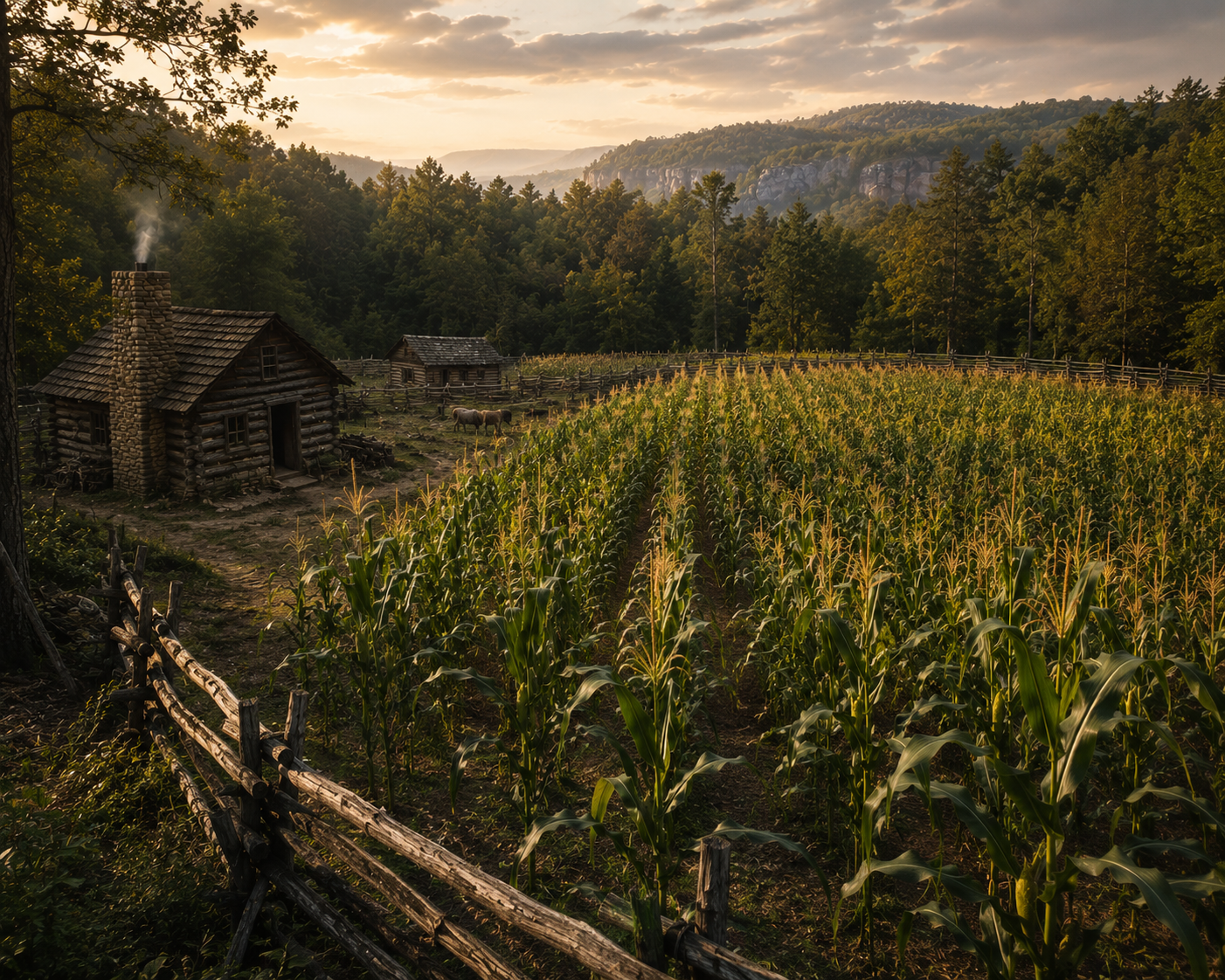
In the ‘Kings of the Blue Ridge’, when Robert Jimerson Carruthers arrived upon his military grant lands in 1800, daily life would have demanded relentless labor. Forests had to be cleared tree by tree using axes, fire, and brute force. Cabins were raised from hand-hewn logs. Wells, smokehouses, fencing, barns, and small crop fields emerged slowly from wilderness terrain that had remained largely untouched by European settlement only years before. Corn became the central survival crop of the frontier, alongside hogs, cattle, hunting, and small subsistence farming.
The isolation of plateau life shaped the culture of the early settlers. Communities often clustered through kinship networks, church ties, and migration chains linking Tennessee back to North Carolina and Virginia. Scots-Irish Presbyterian influence remained strong throughout many frontier settlements. Oral storytelling, Bible reading, fiddle music, folk traditions, hunting culture, and inherited frontier independence all survived within these mountain communities. Many families still carried memories of the Revolution alongside older stories of Scotland, Ulster, and the Great Wagon Road migration southward.
The Cumberland Plateau represented another chapter in a migration story already spanning generations. His father James Carruthers had crossed the Atlantic from Ulster into Pennsylvania. Robert himself came of age in the Carolina backcountry during the years surrounding the American Revolution. Now, by 1800, the family once again stood at the edge of a new frontier — this time among the ridges, forests, and isolated mountain valleys of Tennessee.
The plateau that greeted those settlers was not yet the later world of railroads, coal camps, or industrial timber operations that would emerge during the nineteenth century. It remained a frontier of smoke rising from cabin chimneys, wagon traces cutting through forest gaps, distant church gatherings, livestock bells echoing through valleys, and long winters endured in isolation beneath endless hardwood forests.
Generations later, many descendants of these same frontier settlers would continue moving deeper into Appalachia and the American South, carrying with them the accumulated memory of centuries of migration beginning far away in the Border country of Scotland.