Andrew Craigie
The Apothecary Who Invested in America's Future
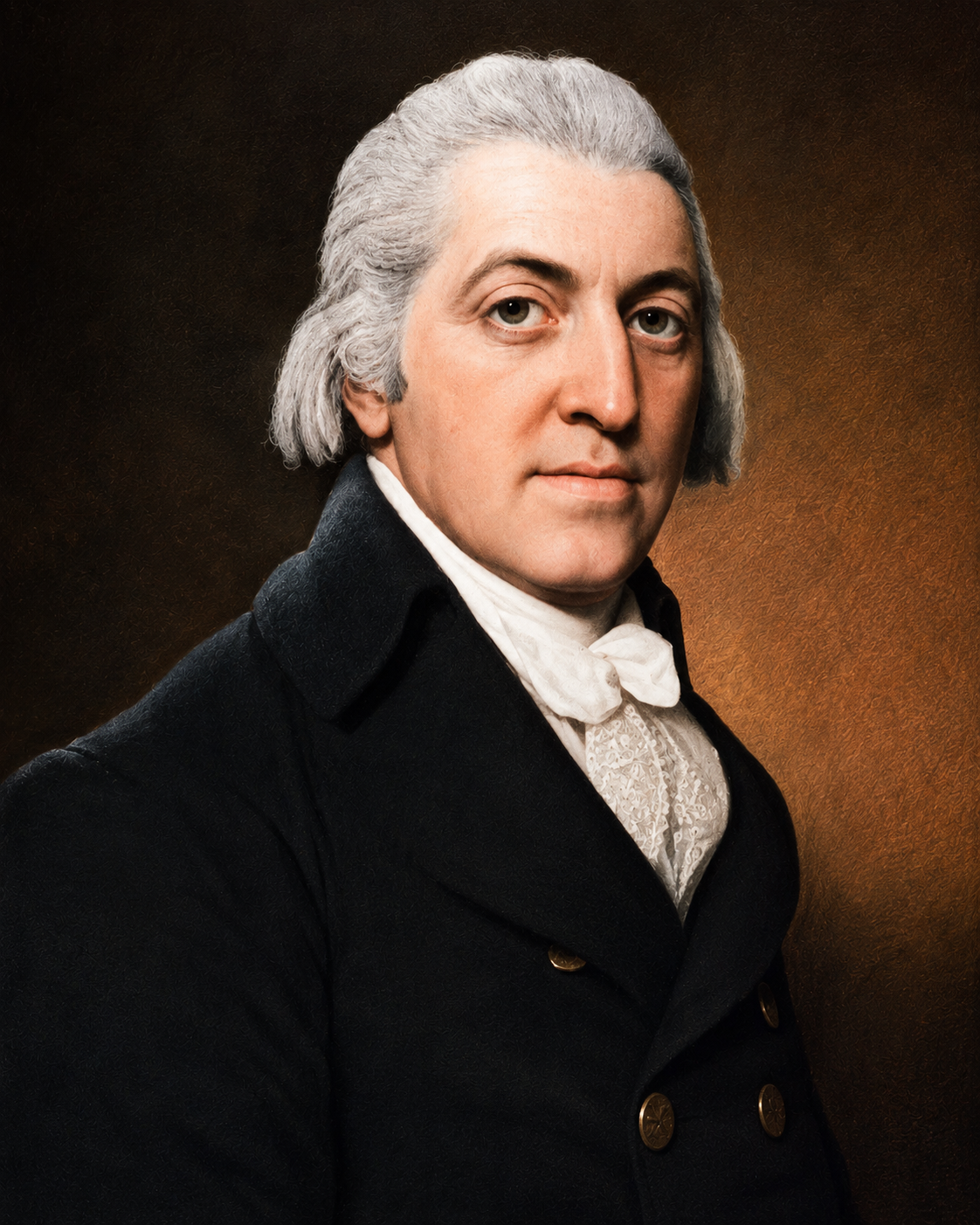
The story of America's founding is often told through the actions of generals, presidents, and celebrated statesmen. Yet behind the armies marching across the colonies stood another indispensable group of patriots—men who secured medicine, managed supply chains, financed government debt, and quietly transformed military victory into lasting national prosperity. Among the most successful of these figures was Andrew Craigie, a gifted pharmacist, merchant, investor, and entrepreneur whose remarkable career bridged the Revolutionary War and the financial rise of the early United States.
Andrew Craigie was born on November 30, 1754, in Boston, Massachusetts, during the closing years of Britain's colonial empire in North America. Boston was then one of the busiest commercial ports in the Atlantic world, where merchants, physicians, printers, and craftsmen exchanged not only goods but also the political ideas that would soon ignite revolution. Raised in a prosperous family, Craigie received an excellent education before apprenticing in pharmacy, a profession that demanded precision, scientific knowledge, and meticulous organization.
By the time Craigie entered adulthood, tensions between Britain and the colonies had reached a breaking point. The Boston Massacre, the Tea Party, and Parliament's punitive Coercive Acts transformed Massachusetts into the center of colonial resistance. When fighting erupted at Lexington and Concord in April 1775, Craigie was barely twenty years old. Rather than taking up a musket, he chose another battlefield—one that proved equally vital to the Revolutionary cause.
Recognizing his exceptional administrative ability, the Continental Army appointed Craigie Apothecary General of the Northern Department. At first glance the title sounds modest, but its responsibilities were enormous. Disease claimed far more soldiers during the Revolution than enemy bullets. Smallpox, dysentery, typhus, malaria, and countless infections threatened to destroy Washington's army long before British muskets could. Craigie became responsible for acquiring medicines, organizing military pharmacies, supervising apothecaries, and ensuring that physicians stationed with the army had the supplies needed to save lives.
The challenge bordered on impossible. Britain controlled many traditional sources of medical supplies, while wartime shortages disrupted imports throughout the Atlantic. Craigie coordinated purchases from France, the Caribbean, and domestic manufacturers whenever possible. He oversaw inventories of quinine, mercury compounds, surgical instruments, herbs, alcohol, and countless other medical necessities while constantly adapting to changing military campaigns. His success helped transform the Continental medical service into one of the most organized departments of the Revolutionary Army.
During these difficult years, Craigie worked alongside many of the Revolution's most influential leaders. He came to know physicians such as Dr. Benjamin Rush, quartermasters responsible for army logistics, and senior officers charged with keeping Washington's forces supplied through some of the harshest winters in American history. Although history naturally celebrates military victories like Saratoga and Yorktown, those triumphs depended upon thousands of less visible administrators whose work kept soldiers healthy enough to remain in the field.
ambitious young entrepreneurs
Peace in 1783 opened entirely new opportunities for ambitious young entrepreneurs. Like Robert Morris, William Bayard, and several other members of America's emerging financial elite, Craigie recognized that the nation's enormous Revolutionary debt represented both a challenge and an opportunity. Under Alexander Hamilton's financial program, federal securities issued during the war became valuable investments backed by the full faith and credit of the United States government.
Craigie became one of the nation's most prominent purchasers of these government securities. His investments reflected extraordinary confidence in the future of the republic at a time when many Europeans still doubted the United States could survive as a stable nation. Rather than viewing federal bonds merely as speculative assets, Craigie understood that strong public credit would attract investment, expand commerce, and establish the United States as a respected participant in international finance.
His growing fortune allowed him to diversify beyond pharmacy. Craigie invested heavily in banking, land development, and urban real estate throughout Massachusetts. Nowhere was his vision more apparent than across the Charles River in Cambridge. There he acquired extensive property and commissioned one of the grandest Federal-style residences in New England, a magnificent mansion overlooking the river and the expanding city of Boston. Built during the closing years of the eighteenth century, the estate reflected both his commercial success and the confidence many Americans felt as the new nation entered a period of remarkable growth.
The house would later become famous for another reason. After Craigie's death, it was purchased by the family of the poet Henry Wadsworth Longfellow, eventually becoming one of the best-known literary homes in American history. Today it survives as the Longfellow House–Washington's Headquarters National Historic Site, where visitors often remember Washington and Longfellow while knowing comparatively little about the successful entrepreneur who first transformed the property into one of New England's finest residences.
Craigie's career unfolded during an extraordinary period of economic transformation. American commerce expanded rapidly following the adoption of the Constitution, while ports such as Boston, New York, Baltimore, and Philadelphia grew into major centers of Atlantic trade. New banks issued credit, insurance companies protected merchants against maritime losses, and investors financed canals, roads, and manufacturing ventures that laid the groundwork for nineteenth-century industrial expansion. Craigie belonged to the generation that understood prosperity required more than political independence—it demanded sophisticated financial institutions capable of supporting long-term economic growth.
Like many investors of his era, however, he also experienced the risks accompanying rapid expansion. Land speculation, changing credit markets, and fluctuating international trade produced both remarkable opportunities and occasional financial strain. Yet Craigie's reputation for intelligence and enterprise remained largely intact throughout his career. Unlike some contemporaries whose fortunes disappeared during economic downturns, he left behind a legacy more closely associated with innovation than collapse.
Andrew Craigie died on July 29, 1819, after witnessing the United States evolve from thirteen rebellious colonies into an increasingly confident nation whose commerce reached every corner of the Atlantic world. His life illustrated the remarkable opportunities available in the Early Republic to individuals possessing education, discipline, and entrepreneurial vision.
History often celebrates the soldiers who fought the Revolution and the politicians who framed the Constitution. Andrew Craigie reminds us that republics also require physicians who preserve armies, administrators who master logistics, investors willing to trust new institutions, and entrepreneurs capable of transforming peace into prosperity. His career touched nearly every stage of America's early development—from military medicine during the Revolution to the financial markets that stabilized the young nation and the urban growth that shaped its future.
Although his name is less familiar than those of Washington, Hamilton, or Adams, Andrew Craigie helped build the infrastructure of a successful republic in ways that extended far beyond the battlefield. By preserving the health of American soldiers, investing in the nation's credit, and contributing to the commercial expansion of New England, he quietly demonstrated that the strength of a country rests not only in the courage of its leaders but also in the vision of those who believe enough in its future to invest their lives—and fortunes—in its success.