Johnstone of Coreheid
The Border Stronghold That Forged a Dynasty
Hidden beneath the towering slopes of the Devil's Beef Tub, where the River Annan begins its long journey south toward the Solway Firth, stood one of the most strategically important estates in seventeenth-century Dumfriesshire. This was Coreheid, home of James Johnstone of Coreheid/Corhead (1625-1697) and his wife Janet Douglas (1635-1673)—a couple whose resilience, political judgment, and noble alliances helped shape generations of descendants.
Far removed from the bustling royal court of Edinburgh, Corehead occupied one of Scotland's great natural gateways. Every traveler moving between the Borders and the capital passed through these rugged valleys. Whoever controlled this high country controlled more than sheep pastures; they watched over the northern entrance into Annandale itself.
A Branch of the Great Johnstone Clan
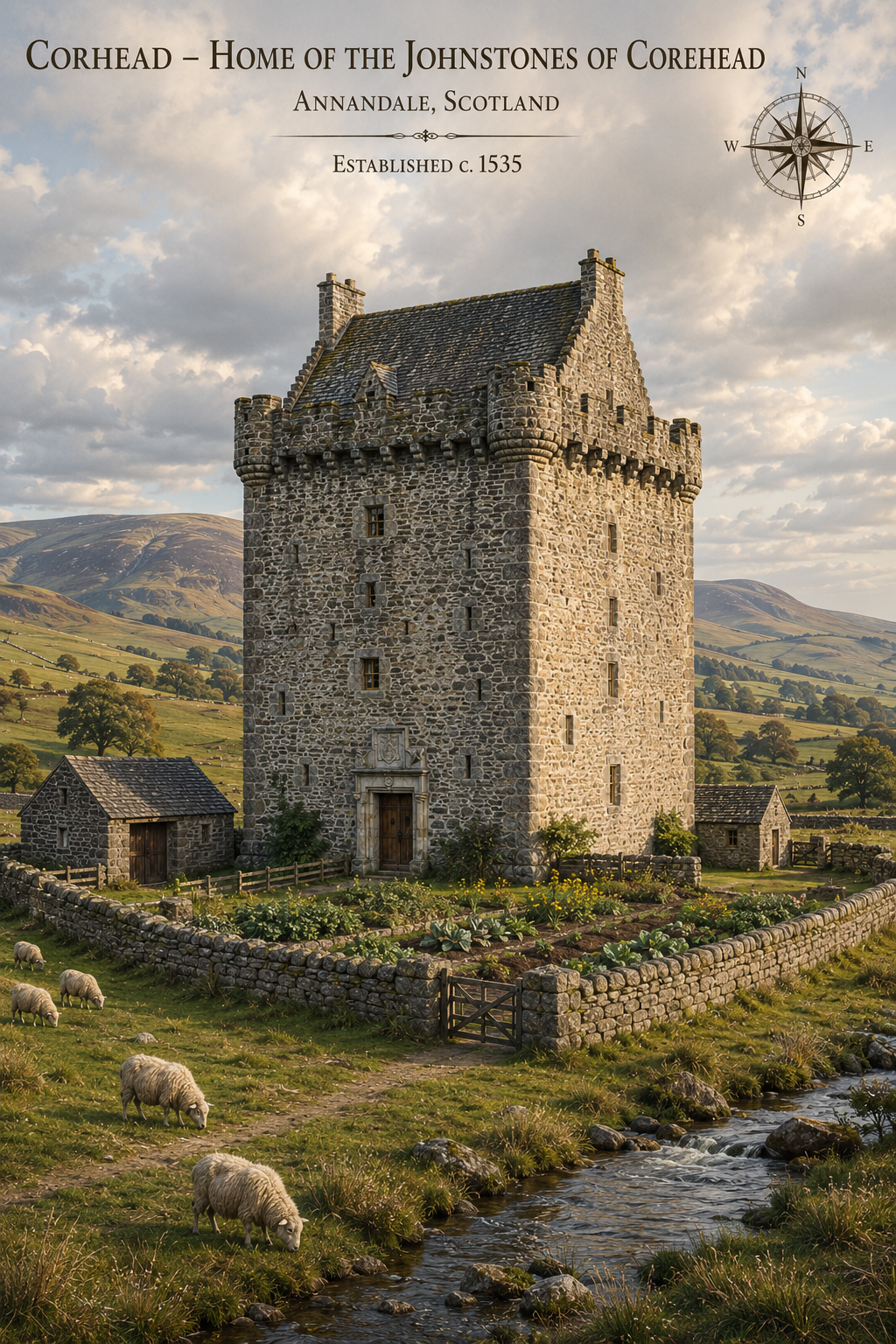
James Johnstone, born in 1625, belonged to one of the most respected cadet branches of Clan Johnstone. Although not the clan chiefs, the Johnstones of Corehead held considerable authority throughout the region. They collected taxes, served on local courts, organized militia service, and acted as trusted representatives of the Crown throughout upper Annandale.
Life in the Border hills demanded strength and vigilance. The landscape was beautiful but unforgiving. Harsh winters, isolated farms, and narrow mountain passes required every laird to balance agriculture with security. Large flocks of sheep grazed across the surrounding hills while tenants depended upon the estate for protection, justice, and stability.
A Marriage That Elevated the Family
Around 1654, James strengthened both his family's political standing and aristocratic prestige through his marriage to Janet Douglas, daughter of Sir James Douglas of Morton and Christian Lockhart.
This was no ordinary alliance.
The Douglas family ranked among Scotland's oldest and most influential noble houses, their history stretching back to medieval battles, royal courts, and the legendary defenders of Scottish independence. Through Janet, the Johnstones of Corehead became directly connected to Morton Castle, one of the great Border fortresses overlooking Nithsdale.
The marriage united two powerful traditions. The Johnstones contributed generations of Border leadership and practical administration, while the Douglases brought centuries of noble prestige, military service, and royal influence.
Living Under Cromwell
The newly married couple quickly found themselves living through one of Scotland's most uncertain periods.
Following Oliver Cromwell's conquest of Scotland, English troops occupied much of the country during the 1650s. Garrisons patrolled the principal roads, heavy taxation strained local landowners, and the traditional authority of many Scottish families came under constant pressure.
For an estate positioned along one of the kingdom's principal routes, daily life became a careful balancing act. James maintained detailed financial records, managed government assessments, supervised tenant obligations, and ensured that Corehead remained both productive and politically secure despite the continuing military occupation.
Raising the Next Generation
Within this demanding environment, James and Janet raised the children who would carry their legacy into future generations.
Their son John Johnstone was trained from an early age to inherit the responsibilities of the estate, learning livestock management, land administration, legal procedure, and the delicate political relationships required of a Border laird.
Their daughter, Janet Johnstone, would eventually marry James Chalmers of Dam, bringing together two influential Dumfriesshire families whose descendants would later continue the family's remarkable story.
Every season of their childhood unfolded beneath the sweeping hills surrounding Corehead, where sheep grazed across the high pastures and the rhythms of estate life were dictated by weather, livestock, and the constant movement of travelers through the mountain pass.
Annandale, Scotland
The Killing Times Reach Corehead
Peace proved short-lived.
Following the Restoration of King Charles II, Scotland entered one of its most turbulent religious conflicts. The government's attempts to impose episcopal control over the Presbyterian Church sparked widespread resistance, particularly across southwest Scotland.
The remote valleys surrounding Corehead soon became refuges for illegal outdoor Presbyterian worship services known as conventicles.
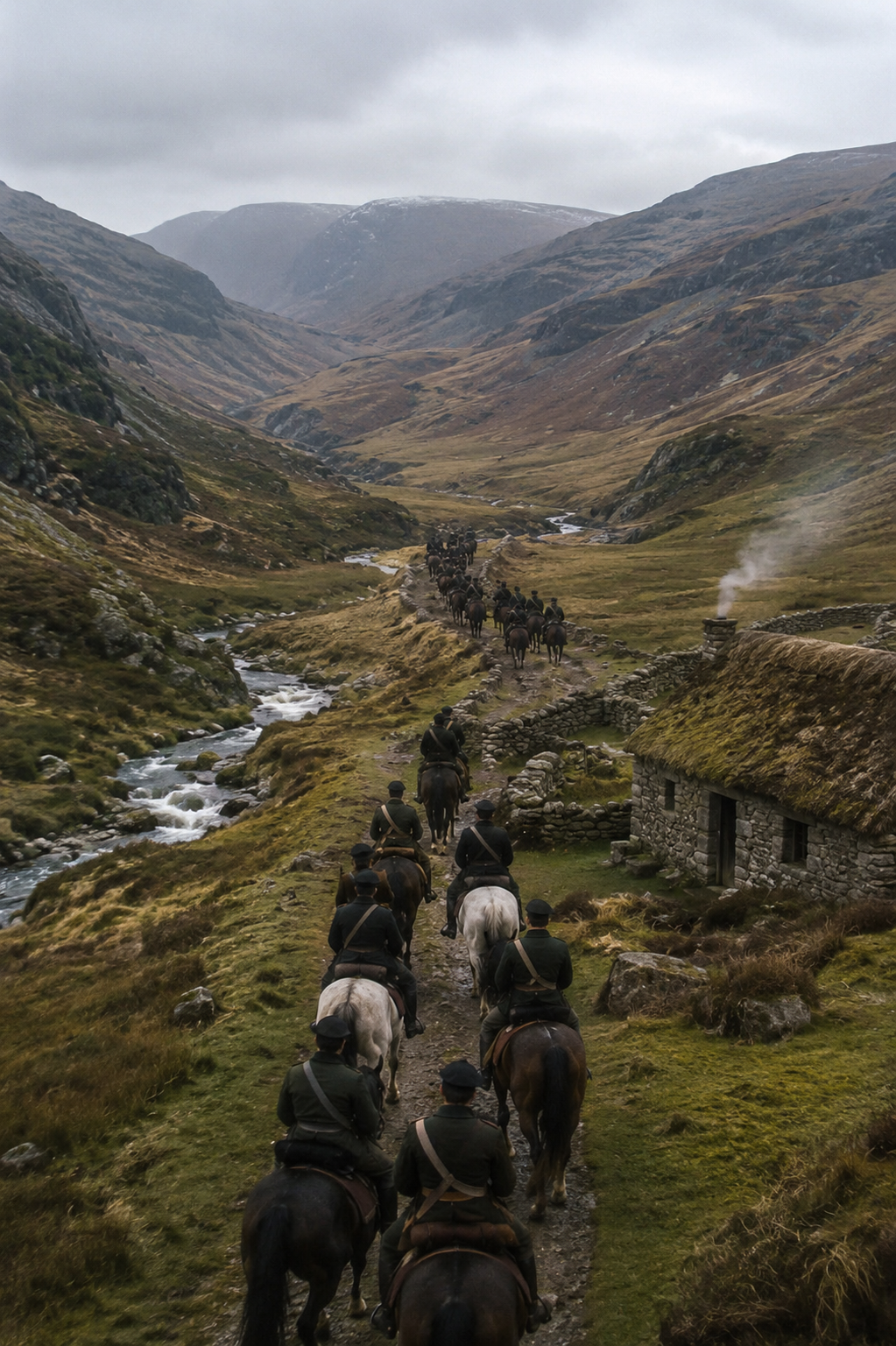
Government cavalry repeatedly searched the hills.
Royal dragoons operating from nearby Moffat rode through the surrounding valleys pursuing suspected Covenanters, while local estates were required to provide lodging, food, and supplies for Crown forces. Every landowner found themselves caught between loyalty to the government and sympathy for neighbors whose religious convictions placed them outside the law.
James Johnstone occupied one of the most difficult positions imaginable. His public duties required him to serve the government, yet protecting his tenants and preserving the stability of the estate required careful diplomacy, legal judgment, and restraint.
A New Scotland
Everything changed in 1688.
The Glorious Revolution swept James VII from the throne and established William and Mary as joint monarchs. The political order that had governed Scotland for decades disappeared almost overnight.
James Johnstone quickly adapted to the new government. In March 1689, the Estates of Scotland appointed him both Captain of the local country militia and a Commissioner for regional defense, placing him in charge of securing the strategic mountain passes of Annandale during a period of renewed uncertainty.
The same valleys that had once sheltered religious dissenters now became part of Scotland's national defensive network.
A Legacy Beyond the Border
When James Johnstone died around 1697, he left far more than an estate.
He left a family strengthened by generations of careful leadership, noble alliances, and unwavering resilience.
Through the marriage of Janet Johnstone to James Chalmers of Dam, the traditions of the Border lairds merged with another rising landed family whose descendants would eventually carry this remarkable heritage far beyond Scotland.
The story of Corehead is not merely one of castles, sheep, and mountain passes.
It is the story of a family that survived political revolution, religious conflict, military occupation, and changing dynasties while preserving both its honor and its place among Scotland's historic gentry. Long before their descendants crossed the Atlantic, the character that defined them had already been forged beneath the towering slopes of the Devil's Beef Tub.
For Your Reference;
The Manuscripts of the Earl of Annandale and Hartfell, Historical Manuscripts Commission, for the Johnstones of Corehead/Corheid, their lands, tenants, and involvement in seventeenth-century Dumfriesshire affairs.
The Statistical Account of Scotland — Moffat, Dumfriesshire, for the Johnstone family of Corehead, their local landholdings, and the family’s connections with Moffat and the Whiteford family.
Historical records of Dumfriesshire and Annandale, including parliamentary, sasine, and county records, for the Johnstones of Corehead and their participation in the political and religious affairs of seventeenth-century Scotland.
Direct ancestors of author Krysta Abesamis.