Crossing Over to Ulster
When Scotland Looked Across the Sea
Long before Scots-Irish families appeared in Pennsylvania, the Carolina backcountry, and the valleys of Appalachia, another migration was already underway across a much narrower stretch of water. For centuries, the North Channel separating southwestern Scotland from Ulster was less a barrier than a bridge. On clear days, the coastlines could almost see one another. The hills of Antrim lay only a short distance from Galloway and the western shores of Scotland. Fishermen crossed regularly. Traders moved between ports. Families maintained connections on both sides of the sea. The crossing itself was often measured in hours rather than weeks. What later generations would call the Scots-Irish story did not begin in America.
It began with Scotland looking westward toward Ulster.
The movement had deep roots stretching back into the medieval period. Scottish warriors, merchants, churchmen, and settlers had crossed into Ireland for centuries, particularly along the northeastern coast. The sea routes between Galloway, Ayrshire, the Hebrides, and Ulster formed part of an interconnected maritime world where movement was common and identities often overlapped. In many respects, the people living around the Irish Sea shared more daily contact with one another than they did with distant political centers like Edinburgh or London. Yet the great wave of Scottish migration into Ulster began in earnest during the early seventeenth century. The catalyst was the Plantation of Ulster.
Following the defeat of powerful Gaelic Irish lords in the Nine Years' War and the subsequent Flight of the Earls in 1607, enormous tracts of land in northern Ireland came under Crown control. The English government sought to secure the region by settling loyal Protestant populations there, particularly from Scotland and northern England. What followed became one of the largest organized migrations in the history of the British Isles.
The first major destination was not all of Ulster equally.
The northeastern counties closest to Scotland attracted settlers first and fastest. Antrim and Down became especially popular because they lay directly across the water from the Scottish coast. The crossing was relatively short, familiar, and affordable. A family leaving Ayrshire or Galloway could arrive in Ulster far more easily than they could relocate to many distant parts of Scotland itself. The landscape also felt familiar. Rolling hills, grazing land, coastal communities, and agricultural opportunities resembled much of southwestern Scotland.
For many settlers, Ulster did not feel like entering a foreign country. It felt like crossing into another part of the same regional world.
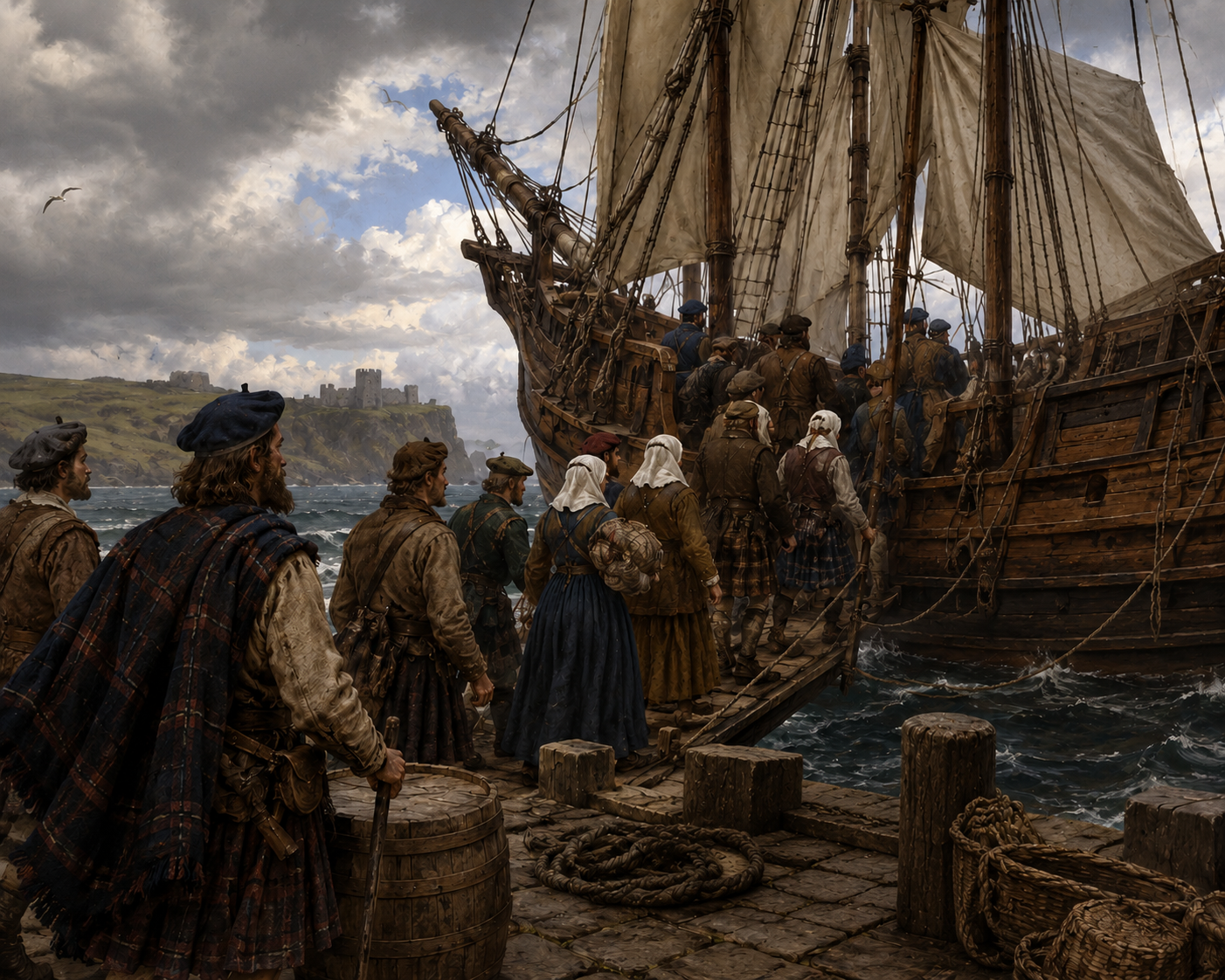
By the 1620s and 1630s, thousands of Scots had already established themselves throughout Ulster. New communities emerged where Scottish speech, customs, farming practices, and Presbyterian religious traditions became deeply rooted. Churches were established. Market towns expanded. Trade flourished between Scottish and Irish ports. Entire kinship networks crossed the water together, creating communities where familiar surnames and familiar accents surrounded newcomers. The numbers were remarkable.
Historians estimate that by the middle of the seventeenth century, perhaps 80,000 to 100,000 Scots had settled in Ulster. By the early eighteenth century, that figure had grown significantly larger. In some regions of northeastern Ireland, Scottish settlers and their descendants formed a substantial portion of the population. The migration became so influential that entire districts developed distinct cultural identities blending Scottish traditions with life in Ireland.
The advantages that drew settlers westward were considerable. Land was often more available than in parts of Scotland. Economic opportunities attracted tenant farmers and tradesmen alike. Population pressures that existed in certain Scottish regions could be eased through relocation. Religious communities, particularly Presbyterians, found opportunities to establish congregations and networks among fellow settlers. Trade routes connecting Scotland and Ulster created commercial possibilities that enriched both sides of the North Channel.
Yet the move was never without difficulties.
Relations between settlers and the native Irish population were often strained from the beginning. The Plantation itself was built upon the transfer of land from earlier occupants, creating tensions that would echo through centuries of Irish history. Cultural, religious, and political divisions hardened over time. Violence periodically erupted. The Irish Rebellion of 1641 brought fear, bloodshed, and lasting trauma to communities throughout Ulster. Families who had crossed seeking stability sometimes found themselves caught between competing loyalties, religious conflict, and frontier insecurity.
Economic conditions could also fluctuate dramatically. Tenant farmers remained vulnerable to rents, harvest failures, changing markets, and political upheaval. By the early eighteenth century, many Scots-descended Ulster families faced growing economic pressures, rising rents, and religious frustrations despite generations of settlement. Ironically, the success of the Scottish migration into Ulster helped create the next great migration.
By the late 1600s and early 1700s, descendants of those original settlers began looking westward once again. This time the horizon extended beyond the Irish Sea and beyond the Atlantic itself. Ships departing from Belfast, Londonderry, Newry, and smaller Ulster ports carried thousands toward Pennsylvania and the American colonies. These migrants brought with them generations of Scottish heritage shaped by life in Ulster. They carried Presbyterian traditions, Border surnames, farming knowledge, family stories, and a culture that had evolved on both sides of the sea.
Among them were countless families whose roots stretched back to the Scottish Borders, the western Lowlands, and regions such as Dumfriesshire, Galloway, and Ayrshire.
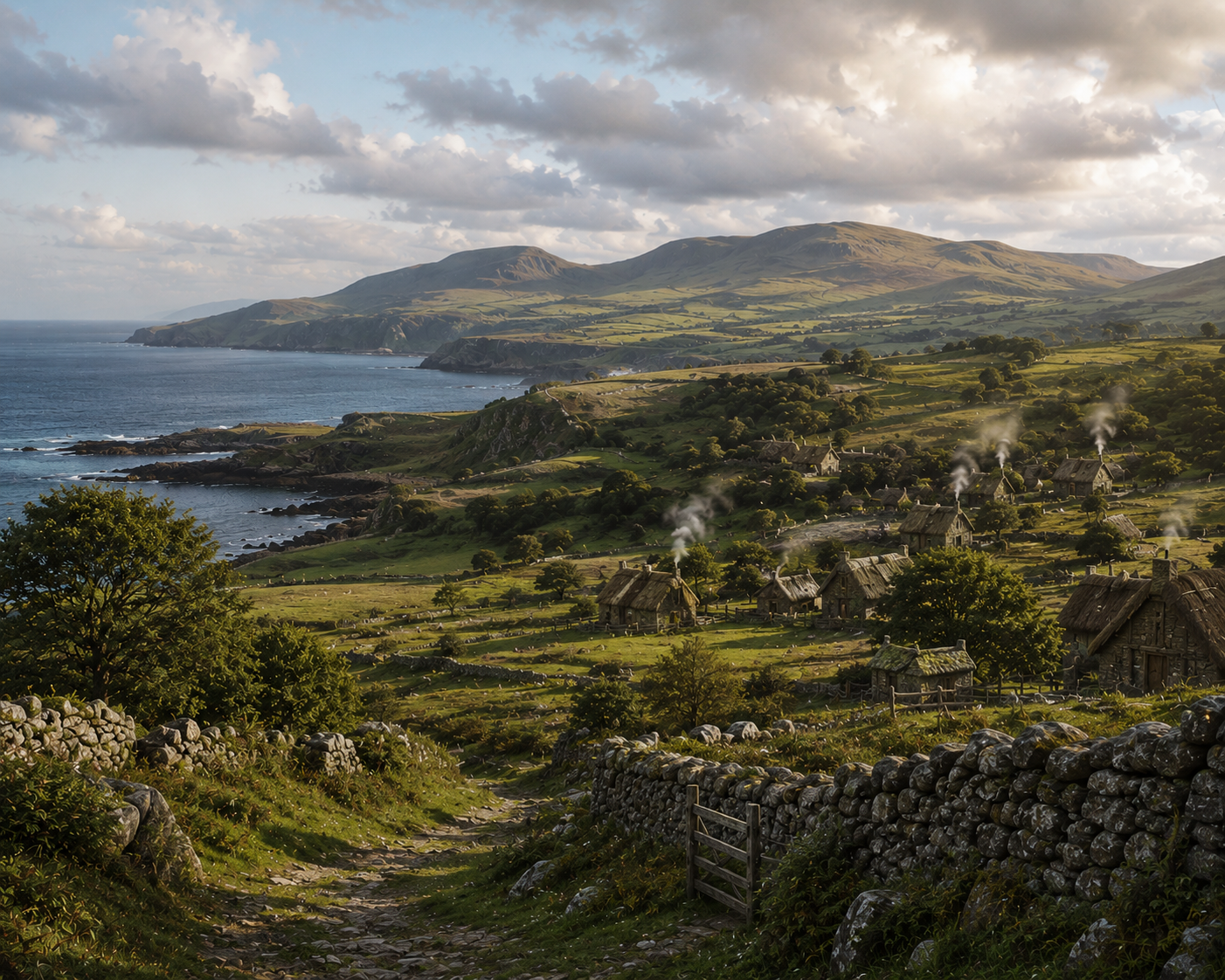
For many of these migrants, America became the third chapter in a journey that had begun generations earlier in Scotland. First came the crossing to Ulster. Then came the crossing to the New World. The path that eventually led families into Pennsylvania, the Shenandoah Valley, Rowan County, and the Blue Ridge frontier often began with a much shorter voyage across the narrow waters separating Scotland from Ireland.
That crossing changed both countries forever…
It reshaped Ulster, transformed Scottish migration patterns, influenced the settlement of colonial America, and helped create the Scots-Irish identity that would later become one of the defining cultural forces of Appalachia and the American frontier. What began as a movement across a visible horizon became one of the most influential migrations in the history of the Atlantic world.