The Scottish Thistle
“Among the many familiar plants they encountered in America were native and they introduced the species of thistle. The Appalachian Mountains often reminded settlers of the landscapes they had left behind. The ridges, valleys, rocky hillsides, and cool mountain climate felt strangely familiar to people whose ancestors had lived among the hills of Scotland and Ulster. Thistles grew readily in disturbed fields, along roadsides, in mountain meadows, and around newly cleared settlements. The sight of a thistle may have served as an unexpected reminder of home. The connection became symbolic rather than botanical. The thistles growing in Appalachia were not always the same species found in Scotland, but the meaning endured.”
Crossing Over to Ulster
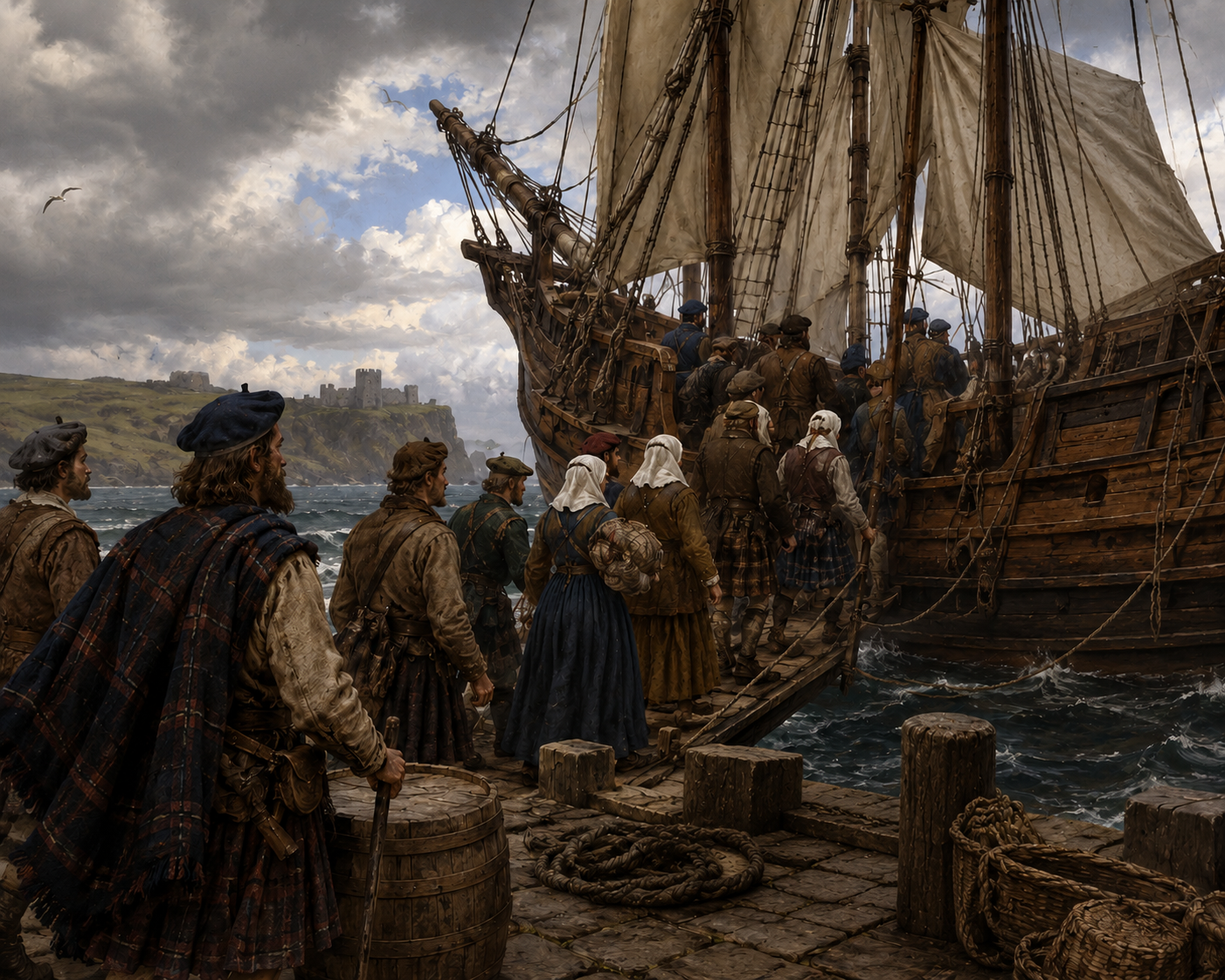
“It began with Scotland looking westward toward Ulster. The movement had deep roots stretching back into the medieval period. Scottish warriors, merchants, churchmen, and settlers had crossed into Ireland for centuries, particularly along the northeastern coast. The sea routes between Galloway, Ayrshire, the Hebrides, and Ulster formed part of an interconnected maritime world where movement was common and identities often overlapped.”
Moffat 1690
“Moffat did not begin as a planned town. Like many settlements in southern Scotland, its origins stretch deep into the medieval period. The name is believed to derive from the Gaelic Magh Fada—meaning "long plain"—a fitting description for the broad valley lying beneath the surrounding hills. The area had been occupied for centuries before written records appeared. Ancient Britons, Romans, and early medieval peoples all moved through Annandale, using the natural passes that connected Scotland to northern England. The nearby Annan Water carved a route through the hills that travelers, traders, soldiers, and drovers followed for generations.”