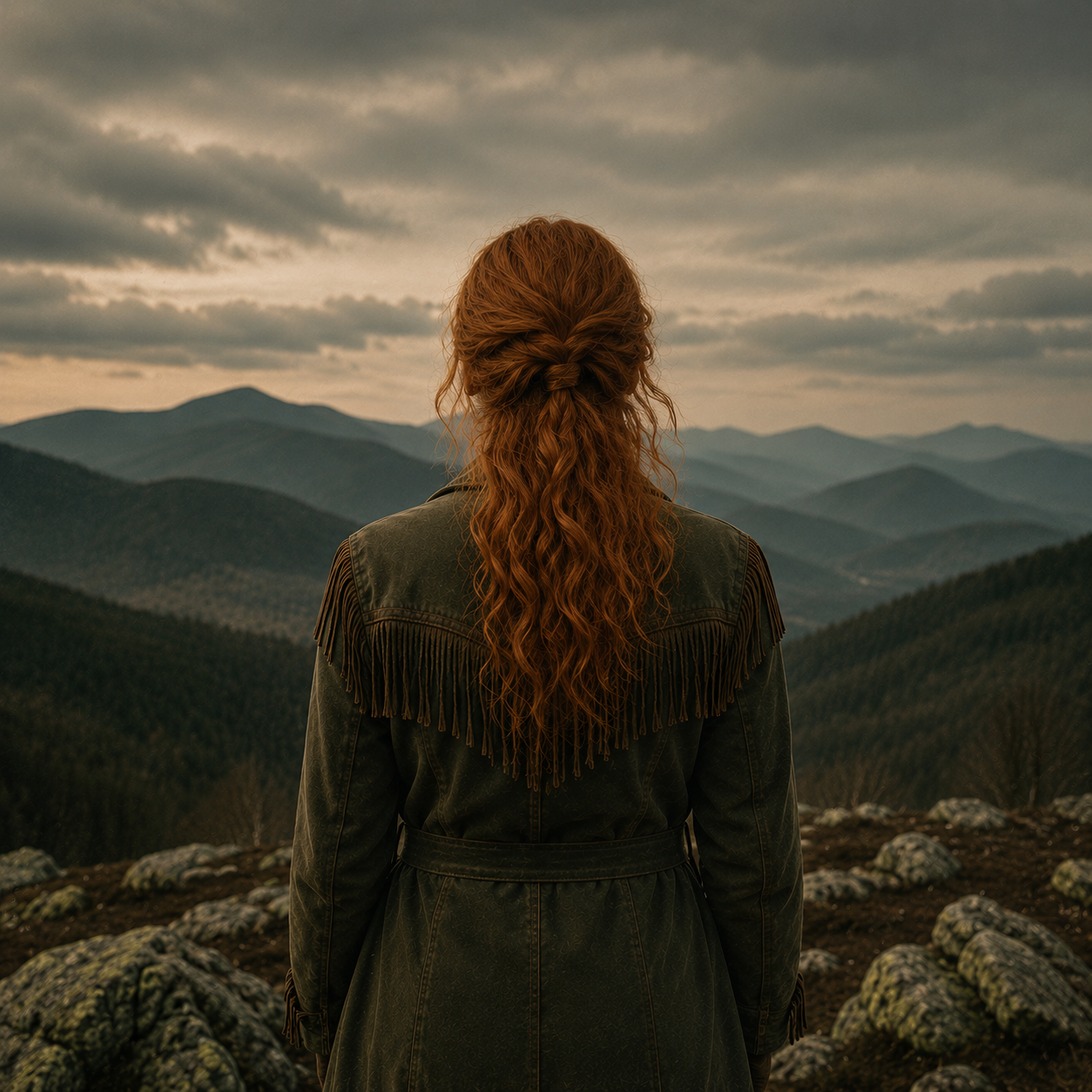
Moffat 1690
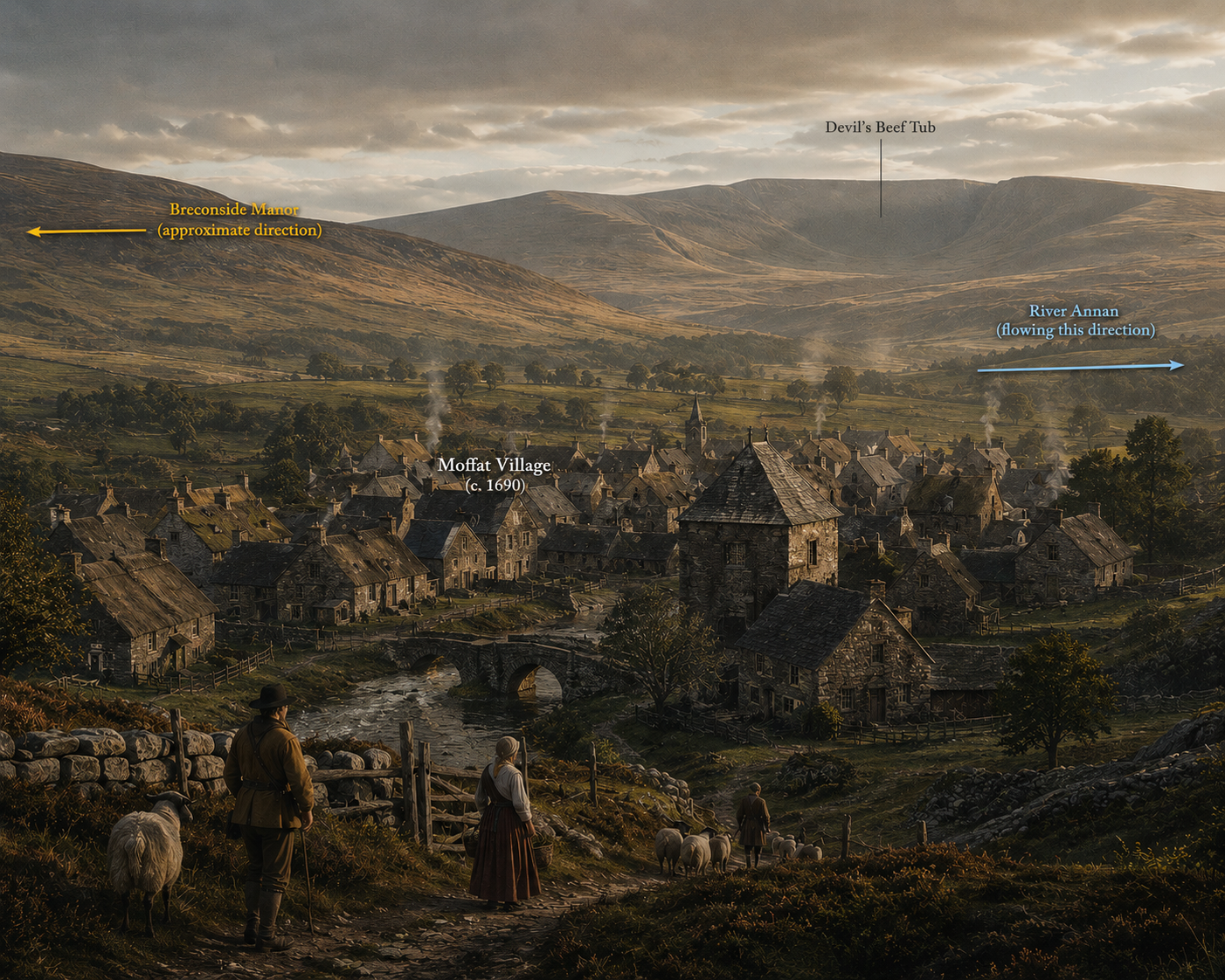
nearby Moffat in the 17th century
Long before the Carruthers family crossed into Ulster and eventually sailed for America, they lived among the windswept hills of southern Scotland overlooking one of the most historic valleys in the Borders. By the late seventeenth century, members of the Carruthers family were associated with Breconside, a hillside property near the growing village of Moffat in Dumfriesshire. It was here, beneath the shadow of the Southern Uplands and within sight of the dramatic Devil's Beef Tub, that the family spent their final generations in Scotland before the great migrations of the eighteenth century began.
A Village Older Than the Carruthers
Moffat did not begin as a planned town. Like many settlements in southern Scotland, its origins stretch deep into the medieval period. The name is believed to derive from the Gaelic Magh Fada—meaning "long plain"—a fitting description for the broad valley lying beneath the surrounding hills.
The area had been occupied for centuries before written records appeared. Ancient Britons, Romans, and early medieval peoples all moved through Annandale, using the natural passes that connected Scotland to northern England. The nearby Annan Water carved a route through the hills that travelers, traders, soldiers, and drovers followed for generations.
By the Middle Ages, Moffat had emerged as a small rural settlement serving the surrounding farming communities. While Edinburgh and Glasgow grew into major centers of commerce, Moffat remained a frontier market village whose fortunes depended largely upon livestock, wool, and agriculture.
The End of the Border Wars
When the Carruthers family arrived at Breconside during the late seventeenth century, the Scottish Borders were undergoing enormous change.
For centuries, families such as the Carruthers, Armstrongs, Johnstones, Maxwells, Elliots, and Grahams had lived within the violent world of the Border Reivers. Raids, feuds, cattle theft, retaliation, and shifting loyalties had shaped everyday life across the region.
That world effectively ended after the Union of the Crowns in 1603 when James VI of Scotland also became James I of England. The border ceased to divide two hostile kingdoms, and the Crown launched an aggressive campaign to suppress reiving culture.
By 1690, nearly a century later, the old riding days were gone. Yet their memory lingered everywhere. Families still remembered feuds. Tower houses still stood across the countryside. Stories of raids and midnight pursuits were passed from one generation to the next.
Breconside and the Southern Uplands
Breconside occupied valuable grazing land above Moffat. Unlike the fertile lowlands farther east, the hills surrounding Moffat were best suited for livestock rather than extensive crop cultivation. The economy of the district depended heavily upon sheep.
Long slopes covered in coarse grasses provided ideal grazing for flocks that supplied wool to local and regional markets. Sheep were often the most valuable asset a family possessed. Wool could be traded, sold, or woven into cloth, while sheep themselves represented a form of wealth that could be expanded through careful management.
Cattle also remained important. Though the days of large-scale cattle raiding had ended, livestock continued to drive much of the local economy. Farmers moved animals between seasonal grazing grounds, tended hay fields, repaired stone dykes, and maintained small agricultural holdings scattered throughout the valley.
The Carruthers household likely derived much of its income from this pastoral economy. Daily life revolved around livestock, weather, repairs, harvests, and the constant labor required to maintain a working estate in the Scottish uplands.
The Devil's Beef Tub
Few landscapes in Scotland are more dramatic than the Devil's Beef Tub.
Visible from the high ground surrounding Breconside, the massive natural hollow cuts deeply into the hills above Moffat. The formation resembles an enormous bowl carved into the earth and has been associated with Border history for centuries.
Its unusual name comes directly from the reiving era. Border riders were said to hide stolen cattle within the basin, concealing them from pursuing enemies and authorities. In effect, the hollow served as a giant natural pen—or "beef tub"—for stolen livestock.
By the time James Carruthers was born in 1695, the raids themselves had largely ended, but the stories remained very much alive. Children growing up around Moffat would have heard countless tales of hidden cattle, mounted riders, feuds, and escapes across the hills.
A Community Rebuilding
All of Scotland at the time was not prosperous.
The 1690s brought what became known as the Seven Ill Years, one of the worst famines in Scottish history. Crop failures devastated much of the country. Food shortages spread. Disease followed hunger. Entire communities struggled to survive. Even families possessing land felt the effects. Poor harvests reduced income. Livestock losses could ruin households. Harsh winters made survival uncertain. The people of Moffat endured these hardships together. Neighbors depended upon one another for labor, assistance, and support. Community ties often meant the difference between survival and disaster.
As Scotland slowly recovered, Moffat continued growing as a regional market center. Wool trading expanded. Livestock sales increased. Roads improved. Though still small, the village became increasingly connected to wider economic networks stretching across southern Scotland.
Today, Moffat is one of the most charming and well-preserved towns in southern Scotland. Nestled within the rolling hills of Dumfries and Galloway, it has transformed from a small Border market settlement into a destination known for its history, hospitality, and natural beauty. Visitors arrive from across Britain to explore the surrounding countryside, walk the Southern Upland Way, visit the Devil's Beef Tub, and experience the same landscapes that generations of Border families once called home.
The town has earned recognition as one of Scotland's most attractive rural communities and was designated Scotland's first "Dark Sky Town," becoming internationally known for its efforts to preserve the night sky from light pollution. Moffat's historic stone buildings, thriving local businesses, annual events, and strong sense of community have helped it remain a vibrant place while still honoring its past. The wool trade, coaching routes, and spa tourism that once fueled its growth have given way to a modern economy built on tourism, heritage, and local enterprise.
For descendants of families such as the Carruthers, Moffat remains far more than a dot on a map. It is a living connection to the world their ancestors knew. The hills still rise above the valley. The Devil's Beef Tub still dominates the skyline. Sheep continue to graze the surrounding slopes much as they did centuries ago. Though the world has changed dramatically since James Carruthers walked these lands, Moffat has preserved something remarkable—a visible link between Scotland's Border past and the present day.
Standing in Moffat today, it is not difficult to imagine why generations of families chose to build their lives here. It remains a place where history is not hidden away in books and archives, but woven into the landscape itself.