
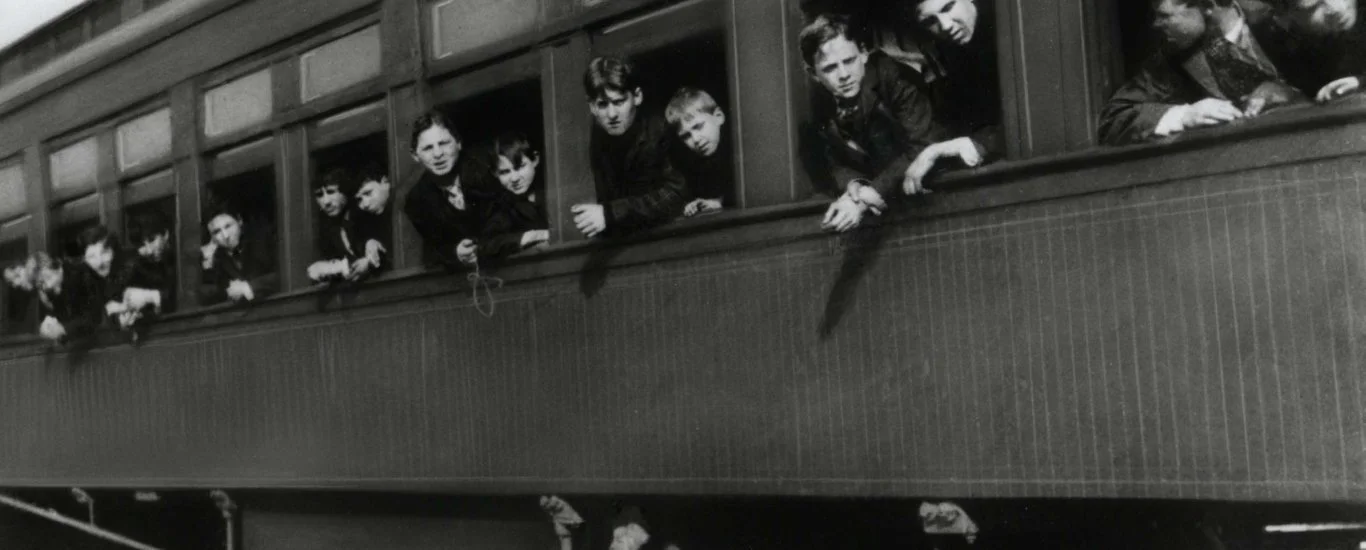
Orphan Trains
By the middle of the nineteenth century, the city was growing at a staggering pace. Immigrants arrived by the thousands, families crowded into tenements, and poverty could turn desperate very quickly. A death, illness, accident, or lost job might leave a family without rent money or enough to eat. There was no modern welfare system to catch them.
Children felt it immediately. Some sold newspapers, matches, or flowers. Others begged, scavenged, worked, or slept in alleys and lodging houses. Some still had parents and homes, but their families were barely hanging on.
That distinction matters: not every child who boarded an “orphan train” was actually an orphan.