William Carruthers of Knocks
William Carruthers (1585) of Knocks emerges from the records as one of the more colorful younger sons of the Holmains family. He was the third son of John Carruthers, 7th of Holmains and 3rd Baron, and Nicolas Jardine, and unlike his elder brother John, William was never expected to inherit the principal Holmains estate. Instead, he belonged to that important class of younger sons who established themselves upon smaller properties belonging to, acquired by, or associated with the wider family. By the early seventeenth century he was identified territorially as William Carruthers of Knocks, and the surviving records place him squarely within the turbulent world of land, family loyalty, debt, church dues and armed confrontation that still characterized Annandale even after the Union of the Crowns.
William is particularly important to our family investigation because he stands at a possible junction between the established Holmains pedigree and the later Carruthers family at Know, Daltonheuk and Breconside. Carruthers & Reid document William himself very clearly, but they do not identify his children. The published Holmains pedigree simply moves from William to his brothers Thomas and Charles. The possibility that he was father of the later William Carruthers in Know therefore remains a working genealogical hypothesis rather than a proven relationship. It is an intriguing one, however, because the geography, chronology and continuing Dalton connections make William of Knocks a man who deserves considerably more attention than the few lines traditionally allotted to him.
A Younger Son of Holmains
William was probably born during the later decades of the sixteenth century, perhaps around 1585, although that date should be treated as an estimate rather than a documented birth. His father John had married Nicolas Jardine on 16 April 1575, under a marriage contract executed at Spedlings, and William grew up within a family whose holdings stretched through the Dalton and Annandale countryside. His known brothers included John, George, Thomas and Charles Carruthers. John eventually succeeded as the 8th Laird of Holmains, while George became associated with Denbie. William became associated with Knocks, and by 1616 he possessed Knocks and Twaquhattis.
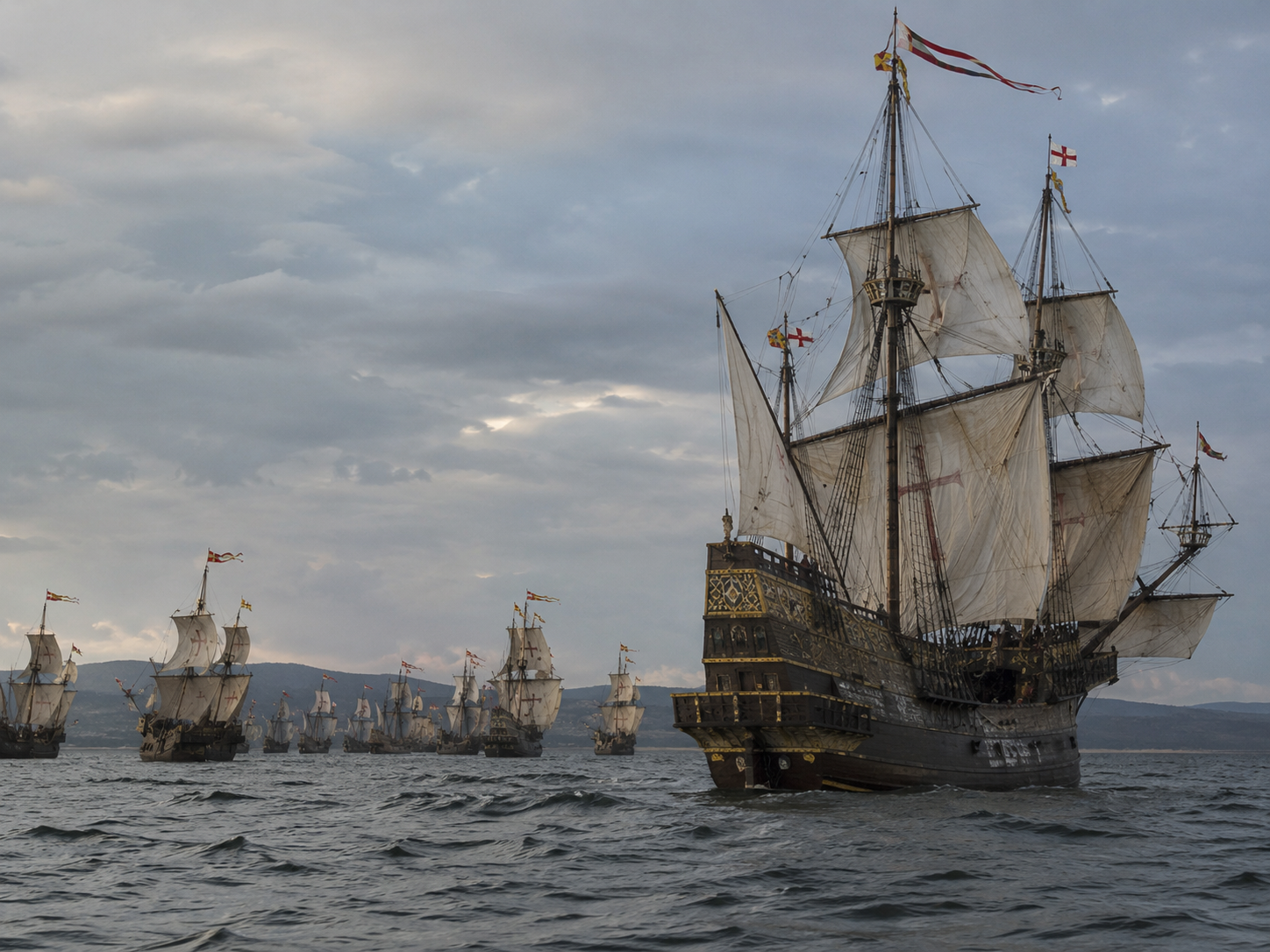
The Scotland of William's youth was changing rapidly. Mary Queen of Scots was executed in 1587, the Spanish Armada threatened England the following year, and James VI of Scotland inherited the English throne in 1603.
The Spanish Armada
For centuries the Carruthers had lived within a militarized frontier society where England lay immediately to the south. William came of age just as James attempted to transform that old frontier into the pacified “Middle Shires” of his new British monarchy. Royal government increasingly attempted to suppress private feuds, armed kin groups and the traditional violence of the Borders. The difficulty was that families such as the Carruthers had been shaped by precisely that world, and William's surviving record demonstrates just how slowly the old habits disappeared.
William and the Holmains Family
The death of John Carruthers, 7th of Holmains, in 1616 exposed tensions that already existed within the family. His widow, Nicolas Jardine, retained substantial liferent rights, while their eldest son John succeeded to Holmains. The resulting disagreements became bitter enough to reach the authorities. Carruthers & Reid observed that William and his brother George generally supported their mother Nicolas against their elder brother John during these disputes. William himself was pursued by Nicolas regarding rents connected with her liferent interests, demonstrating that family alliances were not necessarily simple or permanent.
Yet the records reveal something particularly interesting about the Carruthers family. Whatever disagreements existed inside Holmains, an outside challenge could cause the family to close ranks. William, George and their elder brother John could quarrel among themselves over property and their mother's rights, but when the dispute involved Carruthers land and an outsider attempting to exercise authority over it, the brothers could once again appear together. Nothing illustrates this better than the extraordinary conflict over church teinds in 1615–1617.
The Teind Dispute
The dispute concerned teinds, the Scottish equivalent of tithes: the portion of agricultural produce legally owed for the support of the church and its minister. The local minister, William Hamilton, attempted to collect the teinds due from lands within the Holmains and Dalton sphere. What might have remained an ordinary disagreement over agricultural dues instead developed into an armed confrontation involving some of the most recognizable names in the Carruthers family.
In September 1615, while William's father John was still alive, Hamilton attempted to settle the matter peacefully with the Laird of Holmains. According to the subsequent complaint, however, the laird's sons William of Knocks and George of Denbie confronted the minister, ordered him to leave and drew their swords, preventing him from collecting the teind. This places William near the center of the confrontation from its beginning rather than merely among relatives who became involved later.
The dispute escalated dramatically after his father's death. In July 1616, Hamilton resorted to legal seizure and took cattle in satisfaction of the unpaid teinds. The animals were being driven toward Dumfries, where they could be formally appraised, when William of Knocks and other Carruthers intercepted the party. Armed with staffs and swords, they attacked the men escorting the cattle. The animals were eventually taken outside Dumfries, where another confrontation occurred and the Carruthers succeeded in recovering the cattle. When those accused failed to answer the proceedings that followed, the Privy Council denounced them as rebels.
Forty or Fifty Carruthers
The most remarkable episode occurred on 20 September 1616, when Hamilton again attempted to collect teind sheaves. This time William did not appear with only a handful of relatives. According to the complaint, approximately forty or fifty armed men assembled against the minister. Among those identified were John Carruthers, 8th of Holmains; William of Knocks; George of Denbie; George of Butterquhat; John in Dyke; Herbert in Midelraw; Andrew and George in Over Dormont; Alexander Carruthers of the Rammerscales family, and others belonging to the extended Carruthers network.
Hamilton claimed that he feared he would have been killed had others not intervened. Three days later members of the group returned and threw down his stacked grain. By February 1617, the matter still had not been resolved, and Hamilton again complained to the Privy Council, which ordered the apprehension of those involved. William therefore appears not as a peripheral participant but as one of the principal figures in an organized resistance to the minister's attempts to enforce his rights over the agricultural produce of the Dalton lands.
The episode tells us something important about William and about the Carruthers generally. This was occurring more than a decade after James VI had become king of England and begun his campaign to pacify the Borders. The international frontier was gone, but the kinship structure of Border society remained remarkably powerful. When Carruthers property was threatened, dozens of men from different branches could still assemble together. William's behavior belongs to the older Border culture in which land, family and armed collective action remained intimately connected.
Knocks and Twaquhattis
By 1616, William possessed Knocks and Twaquhattis, giving him the territorial designation by which he appears in the family record. These properties established him independently of the main Holmains estate and explain why contemporary documents could distinguish him readily from the numerous other men named William Carruthers. His identity was not simply “William, son of John.” He was William Carruthers of Knocks.
Something changed in 1624. Carruthers & Reid record that William disponed Knocks and Twaquhattis to William Carlyle, a notary and burgess of Dumfries, and William's wife Mariot Porteous consented to the disposition. This transaction is particularly important because it gives us secure evidence for the identity of William's wife. Unlike many of the uncertain marriages encountered in the earlier Holmains generations, Mariot's connection to William rests upon an actual property transaction in which her consent was legally relevant.
What the transaction does not tell us, at least from the abbreviated published description, is why William disposed of the properties. Financial pressure is certainly plausible. William had already experienced financial difficulties, and debt and security obligations occur repeatedly within the wider Holmains family records. But we should resist turning a plausible explanation into a documented fact. We do not presently know that William sold Knocks because he was in debt.
There is another possibility worth considering. The conveyance may have formed part of an estate restructuring, security arrangement or financing transaction rather than representing William simply selling his home and leaving the district. William Carlyle was not a distant aristocratic purchaser but a Dumfries notary and burgess, precisely the sort of man who could appear in legal and financial arrangements involving land. To understand what actually happened, we need the wording of the original 1624 instrument rather than merely the later summary that William “disponed” the properties.
The Mystery of 1627
Three years after the 1624 disposition, something curious happens. William is still described as “William Carruthers of Knox” in 1627.
That detail matters. Territorial designations could persist for various reasons and cannot by themselves prove continuing ownership, but the continued use of “of Knox” cautions against assuming that William sold everything in 1624, immediately left Dalton and disappeared. Whatever the legal effect of the disposition to Carlyle, William remained associated strongly enough with Knocks for the territorial style still to identify him three years later.
After 1627, however, William becomes difficult to follow in the published Holmains material. Carruthers & Reid do not provide a death date, burial place or list of children. They simply move onward through the other sons of John Carruthers and Nicolas Jardine. That silence is frustrating, but it is also precisely where our investigation becomes interesting.
Documented wife · Mariot Porteous
Mariot Porteous deserves to be kept firmly within William's biography because she is documented, not reconstructed from an online pedigree. Her consent to the 1624 disposition of Knocks and Twaquhattis establishes her as William's wife. Beyond that transaction, however, the surviving evidence currently assembled for this investigation tells us relatively little about her.
Her appearance in the land transaction may ultimately provide the best route to learning more about the couple. Scottish property records frequently preserve women who otherwise disappear from narrative histories because a wife's consent, liferent, terce or inherited interest had to be addressed when land changed hands. Research into the Porteous family, the witnesses to the 1624 instrument and any associated sasines or securities may therefore reveal information that the published Carruthers pedigree does not.
Most importantly, we should not assign children to William and Mariot merely because later genealogies require them. The documentary question remains open.
Was He the Father of William in Know?
This is where William of Knocks becomes particularly important to the later family story.
The line under investigation runs:
John Carruthers, 7th of Holmains and Nicolas Jardine → William Carruthers of Knocks and Mariot Porteous → William Carruthers in Know and Daltonheuk and Martha Johnstone → William Carruthers of Breconside and Margaret Chalmers → James Carruthers, who later sailed to Pennsylvania.
The first relationship in that chain—John and Nicolas as parents of William of Knocks—is established.
William's marriage to Mariot Porteous is also documented.
The difficulty lies in the next step. Carruthers & Reid do not identify William of Knocks as father of William Carruthers in Know, nor do they provide children for William of Knocks at all. At present, therefore, that parent-child relationship should not be presented as proven.
But it deserves investigation. The chronology is possible, the geographic setting remains concentrated around Dalton, and the disappearance of William of Knocks from the published narrative after 1627 creates exactly the period in which the next generation must be reconstructed from local records rather than from the Holmains pedigree alone. The fact that the later William appears as “in Know” rather than “of Knocks” must also be examined carefully rather than assumed to represent the same property or status.
The next stage is therefore not to repeat the relationship until it becomes accepted through repetition. It is to look for the missing bridge: a baptism, testament, sasine, marriage contract, disposition, retour, bond, court record or other contemporary document that connects William of Knocks and Mariot Porteous to William in Know.
A Carruthers Worth Following
William Carruthers of Knocks deserves more than a passing line in a pedigree. The surviving records show a younger son of one of the principal houses of Annandale establishing himself upon his own lands, becoming entangled in the financial difficulties surrounding Holmains and participating vigorously in the disputes of his family. When the minister William Hamilton attempted to collect the teinds, William was among the men who confronted him with drawn swords. When cattle were seized, William participated in their recovery. When the minister returned for the grain, William appeared among an extraordinary gathering of Carruthers kinsmen numbering perhaps forty or fifty men.
Yet the same man eventually appears in the quieter language of property law. In 1624, with Mariot Porteous consenting, he disposed of Knocks and Twaquhattis to a Dumfries notary. Three years later he was still being called William Carruthers of Knox. Then the published trail grows cold.
That disappearance should not be filled with assumptions. It should be treated as a research problem. Somewhere between Knocks, Dalton, Dumfries and the next generation of Carruthers records may lie the evidence that tells us what became of William and Mariot—and whether their household really does provide the missing connection between the established Holmains family and the Carruthers line that eventually crossed the Atlantic to Pennsylvania.
John Carruthers, 7th of Holmains & Nicolas Jardine
↓
William Carruthers of Knocks & Mariot Porteous
↓
William Carruthers in Know & Daltonheuk & Martha Johnstone
↓
William Carruthers of Breconside & Margaret Chalmers
↓
James Carruthers sailed to Pennsylvania
For Your Reference;
Born: probably late 16th century · Dumfriesshire, Scotland; c.1585 is an estimate, not a documented birth date
Father: John Carruthers, 7th of Holmains and 3rd Baron
Mother: Nicolas Jardine
Wife: Mariot Porteous, documented through her consent to the 1624 disposition
Position: younger son of Holmains; landed gentleman styled William Carruthers of Knocks/Knox
Lands: Knocks and Twaquhattis
Documented Activity: principal participant in the 1615–1617 teind disputes involving minister William Hamilton and the Carruthers family
1624: disposed of Knocks and Twaquhattis to William Carlyle, notary and burgess of Dumfries; reason for the transaction presently unknown
1627: still styled “William Carruthers of Knox”
Children: not identified by Carruthers & Reid
Possible Son: William Carruthers in Know/Daltonheuk — under investigation; relationship not yet proven
Death: unknown
Burial: unknown
Key Family Evidence: Carruthers & Reid identify William as the third son of John Carruthers, 7th of Holmains, and Nicolas Jardine.
Key Teind Evidence — 1615–1617: William repeatedly appears in the conflict with minister William Hamilton, including the initial confrontation with drawn swords, the recovery of cattle seized for unpaid teinds and the later gathering of approximately forty or fifty Carruthers and associates when Hamilton attempted to collect teind sheaves.
Key Marriage and Property Evidence — 1624: William disposed of Knocks and Twaquhattis to William Carlyle of Dumfries, with Mariot Porteous specifically recorded as his wife and consenting to the transaction. The conveyance proves the marriage but, without examination of the original instrument, does not establish why the properties were transferred.
Key Research Problem — 1627 onward: William remained styled “of Knox” in 1627, despite the 1624 disposition. His subsequent life, death and children are not supplied by the published Holmains pedigree. Establishing whether he was father of William Carruthers in Know remains the critical missing link.
Arthur Stanley Carruthers & R. C. Reid, Records of the Carruthers Family (1934), particularly the Holmains pedigree and narrative dealing with the sons of John Carruthers, 7th of Holmains, William of Knocks, the teind disputes and the family property transactions.
Register of the Privy Council of Scotland — proceedings arising from William Hamilton's complaints concerning the 1615–1617 teind disputes, including the armed Carruthers confrontations and subsequent denunciations.
Holmains writs and associated property records — particularly the 1624 disposition of Knocks and Twaquhattis and the 1627 record styling William “of Knox.”
11th Great Grandfather of author Krysta Abesamis
*Note on Historical Images
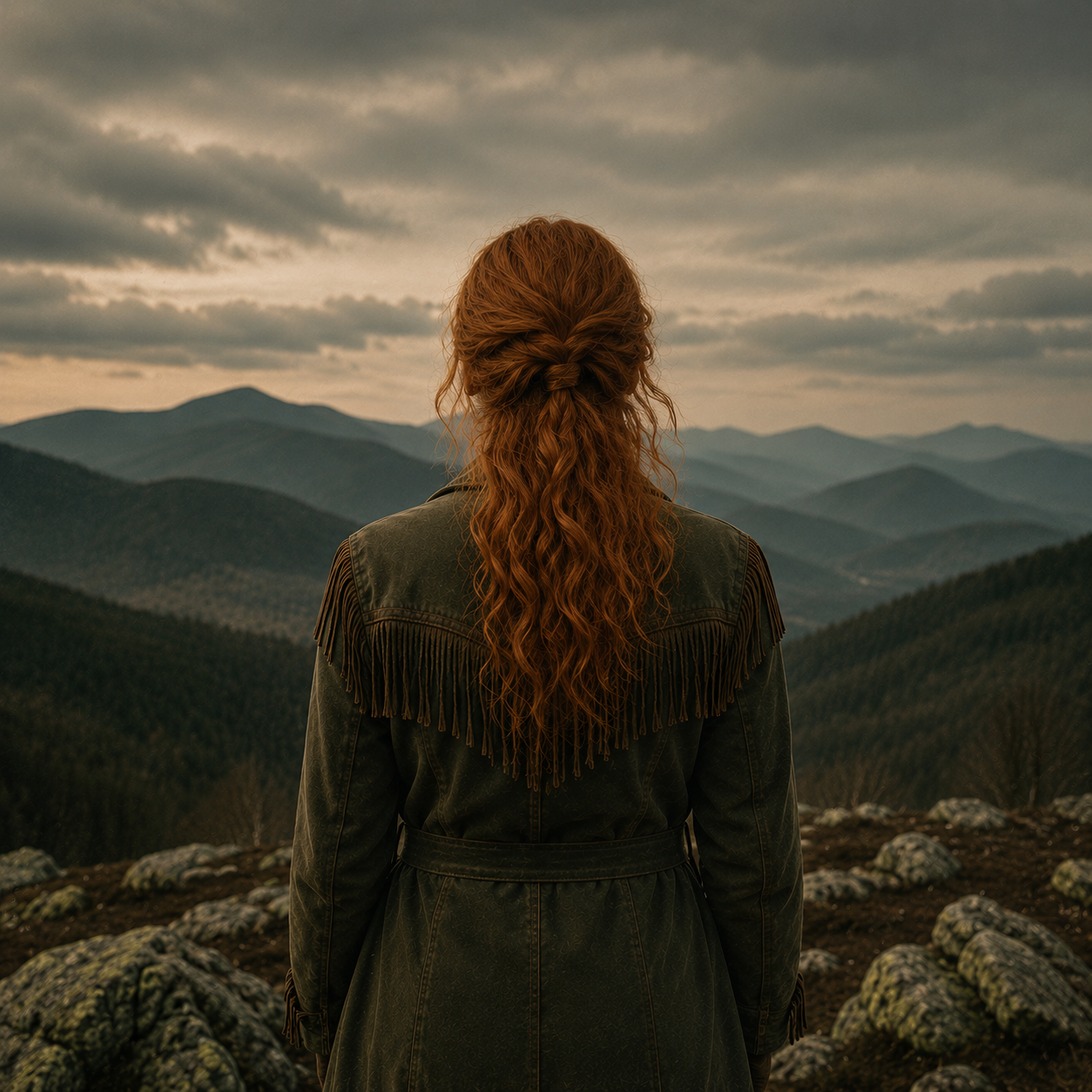
Some images used in this article are AI-assisted historical reconstructions, created to help visualize people, places, buildings, and events for which no surviving photograph or contemporary image exists. These images are interpretive illustrations, not historical photographs or authenticated portraits. Where possible, reconstructions are informed by surviving records, period architecture, clothing, landscapes, heraldry, and other historical references. They are included for visual context and storytelling and should not be considered documentary evidence.