Caerlaverock castle
Fortress of the Western March
Rising from the marshlands near the Solway Firth in Dumfriesshire, Caerlaverock Castle has stood for centuries as one of the great strongholds of Scotland’s western Border country. Even in ruin, its walls still carry the atmosphere of the old Marches — a landscape shaped by shifting loyalties, family rivalries, royal politics, cattle raids, and generations of Border warfare. Unlike most medieval castles in Scotland, Caerlaverock was built in a striking triangular design, surrounded by a moat that reflected its sandstone walls across the wet lowlands. Positioned near the English frontier and close to the River Nith, the fortress guarded an important route into southwestern Scotland. Whoever controlled Caerlaverock controlled movement through part of the western Borders. The Maxwells became the great power associated with the castle. By the late medieval and early modern periods, the Maxwell family had risen into one of the dominant Border dynasties of Dumfriesshire. Their influence extended across the western marches, touching neighboring families through alliances, disputes, marriages, feuds, and land arrangements that often intertwined noble houses for generations. And among those neighboring families were the Carrutherses. The lands of Holmains, Mouswald, and surrounding tower houses existed within the same Border world as Caerlaverock itself. Families such as the Carruthers’, Johnstones, Irvings, Bells, and Maxwells all occupied this shifting frontier society where kinship and conflict frequently existed side by side. Alliances formed through marriage one decade could collapse into bloodshed the next. The Borders were not governed only by crowns and parliaments. They were governed by families. In the sixteenth century, Caerlaverock stood near the center of some of the most volatile rivalries in southern Scotland.
The feud between the Maxwells and the Johnstones became one of the most infamous Border conflicts of the age. Raids, retaliations, shifting allegiances, and killings escalated over decades until violence became deeply embedded in regional memory. One of the defining moments came after the Battle of Dryfe Sands in 1593, where the Johnstones defeated the Maxwells in a brutal Border clash. The feud did not end there. Revenge followed revenge, and eventually John Maxwell, 9th Lord Maxwell, was himself killed in 1608 by Johnstone hands after years of blood conflict between the two families. Yet despite generations of hostility, marriages between these same houses continued to occur. That contradiction defined the Borders. Families who fought one another also depended upon one another. Land, inheritance, political survival, and social standing often required strategic marriages across rival lines. Over time, bloodlines intertwined in ways that made former enemies part of the same extended ancestry.
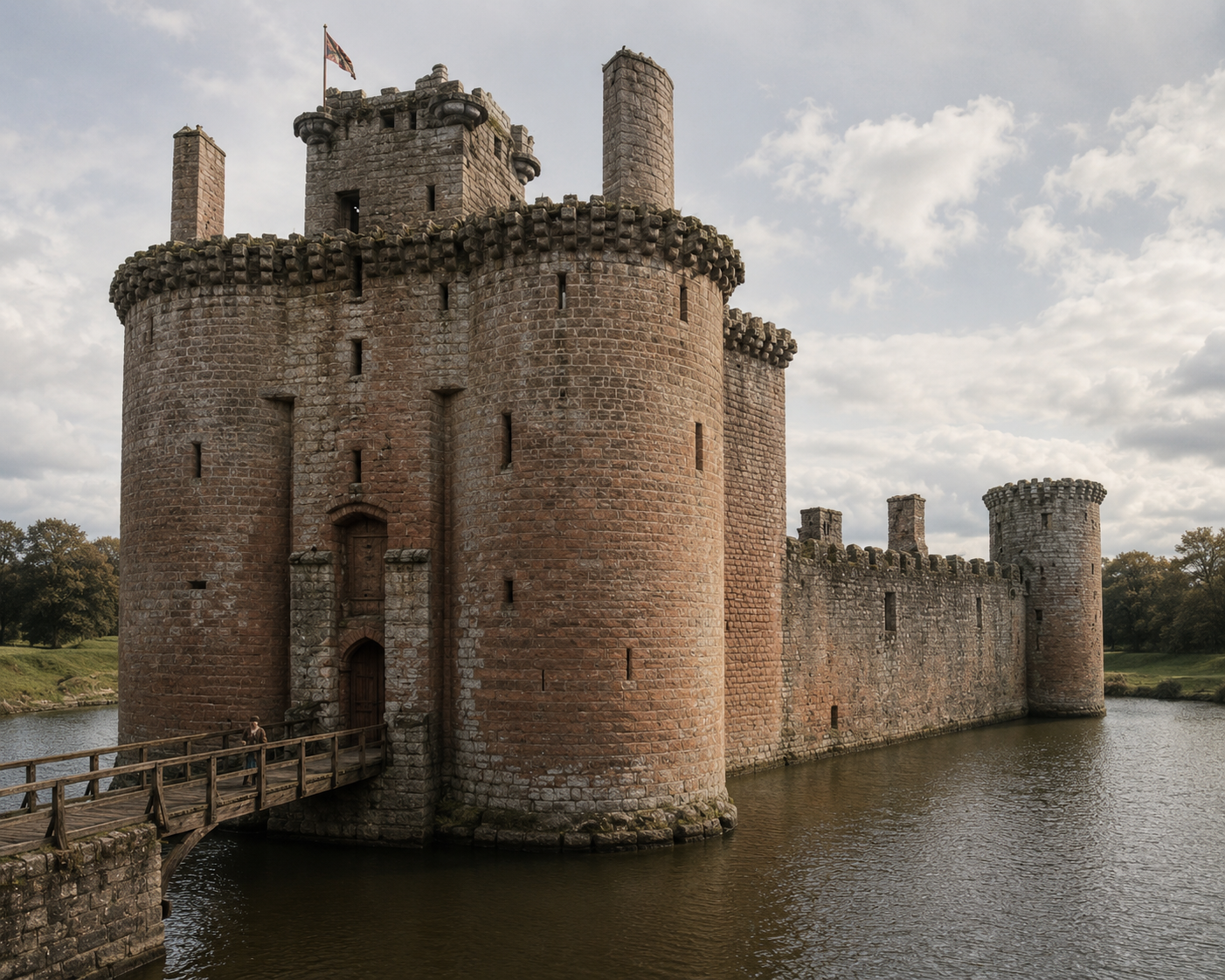
Caerlaverock Castle 1600
One such connection emerged through Sarah Maxwell and her Johnstone marriage — a union that symbolized the strange reality of Border history itself. The same world that produced feuds and killings also produced marriages meant to stabilize land, influence, and kinship between neighboring houses. And through those intertwined lines, the history surrounding Caerlaverock eventually cascades into the broader Carruthers story. For the ancestors later documented in the book ‘The Carruthers Men’ and ‘The Housewives of Holmains’, Caerlaverock was not a distant legendary castle. It was part of the landscape around them. Its towers stood within the same region their families traveled, farmed, married, negotiated, and endured. The political gravity of the Maxwell family influenced the entire district surrounding the Solway and Annandale. The Carruthers’ of Holmains lived within sight of the same Border tensions that shaped Caerlaverock’s history. These families occupied neighboring territory connected through roads, marriages, kirk sessions, land charters, military service, and generations of local memory. The fortress itself became part of the inherited atmosphere of Dumfriesshire life — looming over the western marches as a reminder of both power and instability. Even after the great Border feuds faded, the castle remained. Its walls survived civil wars, shifting crowns, religious upheaval, and the eventual pacification of the Borders under centralized rule. Moss slowly crept across the stone. Marsh birds returned to the surrounding wetlands. Roofs collapsed. Towers weathered. But Caerlaverock endured long enough to become not merely a military fortress, but a historical witness to the families who once moved around it.
Today the ruins still rise from the Solway marshes much as they did centuries ago. And for descendants tracing the old Carruthers lines of Dumfriesshire, the castle remains more than a monument. It is part of the living geography surrounding the story itself — a neighboring stronghold woven into the same Border world that shaped the people later carried into ‘The Carruthers Men’, ‘The Housewives of Holmains’, and eventually across the Atlantic into the generations that followed.