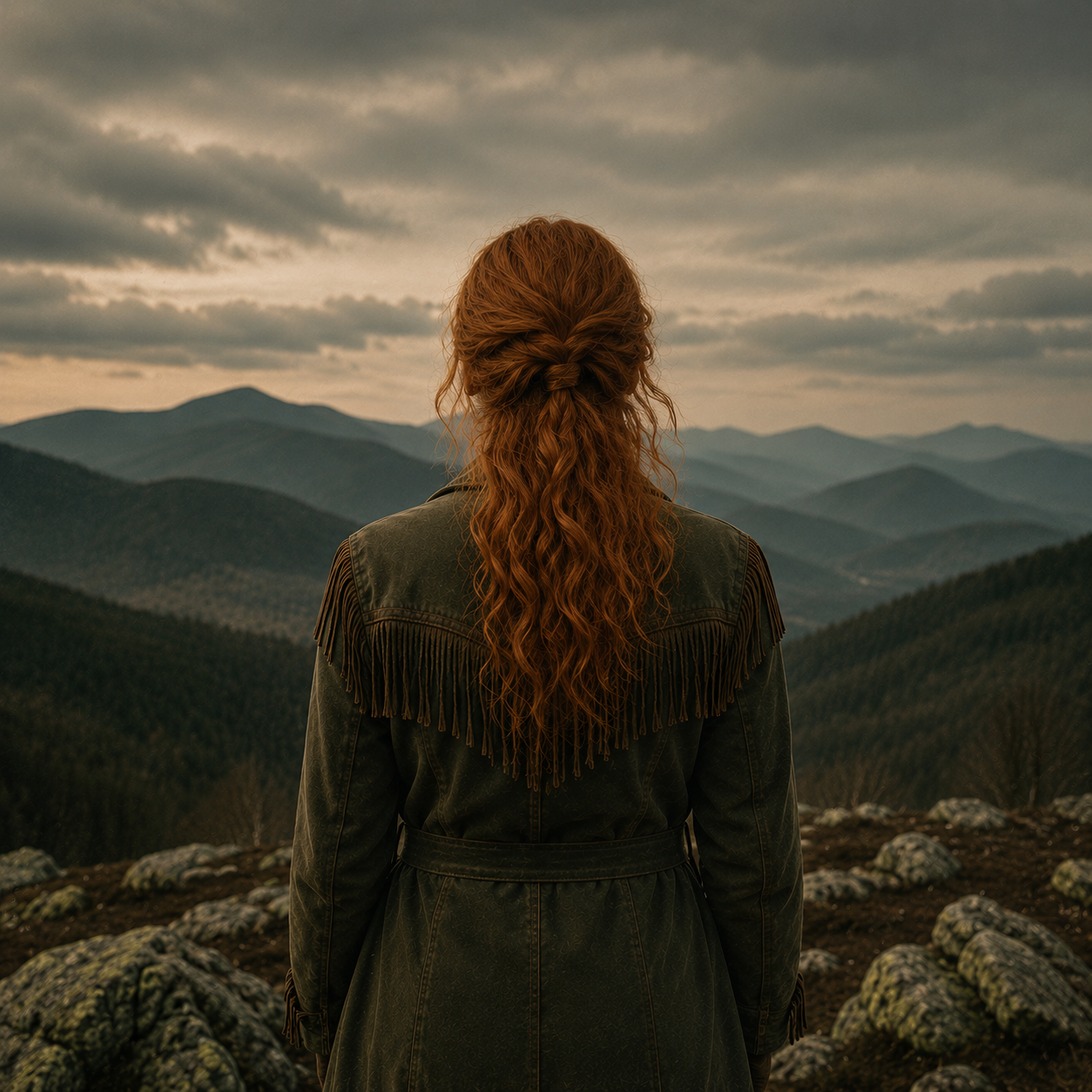
Why Border Families Left Scotland
Crossing the north channel
Long before ships carried Scots-Irish families across the Atlantic to Pennsylvania and the American frontier, another migration had already transformed their lives. It began along the western Borders of Scotland. For generations, families living in Annandale, Dumfriesshire, Liddesdale, and the Solway frontier had existed within the unstable world of the Border marches — a landscape shaped by fortified tower houses, mounted riding culture, livestock raiding, clan loyalties, and centuries of conflict between Scotland and England.
The old Border world demanded endurance. Families survived through kinship networks, mobility, defensive architecture, and intimate knowledge of the frontier landscape. Men rode armed through difficult country. Women maintained tower households under constant uncertainty. Livestock represented wealth. Reputation could determine whether neighboring families became allies or enemies. But by the early seventeenth century, the Borders began changing permanently.
In 1603, James VI of Scotland inherited the English crown and became James I of England, uniting both kingdoms beneath a single monarch. For the first time, the Anglo-Scottish border no longer divided two rival crowns. To the monarchy, the old reiving culture now became a problem. The same riding families once tolerated as frontier defenders were increasingly viewed as sources of instability. Royal authorities moved to suppress Border raiding, dismantle long-standing feuds, and pacify the western marches.
Tower houses lost much of their military purpose. Old riding routes grew quieter. Some notorious families faced executions, transportation, or confiscation of land. The frontier world began disappearing. At the same time, economic pressures increased across southern Scotland. Population growth strained available farmland while inheritance divisions reduced opportunities for younger generations. Many Border families faced difficult choices about land, tenancy, and survival in a rapidly changing political environment. And across the North Channel, opportunity emerged.
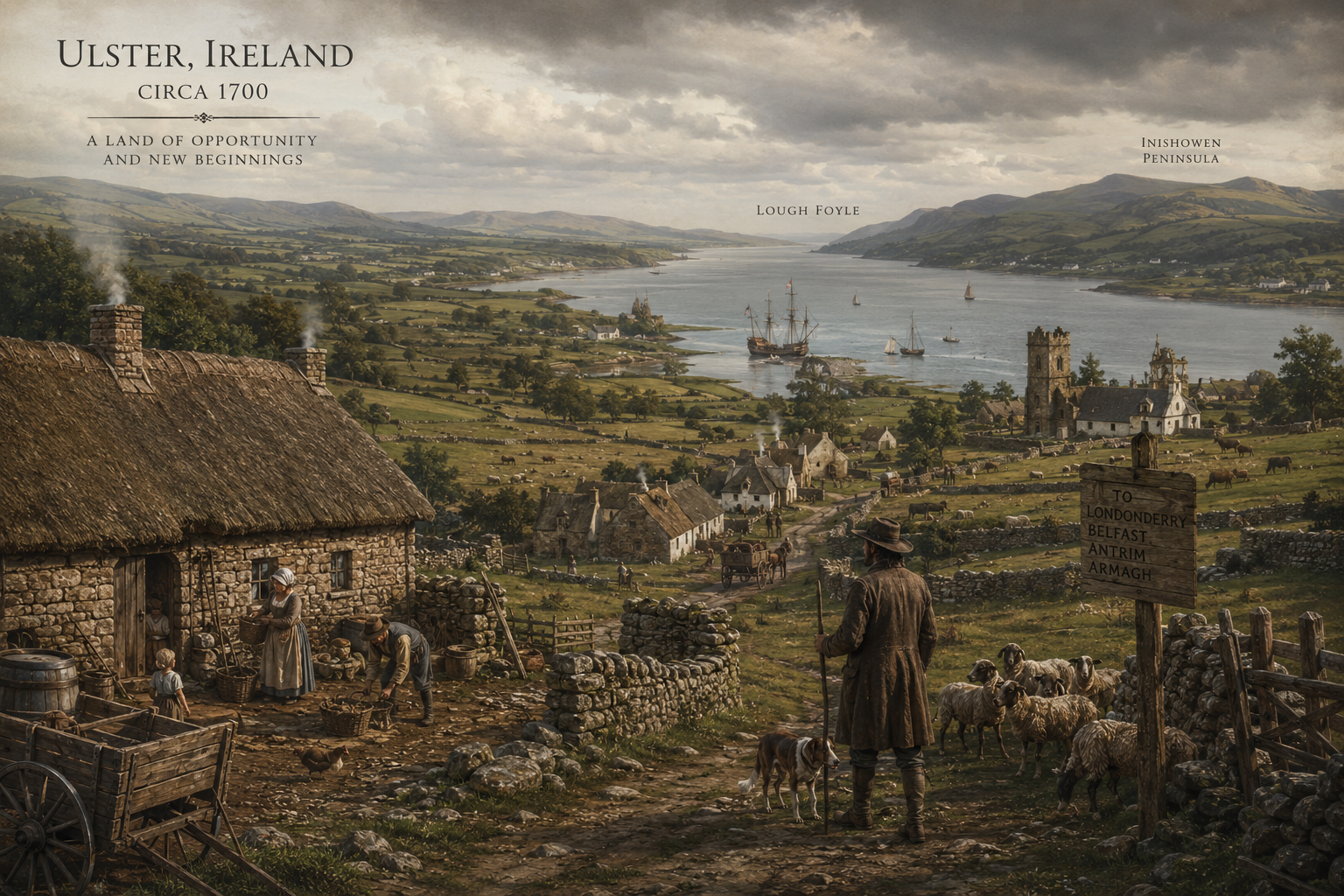
The Plantation of Ulster opened large areas of northern Ireland to Protestant settlement during the seventeenth century. Scottish families — especially Presbyterians from the Borders and Lowlands — began crossing into Ulster in growing numbers. The movement was not a single organized migration, but a gradual flow of families seeking land, stability, tenancy opportunities, trade, and a future beyond the collapsing Border frontier. Many settled in counties such as Donegal, Antrim, Tyrone, and Londonderry. For families coming from Dumfriesshire and Annandale, the journey itself was relatively short. Ferries and small vessels crossed the North Channel carrying livestock, household goods, tools, wool, seed grain, and entire family networks into Ulster.
Often these migrants did not travel alone. Surnames moved together. Neighbors followed neighbors. Kinship systems carried across the sea. They brought Border culture with them. The people arriving in Ulster already understood frontier survival. They knew how to build in difficult landscapes, organize around family networks, defend isolated settlements, and adapt to uncertain conditions. Many retained the Presbyterian traditions deeply rooted in southern Scotland. Others carried memories of tower life, riding culture, and the old frontier loyalties of the marches.
The landscape itself must have felt both familiar and foreign. The rugged hills of Donegal, the Atlantic winds, stone fields, grazing land, and isolated farms echoed parts of the old Borders, yet Ulster remained a new world requiring adaptation. Families rebuilt homes, established churches, worked difficult land, and slowly formed new communities layered atop older Irish landscapes already carrying centuries of history and conflict. Life remained difficult. Crop failures, political instability, religious tension, fluctuating rents, and economic uncertainty continued shaping daily existence across Ulster throughout the seventeenth and eighteenth centuries.
Many Scots settlers remained tenants rather than landowners. Opportunities promised during earlier plantation years often proved uneven or fragile. Yet generations endured there. Children were born in Ulster who no longer remembered the Border towers directly, though many still carried the surnames, customs, speech patterns, and inherited instincts of the Scottish frontier world their families had left behind. And eventually, another migration began.
By the early eighteenth century, increasing numbers of Scots-Irish families once again looked westward — this time across the Atlantic. Economic hardship, rising rents, political frustrations, religious pressures, and the promise of land in America pushed thousands toward ports along the Irish coast. Ships departed carrying descendants of the old Border families into Pennsylvania and the American colonies. For many, the Atlantic crossing appeared to outsiders as the beginning of a journey. But in truth, it represented the continuation of one already generations old.
The movement from Scotland into Ulster formed the middle passage between the western marches and the Appalachian frontier — linking the tower houses of Dumfriesshire to the valleys of Pennsylvania, Tennessee, Virginia, and the American South. The families did not emerge from a single homeland alone. They carried with them layers of migration: from the Borders… to Ulster… and eventually across the Atlantic into another frontier world waiting beyond the sea.