Dragons of Scotland
The Last Echoes of an Ancient Fear
Long before dragons became creatures of fantasy novels, cinema, and modern imagination, people across Europe believed they were real. In Scotland — especially throughout the Highlands, Border country, and the old Celtic landscapes — dragons appeared not simply in stories, but within place names, carved stonework, saint traditions, clan legends, and oral histories carried across generations. To medieval Scots, dragons were not viewed as “mythical” in the modern sense. They were often treated as ancient creatures tied to dangerous wilderness beyond settled land — beasts associated with fear, chaos, death, or sacred places hidden deep within the landscape.
Across Scotland, the old word wyrm was commonly used for dragon-like serpents. These creatures were usually described as enormous snake-like beasts haunting rivers, hillsides, caves, glens, and lonely stretches of countryside where ordinary people rarely traveled alone. Some stories claimed the creatures breathed poison or fire. Others guarded wells, ancient ruins, burial grounds, or hidden treasure. In a world where forests remained dense, mountains isolated entire communities, and the unknown still existed beyond the edges of settlement, such creatures did not feel impossible to those living within it.
One of Scotland’s most famous dragon traditions survives in Angus through the legend of the Strathmartine Dragon. According to local lore, a monstrous beast terrorized the countryside near present-day Dundee until it was confronted and defeated by Martin, a holy man later associated with Saint Martin of Tours. The story endured so strongly within local memory that the village itself carried the legend forward in its very name. Like many medieval dragon tales, the story blended fear, religion, and landscape together into something larger than folklore alone.
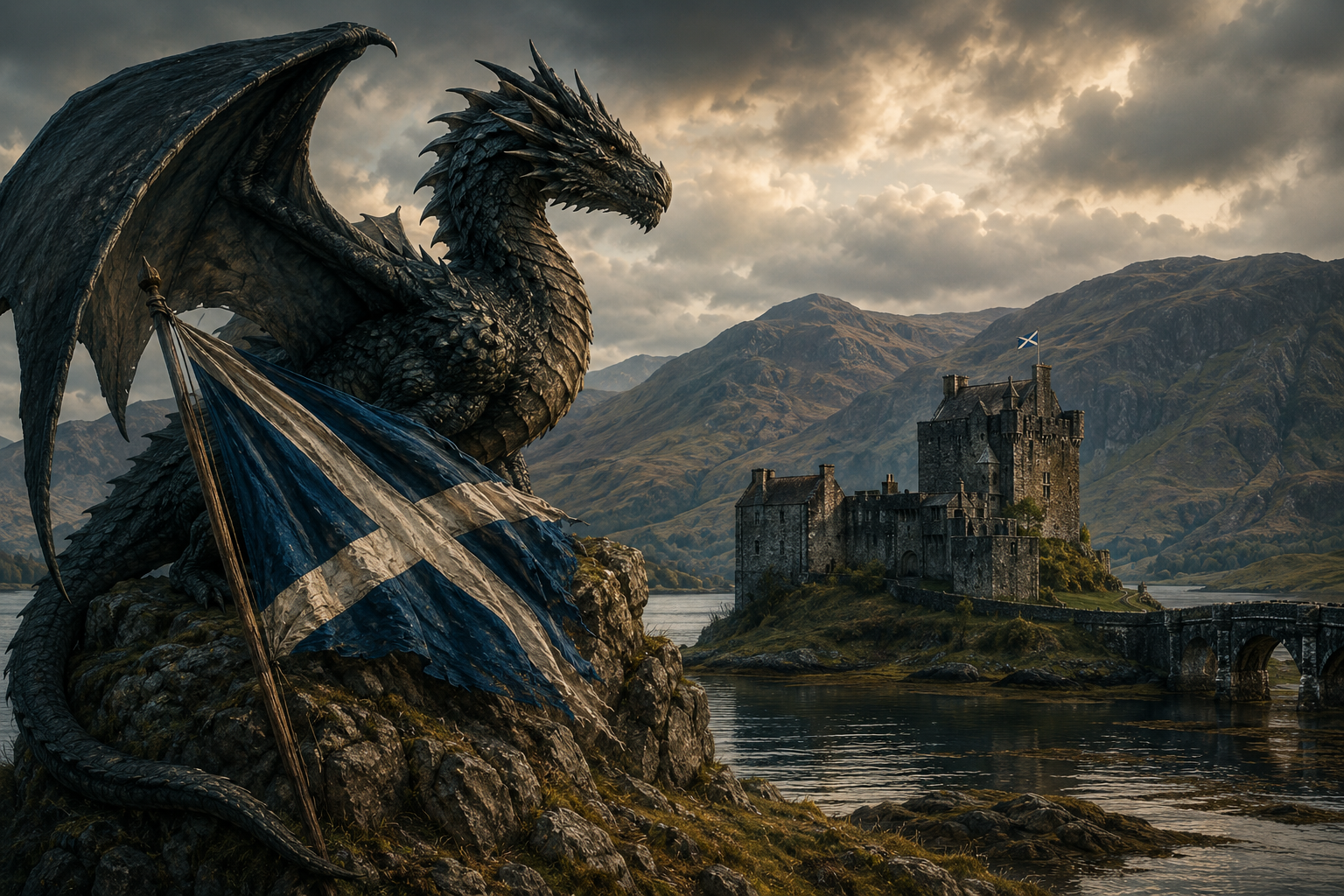
Throughout Dumfriesshire and the Borders — lands deeply tied to the old riding clans and frontier families — stories of giant worms and hill serpents also lingered for centuries. Southern Scotland’s rolling hills, ancient hill forts, standing stones, ruined towers, and mist-covered valleys created the perfect setting for such legends to survive. The Borders already carried a reputation for violence, raids, disappearances, and dangerous wilderness. Within such landscapes, stories of monstrous creatures felt like natural extensions of the land itself.
Even Edinburgh carried traces of dragon imagery throughout the medieval period. Dragons appeared within carvings, maps, heraldic art, and religious symbolism representing chaos, danger, sin, or untamed nature. Across Scotland, many dragon stories gradually became intertwined with Christianity itself. Saints, warriors, and holy figures often “defeated” serpents or worms symbolically, representing the triumph of order over wilderness and Christian belief over older pagan traditions still rooted within the countryside.
What makes these stories especially fascinating is how long many people continued treating them seriously. Belief in dragon-like creatures survived far later than most modern readers realize. Into the 1600s and even the early 1700s, isolated communities across Britain and northern Europe still recorded stories of giant serpents, lake creatures, and monstrous reptiles with genuine sincerity. Travelers’ journals, church writings, local chronicles, and fireside traditions occasionally described sightings of strange beasts moving through rivers, marshes, coastlines, or remote mountain regions. Though educated society increasingly dismissed such reports during the Enlightenment, rural folklore endured much longer.
In the Highlands and islands of Scotland, where oral tradition remained deeply powerful, belief in strange creatures persisted well into the eighteenth century. Stories of sea serpents circulated around the Hebrides and northern coasts while inland communities continued passing down tales of giant worms haunting lonely glens and hillsides. These stories survived because the landscape itself seemed ancient enough to hold them. Scotland’s mist, mountains, lochs, caves, and ruined stone towers created an atmosphere where the line between history, folklore, and imagination often blurred together.
Many historians believe dragon legends emerged through a mixture of influences layered across centuries. Ancient Celtic serpent symbolism likely played a role, as did fossil discoveries interpreted by earlier societies as monster bones. Encounters with large marine animals, unfamiliar reptiles, or strange natural phenomena may have contributed to certain stories as well. Religious symbolism shaped many medieval dragon tales, while the harsh wilderness surrounding early communities gave people genuine reasons to fear what might exist beyond the safety of firelight and village boundaries.
For Scots-Irish families who later crossed into Ulster and eventually Appalachia, many of these old fears and stories traveled with them. Echoes of dragon lore survived quietly within mountain superstitions, warnings about haunted ridges, strange lights moving through valleys, hidden creatures in deep forests, and whispered stories passed between generations. Though dragons gradually disappeared from accepted history, they never fully vanished from memory.
In many ways, dragons never entirely left Scotland at all.
They simply faded into folklore — where mist, memory, old landscapes, and the stories carried around winter fires continued keeping them alive long after the world stopped believing.