
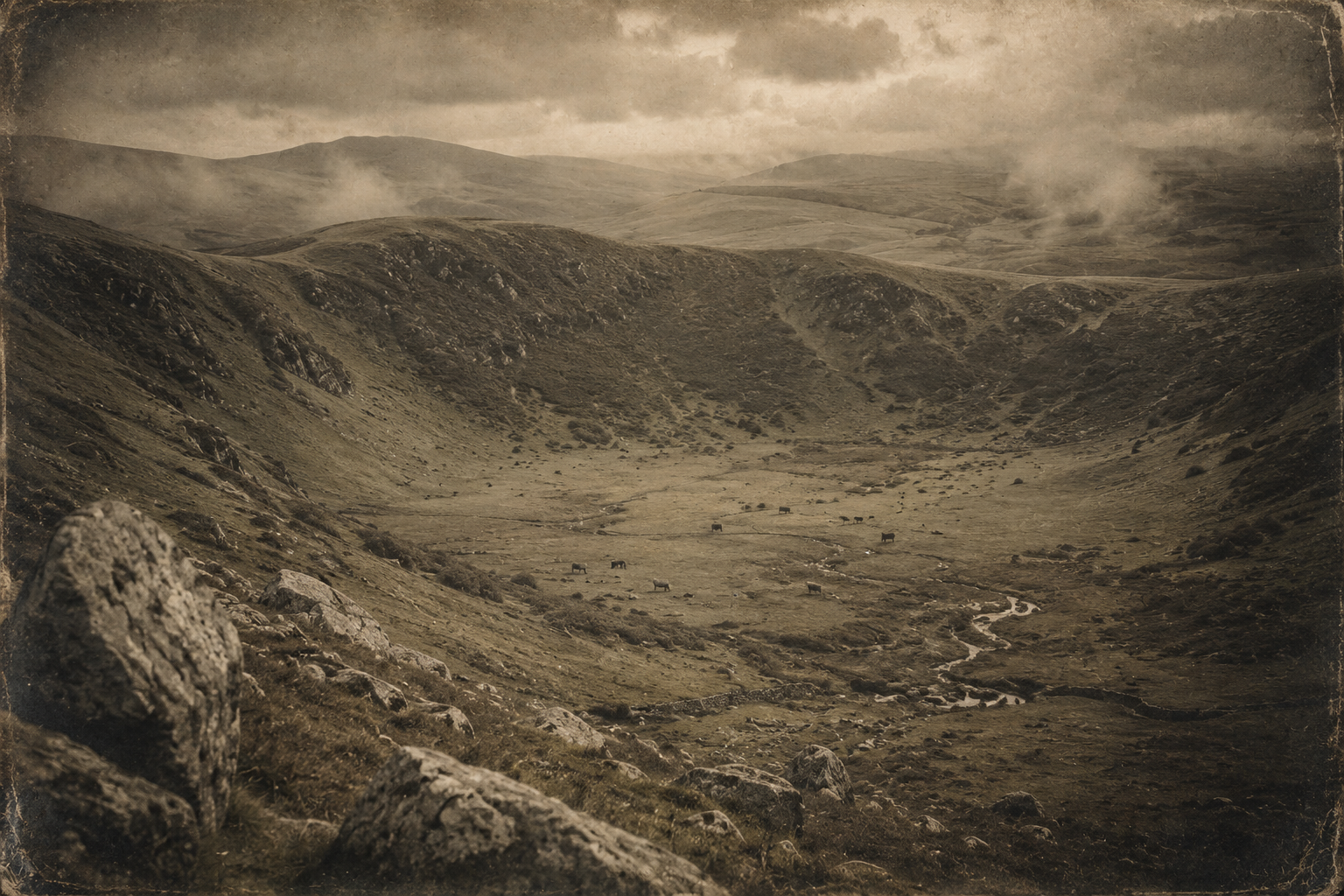
The Devil’s Beef Tub
“The name “Devil’s Beef Tub” is believed to have emerged during the violent frontier years of the sixteenth and early seventeenth centuries, when reiving families used the hollow as a temporary hiding place for stolen cattle. Raiding parties moving through the Borders could drive livestock into the concealed basin where the animals remained hidden among the hills until pursuit faded. In Border country, cattle were wealth. A successful raid could determine whether a family survived winter or collapsed into poverty. Livestock theft became deeply embedded within frontier life along the Anglo-Scottish marches where centralized authority remained weak and survival often depended upon kinship alliances, mounted mobility, and retaliation.”
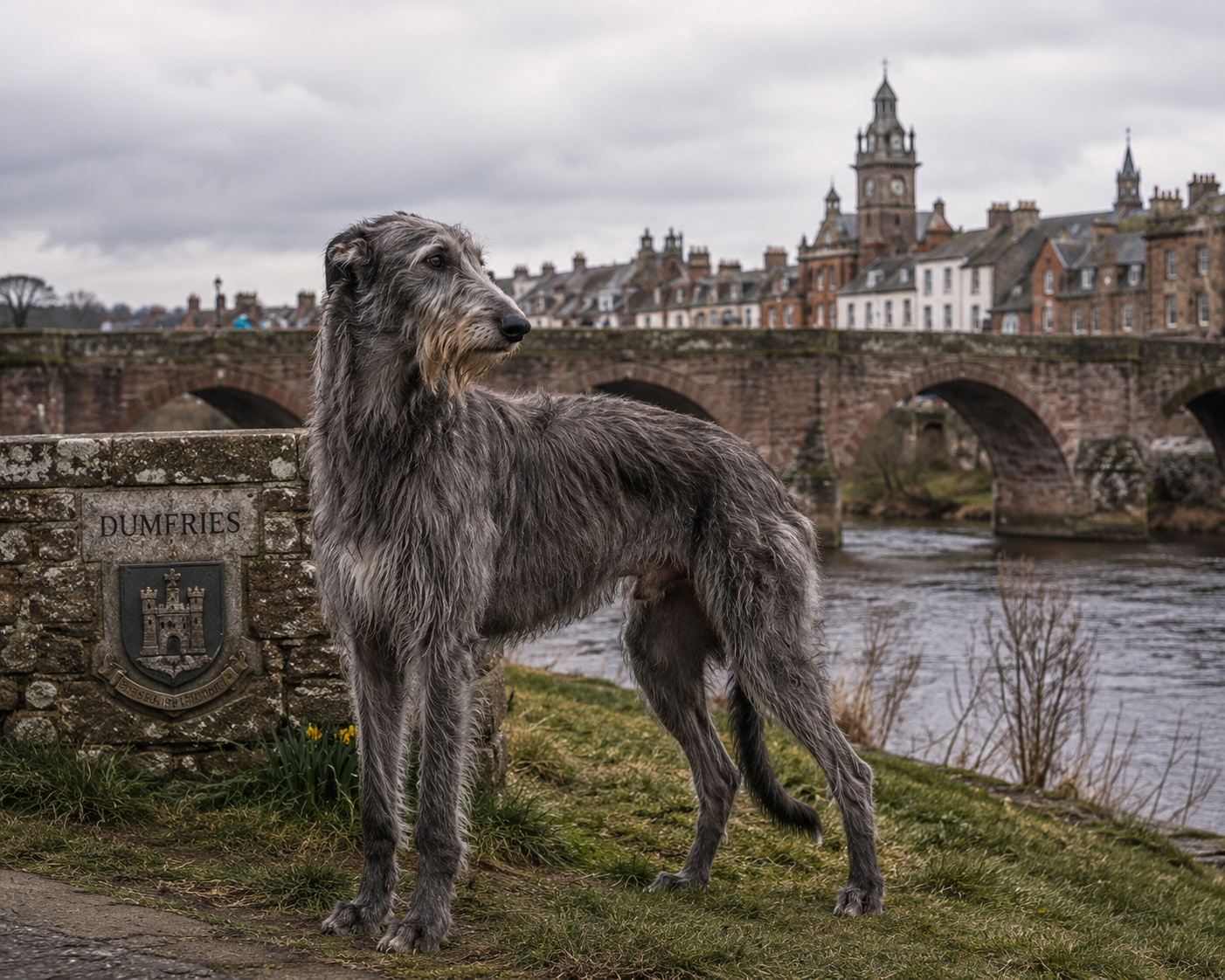
Scottish Deerhound
“The breed's roots stretch deep into Scottish history. References to large rough-coated hunting hounds appear in medieval accounts and may reach back even further into the era of the Picts. By the sixteenth and seventeenth centuries, Deerhounds had become firmly established throughout the Highlands, where vast estates and open hunting grounds provided the perfect environment for maintaining large packs.”

Dragons of Scotland
“In Scotland — especially throughout the Highlands, Border country, and the old Celtic landscapes — dragons appeared not simply in stories, but within place names, carved stonework, saint traditions, clan legends, and oral histories carried across generations. To medieval Scots, dragons were not viewed as “mythical” in the modern sense. They were often treated as ancient creatures tied to dangerous wilderness beyond settled land — beasts associated with fear, chaos, death, or sacred places hidden deep within the landscape.”