My Ship Dudes · Samuel Luckett
A Gentleman of Port Tobacco
A Diaspora Series — Samuel Luckett (1658-1705) 🚢🌊🇬🇧🇺🇸
By 1678, Samuel Luckett had already begun to make a place for himself in the New World. He is recorded as living in Charles County on the Maryland side of the Potomac, a world shaped by land, tobacco, and water. I have yet to uncover his birthdate or which ship he arrived on. Research suggests a baptism in Hastings, England. He is my 9th-great-grandfather, a primary ship ancestor in my tree.
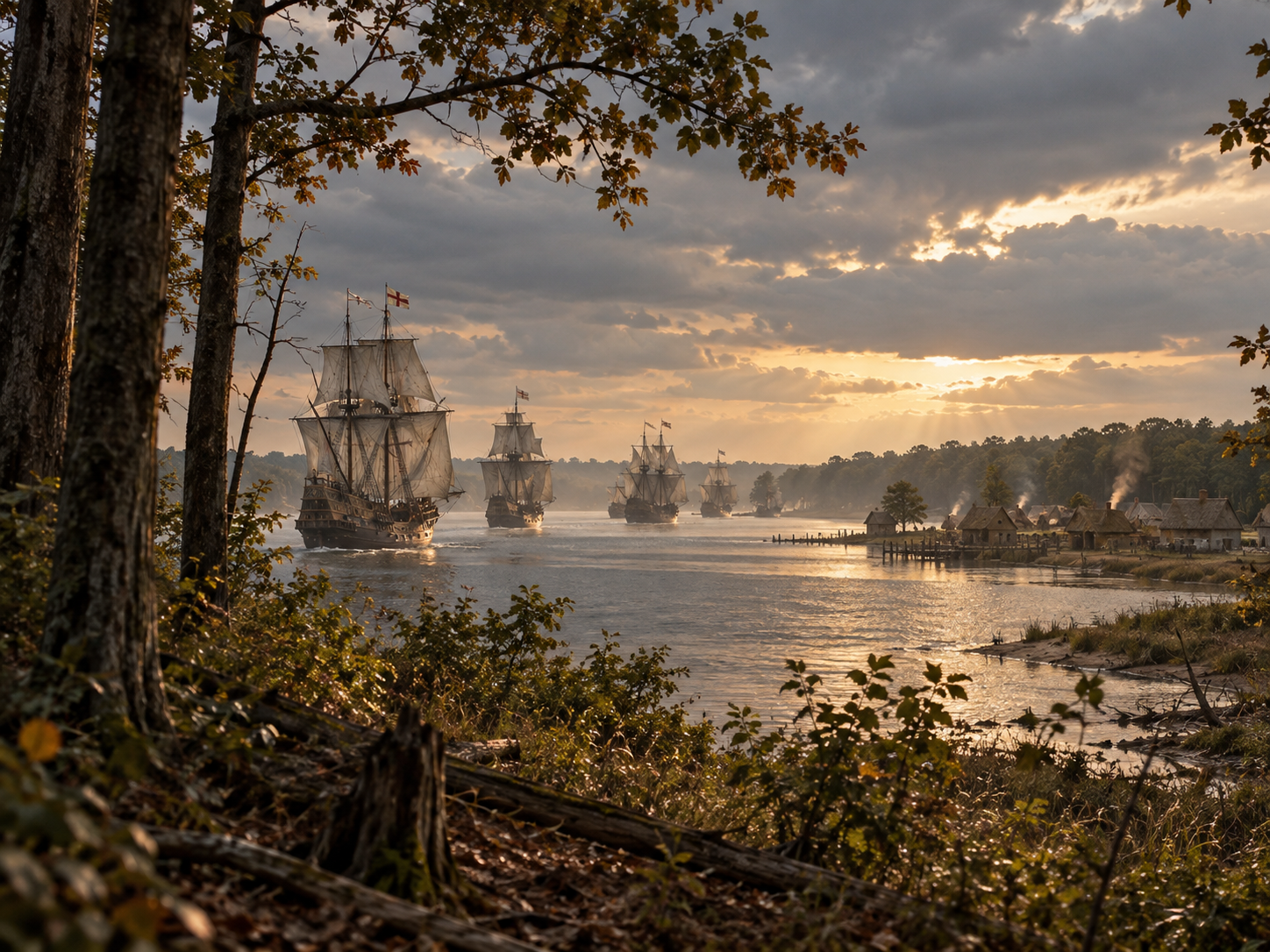
Arriving Early Colonial America 17th century
The Potomac was a huge highway along the western edge of Charles County, with smaller waterways reaching inland. Creeks, rivers, and great stretches of woodland broke up the countryside. The area around Port Tobacco had been home to the native Potapaco people. Disease, colonial expansion, and displacement had dramatically reduced the Indian population by the time Sam arrived.
He received 830 pounds of tobacco for his service in the Nanticoke Indian War in November 1678 and bought himself some land!
The land was around Zekiah Swamp, a wooded wetland that ran roughly twenty miles through Charles County before draining into the Wicomico River. Wow.
In the 1680s, the land was undergoing enormous, often violent change.
Port Tobacco was in a network of creeks and plantations, with roads and waterways connecting families. On 12 August 1684, Samuel also bought land associated with a tract called Johnson’s Choice; they completed the transaction in tobacco.
Pounds of tobacco functioned much like cash money; it was used to pay debts, purchase land, and compensate people for services, like gold.
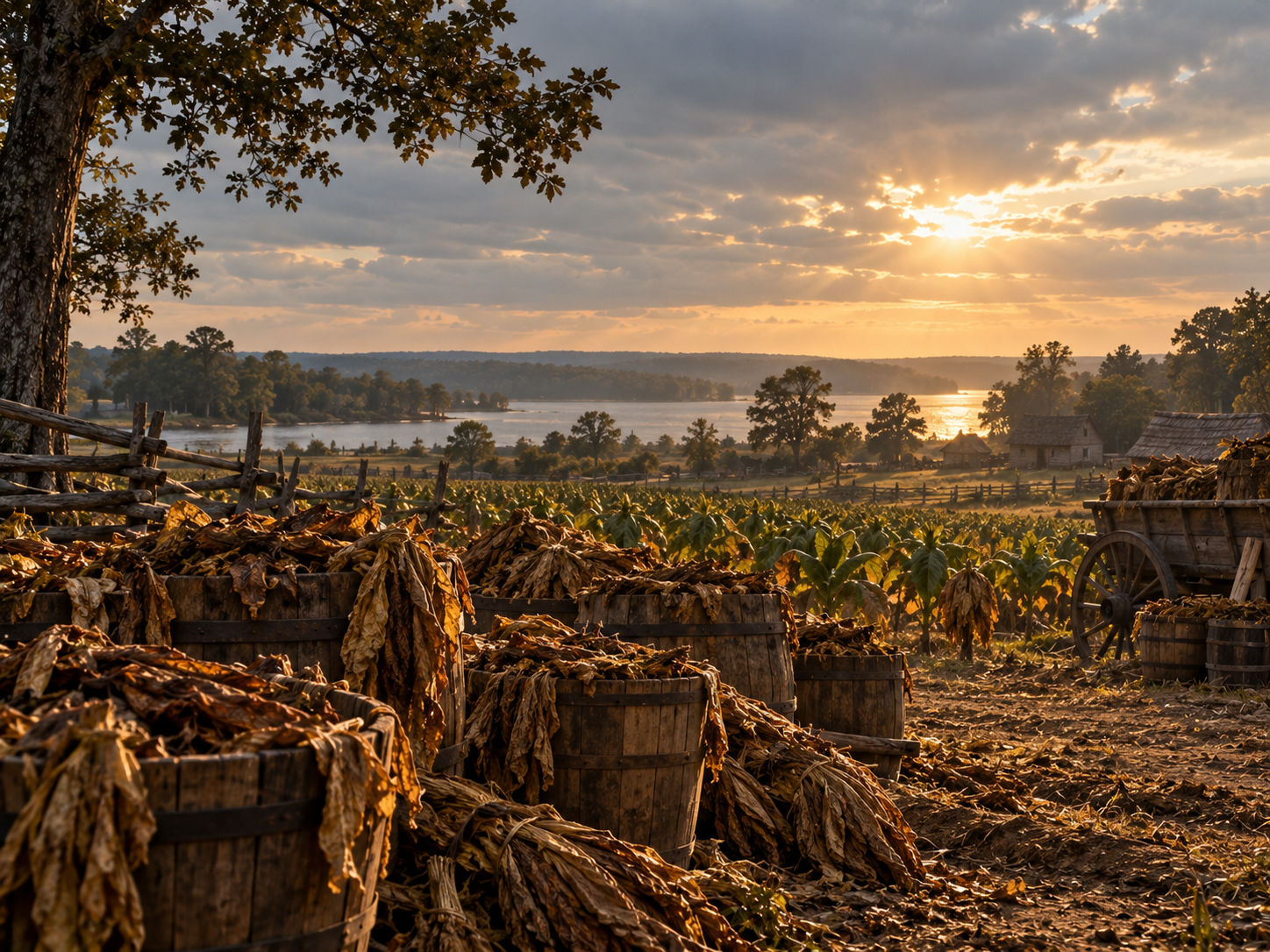
A vision of Tobacco harvested
Isn’t that just fascinating?! Growing money out of the land. I love it.
Around this same time, he married widow Elizabeth Hussey-Gardiner. She had just taken over her late husband’s estate. Samuel and Elizabeth began a property-rich union.
One little bombshell: Samuel was Anglican. Elizabeth was Catholic.
That is not a trivial household detail at all!
The Lucketts of Portobacco 📖
Samuel’s family has actually been the subject of its own book.
In 1938, genealogist Harry Wright Newman published The Lucketts of Portobacco. Harry traced Samuel Luckett and the generations who followed him in Maryland and beyond. It’s one of those old family histories, packed with names, dates and wills drawn from colonial records—and I used it in this article. Newman documented Samuel in Maryland, and even he could not identify the ship that brought him across the Atlantic either.
At the Head of Port Tobacco Creek
Samuel and Elizabeth welcomed a son in 1685, also named Samuel.
The Charles County records the parents as living ‘at the head of Portobacco Creeke.’
Those are excellent details! These are ‘living coordinates’…
The head of Port Tobacco Creek lay inland from the Potomac, where the water narrowed into the surrounding countryside.
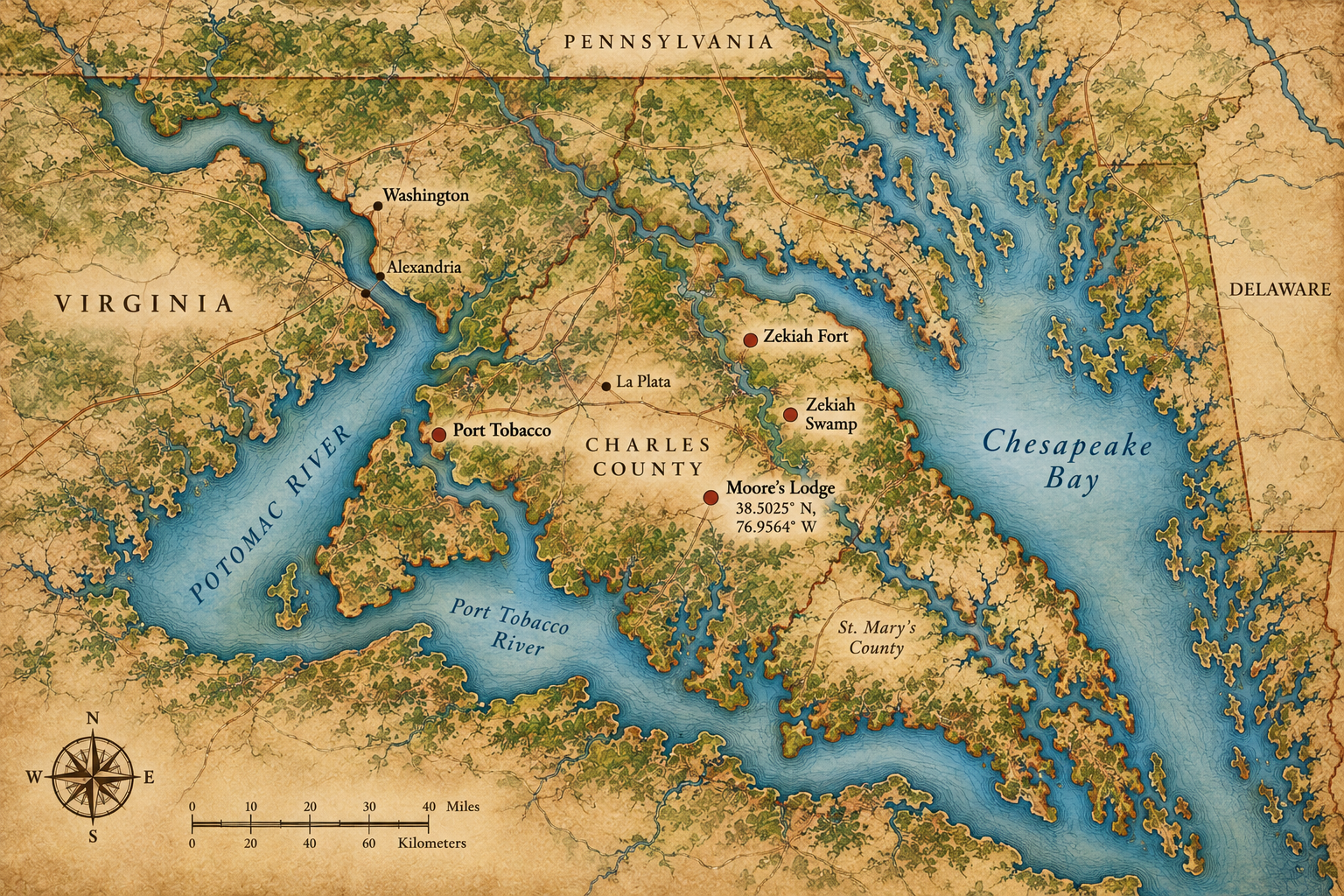
The Maryland Historical Trust record for Court House at Moore’s Lodge, archaeological site 18CH777 at — 38.5025° N, 76.9564° W
So Sam’s location was really useful. He could grow tobacco on his land around him and operate within reach of the water that carried the crop.
And the family stayed right there.
Three years later, another son, Thomas, was born. Later, my 8th-great-grandfather Ignatius Luckett was also born in January 1689 in Port Tobacco.
Port Tobacco and Zekiah had been opening rapidly to colonial settlement. Charles County land transfers increased, prices rose, and plantations spread farther.
And all of this depended on very hard, back-breaking work.
In the early years, much of that labor was still performed by indentured servants, men and women who worked a fixed number of years in exchange for passage. Charles County’s courts were constantly dealing with servants: their contracts, punishments, and attempts to gain freedom. A servant with years remaining on an indenture could be valued at thousands of pounds of tobacco.
That system was beginning to change during Sam’s lifetime.
As the supply of English servants declined during the 1680s, Chesapeake planters increasingly used ‘enslaved African labor.’ The change was gradual at first, then accelerated dramatically toward the end of the century.
Sam Steps Into Public Life
By the 1690s, Sam was no longer an English newcomer digging in along Port Tobacco Creek. He was part of the community that ran it.
In 1698, Sam became the innkeeper.
He took over the ‘ordinary’ concession at the Charles County courthouse at Moore’s Lodge.
An ‘ordinary’ was essentially a licensed tavern or inn—a place where travelers could eat, drink, perhaps find a night bed, stable a horse, exchange news, and conduct business.
Sam’s father-in-law, Thomas Hussey, had operated the first ‘ordinary’ there, and Elizabeth’s family had lived right beside the original courthouse. I wonder if that is how they met?! — because he was an official there? hmmm…
Sam’s wife basically grew up here, and they were taking it over.
I love this because suddenly Sam’s world becomes colorful & hectic!
The ‘Court days’ must have brought people in from across Charles County to the courthouse. Horses arrived with lawyers, planters, witnesses, servants, officials, defendants, and travelers who needed food and drink.
Deals were made. I bet arguments broke out. How exciting.
News arrived from elsewhere in Maryland—and from ships bringing word from England.
And Sam was standing right in the middle of it!
The mysterious immigrant who had appeared in Maryland less than twenty years earlier was now landowner, civil officer, and innkeeper.
It all tells me something more about him than a mere birth date on the tree ever could. Now, that’s microhistory.
I discovered Sam had become somebody people knew.
And I want to imagine him as a jolly fellow with the gift of gab!
The World Was Changing
While Sam raised a family, bought land, and became part of everyday life in Charles County, Maryland, a rebellion broke out in the colony in 1689. Protestant settlers calling themselves the ‘Protestant Associators’ overthrew Lord Baltimore’s puppet government.
In 1692, William and Mary made Maryland a royal colony, placing it directly under the Crown. Maryland was beginning to look more like a permanent English province.
Maryland’s first printing press was operating by 1685. Imagine no longer having to travel news through handwritten copies and/or word of mouth.
Parliament ended the Royal African Company’s monopoly in 1698 on the English slave trade. The government had fallen. A king had been overthrown. Maryland had become a royal colony. Its capital had moved. Through it all, Sam stayed put along Port Tobacco Creek.
He had watched this place change for more than twenty years.
What Sam Left Behind
Samuel and Elizabeth Luckett had four sons: Samuel Jr., Thomas, then my great grandpa Ignatius, and Thomas Hussey Luckett. An extraordinary glimpse into their family life comes only at the end. When Samuel died in 1705, they took an inventory, room by room and it contained twenty-three beds, for travelers and court visitors who needed a place to sleep.
What a lively place it must have been!
In 1698, Sam took over the ordinary; the establishment’s records mention wine, cider, rum punch, brandy, beer, flip, and even lemonade, along with meals, lodging, stabling, and pasture for horses. There was even a quarter-mile horse-racing track on the property at Moore’s Lodge, with races wagered on.
So Cool.
In the summer of 2008, St. Mary’s College of Maryland archaeologist Julie King set out to discover the lost Charles County courthouse. Old deeds had narrowed the search to about 150 acres of farmland and woods south of present-day La Plata.
Shovel testing finally uncovered evidence of the courthouse, the tavern & remains of the Hussey family property, its orchard, the fences, outbuildings, and road.
The road on the seventeenth-century plat appears to linger only as a modern gravel drive today.
But the ground remembered.
Samuel died on 18 July 1705. Elizabeth lived on for another forty-two years, surviving until 1747.
She watched their four sons grow into adulthood, get married, and carry the Luckett name into generations of folks leading to me.
And I am grateful to know their story.
For Your Reference;
Harry Wright Newman, The Lucketts of Portobacco (1938) — Newman’s original genealogical study of Samuel Luckett of Port Tobacco and his descendants. Open Library
Archives of Maryland, Vol. 7 — General Assembly Proceedings, 1678 — The contemporary colonial record naming “Samuell Luckett” and ordering payment of 830 pounds of tobacco, giving us that crucial 1678 appearance. Maryland State Archives
Colonial Encounters — Moore’s Lodge (18CH777) — St. Mary’s College archaeological research on the first Charles County courthouse, Thomas Hussey’s ordinary and dwelling, and the area later associated with Samuel Luckett.
9th Great Grandfather to author Krysta Abesamis