St. Patrick’s Day
What March 17th Meant to the Irish and Scots-Irish World
Long before modern parades, green rivers, plastic shamrocks, and crowded city celebrations, St. Patrick’s Day carried a very different meaning across Ireland and among the Scots-Irish communities connected to Ulster and the western Borders. In 1700, March 17 was not primarily a festival of spectacle. It was a religious feast day rooted in memory, identity, and survival. For many ordinary families living in Ireland at the time — including descendants of Scottish settlers in Ulster — life remained difficult and uncertain. Rural communities depended heavily upon weather, livestock, tenancy agreements, harvest stability, and fragile local economies. Religious division still shaped much of daily life across Ireland following decades of political upheaval, war, and plantation settlement. Yet even amid those divisions, the figure of St. Patrick remained deeply embedded within Irish cultural memory.
The historical Patrick was likely born during the late fourth century in Roman Britain, not Ireland itself. According to his later writings, he was kidnapped as a teenager by Irish raiders and brought across the sea into slavery somewhere in Ireland. There he spent years tending livestock before eventually escaping and returning home. But the story did not end there. Patrick later returned to Ireland as a Christian missionary, traveling throughout the island preaching, baptizing converts, and establishing early Christian communities during the fifth century. Over generations, stories surrounding him grew into legend. Medieval traditions connected Patrick with miracles, sacred hillsides, kings, monasteries, and symbolic acts that blended history with folklore. By the early modern period, St. Patrick had become the spiritual patron saint of Ireland itself.
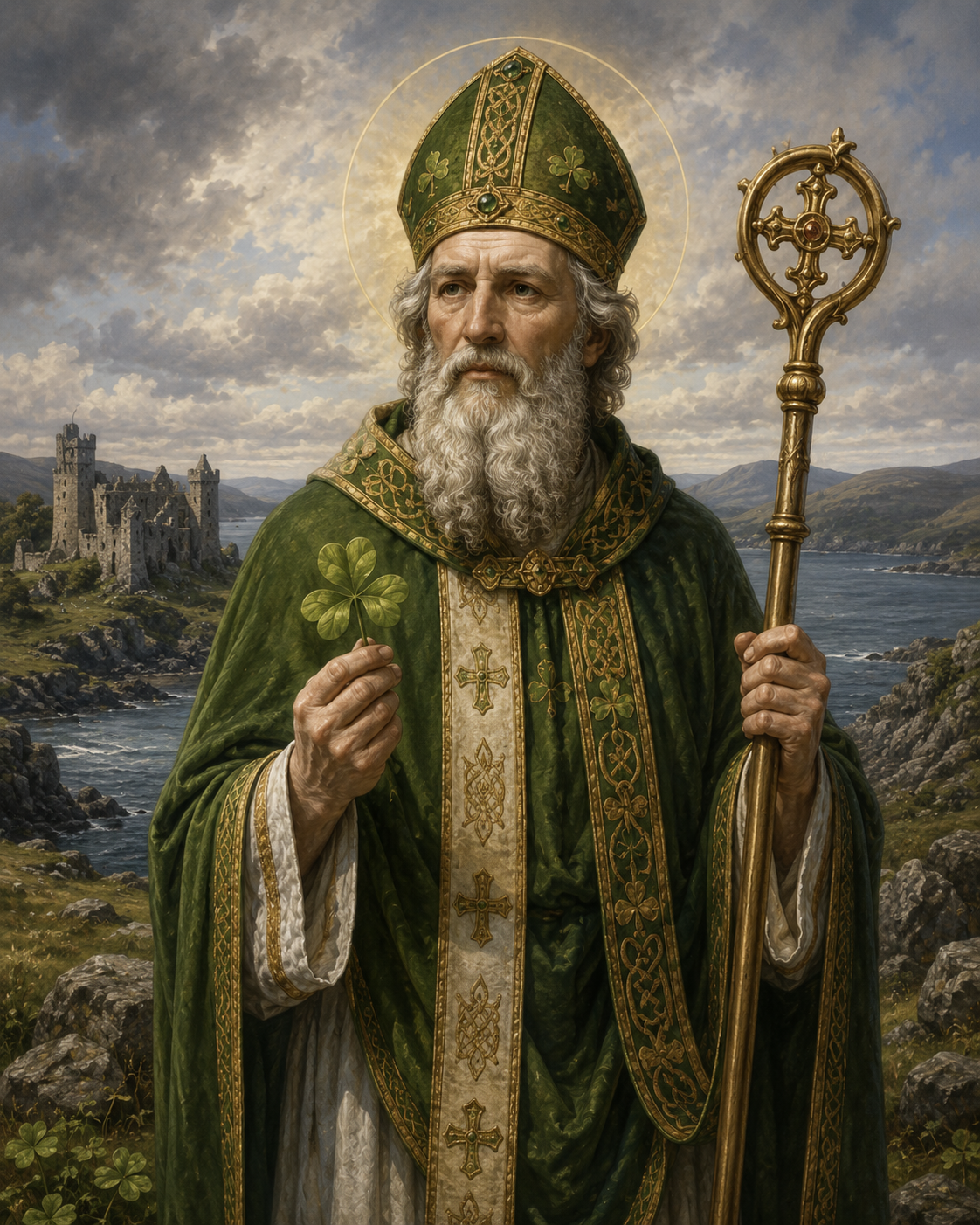
March 17 — believed to mark the date of his death — developed into a feast day observed throughout much of the island. Churches held services. Bells rang. Families gathered. In many places ordinary labor paused for the day. But the holiday looked very different from modern celebrations. In 1700 Ireland, St. Patrick’s Day was quieter, more local, and heavily shaped by religion. The feast day centered largely around church observance, seasonal gathering, hospitality, and communal identity rather than large public spectacle. And importantly, not all Irish or Scots-Irish communities experienced the day in the same way. Ulster in 1700 remained deeply divided between different religious traditions. Native Irish Catholic communities, Anglican settlers tied to the established Church of Ireland, and Presbyterian Scots families all occupied overlapping but often separate social worlds. Many Presbyterian Scots settlers in Ulster — including families carrying Border surnames from Scotland — did not necessarily celebrate St. Patrick’s Day with the same intensity or religious significance found in Catholic Irish communities. Some viewed feast days cautiously due to Protestant attitudes toward saints and older religious traditions. Yet Patrick himself often occupied a more complicated place. Even many Protestant communities acknowledged him as an early historical Christian figure tied to Ireland before later divisions between Catholic and Protestant traditions fully emerged.
Over time, Patrick became less exclusively associated with one denomination and more broadly connected to Irish identity itself. By 1700, the Scots-Irish communities of Ulster were already developing a blended frontier culture. Families who had crossed from Scotland into Ireland during the Plantation period carried with them Presbyterian traditions, Border customs, riding culture, and inherited memories of the western marches. Yet generations born in Ulster also developed attachments to Irish landscapes, local customs, seasonal rhythms, and the shared hardships of life on the island. March 17 existed within that evolving world. A family in Donegal or Londonderry might spend the day attending kirk or church services before gathering around hearth fires for shared meals and conversation. Travelers crossed muddy roads between settlements. Livestock still required tending. Smoke drifted from stone cottages beneath gray Atlantic skies while communities paused briefly within the rhythm of ordinary rural life.
Outside the churches, spring itself was beginning to return. The worst of winter often started loosening its hold across the hills and fields of Ireland by mid-March. Sheep lambed in upland pastures. Coastal winds softened slightly. Farmers prepared for planting seasons ahead. Seasonal feast days frequently carried agricultural meaning alongside religious observance in rural communities where survival depended closely upon the land. And only decades later, many of these same Scots-Irish families would leave Ireland altogether. Ships departing Ulster in the eighteenth century carried descendants of both Scottish Border settlers and older Irish communities across the Atlantic into Pennsylvania, Virginia, the Appalachians, and the American frontier. Along with language, religion, songs, and family names, they also carried fragments of seasonal memory and inherited cultural traditions connected to Ireland itself. St. Patrick’s Day eventually transformed dramatically in America. Large public celebrations developed especially among Irish immigrant communities during the nineteenth century. Parades, civic events, political identity, and public expressions of Irish heritage expanded the holiday far beyond its older religious origins. But back in 1700, March 17 remained something quieter. It was a day shaped by church bells, uncertain weather, rough roads, peat fires, and communities pausing briefly within the difficult rhythm of life in Ireland.