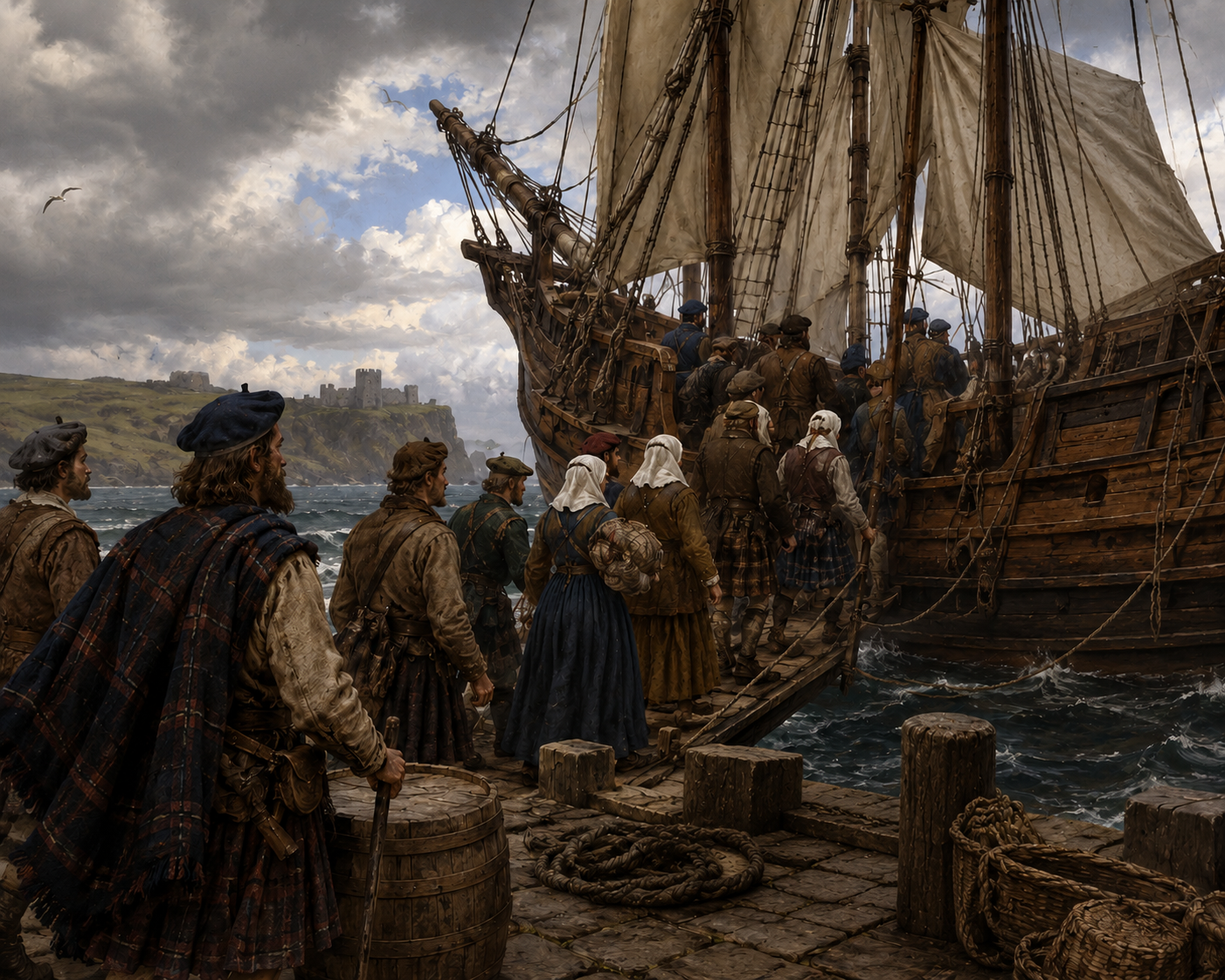
Crossing Over to Ulster
Krysta Abesamis Krysta Abesamis

Crossing Over to Ulster

“It began with Scotland looking westward toward Ulster. The movement had deep roots stretching back into the medieval period. Scottish warriors, merchants, churchmen, and settlers had crossed into Ireland for centuries, particularly along the northeastern coast. The sea routes between Galloway, Ayrshire, the Hebrides, and Ulster formed part of an interconnected maritime world where movement was common and identities often overlapped.”

Read More
Moffat 1690
Krysta Abesamis Krysta Abesamis

Moffat 1690

“Moffat did not begin as a planned town. Like many settlements in southern Scotland, its origins stretch deep into the medieval period. The name is believed to derive from the Gaelic Magh Fada—meaning "long plain"—a fitting description for the broad valley lying beneath the surrounding hills. The area had been occupied for centuries before written records appeared. Ancient Britons, Romans, and early medieval peoples all moved through Annandale, using the natural passes that connected Scotland to northern England. The nearby Annan Water carved a route through the hills that travelers, traders, soldiers, and drovers followed for generations.”

Read More
The Devil’s Beef Tub
Krysta Abesamis Krysta Abesamis

The Devil’s Beef Tub

“The name “Devil’s Beef Tub” is believed to have emerged during the violent frontier years of the sixteenth and early seventeenth centuries, when reiving families used the hollow as a temporary hiding place for stolen cattle. Raiding parties moving through the Borders could drive livestock into the concealed basin where the animals remained hidden among the hills until pursuit faded. In Border country, cattle were wealth. A successful raid could determine whether a family survived winter or collapsed into poverty. Livestock theft became deeply embedded within frontier life along the Anglo-Scottish marches where centralized authority remained weak and survival often depended upon kinship alliances, mounted mobility, and retaliation.”

Read More