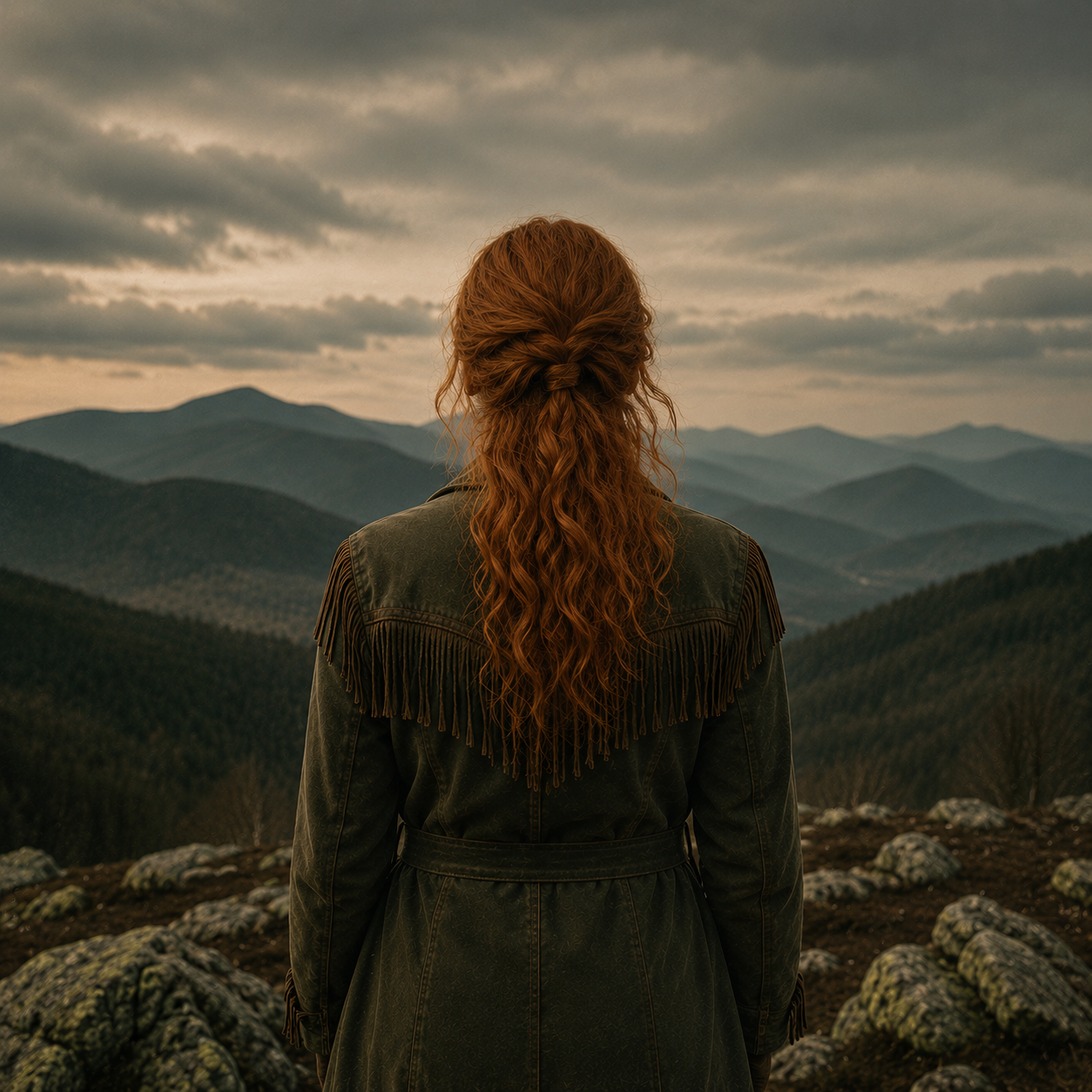
The Devil’s Beef Tub
The Hidden Hollow of the Border Reivers
High in the hills of Annandale, where mist settles across the moorlands and old roads vanish into the Scottish Borders, there lies an enormous natural hollow known for centuries as the Devil’s Beef Tub. Even today the place feels isolated. The surrounding hills rise in sweeping ridges around a vast bowl-shaped depression cut deep into the landscape near the headwaters of the River Annan. In winter the fog hangs low across the valley. Wind moves across the open ground with little interruption. Sheep graze where mounted riders once disappeared into the hills.
To travelers crossing the Borders centuries ago, the place carried an ominous reputation. And for the Border Reivers, it became legendary. The name “Devil’s Beef Tub” is believed to have emerged during the violent frontier years of the sixteenth and early seventeenth centuries, when reiving families used the hollow as a temporary hiding place for stolen cattle. Raiding parties moving through the Borders could drive livestock into the concealed basin where the animals remained hidden among the hills until pursuit faded. In Border country, cattle were wealth. A successful raid could determine whether a family survived winter or collapsed into poverty. Livestock theft became deeply embedded within frontier life along the Anglo-Scottish marches where centralized authority remained weak and survival often depended upon kinship alliances, mounted mobility, and retaliation.
The Devil’s Beef Tub sat within ideal reiver terrain.
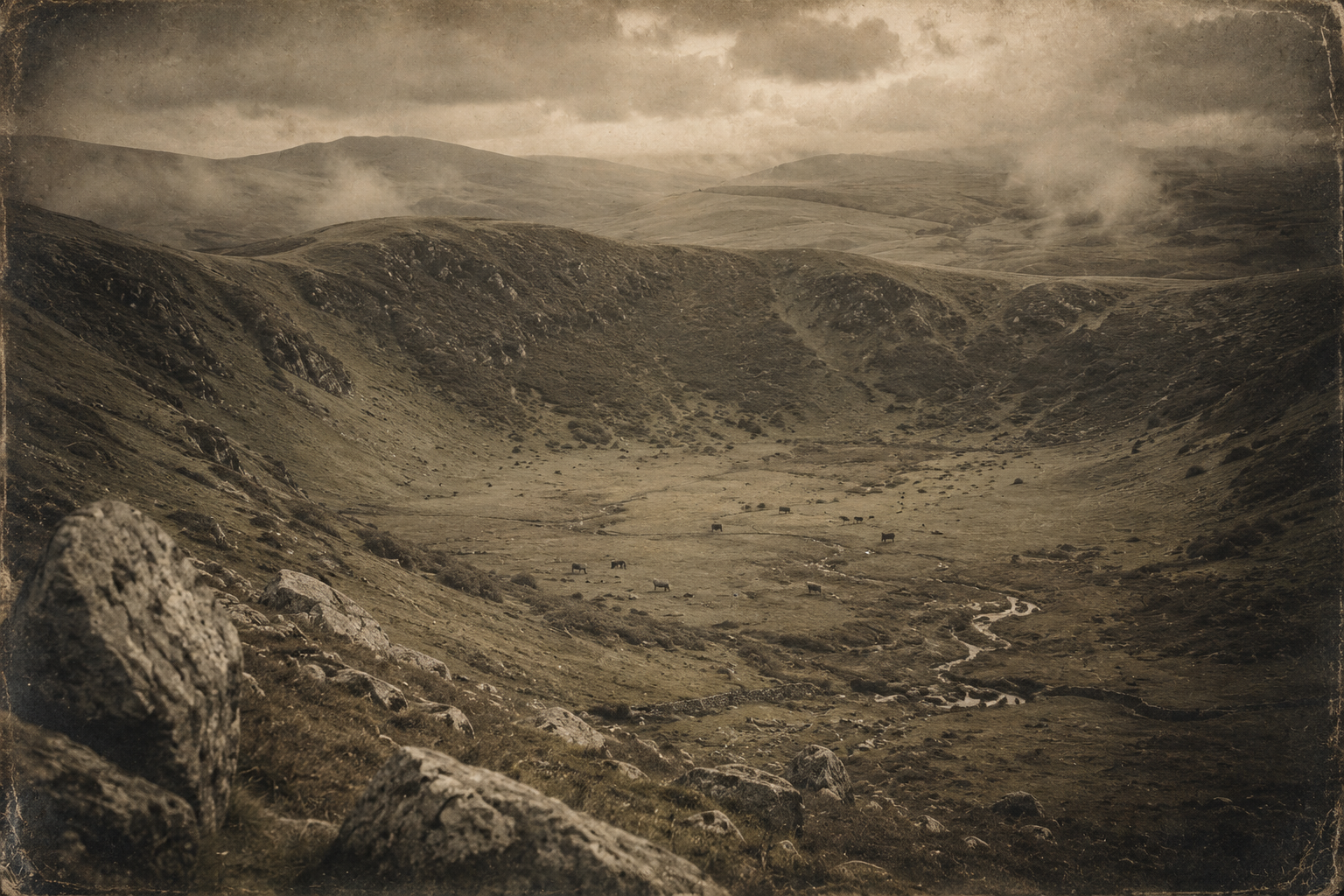
The Devil’s Beef Tub 1700
The surrounding uplands of Annandale connected a network of old riding routes through the Borders — pathways known intimately by the Carruthers, Johnstones, Armstrongs, Bells, Irvings, and other frontier families whose lives unfolded across this unstable region. Riders could move quickly through valleys, disappear into hills, and cross difficult country long before organized forces could respond.
At night, stolen cattle driven into the hollow would vanish beneath darkness and fog. The silence of the hills concealed movement. Hooves softened against wet ground. Smoke from distant towers drifted across the valleys while armed riders kept watch from the surrounding slopes. The landscape itself became part of Border strategy. To modern visitors the area appears peaceful — rolling green hills, winding roads, scattered sheep, and open sky. But during the reiving centuries, this country functioned almost like a frontier war zone where geography determined survival. And nearby stood the lands associated with the Carruthers family. The old Carruthers territories of Annandale and Dumfriesshire existed within the same world shaped by these riding routes and frontier conditions. Families connected to Holmains, Mouswald, and neighboring Border lands would have known the region intimately.
The hills surrounding the Devil’s Beef Tub were not distant wilderness to them, but part of the lived geography of the western marches.
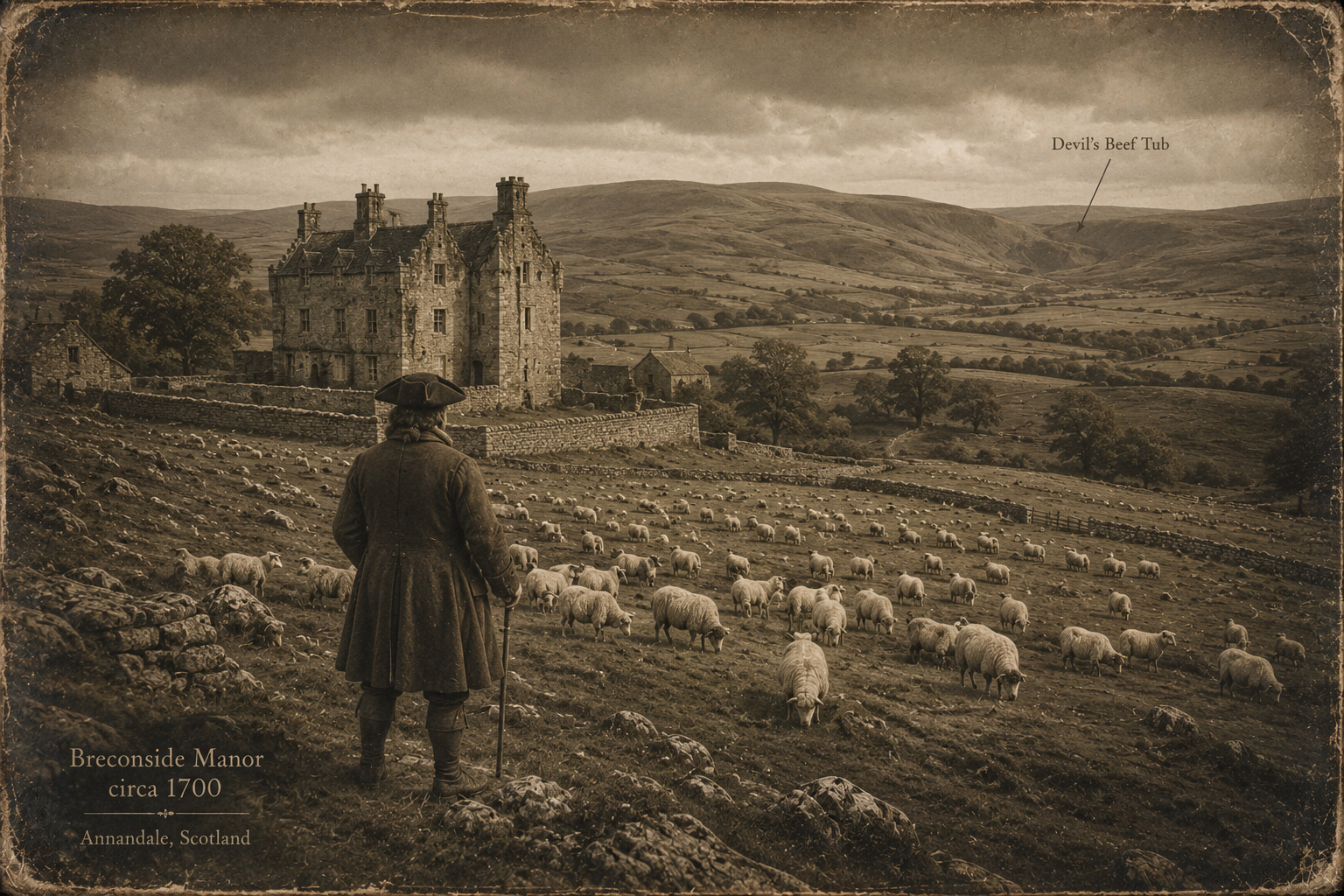
Nearby Breconside Manor stood within this broader Border landscape.
Long before later generations crossed into Ulster or America, the ancestors connected to ‘The Carruthers Men’ and ‘The Housewives of Holmains’ books by Krysta Abesamis moved through a world defined by fortified towers, kinship loyalties, mounted travel, and difficult upland terrain.
Roads remained rough. Journeys were dangerous. Information traveled by riders and family networks rather than centralized government. The Borders produced a culture of endurance. Children grew up hearing stories of raids, feuds, and retaliation. Tower houses rose from valleys as defensive homes rather than symbols of luxury. Livestock stayed close to fortified walls at night. Families learned quickly which roads were safe, which surnames carried danger, and where riders could disappear into the hills. Places like the Devil’s Beef Tub became woven into that inherited memory. The hollow itself also occupied an important geographic position near one of the principal routes north through Annandale.
Travelers moving between Scotland and England passed through nearby valleys for centuries. Armies crossed the region. Merchants traveled it. Reivers exploited it. Migrants later departed through it as the Borders slowly transformed from a militarized frontier into quieter agricultural country. But the old atmosphere never fully vanished. Even now the hills surrounding the Devil’s Beef Tub carry a strange stillness. Weather moves rapidly across the landscape. Clouds descend without warning. Roads curve through open ground once watched by mounted riders. The emptiness itself preserves part of the old Border feeling.
For descendants tracing the Carruthers lines of Dumfriesshire, the Devil’s Beef Tub represents more than folklore or scenery. It remains part of the physical world surrounding the families documented later in the book ‘The Carruthers Men’— a neighboring landmark tied to the same frontier culture that shaped the western marches for generations. Before ships crossed the Atlantic… before Ulster… before Appalachia… there were these hills.
And hidden among them was one of the most infamous hollows in all the Border country.