Scottish Deerhound
The Noble Hunter That Refused to Disappear
Few animals are more closely tied to Scotland's history than the Scottish Deerhound. Tall, powerful, and unmistakably elegant, the breed has long been associated with Highland chiefs, ancient hunting traditions, and the rugged landscapes of northern Scotland. Yet what many people do not realize is that the Scottish Deerhound came dangerously close to extinction. Its survival was never guaranteed. In many ways, the history of the Deerhound mirrors the history of the Highlands themselves.
For centuries, the Deerhound was considered the great hunting dog of the Scottish nobility. Long before firearms transformed hunting, these remarkable hounds were bred to pursue and bring down red deer across some of the most difficult terrain in Britain. Their speed, endurance, and intelligence made them invaluable companions to Highland chiefs and landowners. Possessing a Deerhound was once regarded as a mark of status, and ownership was often restricted to those of noble rank.
The breed's roots stretch deep into Scottish history. References to large rough-coated hunting hounds appear in medieval accounts and may reach back even further into the era of the Picts. By the sixteenth and seventeenth centuries, Deerhounds had become firmly established throughout the Highlands, where vast estates and open hunting grounds provided the perfect environment for maintaining large packs.
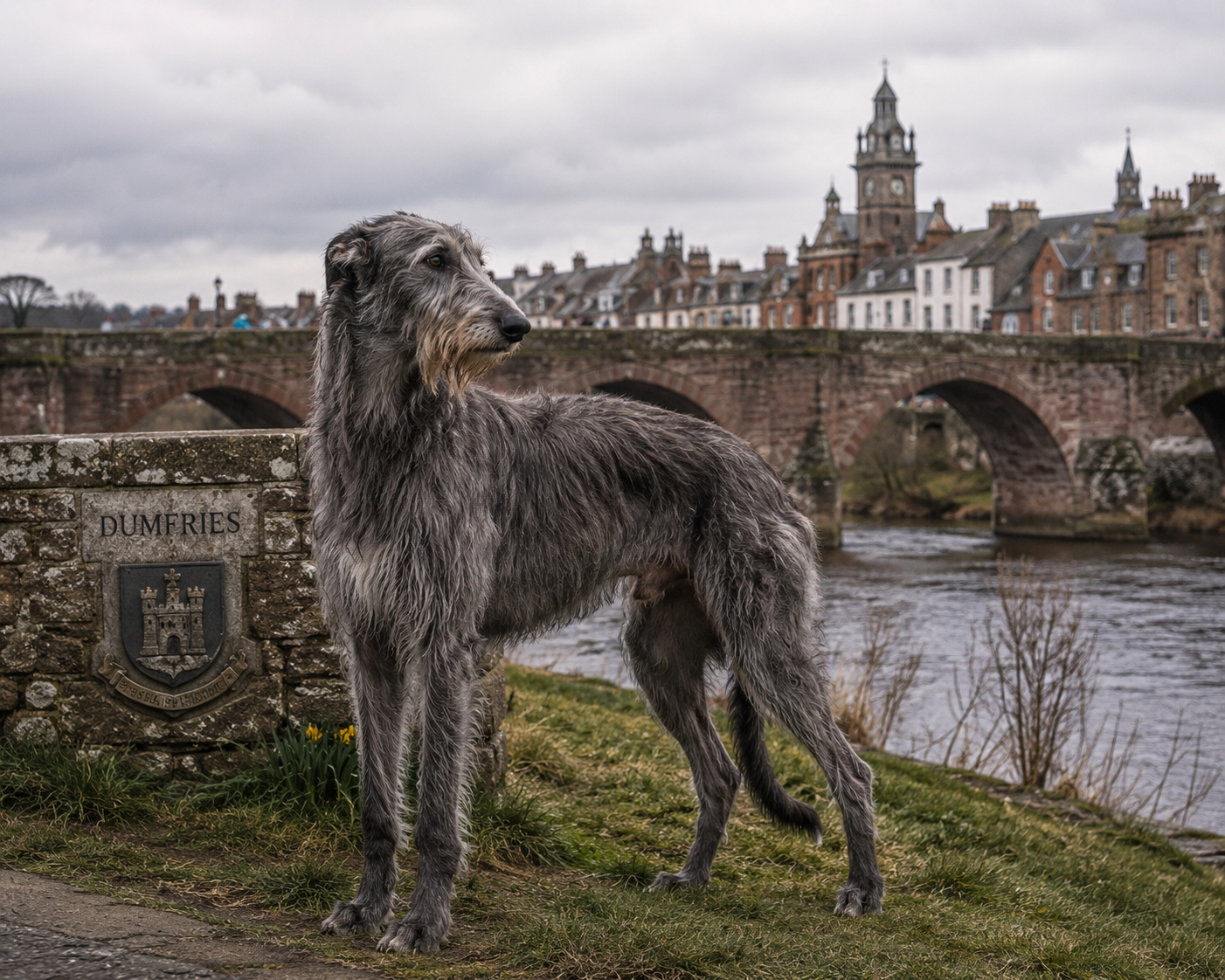
Unlike many modern sporting breeds developed for specialized kennel programs, the Deerhound evolved as a practical working animal. It was bred for function rather than appearance. Every feature served a purpose. Its long legs allowed it to cover ground quickly across moorland and mountain slopes. Its rough coat protected it from Scotland's cold winds and rain. Its deep chest and powerful lungs provided the stamina necessary to pursue deer over long distances.
For generations, the breed thrived alongside the clan system that dominated Highland society. Chiefs maintained hunting grounds. Estates supported large households. Deer hunting remained both a necessity and a symbol of authority. As long as the old Highland order endured, the Deerhound had a place within it.
Then came the eighteenth century. The Jacobite Rising of 1745 would change Scotland forever.
When Prince Charles Edward Stuart launched his final attempt to reclaim the British throne, thousands of Highland clans rallied to the Jacobite cause. The campaign ended in disaster at the Battle of Culloden in 1746. In the years that followed, the British government moved aggressively to dismantle the traditional Highland way of life. Clan authority was weakened. Weapons were confiscated. Tartan and Highland dress were restricted. Traditional social structures that had existed for centuries began to collapse.
There is a detail often overlooked in the history of Scottish Deerhounds: during the Jacobite aftermath of the eighteenth century, when Highland culture was actively suppressed and clan structures dismantled, the collapse of the great Highland households that kept these dogs nearly erased the breed entirely from Scotland. As estates changed hands and traditional hunting practices declined, the dogs themselves began disappearing.
What saved them was not a national effort. There was no organized campaign to preserve the breed. Instead, a handful of private individuals refused to let the line end.
Among the most important were Archibald and Duncan McNeill of Colonsay during the nineteenth century. Working from the remaining examples they could locate, they carefully rebuilt breeding lines and preserved the characteristics that made the Deerhound unique. Other dedicated enthusiasts joined the effort, recognizing that they were preserving more than a dog. They were safeguarding a living piece of Scottish history.
The breed's survival is itself a small act of cultural resistance.
By the Victorian era, interest in Highland traditions had begun to recover. Romantic fascination with Scotland's past encouraged renewed appreciation for Deerhounds, tartans, castles, and clan history. The breed slowly regained popularity and eventually became recognized around the world as one of Scotland's national dogs.
Yet despite this recovery, Deerhounds never became common. Even today they remain relatively rare. Their size, exercise requirements, and specialized nature have prevented them from becoming a widespread household breed. In many ways, this rarity preserves some of their historic character. Encountering a Deerhound still feels like encountering a survivor from another age.
To stand beside a Scottish Deerhound is to glimpse something ancient. Their silhouette has changed little from the dogs that once raced across Highland glens beneath the gaze of clan chiefs. Their instincts were forged in the mountains and moors of Scotland long before modern dog shows or breed standards existed.
The story of the Scottish Deerhound is ultimately not just about dogs. It is about survival. It is about the resilience of culture, memory, and tradition. Like the Highlands themselves, the Deerhound endured years when its future seemed uncertain. It survived because a few people believed some things were worth preserving.
Today, the breed stands as one of Scotland's most remarkable living connections to its past—a reminder that history does not survive by accident. Sometimes it survives because someone refuses to let it disappear.