The Comet of 1811
In the autumn of 1811, the people living across Tennessee and the Blue Ridge mountains looked upward and saw something many believed was a warning from Heaven itself. Night after night, a blazing comet stretched across the sky — bright enough to cast light over fields, rivers, cabins, and mountain roads. It became known as the Great Comet of 1811, visible to the naked eye for nearly nine months, one of the longest and most spectacular comet appearances ever recorded. For families of Scots-Irish descent living in the hills and valleys of Tennessee, western North Carolina, and the Appalachian frontier, the sight would have been unforgettable. Many still carried older beliefs from Scotland and Ulster that comets were omens tied to death, war, famine, or upheaval. In isolated settlements where news traveled slowly and the wilderness still pressed close around the edges of daily life, the comet became part of conversation, fear, prayer, and folklore.
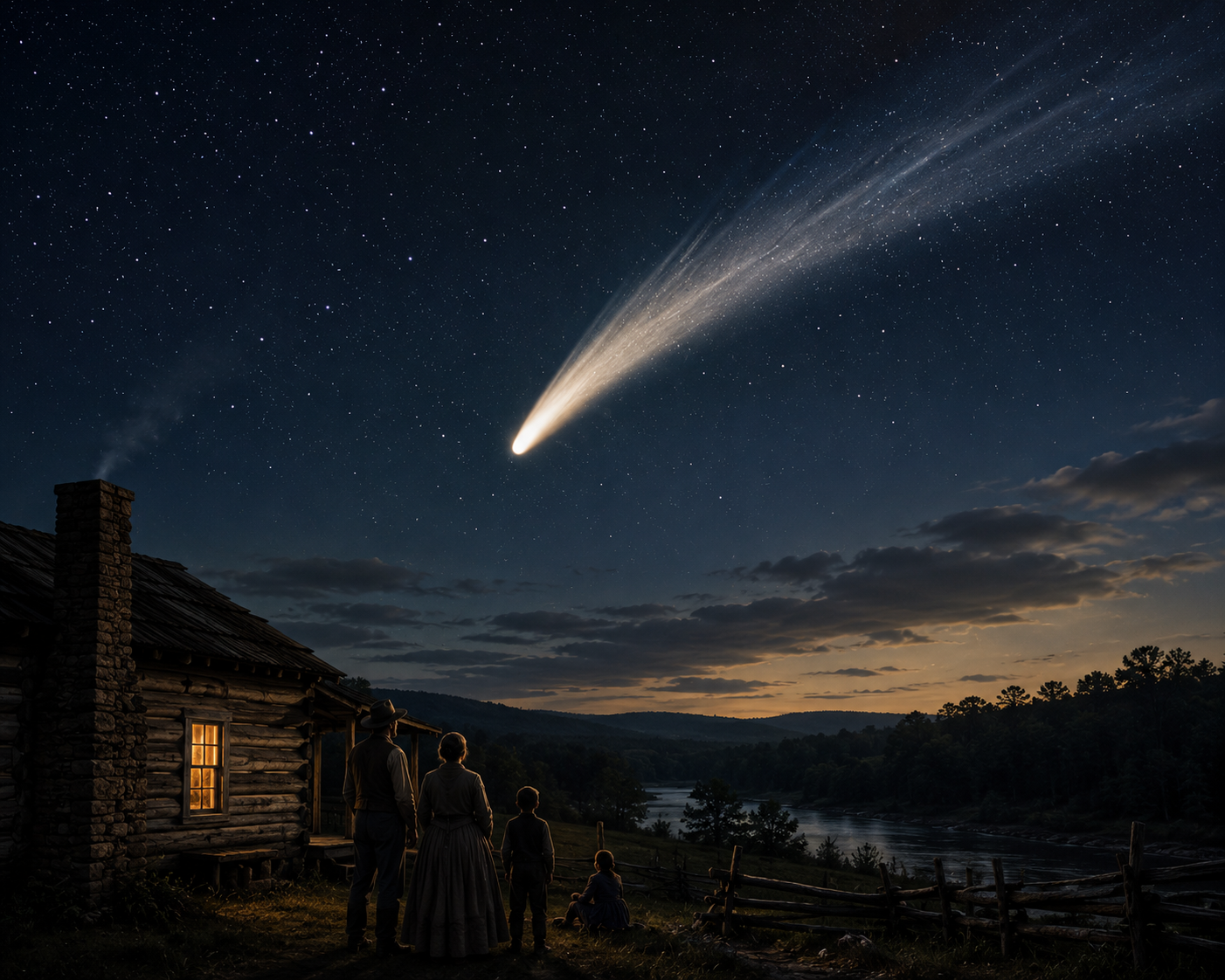
Witnesses described a glowing head with an enormous tail that seemed to spread across half the heavens. By October and November of 1811, the comet had become so brilliant that travelers could navigate by its light. Some accounts compared it to a torch suspended over the frontier.
Beginning in December 1811, the New Madrid earthquakes shook the Mississippi Valley and much of Tennessee with terrifying force. Cabins rattled in the night. Chimneys collapsed. Trees snapped and riverbanks gave way. In parts of western Tennessee, the land cracked open and water burst upward from the ground. The shaking was felt across an enormous portion of the young United States, including Nashville and the Tennessee frontier. The coincidence of the comet and the earthquakes burned itself into memory. To many settlers, they were inseparable events. Some claimed the Mississippi River flowed backward. Others reported hearing sounds like thunder rolling beneath the earth. Entire stretches of landscape changed permanently. Reelfoot Lake in Tennessee was formed during the quakes, becoming one of the most lasting scars left by the disaster. Across the Blue Ridge and Appalachian settlements, families who had already endured migration, frontier hardship, disease, and isolation suddenly found themselves living beneath a sky marked by fire while the ground trembled beneath their feet.
As written in the new book ‘Kings of the Blue Ridge’ by author Krysta Abesamis, the comet crossed the sky in 1811 and earthquakes shook Robert Carruthers backyard in Tennessee. For folks living in the southern mountains, the Great Comet of 1811 was more than an astronomical event. It became part of frontier memory — tied forever to earthquakes, fear, wonder, and survival. Families spoke of it for decades afterward. Some believed it marked the end of an age.