The Isle of Man
Between the Kingdoms of the Irish Sea
In the middle of the Irish Sea, suspended between Scotland, Ireland, England, and Wales, lies the Isle of Man — a rugged island shaped by wind, sea crossings, Norse kings, Celtic tradition, and centuries of movement between the surrounding coasts.
To travelers approaching by ship during the seventeenth and eighteenth centuries, the island rose slowly from the gray water like a world unto itself.
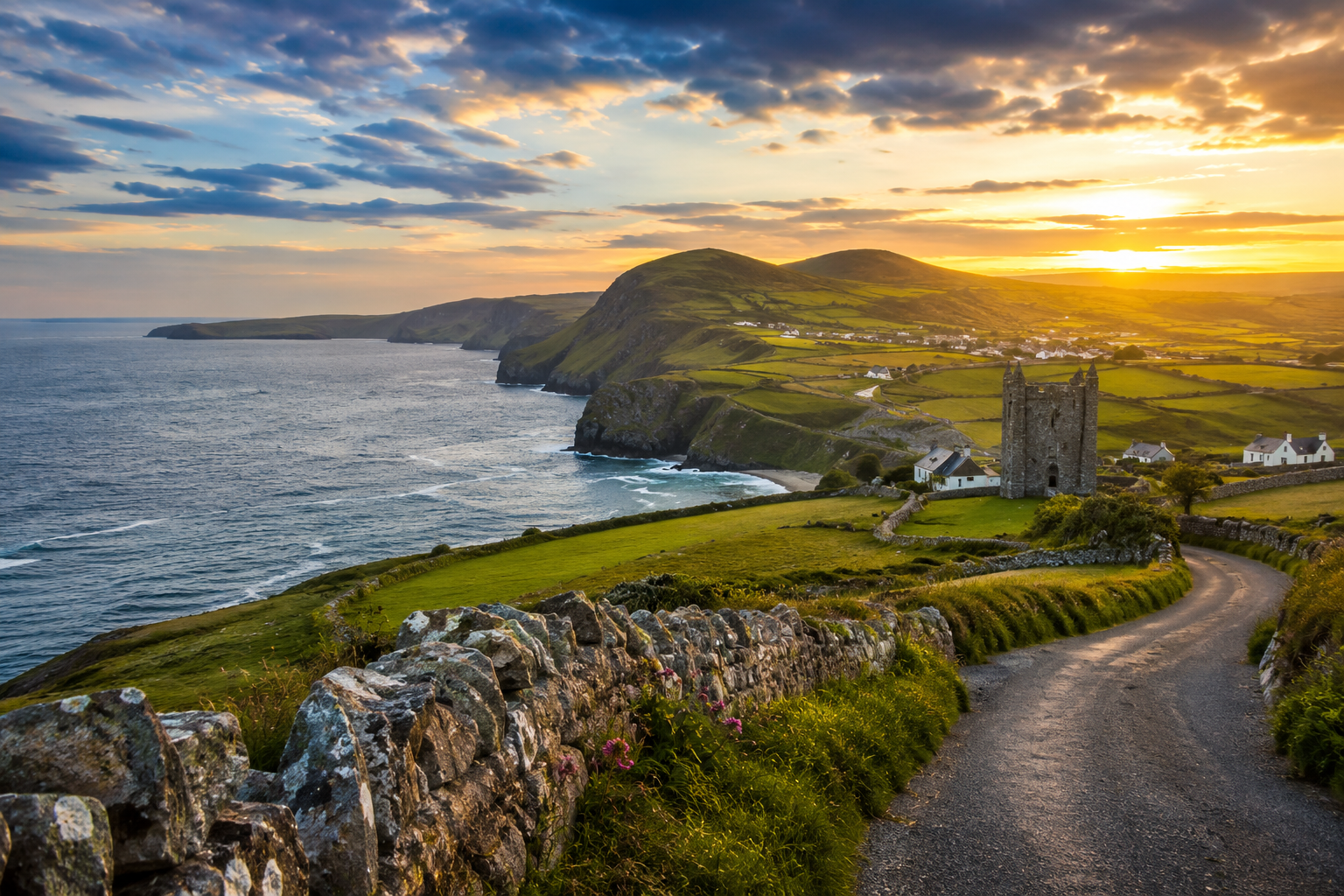
Its cliffs stood dark against the horizon. Fishing villages clung to the coastline. Smoke drifted from cottages scattered beneath green hills while old roads crossed inland valleys shaped by weather and isolation. Though small in size, the Isle of Man occupied a remarkably important position within the wider history of the Irish Sea world.
For generations, the island existed not at the edge of history, but directly within it’s currents.
Long before modern borders hardened between nations, the Irish Sea functioned almost like a connected frontier highway. Families, merchants, fishermen, soldiers, clergy, raiders, and migrants moved continually between western Scotland, Ulster, Cumbria, Wales, and the Isle of Man itself. Ideas, surnames, language, religion, and trade crossed the waters alongside them.
The island became deeply layered with overlapping cultures.
Celtic traditions remained strong for centuries, particularly through the ancient Manx Gaelic language closely related to both Irish and Scottish Gaelic. At the same time, Norse influence transformed much of the island during the Viking Age. Scandinavian settlers established rule across the Isle of Man and the Hebrides, creating a maritime kingdom that linked the island directly into the Norse world of the North Atlantic.
Even today traces of that past remain visible.
Old Norse place names survive across the island. Viking burial sites still emerge from the earth. Stone crosses carved centuries ago stand weathered by sea air and rain. Tynwald — the island’s parliament — traces its origins back over a thousand years and remains one of the oldest continuous parliamentary traditions in the world.
By 1700, however, the Isle of Man existed within a changing political landscape.
The island had passed through periods of Scottish influence, English control, Norse rule, and noble lordship. During much of the seventeenth century it remained under the authority of the Stanley family, Lords of Mann, whose rule tied the island into broader British political struggles unfolding across the surrounding kingdoms.
Yet ordinary life on the island remained deeply tied to the sea.
Fishing, farming, weaving, small-scale trade, and maritime travel shaped daily existence. Coastal communities depended heavily upon weather and seasonal movement. Families lived close to both hardship and opportunity. Small boats crossed continually toward Ireland, Galloway, Cumbria, and the Scottish coast carrying goods, livestock, wool, salted fish, and passengers between neighboring shores.
The sea connected more than it separated.
For Border and Ulster families later connected to The Carruthers Men, The Royal Branch, and the wider Scots-Irish migrations, the Isle of Man existed within the same maritime world linking southwestern Scotland to northern Ireland and eventually to America itself.
Ships sailing between Dumfriesshire ports, Ulster settlements, and English harbors frequently moved through waters surrounding the island. Mariners navigating the Irish Sea relied upon familiar coastal routes shaped by wind, tide, and dangerous weather. Storms could rise quickly across the open water. Fog obscured coastlines. Wrecks were common.
The island earned a reputation for independence.
Its relative isolation helped preserve older customs, local law, and distinct identity even while larger powers competed for influence across the surrounding kingdoms. Smuggling flourished periodically along hidden coves and isolated shorelines as traders exploited the island’s complicated political position within British customs systems.
To many outsiders, the Isle of Man carried an atmosphere almost separate from the mainland itself.
Travelers described shifting weather, green hills descending toward rocky coastlines, ancient ruins overlooking the sea, and villages shaped by both Celtic and Norse inheritance. The island’s folklore became filled with stories of sea spirits, fairy bridges, storms, phantom ships, and supernatural traditions surviving long after similar beliefs faded elsewhere.
Yet beneath the folklore stood real lives shaped by migration and endurance.
Families buried their dead in windswept kirkyards overlooking the sea. Children grew up watching ships appear and vanish beyond the horizon. Fishermen measured life against tide and weather while women maintained homes through long winters of uncertainty.
And like much of the Irish Sea world, the Isle of Man eventually became connected to the wider Atlantic migrations unfolding during the eighteenth century.
Some island families later departed for America. Others became tied economically to the growing movement between Ulster, Scotland, and the colonies beyond the Atlantic. The sea routes surrounding the island formed part of a much larger network carrying generations westward into the New World.
But even as migration reshaped the surrounding regions, the Isle of Man retained its distinct identity.
Caught between kingdoms yet never fully absorbed by any single one, the island endured as a place shaped by crossings — between nations, languages, religions, and generations.
And for descendants tracing the older worlds surrounding southwestern Scotland, Ulster, and the Irish Sea frontier, the Isle of Man remains one of the great neighboring landscapes of that forgotten maritime world — a windswept island standing quietly between the coasts where so many journeys once began.