The Pearls of Lochleven
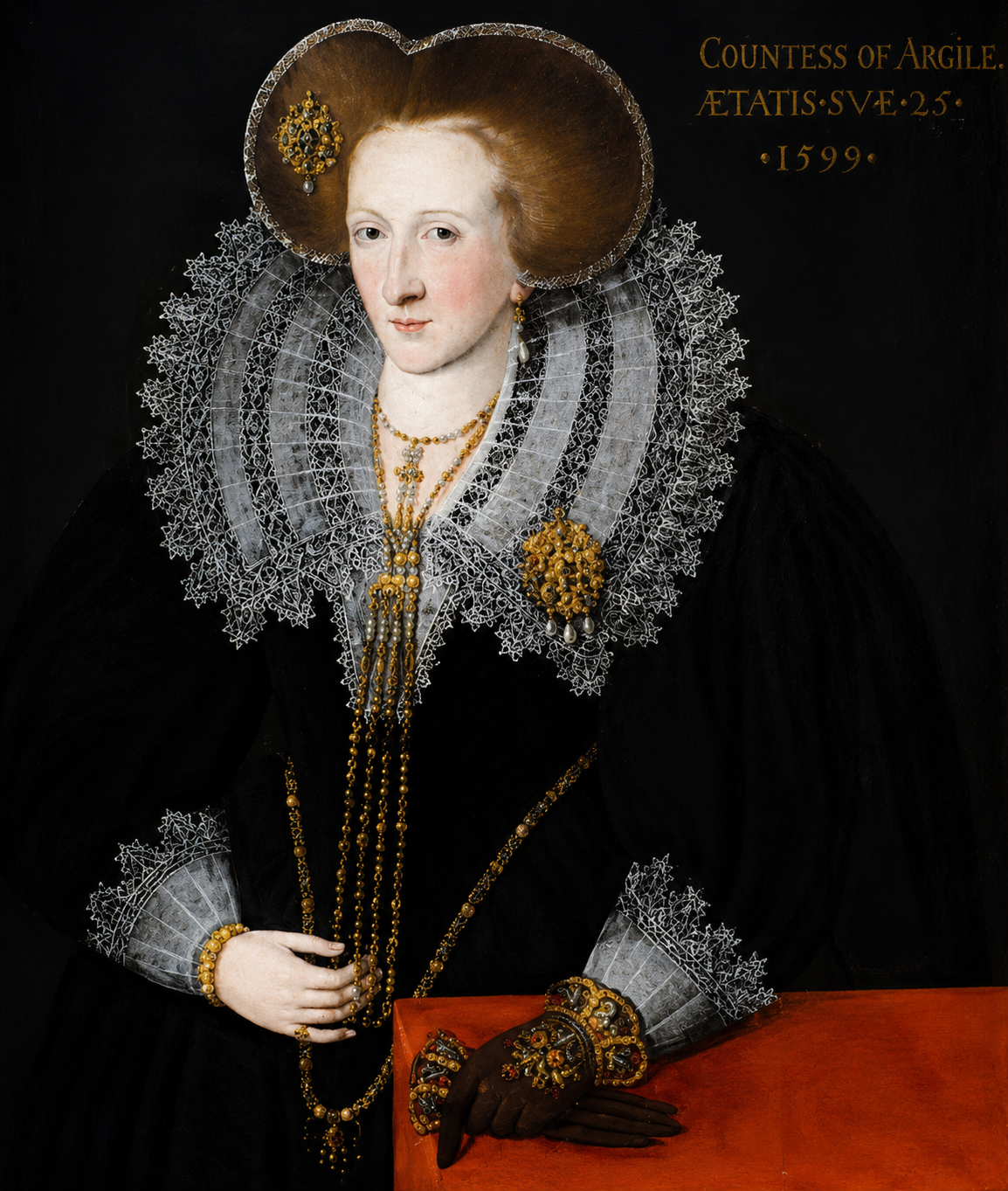
Among the women standing quietly behind the Carruthers family lies a network of noble bloodlines tied directly into the political heart of Scotland. One of the most fascinating among them is Agnes Douglas — daughter of William Douglas, 7th Earl of Morton, and Lady Agnes Leslie, Countess of Morton — whose family connections reached into some of the most powerful dynasties of the Scottish Lowlands. The Douglas family stood among the great noble houses of Scotland for centuries. Through land, marriage, political alliances, and royal proximity, the Earls of Morton occupied a world deeply entangled with the Scottish Crown itself. Their influence stretched across generations marked by shifting loyalties, court politics, territorial power, and the turbulence of a changing kingdom. Her mother - Lady Agnes Leslie, Countess of Morton, brought her own powerful lineage into the family through the Leslie bloodline — a house long connected to Scottish nobility and court life. Through these marriages, the Morton line became woven into a wider network of aristocratic families whose descendants would continue branching outward across Scotland for generations.
Known throughout Scotland as the “Pearls of Lochleven,” Agnes Douglas Countess of Argyll and her sisters became renowned for their beauty, noble bearing, and powerful family connections during the late 16th century. The name emerged from the Douglas court surrounding Lochleven Castle and the Earls of Morton, where the daughters of the house were admired among Scotland’s noble circles and royal society. In a world where reputation traveled through court correspondence, noble marriages, royal visits, heraldic alliances, and word carried between castles and estates, the title spread far beyond Lochleven itself. Courtiers, lairds, visiting nobles, royal households, and the great families of the Scottish Lowlands and Borders would have heard of the celebrated Douglas sisters whose marriages and bloodlines tied them into some of the most influential dynasties in Scotland.
Agnes Douglas would eventually become connected to the Kerr family, another powerful Border and Lowland house deeply involved in Scottish politics and noble society. Through this extended network emerged Helen Kerr, whose bloodline would later merge into the Carruthers family itself. It is through Helen Kerr that this branch of royal and noble ancestry ultimately cascades into the Carruthers line documented in ‘The Carruthers Men’. What began among the courts, alliances, and noble houses of Scotland would, generations later, move through the Scottish Borders, across Ulster, and eventually into the mountains and mill villages of the American South.
The story is a reminder that royal bloodlines did not remain isolated inside castles and courts alone. Over centuries, those same lines moved outward through marriages, migrations, frontier settlements, and ordinary family lives — eventually becoming part of bloodlines carried far beyond Scotland itself. Within the Carruthers reconstruction, these connections help illuminate the wider historical world surrounding the family: a landscape where Border lairds, noble daughters, clan alliances, heraldry, and royal descent existed alongside the realities of frontier survival, migration, and generational endurance.
*Portrait associated with Agnes Douglas, daughter of William Douglas, 7th Earl of Morton, and Lady Agnes Leslie, Countess of Morton.