Eleanor Carruthers Wilson
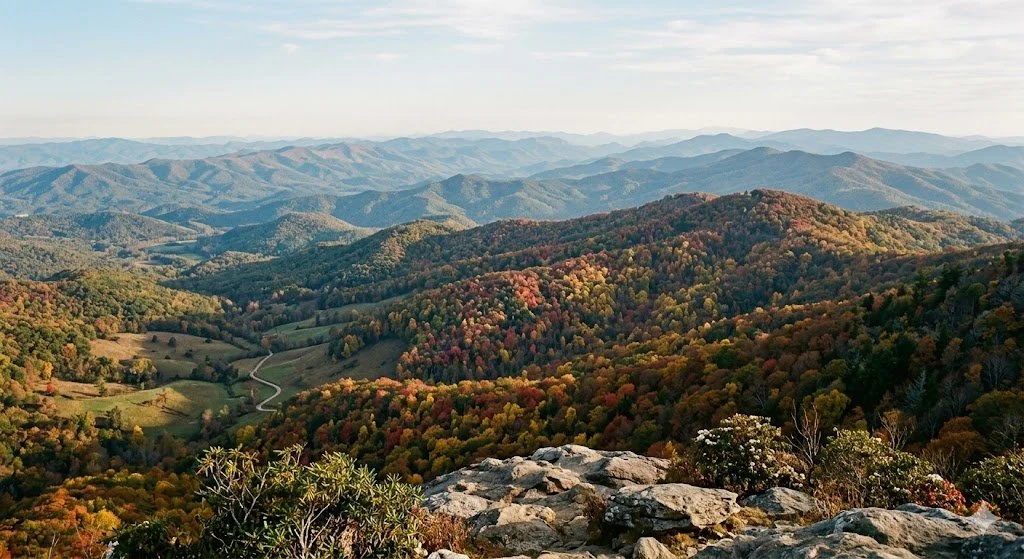
Blue Ridge Mountains
Few women of the American Revolution left behind a legacy as enduring as a woman called Eleanor Carruthers Wilson. Although she never commanded troops or signed declarations, her courage became woven into the folklore of North Carolina with a few words & nine soldier sons, the history of the Scotch-Irish frontier, and the story of a family whose descendants would later help settle Tennessee.
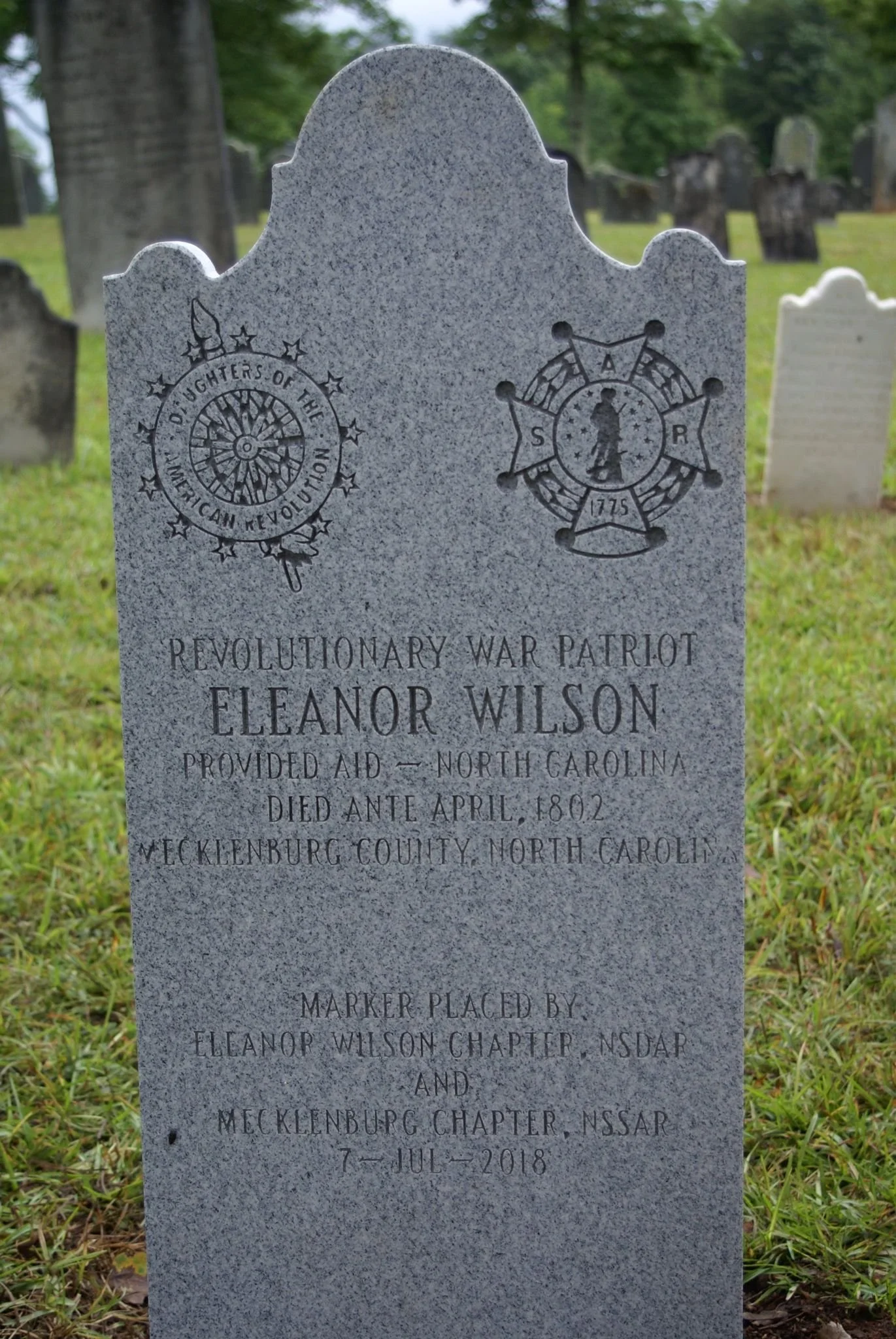
Today, Eleanor is remembered not only as the wife of Patriot Robert "Old Robin" Wilson, but as a woman officially recognized for her own patriotic service during the American Revolution and honored with a chapter of the Daughters of the American Revolution bearing her name for her contribution to the war effort (food & supplies).
Eleanor Carruthers Wilson was born about 1724 into an Ulster-Scots Presbyterian family. Although many family traditions associate her childhood with the Carruthers migration from Ireland, modern sources differ on her birthplace.
The DAR currently lists Chester County, Pennsylvania, as Eleanor's birthplace. However, no primary eighteenth-century record supporting that conclusion has yet been identified, anywhere. The Clan Carruthers material identifies Eleanor as born in Cumberland County, Pennsylvania, not Ireland, although it also links her to James Carruthers and Mary Caldwell Morrison, who migrated around 1730.
So even within Carruthers circles, Pennsylvania—not Ireland—is the commonly published birthplace. If Eleanor was born c.1724 (DAR estimate) and the family arrived about 1730, then yes—she would have been about six years old during the migration.
Her early years were unquestionably rooted in the Scotch-Irish immigrant communities of colonial Pennsylvania, where she later met Robert Wilson. OR her birth year could be wrong…This is also common. If she were actually born around 1731–1733, then Pennsylvania would fit. But then she'd only be about 15–17 when her first child arrived, which creates other chronological questions.
Was she the sister of Robert Carruthers?
For Carruthers researchers, however, Eleanor represents a Revolutionary heroine. One longstanding question remains… Was she the sister of Robert ‘Jimerson’ Carruthers?
If Eleanor truly was the daughter of James Carruthers and Mary Morrison, then we should stop relying on modern genealogies and try to find the earliest source that first identified her parents. If we can trace that attribution back to an eighteenth- or early nineteenth-century record, we may also be able to determine whether the Ireland or Pennsylvania birthplace tradition came first. That would give us much firmer ground verses repeating later compilations.
The DAR's patriot database is excellent for documenting Revolutionary service, but birthplace information often comes from descendant applications and isn't always supported by original eighteenth-century records.
But in 1742 it was still frontier. Heavy Scotch-Irish settlement. Londonderry congregation nearby.
Exactly where we'd expect Ulster immigrants. Yet, the Clan Carruthers pages state:
Eleanor was the daughter of James Carruthers and Mary Caldwell/Morrison.
She was the sister of James Carruthers.
Notice something important:
They specifically mention only James as her sibling, They do not add - sister of Robert Jimerson Carruthers.
That omission is interesting because those same sites have a separate page devoted to Rev. Robert Jimerson Carruthers.
The Clan Carruthers page for Robert Jimerson states he was:
born in Letterkenny, Donegal
son of James Carruthers and Mary Caldwell Morrison
married Margaret Gillespie
But it never mentions Eleanor Wilson as his sister.
Why this matters
Modern researchers generally infer the sibling relationship because Robert Jimerson and Eleanor are attributed the same parents, appear within the same migration tradition, and emerge from the same Pennsylvania Scotch-Irish community. Yet, despite those similarities, no eighteenth-century document has been found that explicitly identifies them as brother and sister.
Therefore, they were siblings? I have not located an early document saying so.
What would prove Robert was her brother?
One of these:
a family Bible
a probate record naming children
a deed involving heirs
a church record
a pension affidavit
an early family manuscript
So far, I haven't found one.
Much of Eleanor's earliest life remains hidden behind the passage of time.
Nearly all historians agree that she belonged to the Scotch-Irish Presbyterian migration that helped settle Pennsylvania during the first half of the eighteenth century. Whether she was born in Ulster before her family's immigration or in colonial Pennsylvania remains uncertain. Modern sources disagree, and no contemporary record has yet settled the question. What is certain is that she grew up within the close-knit Scotch-Irish communities whose values of faith, family, education, and personal liberty would shape the rest of her life. Historian Krysta Abesamis’ research has identified an intriguing pattern...
James Carruthers was in the Derry Township/Londonderry Scotch-Irish settlement.
The Bighams were there.
The Wilsons were there.
The McDowells were there.
The Campbells, Allisons, and other Ulster Presbyterian families were there.
Those weren't random neighbors—they formed a frontier community.
Robert Wilson and the Journey South
While living among Pennsylvania's Scotch-Irish settlements, Eleanor married fellow Presbyterian settler Robert Wilson, remembered by later generations as "Old Robin" Wilson.
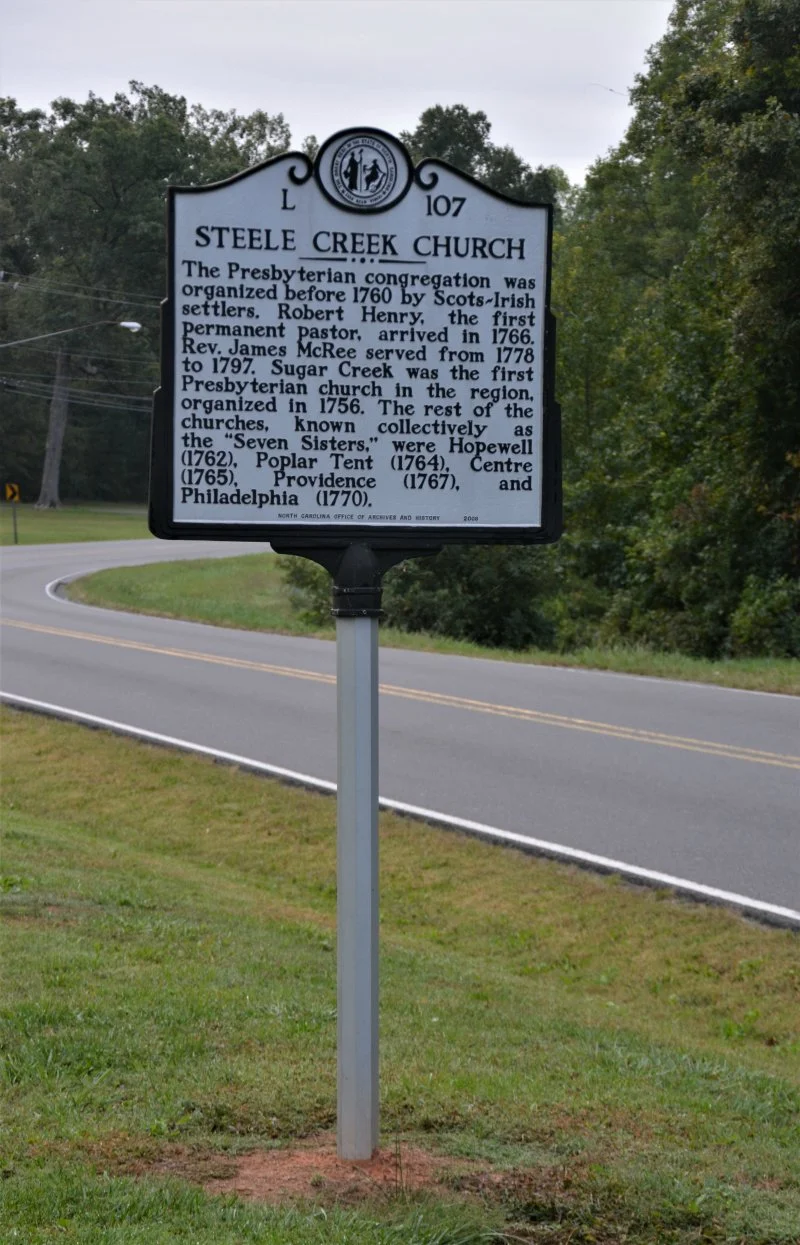
Around 1760, Robert, Eleanor, and members of the extended Wilson family migrated south into Mecklenburg County, North Carolina, joining thousands of frontier families seeking fertile land and new opportunity. Early historians consistently describe the Wilsons as having removed from Pennsylvania to Mecklenburg during this period.
Building a Plantation on Sugar Creek
By 1764, Robert Wilson had acquired approximately 350 acres on both sides of Sugar Creek, where the family established one of the substantial farms in the Steele Creek community. Contemporary deeds describe houses, orchards, gardens, and other improvements already present on the property, reflecting a prosperous and well-developed plantation by frontier standards.
Here Eleanor managed the household while raising eleven sons, creating one of Mecklenburg County's most remarkable Revolutionary families.
The Revolution Came Home
When the American Revolution reached the Carolina backcountry, the Wilson plantation became part of the Patriot war effort.
Robert Wilson and seven of their sons entered Revolutionary service. While they marched with militia units, Eleanor remained responsible for protecting the plantation, feeding the household, and supplying provisions that supported the Patriot cause.
The DAR now officially recognizes Eleanor's own contribution as "Patriotic Service – Furnished Supplies," honoring the vital work performed by countless women whose efforts kept the Revolution alive far from the battlefield.
The Tradition of Cornwallis at Wilson's Plantation
One of Mecklenburg County's oldest Revolutionary traditions tells of an extraordinary encounter during October 1780.
Following his withdrawal from Charlotte after the Patriot victory at King's Mountain, General Charles Cornwallis reportedly halted his army for the night at the Wilson plantation near Steele Creek. Early historical accounts describe Cornwallis and the notorious Banastre Tarleton dining in the Wilson home while Robert Wilson and one of his sons were prisoners of war.
According to the oral tradition, Cornwallis attempted to persuade Eleanor to convince her husband and sons to abandon the Patriot cause in exchange for British favor.
Her response became legendary.
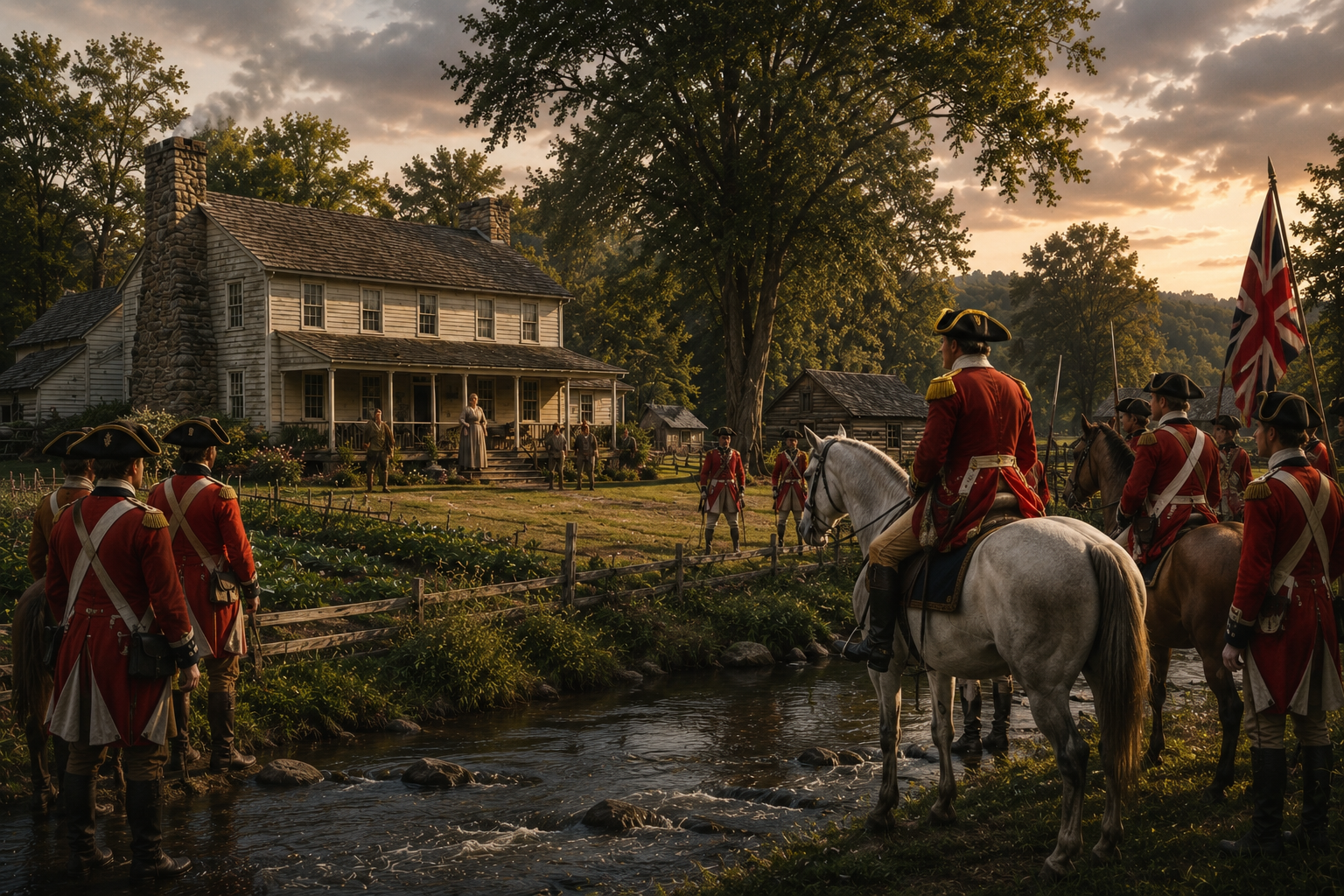
Sugar Creek plantation of Robert & Eleanor Wilson
Rather than encourage surrender, Eleanor declared that she had already sent her fifteen-year-old son Zaccheus to join General Thomas Sumter's army and would rather see herself take up arms than witness any member of her family betray the cause of liberty.
Whether every word survives exactly as spoken can never be known. The conversation first appeared in published histories decades after the Revolution and should be understood as an enduring local tradition rather than a verbatim transcript. Yet for generations, the story has symbolized the unwavering determination for which Eleanor became famous throughout Mecklenburg County.
Remembered Long After the War
After the Revolution, many of the Wilson sons joined the westward migration into Tennessee, helping carry the family's legacy into the expanding American frontier.
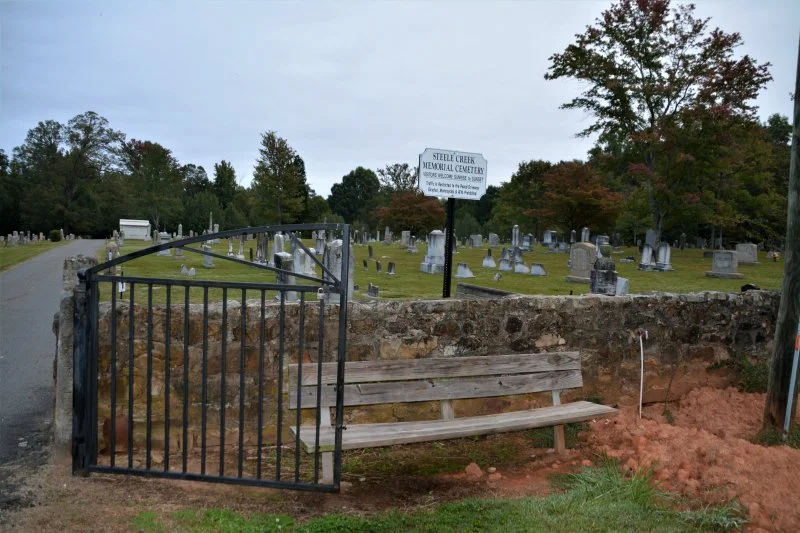
Robert and Eleanor remained at Steele Creek, where they spent the remainder of their lives among the community they had helped establish. Robert's will was probated in 1794, while Eleanor is generally believed to have died around 1801–1802. Both are buried in the historic cemetery of Steele Creek Presbyterian Church, where descendants continue to honor their memory. Although one nineteenth-century history incorrectly stated that they both died in 1810, later probate evidence and modern historical research support the earlier dates.
More than a century after her death, Eleanor's story continued to inspire new generations.
On January 28, 1918, descendants established the Eleanor Wilson Chapter of the National Society Daughters of the American Revolution in Washington, D.C., naming the chapter in honor of the courageous frontier mother whose devotion to liberty had become part of North Carolina history. In 2018, members returned to Steele Creek to rededicate the graves of Eleanor and Robert Wilson, reaffirming a legacy that has endured for nearly 250 years.
Whether born in Ulster or Pennsylvania, Eleanor Carruthers Wilson represents the thousands of Scotch-Irish women whose quiet strength sustained families through migration, frontier settlement, and revolution. She left no diary and signed no declaration, yet her courage became part of Mecklenburg County's oldest traditions. More than two centuries later, her name remains synonymous with loyalty, perseverance, and the enduring spirit of the American frontier.
Whether Eleanor ultimately proves to have been Robert Jimerson Carruthers' sister or not, her story deserves to stand on its own. She helped build one of Mecklenburg County's earliest frontier communities, supported the Patriot cause during the Revolution, and became one of North Carolina's most enduring Revolutionary heroines. If future records finally connect her to the immigrant James Carruthers (1695-1732) family, it would unite two remarkable branches of a Scotch-Irish story already spanning Pennsylvania, North Carolina, and Tennessee.
To Be Continued……