Women Floral Artists Under The Scope
In eighteenth-century London, art was everywhere, provided you knew where to look.
Along the Strand and through the narrow streets around St Martin's Lane, craftsmen and artists made their living with brushes, engraving tools, precious metals, and whatever commissions they could secure. Portrait painters worked for wealthy patrons, engravers reproduced fashionable images, and skilled goldsmiths decorated watches and elaborate snuffboxes for customers who could afford them.
Talent mattered, but so did introductions, reputation, and knowing the right people.
For a little girl growing up in one of London's artistic households, it was also a world close enough to touch.
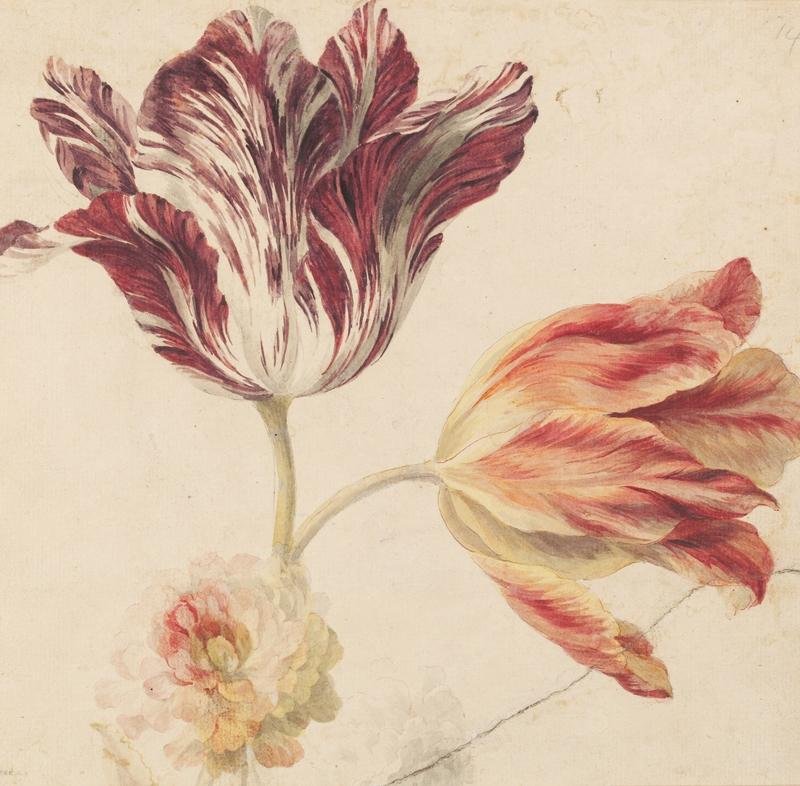
Two Parrot Tulips and a Double Narcissus (1758)
Her father, George Michael Moser, arrived from Switzerland in the 1720s and became a highly skilled goldsmith, enameler, and designer. He was also deeply involved in London's developing art institutions, particularly the St Martin's Lane Academy, where artists gathered to study drawing and improve their skills.
He had married Mary Guynier, whose own father, Claude Guynier, was a painter. Their daughter, Mary, born in London on 27 October 1744, therefore inherited something rather unusual: artistic family blood on both sides.
Mary didn't have to discover the world of art from a distance. She was growing up within it.
Her father taught her to draw and paint, giving her an education many girls her age could never have had. While flower painting was considered an acceptable accomplishment for a young lady, the Moser household offered something beyond the usual genteel lessons.
Mary learned from a working professional who understood how artists built their reputations.
By her teens, she was earning her own. Obviously, mature for her age.
Mary was already attracting attention from the Society of Arts, winning prizes for her ornamental designs and flower paintings.
One of those paintings survives, giving us a remarkable glimpse of what this young artist could accomplish before her sixteenth birthday.
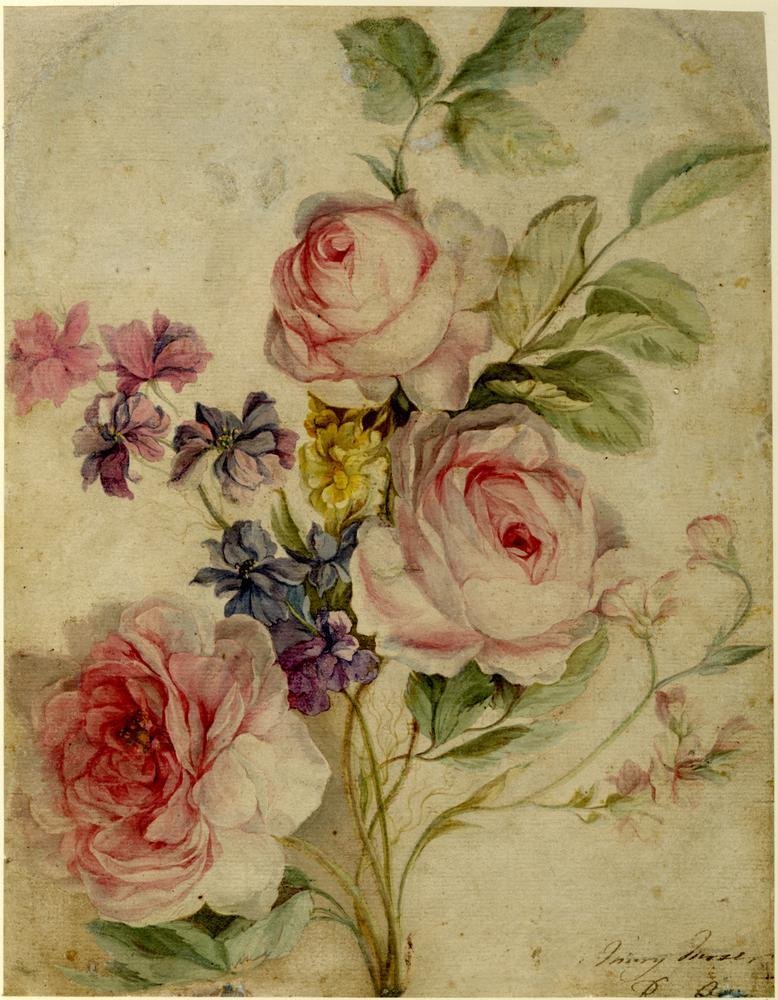
Study of Roses and Violets
Mary entered an ornamental design in a 1758 competition organized by the Society for the Encouragement of Arts, Manufactures and Commerce. She won five guineas, a respectable sum for a girl still in her teens.
The following year, she submitted a painting of flowers in a vase.
This time, the Society awarded her another five guineas and a silver medal, recognizing what its committee described as her "Extraordinary Merit."
They were so impressed that they framed and glazed her painting for public display.
In 1760, the work appeared in one of London's earliest major public exhibitions of contemporary British art, held in the Society's Great Room at Denmark Court, just off the Strand.
She was in.
Imagine what that meant for a fifteen-year-old girl whose father had spent years helping to build London's artistic community.
Her flowers were now hanging in an exhibition where the public could see them.
Mary Moser was no longer simply George Michael Moser's talented daughter. She was becoming an artist in her own right.
By the early 1760s, Mary Moser had accomplished what many aspiring artists spent years trying to do. Her work had been publicly exhibited, her talent recognized, and her name introduced to London's growing community of art collectors and patrons.
But winning a prize at fifteen was one thing. Making a living as an artist was quite another.
London's art world was changing rapidly. Wealthy patrons still commissioned portraits and decorative paintings for their homes, but public exhibitions began offering artists something different: the chance to show their work to people they had never met.
For Mary, that meant a chance to establish a reputation beyond her father's connections.
In 1761, the Society of Artists of Great Britain began holding annual exhibitions, giving painters, sculptors, and designers a new public platform. Mary exhibited with the Society in the 1760s, building her reputation as a flower painter.
And flowers were serious business.
Britain's wealthy households were filling their gardens with ornamental plants, including varieties arriving through expanding international trade and botanical collecting. Gardeners, nurserymen, collectors, and artists all participated in this fashionable enthusiasm for plants.
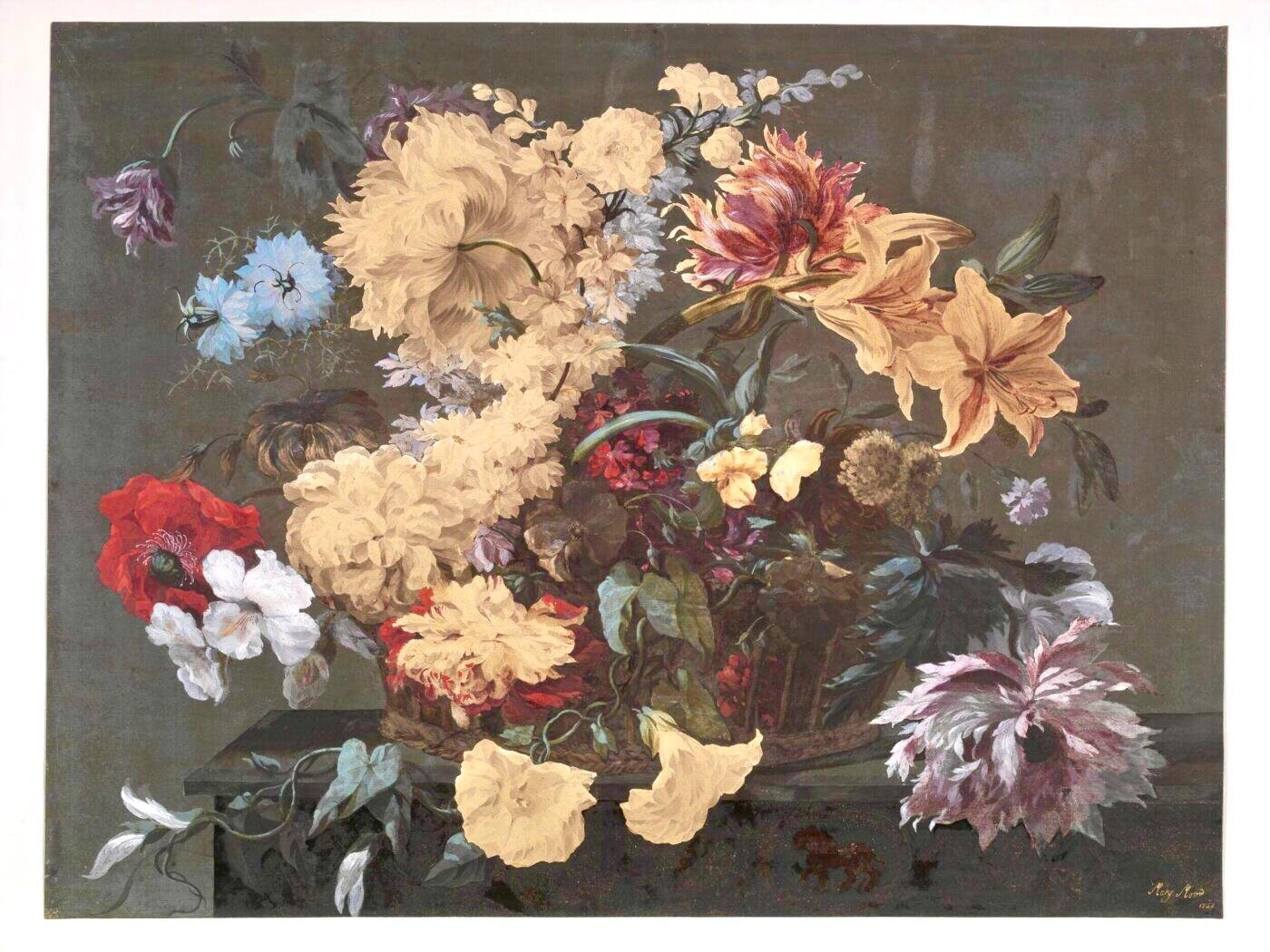
A Basket on a Marble Ledge (1770) Watercolor on paper
By 1768, Mary had spent nearly a decade exhibiting her paintings. She was twenty-four, with an established reputation, and her father was among the influential artists shaping London's artistic institutions.
But behind the exhibition walls, those institutions were mired in a messy disagreement.
Members of the Society of Artists were arguing over leadership, elections, and who should control the exhibitions. Some wanted a new institution with the patronage of King George III, one that would offer formal training, professional recognition, and greater authority to British artists.
The disputes eventually produced a breakaway group.
On 10 December 1768, George III approved the establishment of the Royal Academy of Arts. The new institution included some of Britain's most celebrated artists, among them Joshua Reynolds, Thomas Gainsborough, Benjamin West, and Mary's father, George Michael Moser.
And Mary herself.
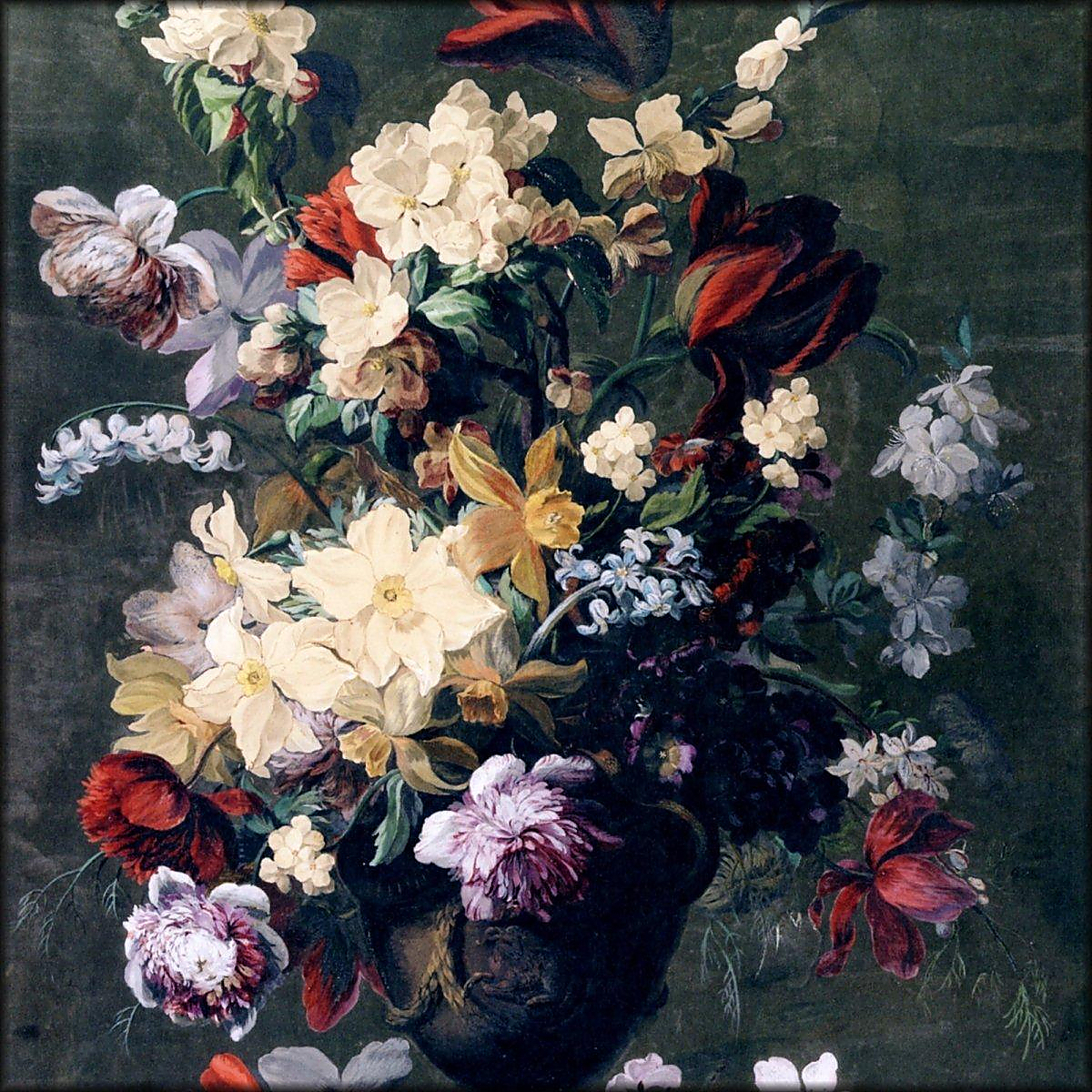
Flowers in a Vase, Which Stands on a Ledge (1768) Mary Moser Royal Collection #408020
Two Women in a Room Full of Men
Of the Royal Academy's thirty-six founding members, only two were women.
One was Angelica Kauffmann, a successful portrait and historical painter.
The other was Mary Moser.
Mary was the youngest founding member, and her reputation as a flower painter had earned her a place among Britain's artistic establishment.
The little girl who had learned to paint under her father's guidance was now helping establish the institution that would influence British art for generations.
Yet a peculiar contradiction awaited her.
The Academy recognized Mary as a professional artist, but it did not offer women the same artistic education.
Its life-drawing classes, where students studied the human figure from nude models, were considered inappropriate for female participation. This was a major inconvenience. Drawing the human body was central to the Academy's teaching and particularly important for artists who wanted to paint ambitious historical and mythological scenes.
Mary helped found an institution that gave male students opportunities women were denied. The irony.
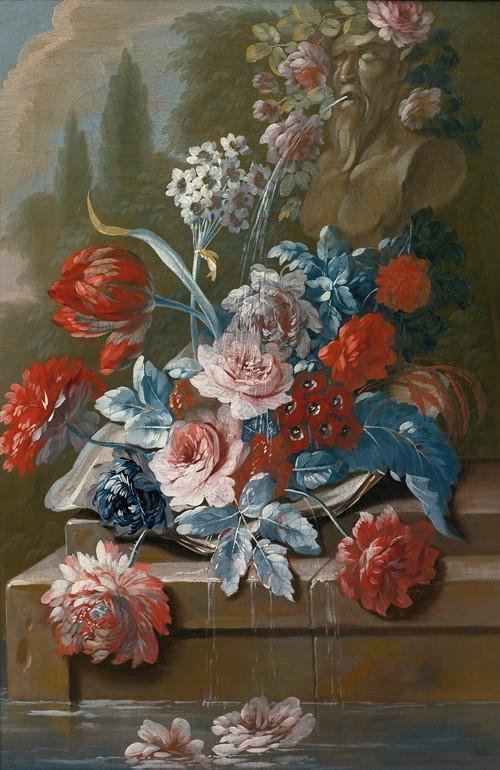
Spring - Oil on canvas (1780)
Her father became the Academy's first Keeper, responsible for supervising its schools.
The man who had personally encouraged his daughter's artistic education now held a leading position in an institution where women could not receive the same training as men.
How Mary felt about this arrangement is something her surviving records have not yet told us. I can imagine she had to deal with it given the time period.
But she was hardly powerless. Mary participated in the Academy's affairs, attended General Assembly meetings, and exercised her vote.
She had earned her place, and she intended to occupy it.
Flowers for a Queen
By the 1770s, Mary Moser was firmly established among London's professional artists. She continued exhibiting at the Royal Academy, where fashionable society gathered to admire the latest paintings, discuss artistic reputations, and occasionally discover a new favorite.
London's enthusiasm for flowers was flourishing, too.
Wealthy households cultivated ornamental gardens, nurseries introduced exotic plants, and botanical collectors eagerly acquired specimens from overseas. At Kew, the royal gardens were becoming an important center of botanical study.
And Mary was hardly the only woman making a career out of flowers.
Mary Delany, whose extraordinary paper flower collages began in 1772, moved within aristocratic and botanical circles connected to Kew. Ann Lee, a botanical illustrator associated with physician and plant collector John Fothergill, worked in London during the same decades. Margaret Meen was also developing her career as a flower painter and drawing teacher.
I wonder how often these women's worlds overlapped, and that’s microhistory.
They worked in a relatively small artistic and botanical community, often sharing the same patrons, nurseries, exhibitions, and acquaintances. Mary Moser and Margaret Meen, in particular, were teenagers.
Did they know one another? Had they admired each other's paintings? Might they have encountered the same collectors or botanical specimens? I think they just had to. And I would love some proof of this!
We cannot yet establish friendship or meetings, but their overlapping careers offer a fascinating glimpse into a community of women whose individual stories are usually told separately.
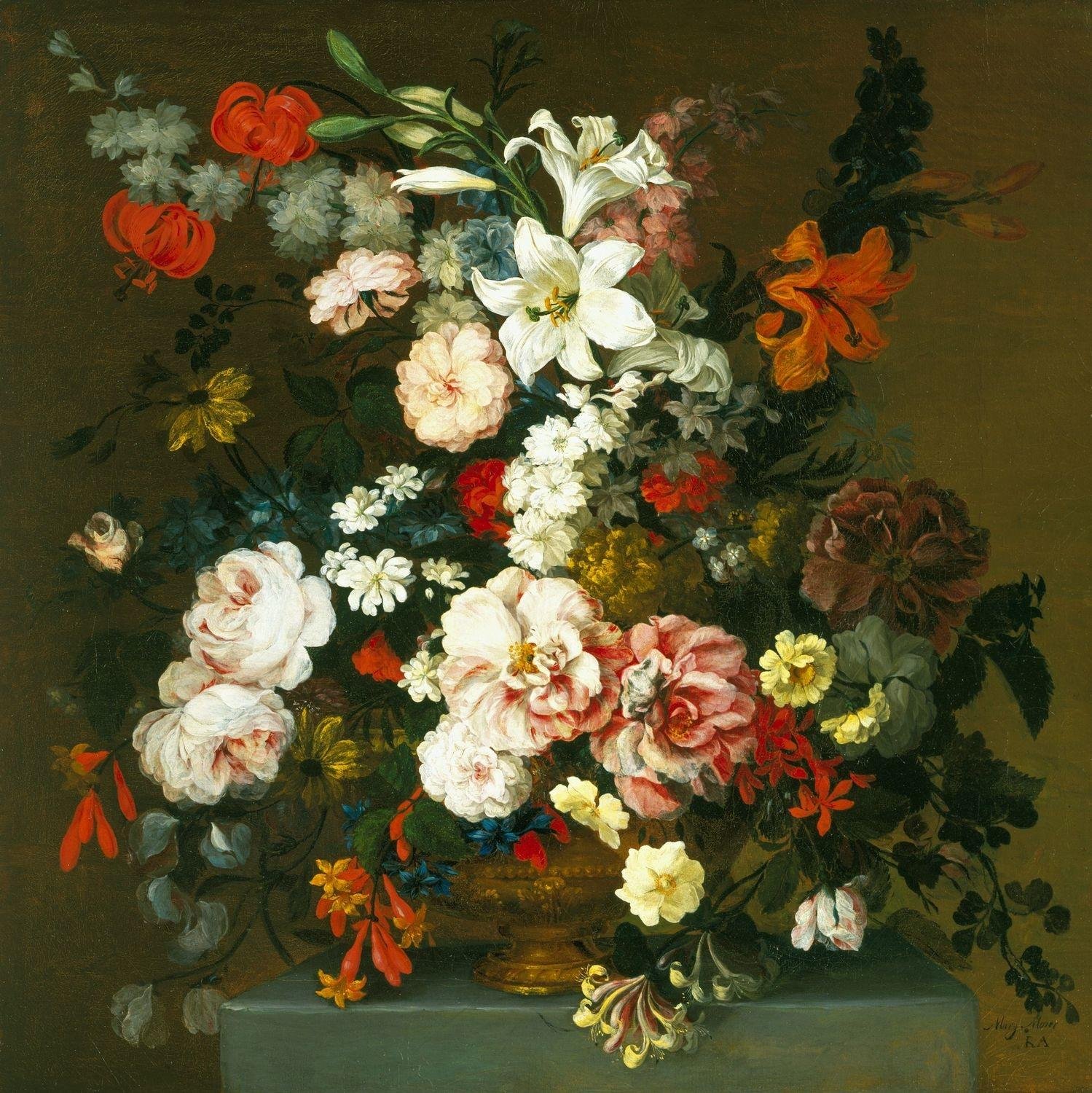
A Vase of Flowers · Mary Moser Royal Collection #402468
Queen Charlotte, wife of George III, shared the fashionable enthusiasm for gardens, botany, and the arts. Born in Germany in 1744, the same year as Mary, she married George III at seventeen and became queen of a country whose gardens were increasingly filled with plants arriving from around the world.
By the time Charlotte commissioned Mary to decorate Frogmore House, both women were approaching fifty.
Britain faced considerable political uncertainty. The American Revolutionary War had ended in 1783 with Britain losing its thirteen American colonies. In 1788, George III fell seriously ill, raising fears about the monarchy's future. The French Revolution followed in 1789, and Britain entered the war against revolutionary France in 1793.
These were not distant events for the royal household. Yet amid the political turmoil, two women were collaborating on something extraordinary.
In 1792, Queen Charlotte purchased Frogmore House near Windsor Castle as a country retreat. She commissioned Mary Moser to decorate a room with elaborate floral paintings across its walls and ceiling.
She wanted flowers inside and out.
Mary's assignment was extraordinary. Instead of producing another framed arrangement for a drawing room, she transformed an entire interior into a painted garden. Flowers spread across the walls and ceiling, surrounding anyone who entered.
A true modern-day art installation. Completely immersive!
We cannot know whether Charlotte intended the room as a refuge from the political anxieties of her time. But its creation offers a fascinating glimpse of private royal life against the turbulence of late eighteenth-century Europe.
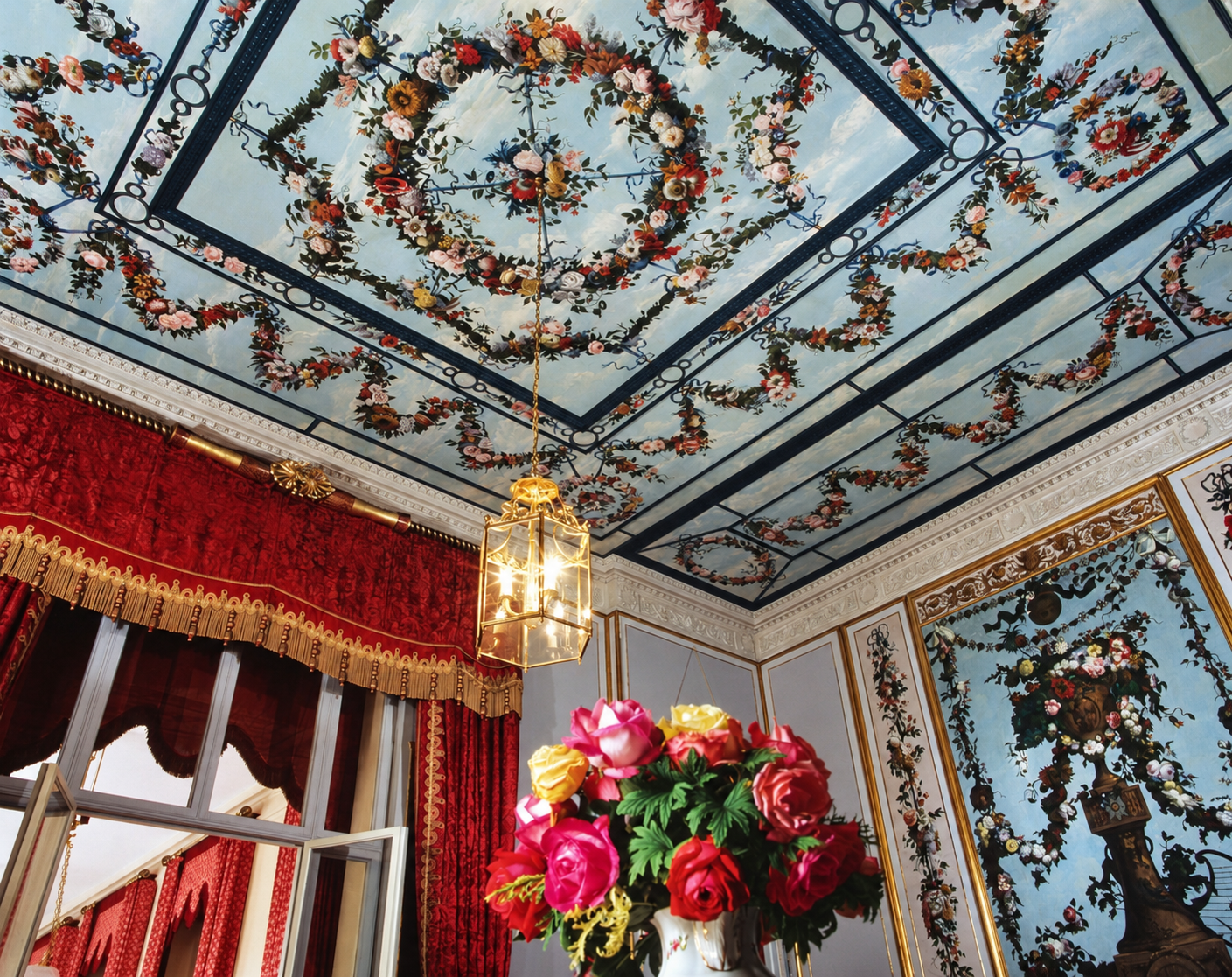
The Mary Moser Room at Frogmore House
For the girl who had won five guineas for a flower painting at fourteen, this was quite a commission!
Accounts of the project frequently mention a payment of £900, a considerable amount in the 1790s. Whether that sum represented Mary's personal fee or included expenses for the decorative work deserves closer examination.
By the 1790s, Mary had achieved something remarkable. She was an established professional artist, a founding member of the Royal Academy, and the woman entrusted with bringing an elaborate painted garden into a queen's private residence.
Not bad for a girl who grew up watching her father work with gold and enamel in eighteenth-century London.
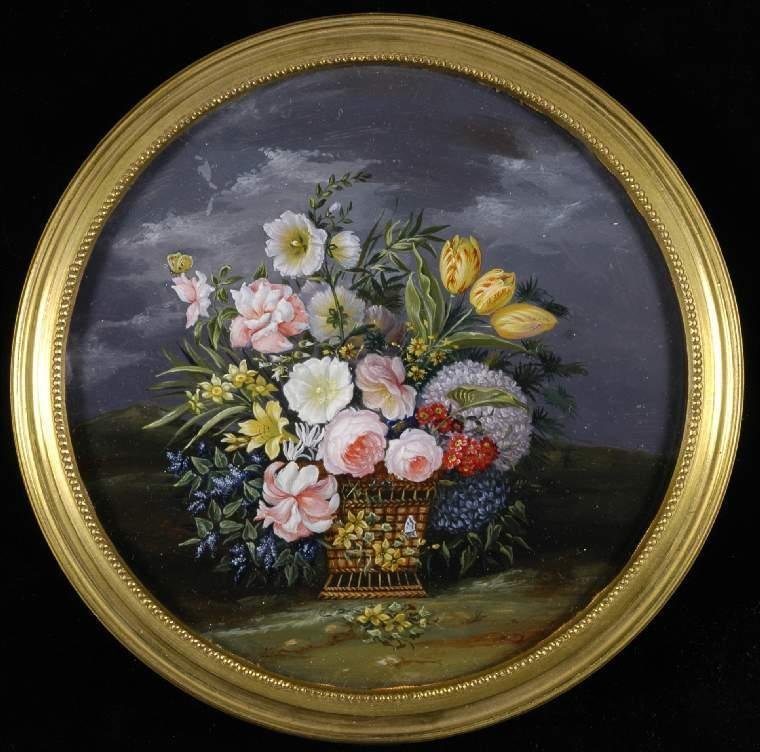
A Basket on a Stone Ledge Containing Flowers
Later Years
Mary's life did not end with her royal commission. In fact, she was approaching fifty when she made another important decision. On 26 October 1793, Mary married Captain Hugh Lloyd of Chelsea. She was forty-eight, just one day short of her birthday, and became his second wife. No children are known to have resulted from their marriage.
Afterward, she exhibited under her married name, Mary Lloyd. Her professional commissions diminished, but she remained connected to the Royal Academy and its artists.
Unfortunately, her eyesight was deteriorating. By 1802, she had largely withdrawn from public exhibitions. A reported stroke in 1810 brought further difficulties, although accounts suggest she eventually recovered enough to paint again. Mary outlived her husband.
She spent her final years in London's Bloomsbury district, on Upper Thornhaugh Street, not far from the artistic world she had spent her life in.
She was one of several women floral artists who worked with the same royal family, teaching related subjects during overlapping careers. Royal Botanic Gardens, Kew, explicitly identifies Mary Moser, Margaret Meen, and Mary Delany among the women who instructed the queen and princesses.
That establishes a shared educational and patronage network, but I still have no proof of friendships between the artists.
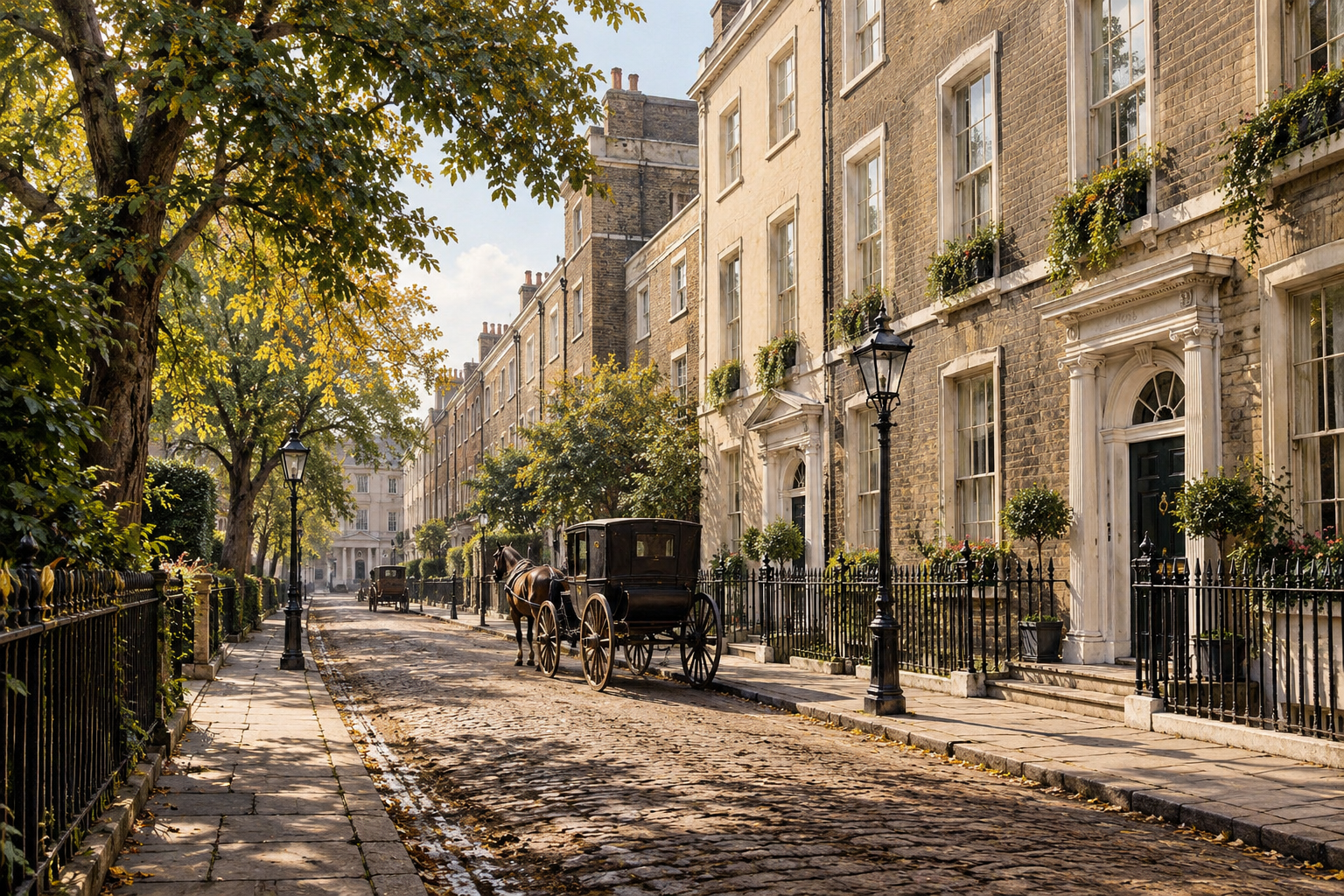
A vision of Mary’s home on Upper Thornhaugh Street, Bloomsbury, London, c. 1810–1819
She died there on 2 May 1819, aged seventy-four, and was buried at Kensington.
Her will offers something that her paintings cannot: a glimpse of the people who mattered to her. Among those connected to her estate were her cousin Joseph Moser and the sculptor Joseph Nollekens, a longtime friend and fellow artist. She also remembered members of the Cosway family. These relationships remind us that Mary belonged to a community of artists, patrons, teachers, and friends extending far beyond the Royal Academy's exhibition rooms.
And I particularly like that she continued participating in the Academy's affairs even after she could no longer work as she once had. Mary Moser had helped establish the institution in 1768. More than forty years later, she was still part of its story.
Today, her flowers remain at Frogmore House, painted across the walls and ceiling of a room that bears her name.
Not a bad legacy for a woman who made a profession out of painting flowers.
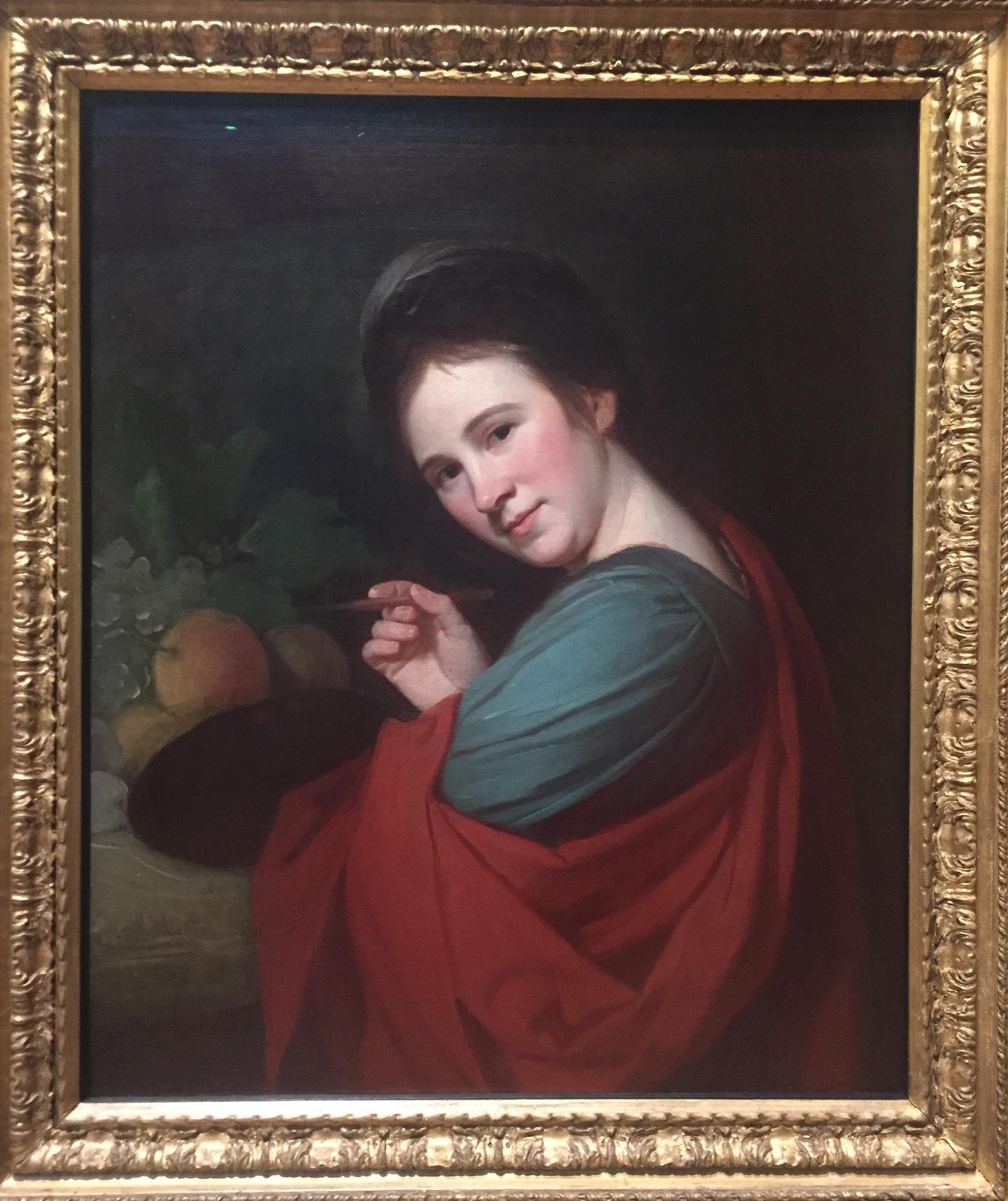
Artist Mary Moser (c. 1775)
For Your Reference
Royal Society of Arts. “Mary Moser Room.” Documents Mary's childhood training, Society of Arts prizes in 1758–1759, early exhibitions, Royal Academy membership, and Frogmore commission.
Royal Collection Trust. “Mary Moser: A Vase of Flowers, 1792–1797” (RCIN 402468). Documents Queen Charlotte's patronage and the floral decorations of the Mary Moser Room at Frogmore House.
National Portrait Gallery, London. “Mary Lloyd (née Moser), 1744–1819.” Biographical information on Mary's family, artistic training, Royal Academy membership, and professional career.
Spies-Gans, Paris A. “Mary Moser: Portraitist.” Journal18: A Journal of Eighteenth-Century Art and Culture, Issue 8, 2019. Scholarly examination of Mary's career beyond flower painting, her professional relationships, and surviving documentary evidence.
O'Donoghue, Freeman Marius. “Moser, Mary.” Dictionary of National Biography, vol. 38, 1894. Historical biographical account covering Mary's exhibitions, Queen Charlotte's patronage, marriage, and later years.
The Fitzwilliam Museum, Cambridge. A Basket on a Marble Ledge Containing Flowers, Including Lilac, Stocks, Peonies and Iris, 1770. Watercolour and bodycolour on paper, accession PD.823-1973. Authenticated original artwork bearing Mary's signature and date.
Smith, John Thomas. Nollekens and His Times. London: Henry Colburn, 1828, two volumes. Historical account of the London artistic community, including material concerning Mary Moser and her will.
The National Archives, Kew. Last Will and Testament of Mary Lloyd (née Moser). PROB 11/1617/48. Primary archival record for Mary's estate and personal relationships; cited in modern scholarship.
Researched & Written by author Krysta Abesamis