Women Floral Artists Under the Scope
Margaret’s interest in botany likely began in her father’s household, where plants mattered for more than their beauty. Her mother was Sarah Crack, and her father, Henry Meen, was an apothecary, a profession closely tied to medicinal plants.
She was born in 1751 near Suffolk, England, and belonged to a generation that saw a growing enthusiasm for botany. Wealthy households kept personal gardens and would grow fashionable flowers.
In 18th-century England, a young woman who could draw was considered accomplished. A woman who could earn a living by drawing was something else entirely.
For women, botanical drawing occupied an interesting position between education and serious study. Families who could afford drawing lessons often encouraged painting flowers as a genteel pastime. Perfect for a growing girl.
In the eighteenth and early nineteenth centuries, budding botanical artists commonly worked with finely ground pigments mixed with water and a binder, often gum arabic. They used delicate brushes to build transparent layers of color and capture the fine details of petals, leaves, and stems. A time-consuming activity.
By the 1770s, she had moved to bustling London, where she began teaching flower and insect painting. Before she entered royal circles, Margaret was already exhibiting her paintings. Women were not admitted as students to the Royal Academy Schools until 1860, although they could exhibit their work much earlier.
She had shown two flower paintings at the Royal Academy in 1777. The exhibition catalog recorded her residential address as Mr. Brown’s, 62 Portland Street.
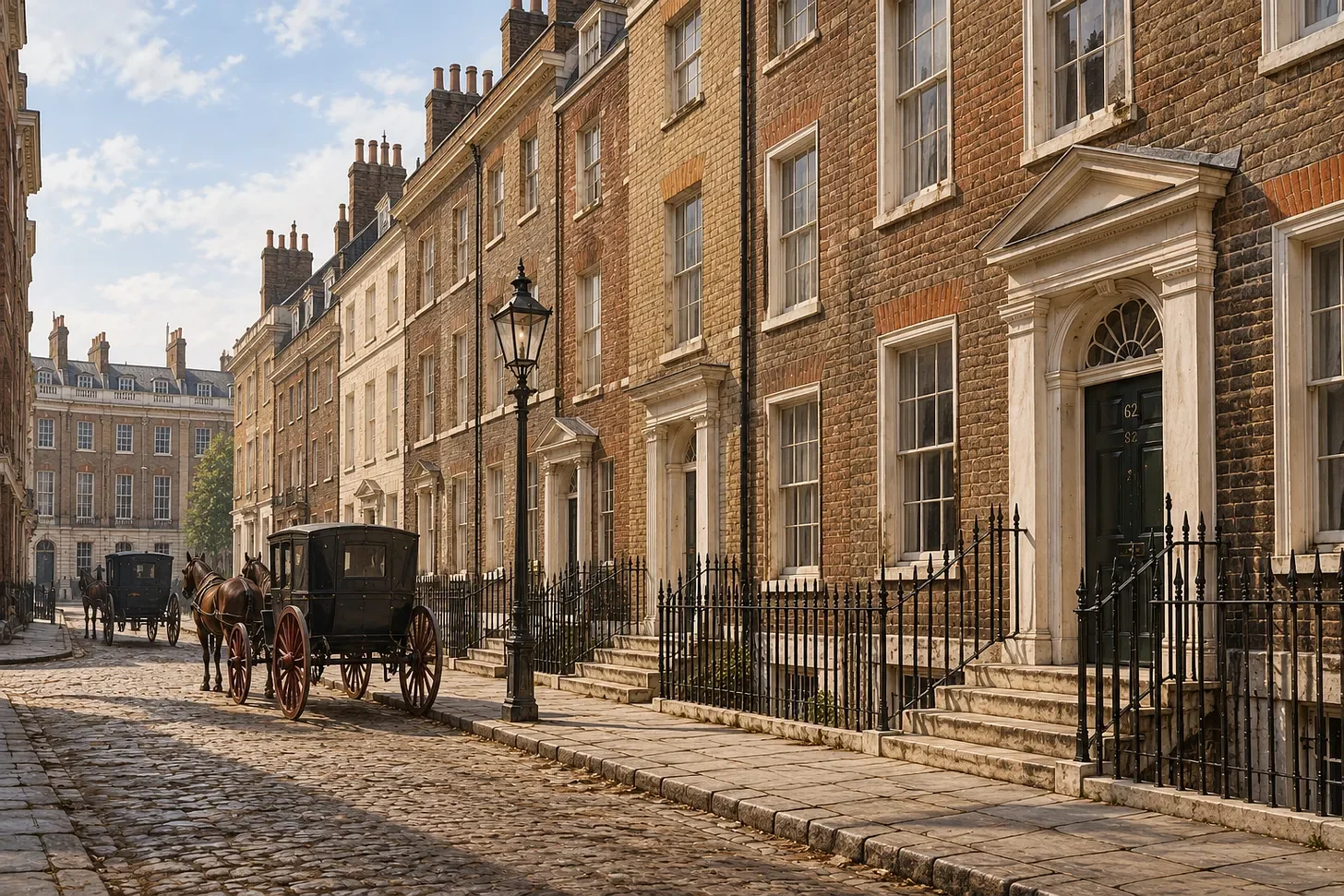
Mr. Brown’s, 62 Portland Street
Peter Brown is also recorded at the same address. He was an established illustrator of birds, insects, and flowering plants. His circle included naturalists Joseph Banks and Thomas Pennant.
In 1776, he published New Illustrations of Zoology, and in 1783, the Prince of Wales appointed him the royal ‘botanical painter.’
Peter Brown could have been Margaret’s landlord, her teacher, or just a friend she used as an address. He was Danish-born and accomplished.
Portland Street connected them forever in the records.
Margaret worked and exhibited consistently in a city where a woman’s artistic reputation and location could help her attract paying pupils.
Their address at 62 Portland Street was probably about 1 to 1.5 miles (1.6–2.4 km) from the Royal Academy's exhibition rooms in Pall Mall in 1777. That would have meant approximately 20–35 minutes on foot.
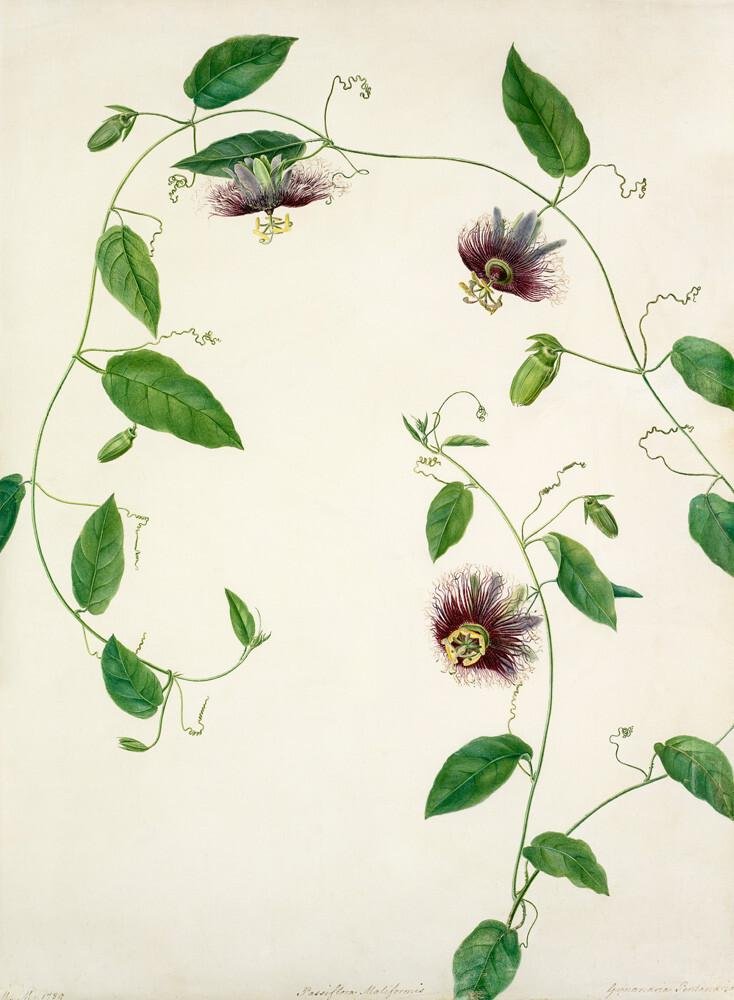
Passiflora maliformis
In a 1781 letter from Norfolk botanist Thomas Woodward to botanical publisher William Curtis. He asks Curtis to provide her with botanical specimens to draw.
Thomas described her as ‘a young woman from Bungay who had settled in London to teach flower and insect painting’.
Margaret was teaching, sought specimens, and connected with men in Britain’s expanding botanical publishing world. An English female floral artist whose reputation was growing in an established botanical network.
How exciting!
And Margaret Meen was already an exhibiting artist during Mary Delany's lifetime. Both were active in Britain's botanical art world, though I found no evidence of a meeting at the Academy. By the time Mary Delany died in 1788, Margaret was about 36. She had already spent more than a decade exhibiting botanical artwork. I want to imagine they knew each other through the royal circle. It’s a small world after all.
Because by 1789 Margaret’s pupils included Queen Charlotte, wife of George III and friend to Mary Delany.
The queen was a serious botany enthusiast. The royal gardens at Kew offered access to plants arriving from around the world, and drawing was par’ education.
On one occasion in 1789, Queen Charlotte recorded in her diary that she “drew with Miss Mean from 10 till one.”
Three hours!
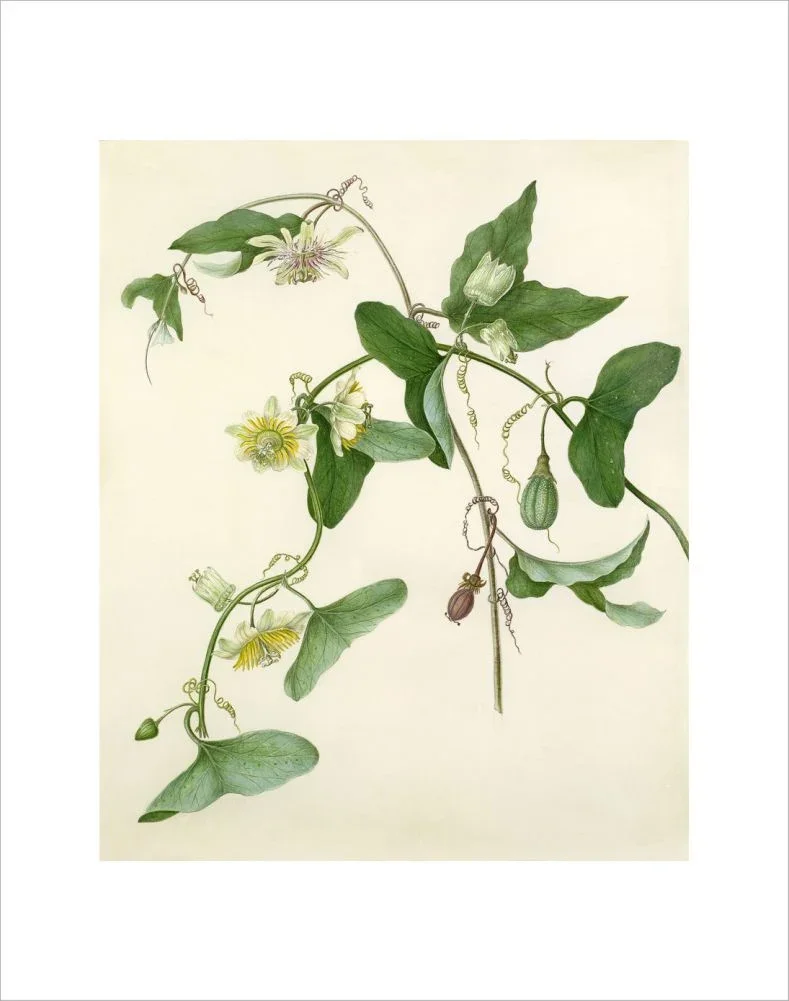
Passiflora misera
I find that little diary entry delightful.
Imagine the difference between the young woman who once exhibited her paintings from Mr. Brown’s address on Portland Street and the experienced artist now teaching in royal surroundings.
Margaret had earned her way into that room.
Her relationship with the royal household extended beyond the queen. Princess Elizabeth, one of George III and Charlotte’s daughters, was an enthusiastic artist who copied botanical compositions. In 1792, the princess completed a flower painting featuring a bird’s nest, based on Margaret’s work.
The connection did not disappear after a few fashionable lessons. Margaret and Princess Elizabeth continued to correspond until 1822.
In 1790, Margaret attempted something particularly ambitious.
She published Exotic Plants from the Royal Gardens at Kew and dedicated the work to her student and her queen, Queen Charlotte.
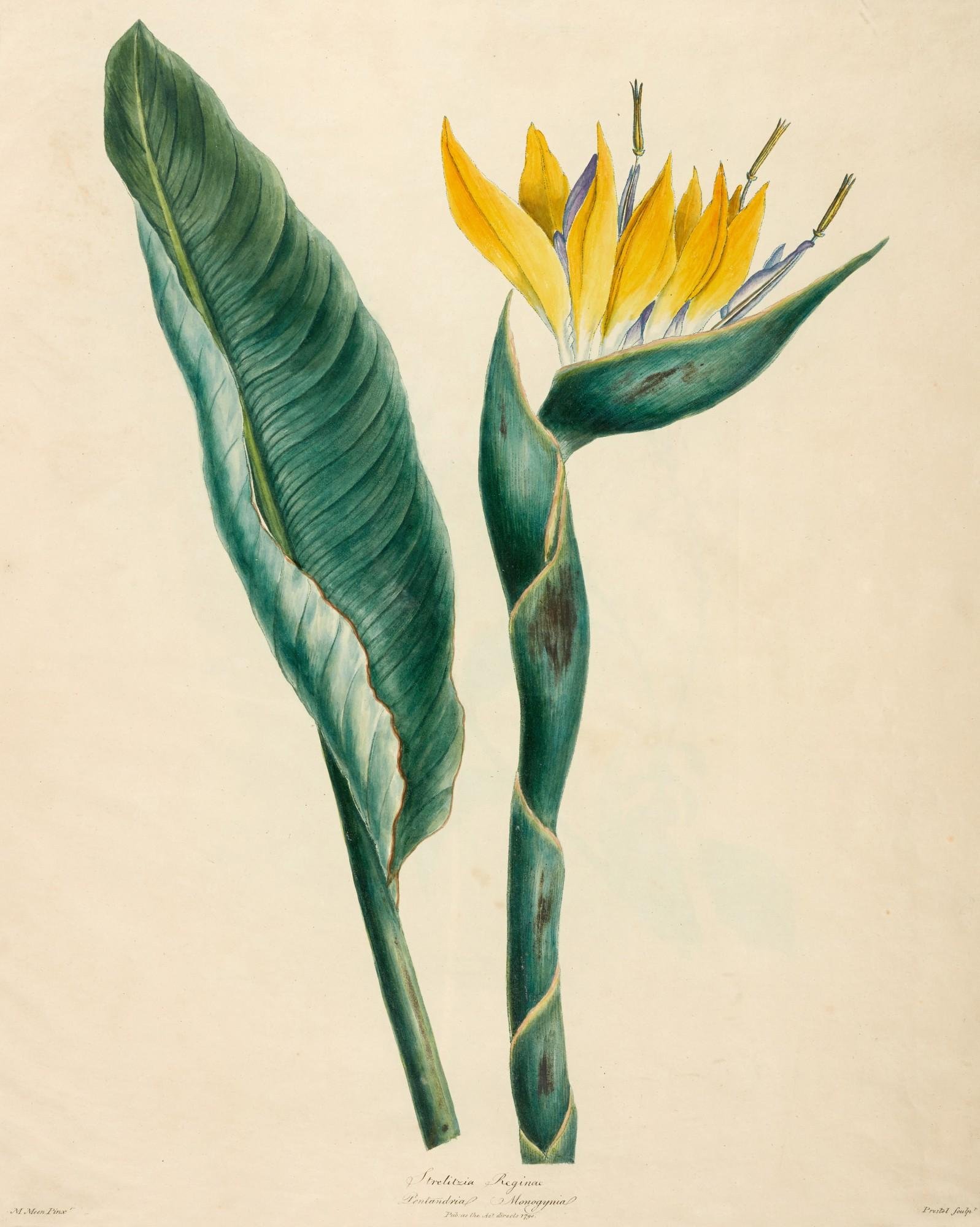
Strelitzia reginae
The project brought together the subjects she knew best: unusual plants, botanical illustration, and the royal gardens. One illustration featured Strelitzia reginae, the bird-of-paradise flower, named for the queen's birthplace, Mecklenburg-Strelitz.
The publication was intended to appear in installments, but only two issues were produced. Why it ended so quickly is not firmly established. Perhaps the expense of producing botanical illustrations proved difficult to sustain. Perhaps there were too few subscribers. Without her accounts or correspondence explaining the decision, we cannot know.
Still, Margaret had done something important. She had moved beyond teaching and exhibiting to publishing botanical work under her own name.
And she kept working.
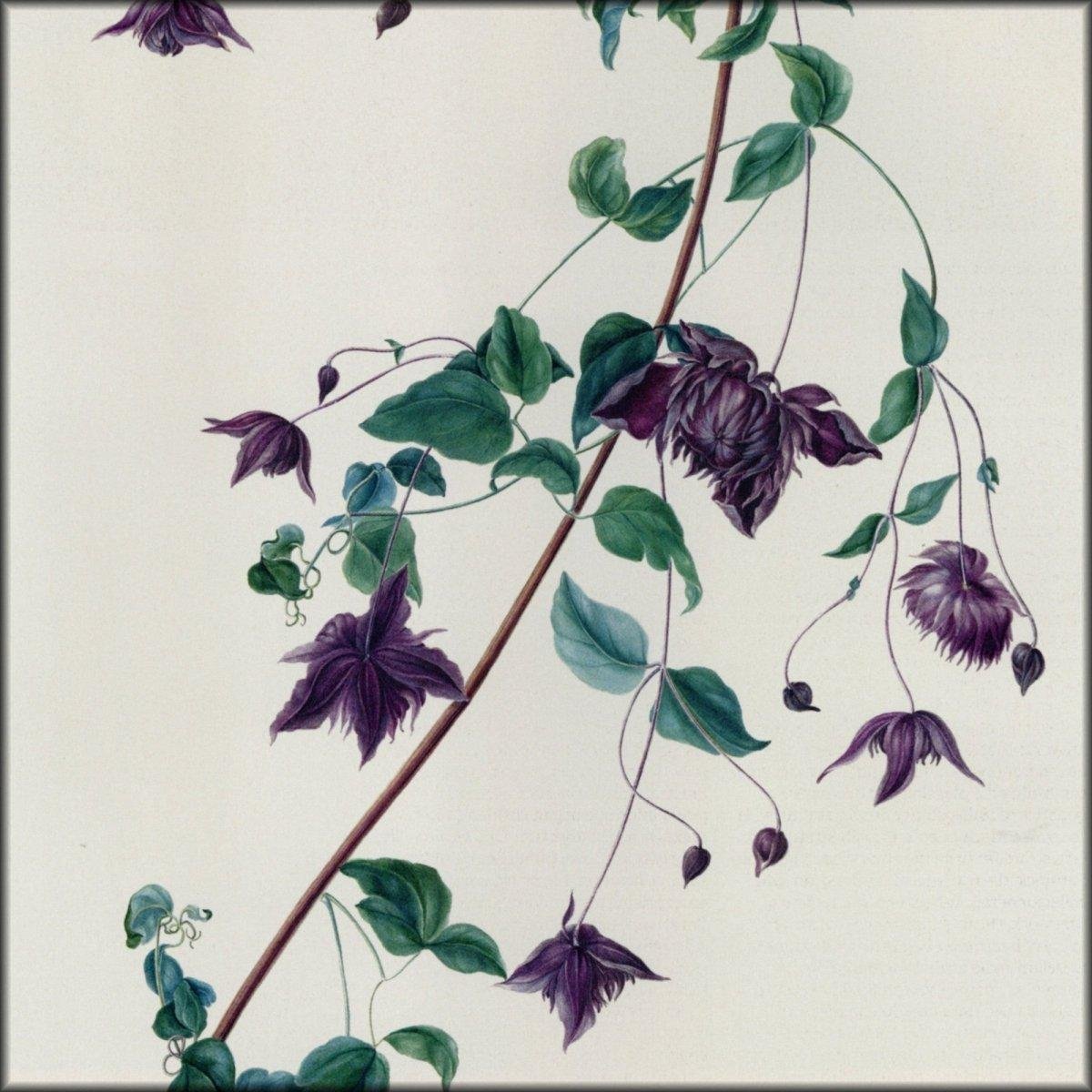
Clematis purpurea
Her paintings documented plants cultivated at Kew, including species newly introduced into Britain.
She used William Aiton’s Hortus Kewensis to identify the plants she illustrated. These were not merely attractive pictures for the wall. They preserved the appearance of living specimens at a time when botanical collections were expanding rapidly.
Margaret's later life also reminds us that an artist's career did not necessarily end when fashionable patronage faded. She continued teaching in private households and schools, including classes in Notting Hill. Among her pupils were daughters of Joshua Smith, the member of Parliament for Devizes. One of those young women, Emma Smith, later married into the Austen family.
As far as the surviving biographical record shows, Margaret had no husband or children of her own.
Teaching remained an important part of her life well into old age.
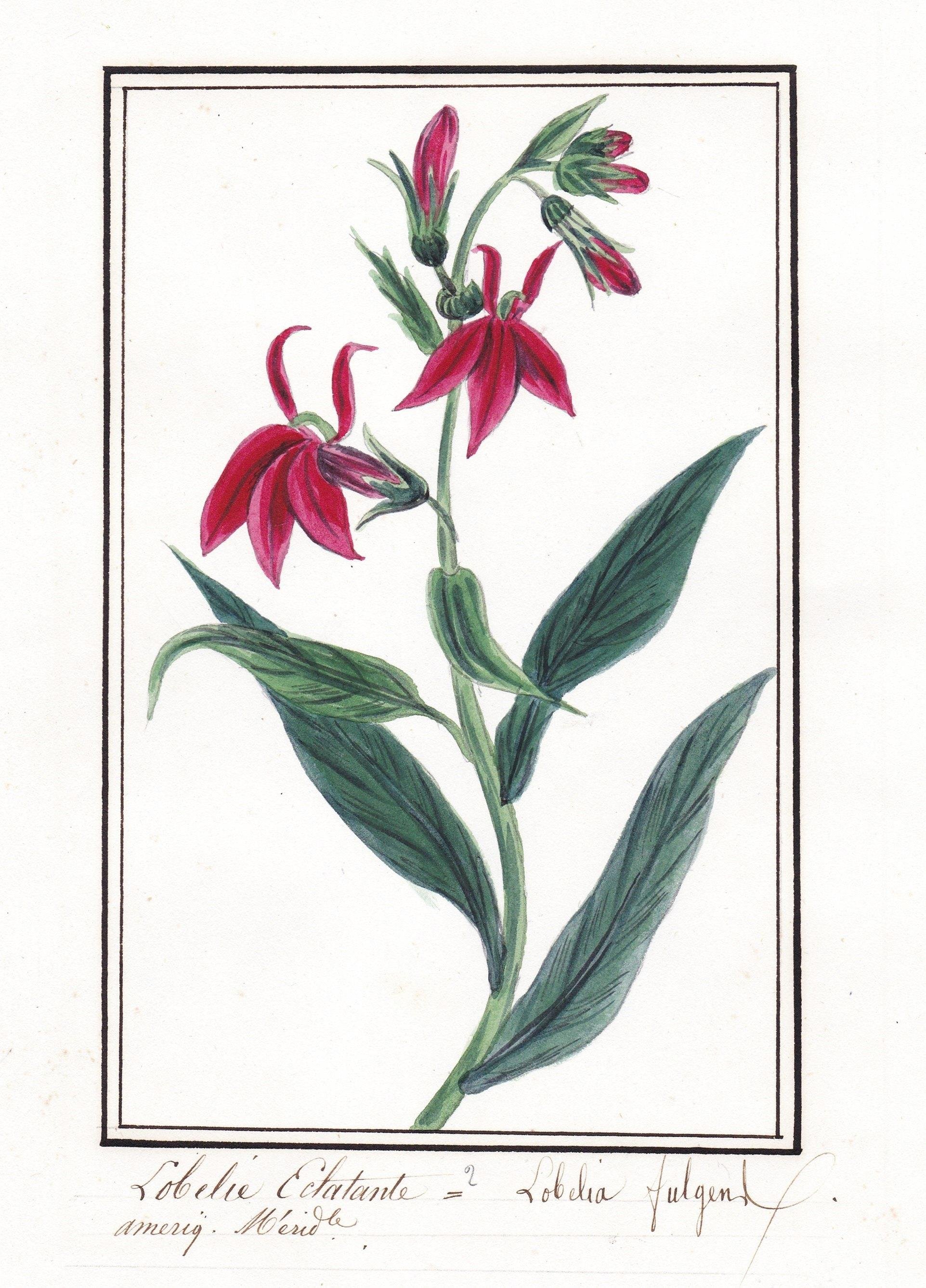
Lobelia species
By 1819, Margaret was living at Sunnybank Cottage in Loughton, Essex. She continued traveling to teach at a school in Hammersmith, despite the expense of the coaches.
Margaret's Need for Company
A surviving letter from Margaret explains why she continued making those journeys. She wrote that even if her coach fares consumed everything she earned, the lessons were worthwhile because they helped sustain her spirits and kept her in contact with the world.
I find that rather touching.
Margaret wasn't necessarily teaching for the money. Being among people mattered to her, too. It offers a much more personal glimpse of her life than any list of exhibitions or royal pupils could.
In 1820, she appears to have been seeking a woman to live with her as a companion, offering accommodation without wages.
Five years later, her will reportedly identified a woman named Elizabeth Browning as living in her household. Elizabeth was left £2,500 in consolidated annuities, a substantial provision.
Could Elizabeth have been the companion Margaret was seeking? Possibly, although I haven't found evidence to prove it.
Another woman, Catherine Renouard, was named executrix and received the remainder of Margaret's estate. The surviving records cannot fully explain what these relationships meant to Margaret personally.
Still, here was an unmarried professional woman in her seventies, arranging her household, managing her finances, and deciding who would inherit what she had accumulated during her lifetime.
And I rather admire that independence.
Margaret Meen died in Bath in January 1834, aged 82, and was buried in the parish of St Swithin's, Walcot. Her will, written nine years earlier, had identified her residence as Loughton, Essex.
What brought her to Bath remains uncertain. She may have been visiting someone, staying for her health, or living there temporarily. Her burial is documented, but the circumstances surrounding her final days remain a small historical mystery.
Margaret had taught girls, aristocratic women, and a queen. She exhibited at the Royal Academy, published botanical illustrations, and left paintings that are still preserved in important collections.
Born into an apothecary's household near Harleston, that little girl spent much of her adult life making a living from flowers.
In an age when flower painting was considered a suitable accomplishment for young ladies, Margaret turned it into a profession.
Was it kinda chic to be Margaret Meen?
Absolutely.
For Your Reference;Chris Byrd, “The Life and Works of Margaret Meen,” Biodiversity Heritage Library, 2019.Julia Buckley, discussion of Margaret Meen in Women in the History of Science, 2023.Jane Simpkiss, “Meen, Margaret (bap. 1751, d. 1834),” Oxford Dictionary of National Biography, 2024.Researched & Written by author Krysta Abesamis