Hello from Advocates Close
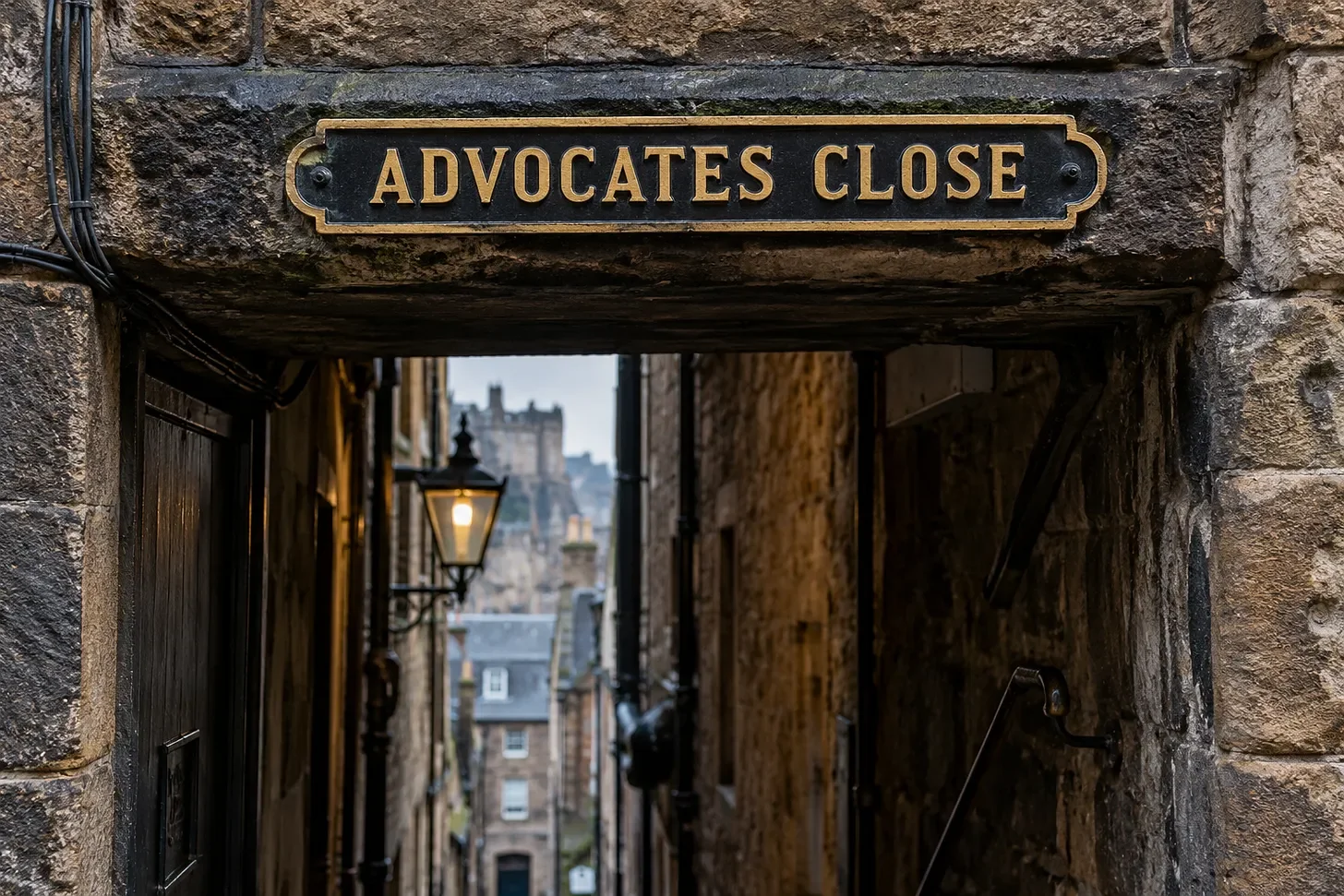
I ducked into one of the closes off the Royal Mile to shake off the rain. Over my shoulder, a little sign read: ADVOCATES CLOSE.
Advocate’s Close runs north from Edinburgh’s High Street, dropping steeply through the Old Town. Edinburgh Castle is only a few blocks away. Today, we tend to think of these closes as passageways, shortcuts between streets, or wonderfully atmospheric places to photograph. Historically, the closes were much more than that.
Houses rose along them. Families lived above shops, workshops, cellars, and stables. People carried food and water through them, climbed their stairs, and emptied waste and rubbish. They raised children, and some even had the plague and died in rooms overlooking the same narrow strip of ground.
Advocate’s Close has a documented history stretching back centuries. Archaeologists have excavated the site here and uncovered fragments of the people who lived there.
Three distinct ages are hidden within what you see as Advocate’s Close.
The closes themselves are medieval. Archaeology beneath them shows occupation dating to the 12th–13th centuries, during the early development of Edinburgh as a royal burgh.
The High Street was laid out with long, narrow burgage plots running off it. Over time, access lanes developed between and through these plots—the ancestors of the closes we recognize today. The closes grew organically as medieval property behind the High Street was divided, occupied, and increasingly built upon.
But the stone buildings and stairs are much later. The west-side excavation uncovered a tenement built in the late 1500s, complete with cellar floors, a corbelled cellar roof, and a turnpike stairwell—a spiral stair contained within the building. Archaeologists date that stair as part of the late-16th-century tenement complex. It wasn’t originally the big open flight of steps we experience today; it was part of the house itself.
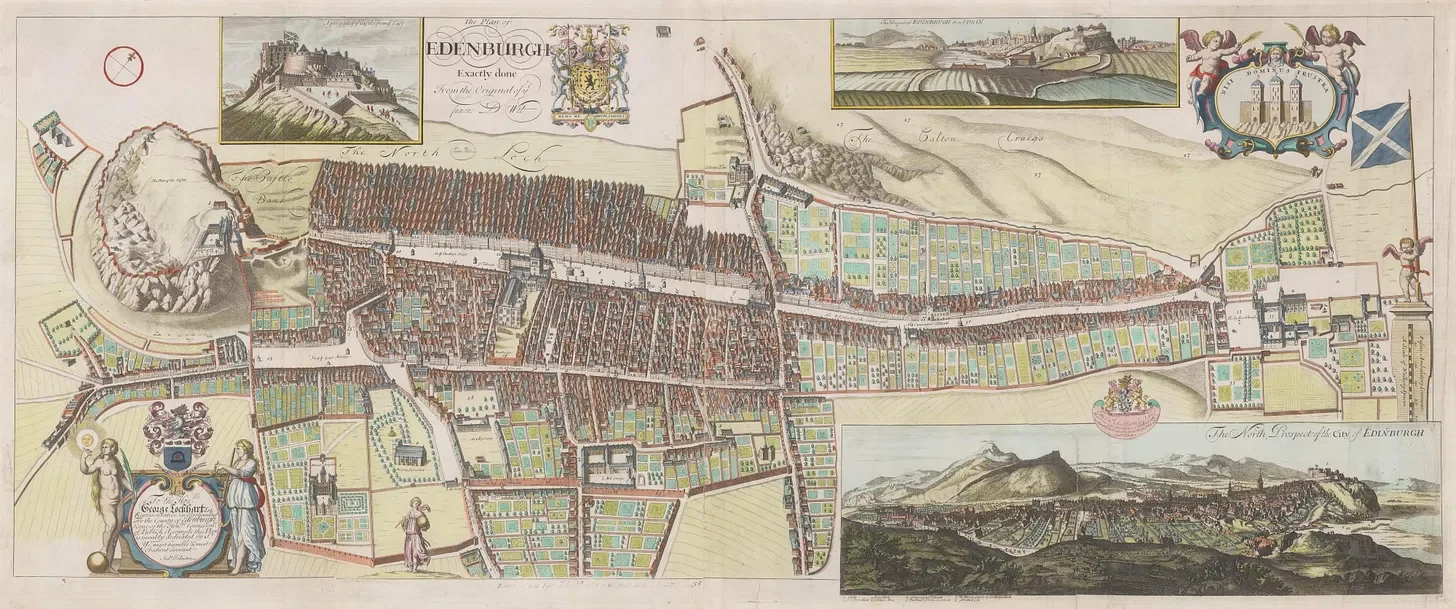
By the seventeenth century, there were also exterior stairs. Gordon of Rothiemay’s 1647 map of Edinburgh depicts the tenements here with steep steps rising from the close to entrances above street level.
Before anyone called it Advocate’s Close, the passage appears in records under several names, including Cant’s Close, Clement Cor’s Close, Home’s Close, and Stewart’s Close. Edinburgh closes often took the names of prominent residents and property owners, so a change on the map could mark a change in who lived there.
Its existence dates back to at least 1562. A charter from that year belonging to John Murdo concerns the former property of Henry Cant on the east side of the transe—the passage/close. In 1579, Murdo conveyed land described as being on the east side of Cant’s Close to Clement Cor.
Cor was an Edinburgh merchant, burgess, and civic official. Earlier documentation describes the land here as waste and burnt.
That is particularly interesting because Edinburgh had been violently attacked in 1544, when English forces burned large sections of the town. So when Cor’s household entered this story, parts of this close already bore the scars of an earlier Edinburgh. By 1590, Clement and his wife, Helen Bellenden, had built (or substantially rebuilt) the house here.
Their initials survive together in the stone today: C.C. — H.B.
One inscription on their house reads SPES ALTERA VITAE — Hope of another life. Another, dated 1590, reads: BLISSIT BE GOD OF AL HIS GIFTIS.
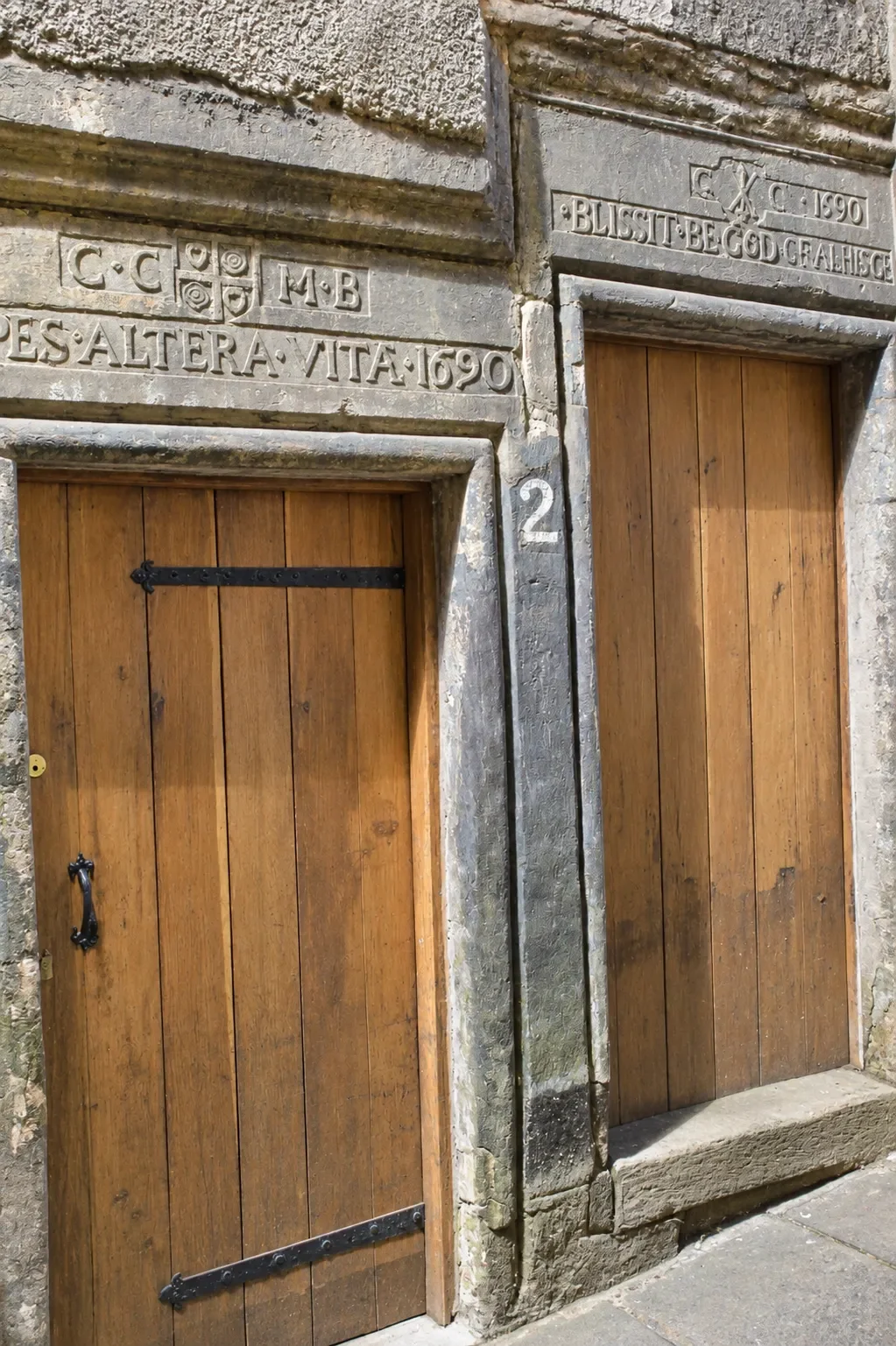
What we see today is a little deceptive: the doorways are genuinely old, but they no longer show exactly how the buildings once stood.
The building rose several stories above the close. At the lower level was a stable, later divided into cellars. Higher up were the household rooms: a hall, study, kitchen, and chambers, reached by stairs climbing through the building.
Clement and Helen had four known daughters: Margaret, Isobel, Bessie, and Janet Cor. Margaret married the advocate Alexander Levingstoune in 1588, and Father Clement later transferred property in the close to the couple.
Outside their door lay Edinburgh in 1590.
James VI sat on the Scottish throne. The Reformation was still within living memory. Edinburgh was crowded, politically volatile, and increasingly built upward, with households stacked above one another along the High Street and its closes. Cool.
Clement Cor could hardly have known that four centuries later someone would excavate the rubbish left by people living in this little corner of the city.
He probably would have been even more surprised to learn that the words he placed over his home would survive! And Clement and Helen are only the beginning.
Another man associated with these buildings, a Lord Advocate, would leave his occupation permanently attached to the street itself.
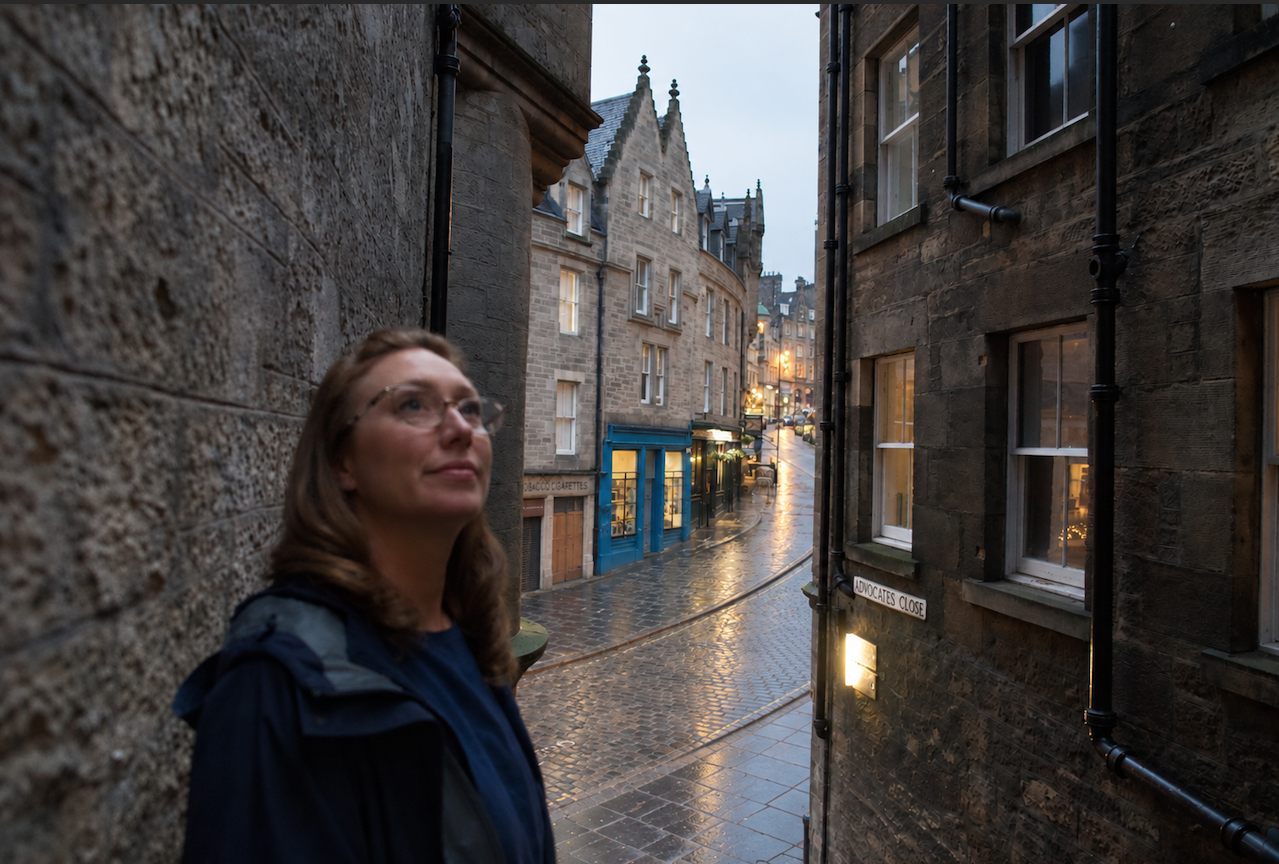
It rained this week in Edinburgh
Right in the thick of the most turbulent chapters in Scottish history, Adam Bothwell, Bishop of Orkney, had a house here.
Adam was born around 1527, the son of Francis Bothwell, an Edinburgh burgess who had served as Provost of the city. Adam was educated at St Andrews and became Bishop of Orkney in 1559, just as Scotland entered the upheaval of the Reformation.
His religious career was, to say the least, complicated. And then came Mary.
On 15 May 1567, Adam Bothwell performed the marriage ceremony between Mary, Queen of Scots, and James Hepburn, 4th Earl of Bothwell, at Holyrood.
Yes, there are two Bothwells. To be clear, Adam Bothwell was the bishop. James Hepburn was the Earl of Bothwell and Mary’s new husband. (Darnley’s murderer)
Our man from Advocate’s Close performed the ceremony.
Imagine Edinburgh during those weeks. These weren’t distant events in another kingdom. They were unfolding within walking distance of the house!
News and rumor would have traveled through the High Street, taverns, shops, and closes almost as quickly as people could speak them.
Adam himself later claimed he had been pressured into performing the marriage.
His residence occupied part of what survives around Advocate’s Close, and traces of the building have been incorporated into later structures. The house is generally dated to the sixteenth century.
By 1688, the Stewart family had become associated with property in the close. Sir James Stewart of Coltness, a merchant and twice Lord Provost of Edinburgh, acquired a tenement here. His son, also Sir James Stewart, lived here, rebuilt the family house, and later became Lord Advocate of Scotland, serving under William and Mary and Queen Anne. Sir James died in 1713, but his name outlived him!
After the Stewarts, Advocate’s Close gradually lost the wealthy households that had once given it prestige. As Edinburgh expanded during the eighteenth century and prosperous families moved toward the New Town, the Old Town closes became more crowded. Old houses in the closes were subdivided into smaller dwellings, workshops and commercial spaces.
Walking Advocate’s Close · Filmed by Edinburgh Walks - click here…
Some of the sixteenth-century buildings still survive along the east side of Advocate’s Close. The west side was less fortunate. During 1920s slum-clearance work, they demolished most of its buildings. Several of the old carved doorways were saved, but instead of being returned to their original positions, they were grouped together in a new arrangement.
But they left plenty behind…
Centuries later, archaeologists’ excavations at Advocate’s Close uncovered layers of household debris beneath the buildings: animal and fish bones, pottery, glass, clay tobacco pipes, and other fragments of everyday life. Some ceramics were imported from England and continental Europe. Taken together, these objects suggest relatively prosperous households in the sixteenth and seventeenth centuries.
The layers of midden deposits beneath Advocate’s Close tell another part of the story: how Edinburgh dealt with its rubbish. The way residents dumped and managed household waste changed as the Old Town grew increasingly crowded. What looks like centuries of discarded bones, broken pottery and everyday debris actually records a city struggling to manage waste as it grew and changed around the people living here.
Advocate’s Close never really disappeared.
I am still searching for any shareable video footage of the actual excavation.
The area uncovered is in red.
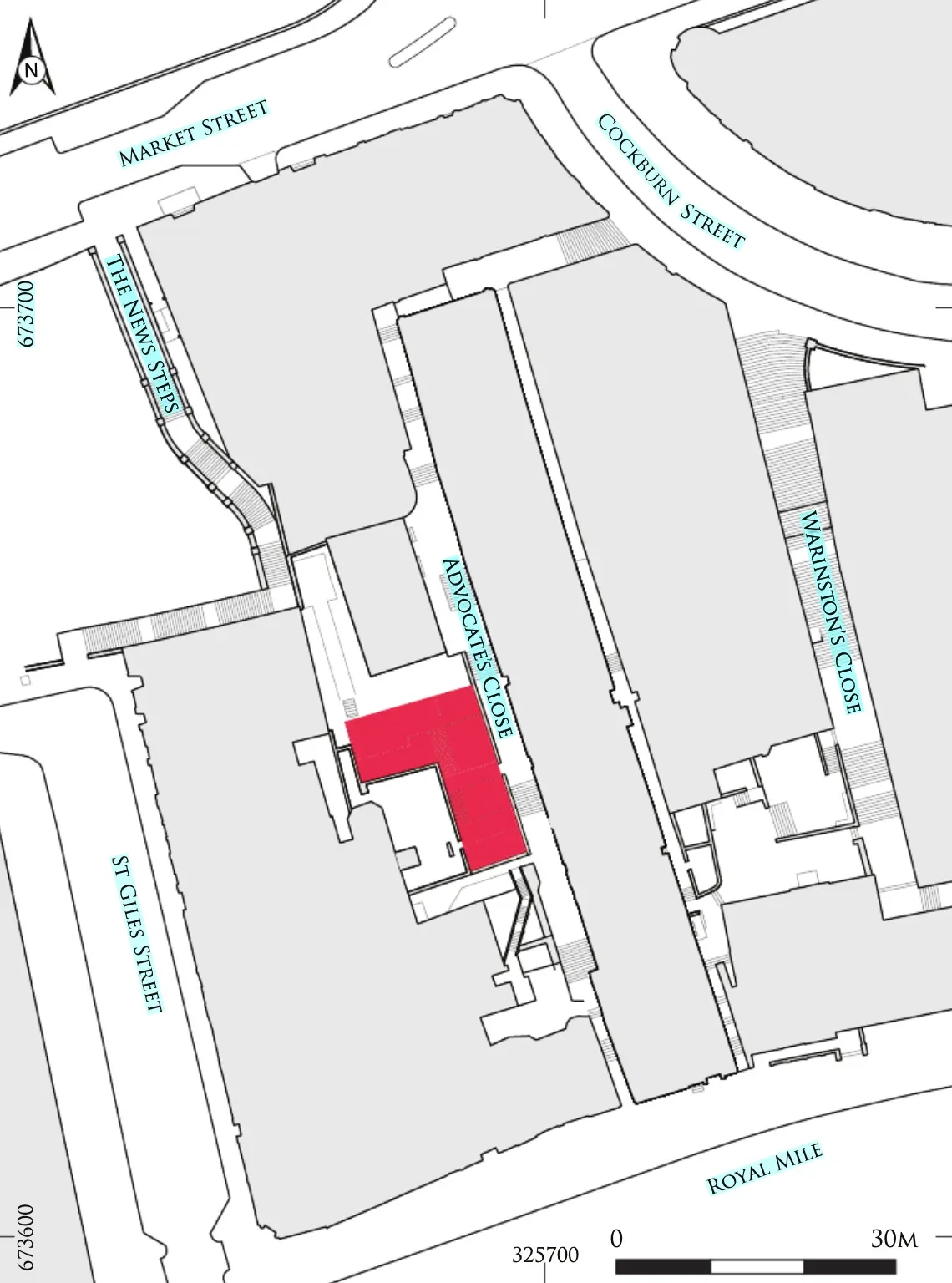
Scottish Archaeological Internet Reports 2017
That’s probably my favorite part of wandering through Edinburgh.
You don’t have to go looking for history.
You’re standing in it.
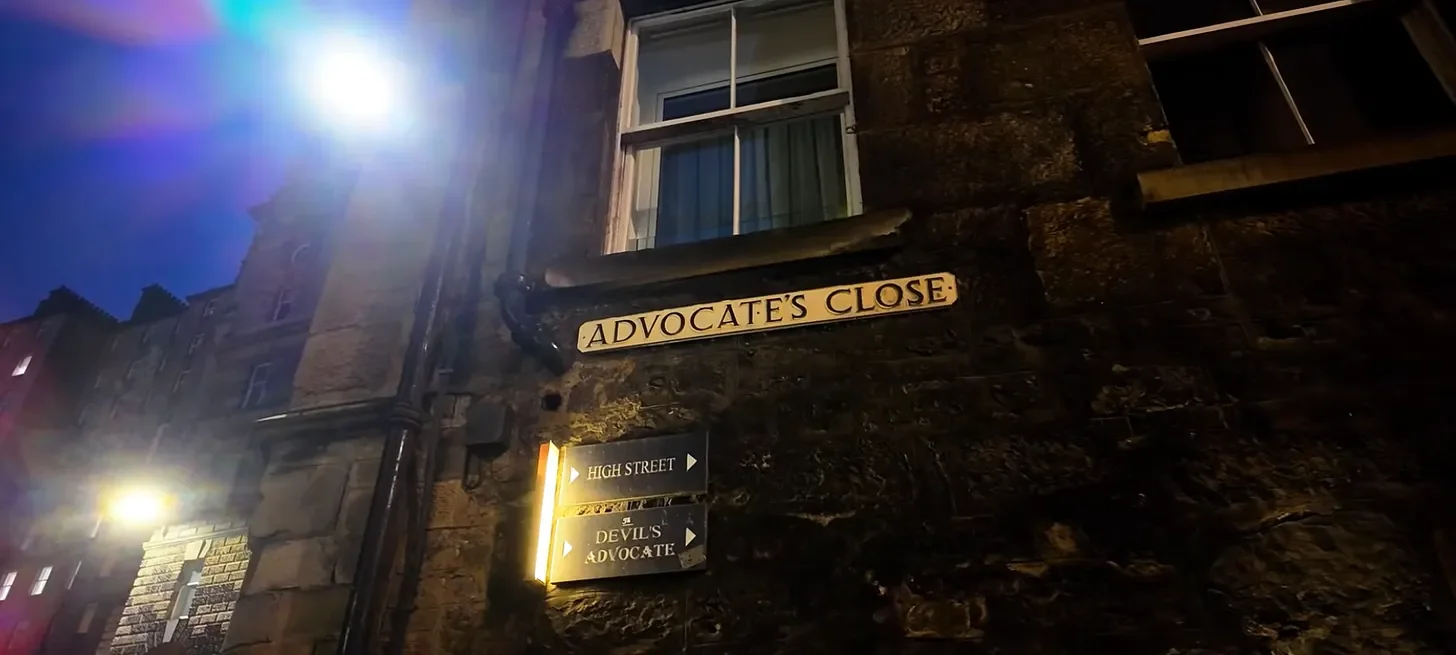
Walk Advocate’s Close at night. Filmed by Indexbot - Click here…