My Ship Dudes · John A. Knox
No relation to the Reformer
A Diaspora Series — John Absalom Knox (1708-1758)🚢🌊🏴🇺🇸
I have uncovered several ship ancestors. They sailed from England, Wales, Scotland, or Ireland for many different reasons. This upcoming series of articles celebrates their brave journeys to the New World. You’ll find me picking apples from my family tree to showcase their unique stories.
My 8th-great-grandfather, John A. Knox, from Scotland, was born in 1708.
Despite the famous surname, this John Knox was not closely related to the controversial ‘Reformer John Knox.’
His exact birthplace remains unknown, but the oldest oral family history preserves a tradition that he came from Renfrewshire, in western Scotland. More than one branch of his descendants recorded this memory, which makes it worth taking seriously.
In John’s childhood, Renfrewshire was still largely rural, with farms, villages, and old estates spreading south and west of the River Clyde.
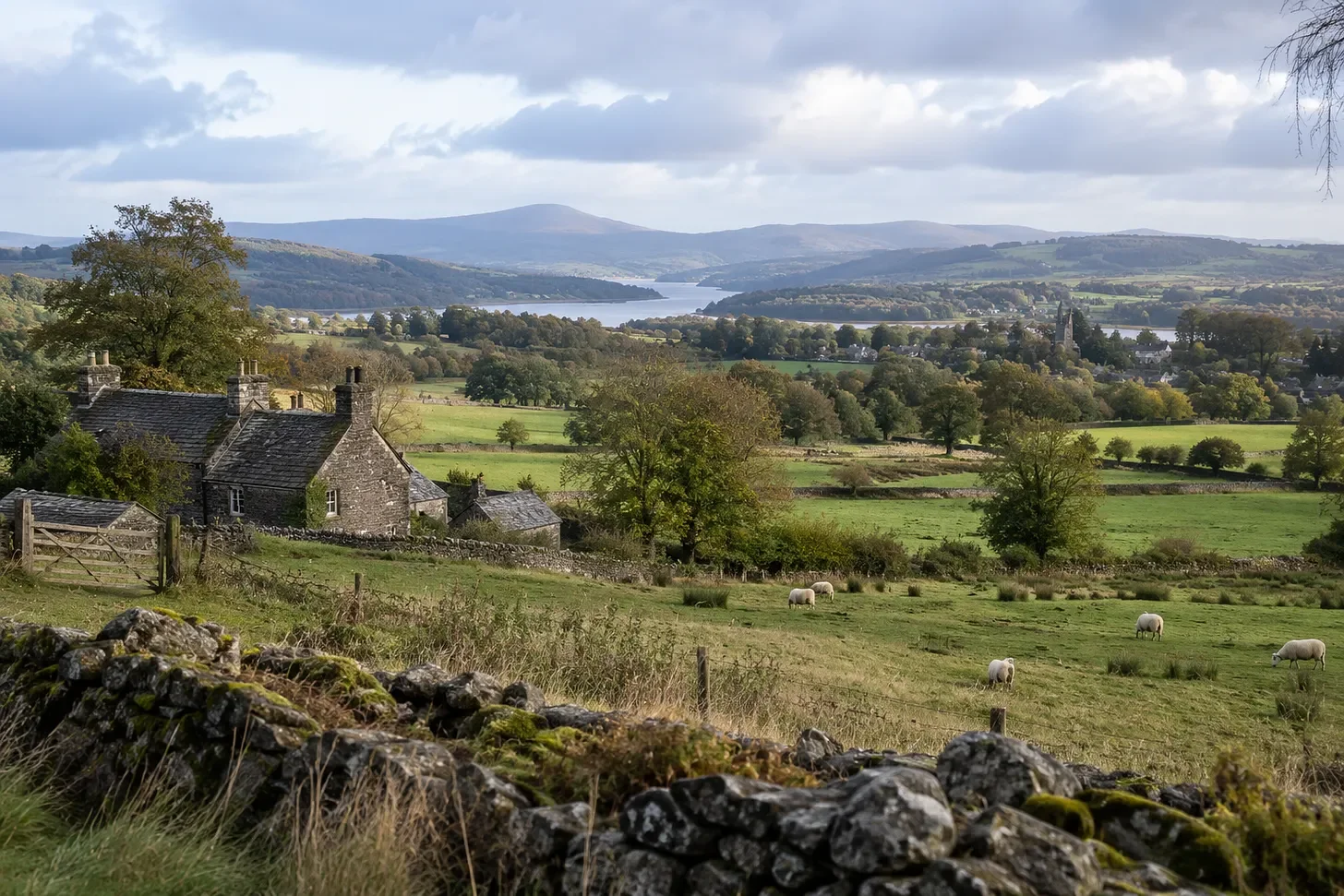
A vision of Renfrewshire, Scotland in 1700
Glasgow was growing nearby but had not yet become the great industrial city of the following century. Parish churches anchored local communities, market towns drew people from the surrounding countryside, and much of everyday life still revolved around the land.
John was born into a Scotland that had only recently emerged from decades of religious upheaval. Presbyterian government had been restored to the Church of Scotland in 1690, less than twenty years before his birth. That Presbyterian world would remain an important thread in his family’s story as they moved from Scotland to Ulster and eventually to America.
Little is known with certainty about John’s childhood. We do not yet have a baptismal record or a specific Renfrewshire parish.
Yet family tradition did preserve the next part of his journey…
At some point, John left Scotland for Ulster, where we find the next part of his story.
The major Plantation of Ulster had begun under James VI & I in the early 1600s, deliberately settling English and Scottish Protestants in the northern province of Ireland. By John’s lifetime, generations had already grown up in the communities created and reshaped by that migration.
Across the North Channel lay Coleraine, a busy market town and transportation center in County Londonderry, near the mouth of the River Bann. The London companies had developed Coleraine during the seventeenth-century Plantation of Ulster as one of its principal planned towns.
The river dominated the landscape, flowing north toward the Atlantic, with fields and gently rising countryside beyond it. Its much older Irish name, Cúil Rathain, means “nook of the ferns,” giving you some sense of the landscape from which the town grew.
Here is where Jean Gracy enters his story.
Born around 1708, probably in Ireland, Jean remains almost as elusive as John. The old Knox family history remembered her as an Irish Presbyterian and preserved two valuable details: her mother was Jean Sinclair, and she had a brother named Patrick Gracy. Beyond that, her early life remains vague.
John and Jean married in Ireland and began their life together there. Patrick Gracy remained close to his sister.
When John and Jean eventually left Ireland, Patrick went with them.
That small detail, preserved by their descendants, tells me that at least one member of Jean’s family was making the journey too.
By about 1740, John, Jean, and Patrick were preparing for a much larger crossing.
They left it all behind.
They were going to America.
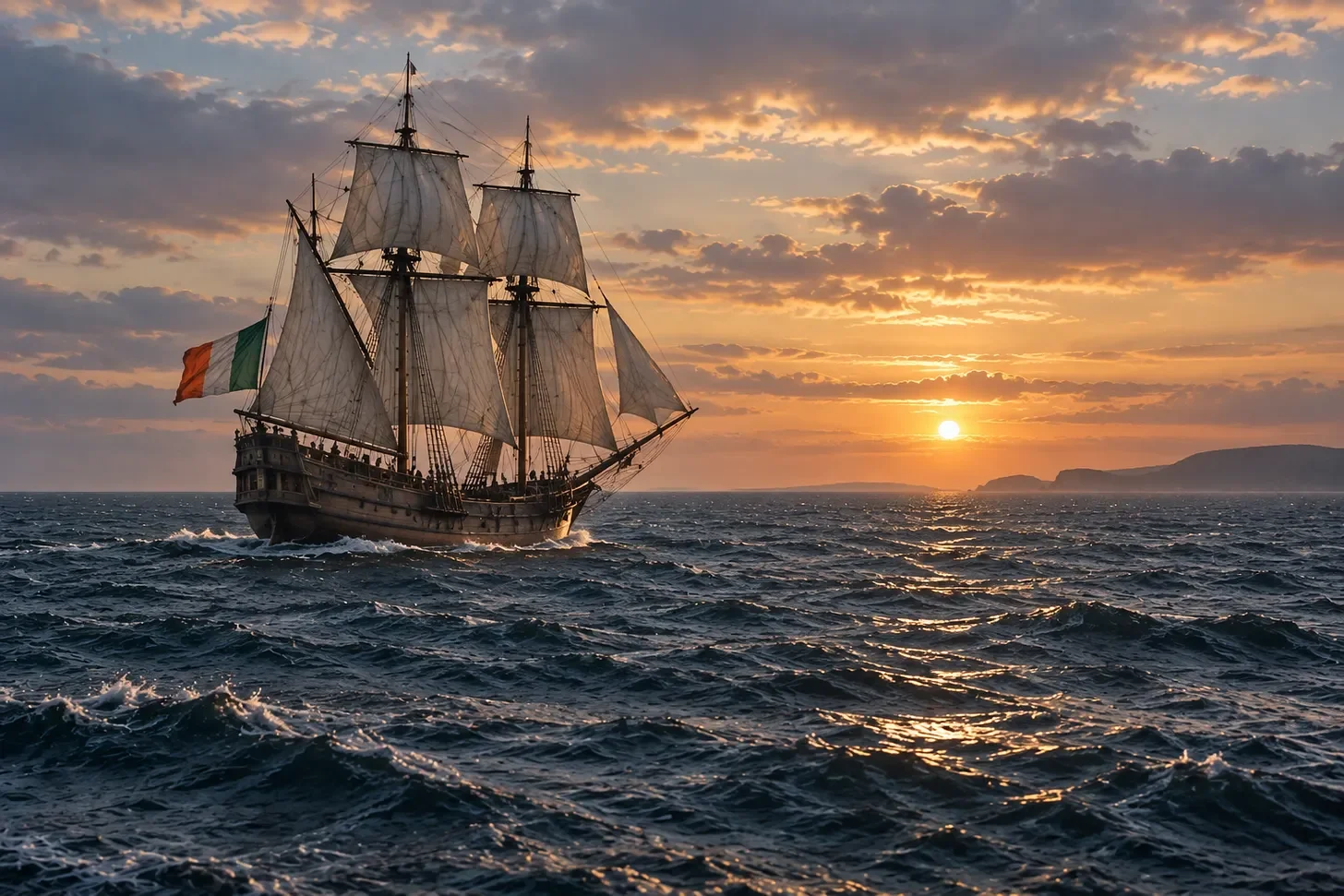
In 1905, Hattie S. Goodman, a descendant of John and Jean, published a Knox family history she had been compiling since 1890. Goodman still had access to old family papers when she wrote, describing some of them as already coming apart with age.
An unusually vivid memory of the crossing survived in the family. Her account of Patrick Gracy drew in part on information from two of Patrick’s great-granddaughters, women close enough to the family to have inherited stories from generations who had known him.
According to that account, John, Jean, and Patrick crossed the Atlantic in a sailing vessel, and the voyage did not go smoothly. Unfavorable winds prolonged the crossing to three months. Before they reached America, their water and provisions ran short. Patrick supposedly left Ireland wearing a new pair of buckskin breeches that fit him tightly. After three months at sea, with food running short, the breeches were considerably looser when he stepped ashore.
Goodman did not identify their ship or port of arrival. She believed they may have spent some time in Pennsylvania before moving south, which would make sense in the context of the broader migration around them. During these years, large numbers of Presbyterian families from Ulster arrived at ports such as Philadelphia and then moved into the interior. Some stayed. Others continued south through the valleys of Pennsylvania and Virginia toward the Carolina backcountry. This was a common route.
Their trail became clearer as they moved south.
By the middle of the eighteenth century, the road into the Carolina backcountry carried a steady stream of families seeking land.
So many families in my tree did the same in the 18th century.
My recent book, ‘Kings of the Blue Ridge,’ covers this road across generations of the Carruthers/Grizzle line, from Pennsylvania to North Carolina and then to Tennessee.
What later became known as the Great Wagon Road followed older paths through Virginia’s Shenandoah Valley and down into the Carolina Piedmont. It was not a single, smooth highway. Routes branched, converged, and changed as travelers made their way south.
Travelers encountered rough stretches of road, river crossings, mud, steep grades, taverns, ferries, and settlements scattered along the route. At some point during this southward movement, John, Jean, and Patrick’s paths diverged into neighboring households rather than a single traveling party. Patrick Gracy settled in what became the Presbyterian community around Center Church, while John and Jean established themselves farther east in the area that became Rowan County.
Here, at last, John emerges from family memory and into surviving public records.
On 23 May 1758, a Rowan County deed recorded James Stewart selling John Knox 600 acres of land on the south side of Third Creek. The price was £37 10 shillings.
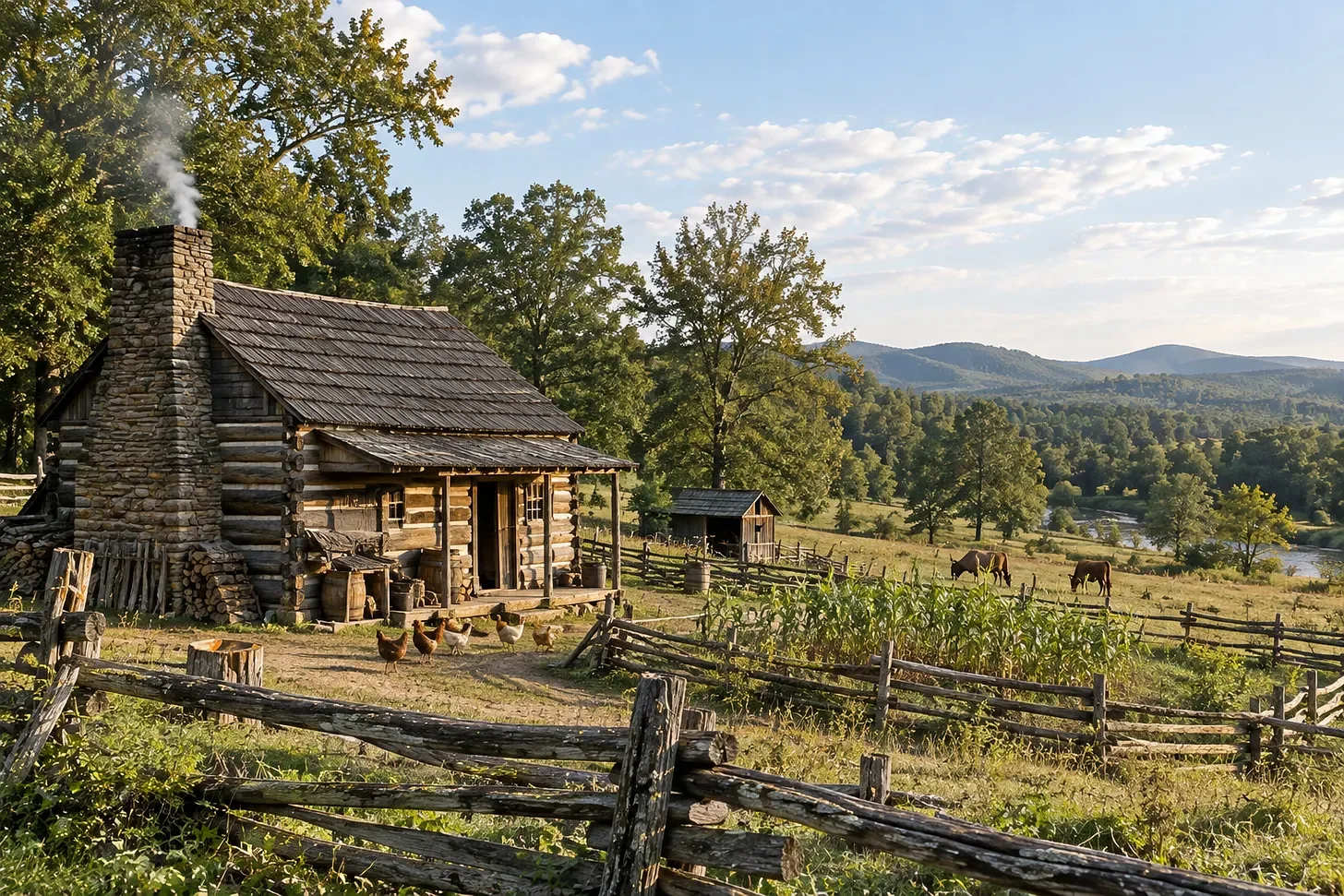
A vision of John Knox’s land 1758
The clerk also provided John's description.
John Knox, yeoman.
After Scotland, Ulster, an Atlantic crossing, and years in an American landscape that remains difficult to trace, I finally have him standing on a piece of ground.
The Knox Farm Historic District near Cleveland, Rowan County, preserves the historic Knox family property. The National Register documentation traces the farm’s origins to the 600 acres John Knox acquired in 1758.
Whether John himself built the cabin still needs to be established.
Knox family lands near Third Creek, Rowan County, North Carolina —
Modern reference: 35.71694, -80.74694.
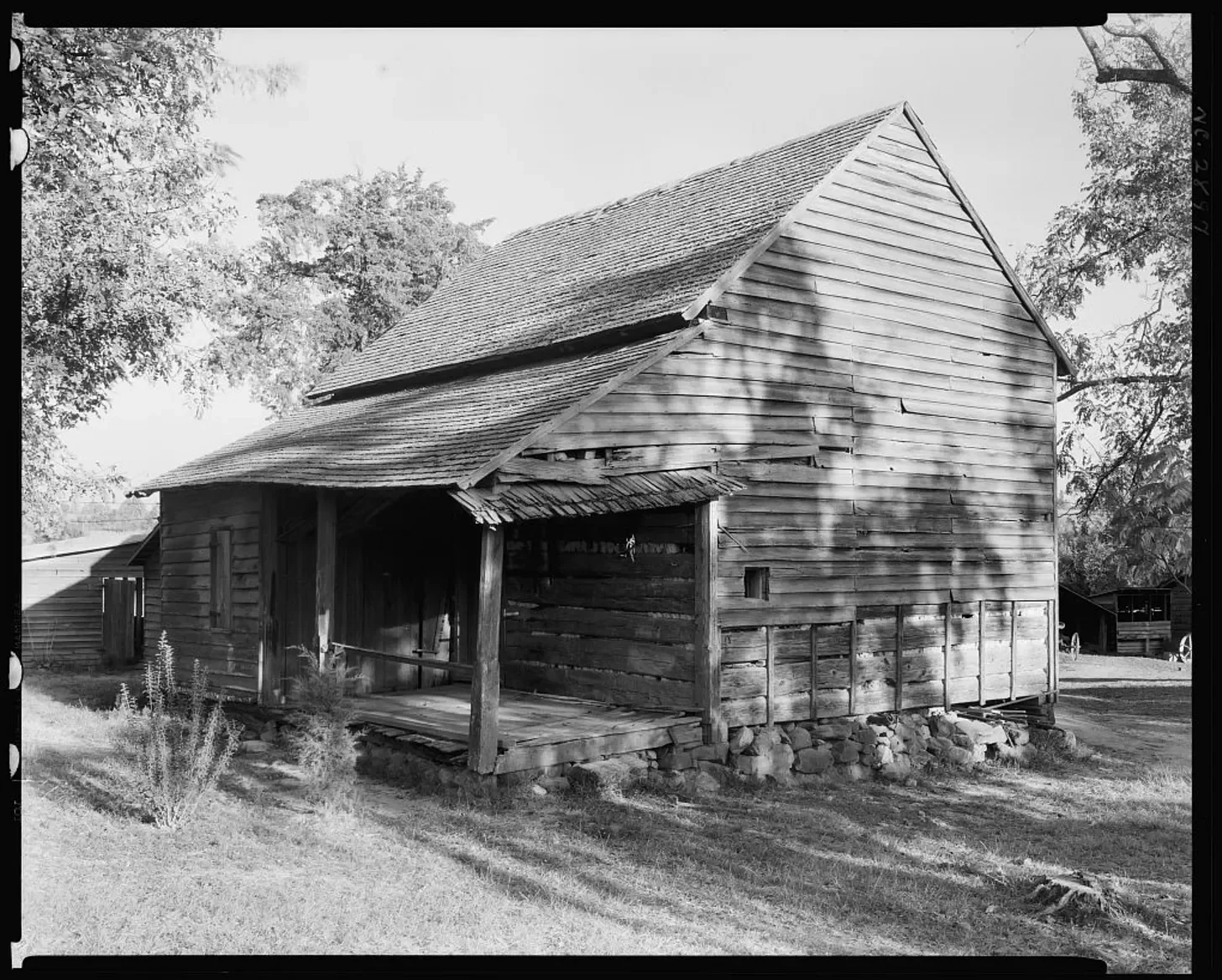
John Knox Cabin (Frances B. Johnston Photo 1938) https://www.loc.gov/resource/csas.03108/
The Library of Congress catalogs it as “John Knox Emigrant Cabin, Salisbury vic., Rowan County, North Carolina.” Frances Benjamin Johnston photographed it in 1938 as part of the Carnegie Survey of the Architecture of the South. Most importantly, Johnston’s inventory dates the structure to around 1752.
John and Jean were not beginning again as a young couple. They had brought a family with them on this migration. Their household would eventually include seven sons and one daughter: William, Samuel, James, Absalom, John, Joseph, Benjamin, and Mary.
Nearby stood another important piece of their new world: Thyatira Presbyterian Church. The congregation was established by the early 1750s, and John has long been remembered as one of its early members or founders, although the National Register researchers correctly describe that connection as tradition rather than documentary proof.
Still, Thyatira would become inseparable from the Knox family.
Only a few months after the 1758 deed recorded John’s name on the land, his story came to an abrupt end.
Before 1758 was over, John A. Knox was dead.
About fifty years old, he died in Rowan County. He was buried in the churchyard at Thyatira Presbyterian Church, not far from the land on which he and Jean had made their home. His grave is among the earliest surviving burials there.
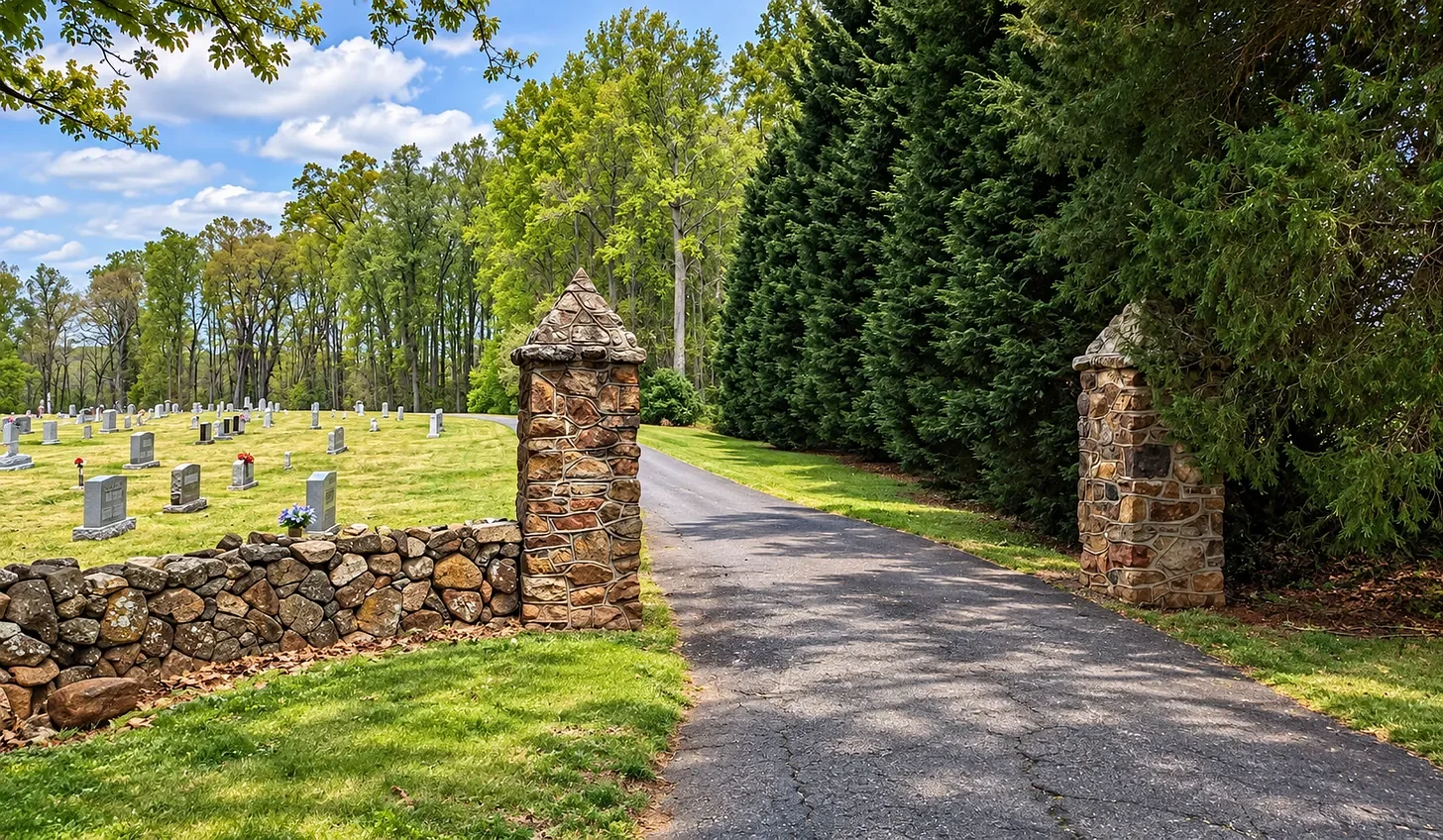
Thyatira Presbyterian Churchyard
Jean was left to carry on without him.
She remained in Rowan County for another fourteen years, surrounded by the family they had brought to this new world.
By September 1772, Jean was ill enough to put her affairs in order.
On September 13, she made her will. Unlike much of their earlier story, this document survives. Jean named family members, distributed her possessions, and signed her mark at the bottom of the page before witnesses Henry Chambers, John Graham, and John Kerr. Only five days later, on September 18, 1772, Jean died. She was sixty-four years old.
They buried her beside John at Thyatira. Their old gravestone recorded them together: John, who died in 1758, and “Jean Knox his wife,” who died in 1772. More than 150 years later, descendants preserved the original stone within a larger memorial erected on May 20, 1911.
On it, they inscribed the names of the seven Knox sons remembered as soldiers of the American Revolution, their daughter Mary, and a remarkable note beside their son James: grandfather of President James Knox Polk. Their children would carry the family into another chapter of American history…
They were the great-grandparents of James Knox Polk, once President of the United States.
John and Jean had begun in Scotland and Ulster, crossed an ocean, and ended their lives on the Carolina frontier.
Grateful there was enough of a trail for me to follow the family across the water.
For Your Reference;
Hattie S. Goodman, The Knox Family: A Genealogical and Biographical Sketch of the Descendants of John Knox of Rowan County, North Carolina, and Other Knoxes (1905) — see especially Chapter IV, “John Knox, Emigrant, and Jean Knox’s Will.”
Knox Farm Historic District — National Register of Historic Places nomination, Rowan County, North Carolina — documentation for the historic Knox property and landscape near Third Creek.
Frances Benjamin Johnston, “John Knox Emigrant Cabin,” 1938 — Library of Congress — original archival photograph; Library of Congress inventory dates the structure to 1752.
8th-great-grandfather of author Krysta Abesamis