Microhistory Explained
I feel microhistory is often misunderstood. It frequently depends upon historical reconstruction. Writing becomes microhistorical when you deliberately use a small reconstructed world to investigate the larger one.
The kind of history I am drawn to is a legitimate historical method, not merely “family history with extra detail.” I want to find the life between the records—to write about the places people called home, the schedule they woke up to each morning, the events that shaped their lives, the hardships they carried, and the pieces of themselves they unknowingly left for us to find.
Traditional genealogy can establish the framework: Who were this person’s parents? Whom did they marry? When were they born? Where did they live? Who were their children? Those questions build the family tree. My interest begins with what we can discover beyond the tree.
I am trying to figure out what it was like to be them and to be there. That is a big part of the attraction for me.
For example, I can write about the life of one cotton-mill worker in Lanett, Alabama
(The Girl, Bacon Level and the Chattahoochee), from census records, employment evidence, maps, photographs, and accounts of mill conditions. That reconstruction tells us about one person. But when you use her life to explore how mill work, company housing, wages, family labor, and industrialization changed life for working families in the South, the small story becomes microhistory. Investigating her is recovering a community that has largely disappeared.
I feel that being a historian means bringing those pieces to life without claiming more than the evidence allows.
To understand how microhistory became a method, it helps to look at three historians who shaped the way we practice it today.
The prominent Italian historian Giovanni Levi is a central figure in the Italian movement known as microstoria — microhistory. He was born in Milan on 29 April 1939. Levi is 87 years old. He taught at Turin and Viterbo. And he is presently at the Ca’ Foscari University of Venice, where he is now professor emeritus.
What interests me most about Levi is he believed the historian should let the reader see the investigation happening.
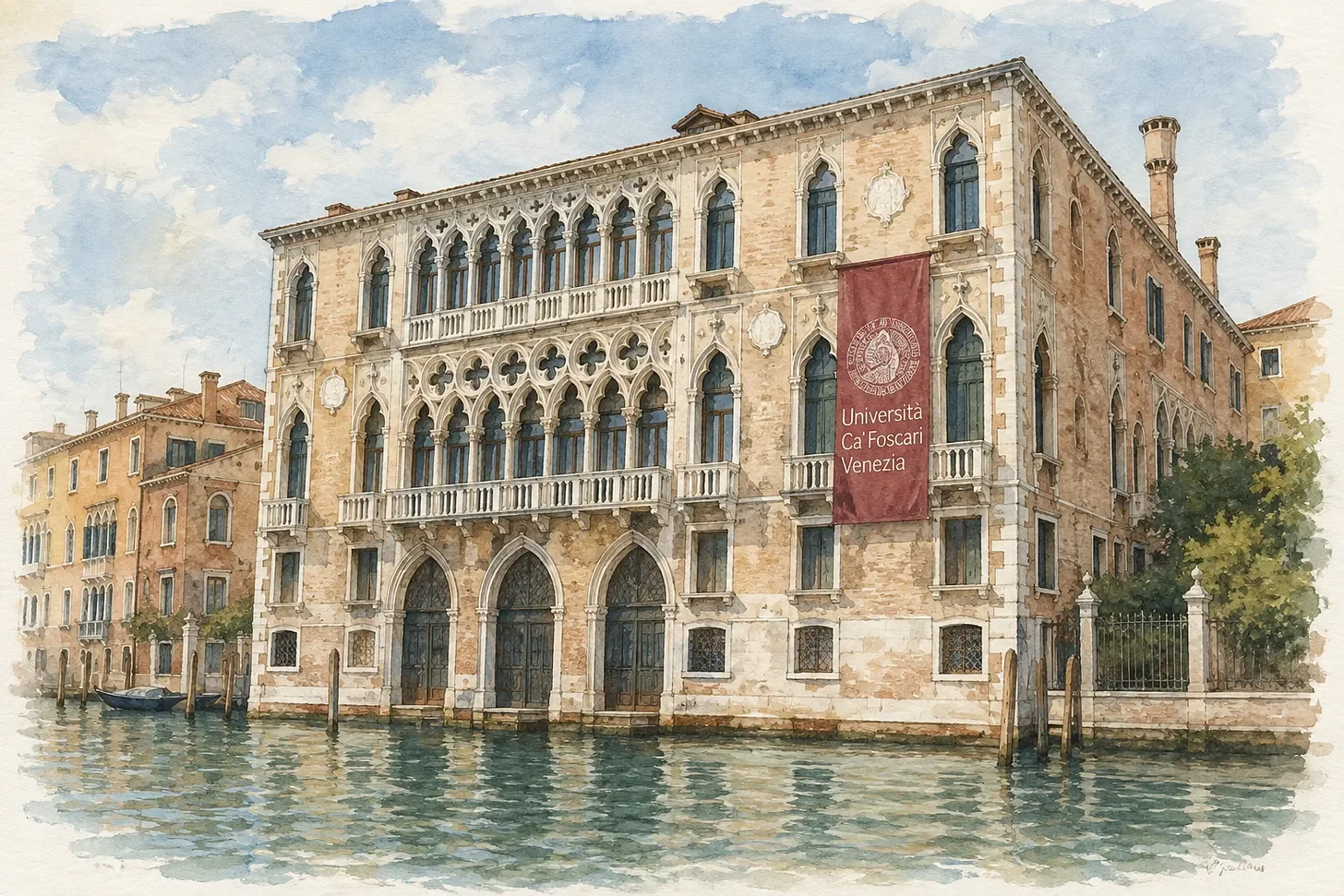
Ca’ Foscari University of Venice
In my opinion, the most well-known microhistorian is Carlo Ginzberg.
The best-known visual association is Carlo Ginzburg's The Cheese and the Worms (1976). It reconstructs the world of Menocchio, a sixteenth-century miller, primarily from Inquisition records and became one of the defining works of Microhistory.
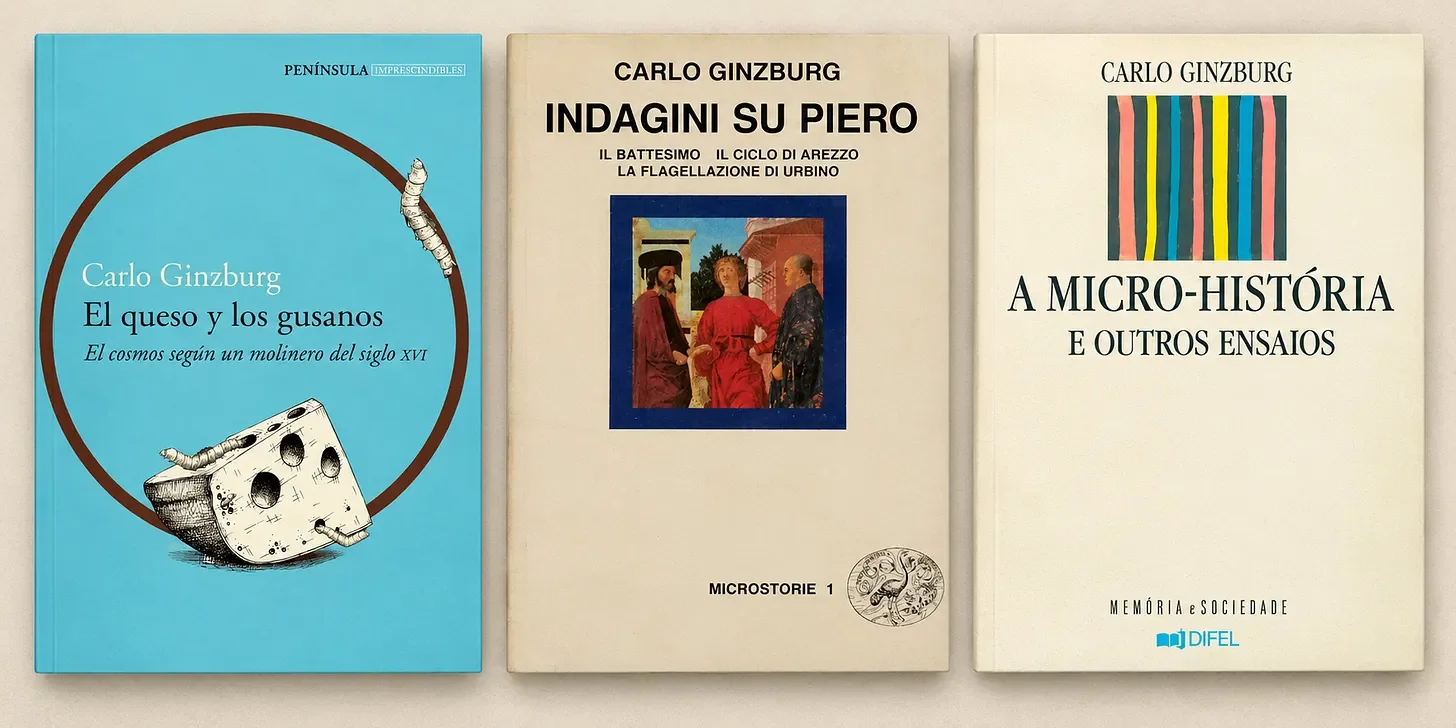
Work by author Carlo Ginzberg (1939-2026)
Chair of the Center for Microhistorical Research at the Reykjavik Academy in Iceland, Sigurður Gylfi Magnússon has also done a great deal to popularize microhistory and is hardly alone in conflating microhistory with the study of obscure ordinary people’s lives.
He is an Icelandic historian and professor at the University of Iceland.

Sigurður Gylfi Magnússon
In 2003, Magnússon founded and chaired the Center for Microhistorical Research, which focuses on microhistorical studies and publishes related works. He is editor of The Journal of Microhistory alongside Dr. Davíð Ólafsson.
His research focuses heavily on microhistory, cultural history, and personal ego-documents. He is also the author of Wasteland with Words: A Social History of Iceland and a co-author of What is Microhistory? Theory and Practice.
His book ‘Emotional Experience and Microhistory’ explores the life and death of Magnús Hj. Magnússon through his diary, poetry and other writing, showing how best to use the methods of microhistory to address complicated historical situations.
His work has combined social history with microhistorical methods to interpret the long-term development of Icelandic society.
What draws me to all three of these historians is not simply that they wrote about ordinary people. It is the way they looked closely at small pieces of evidence and refused to let those lives disappear into the larger history around them. A miller, a diary, a family, a village, even a single census entry can become the starting point for a much bigger, exciting investigation.
That is what I want to do with the people I write about.
Think your work might practice Microhistory?
Here is an example of using the Microhistory methods while writing;
1. Establish the person in the record. Begin with what surviving documents can actually establish before attempting reconstruction. Reduce the scale of investigation to a person, family, event, community, or other tightly bounded subject.
2. Build the chronology. Arrange documented events in sequence so that both continuity and gaps in the evidence become visible. Reconstruct the physical landscape in which the documented events occurred.
3. Expand outward from the individual. Investigate the people and institutions surrounding the subject because their records may preserve evidence the subject did not leave behind.
4. Reconstruct the immediate world. Use the history of the period and place to understand the conditions in which the individual lived. Bring together records, books, testimony, material culture, and comparable contemporary evidence without pretending that contextual evidence is personal evidence.
5. Separate fact from inference. Distinguish what the documents prove from what clues make probable, plausible, or merely possible. Historian Carlo Ginzburg’s writings on the evidential paradigm are particularly important here.
Read your writing specifically as method rather than prose, I think you have considerably more microhistory already happening than you realize!