
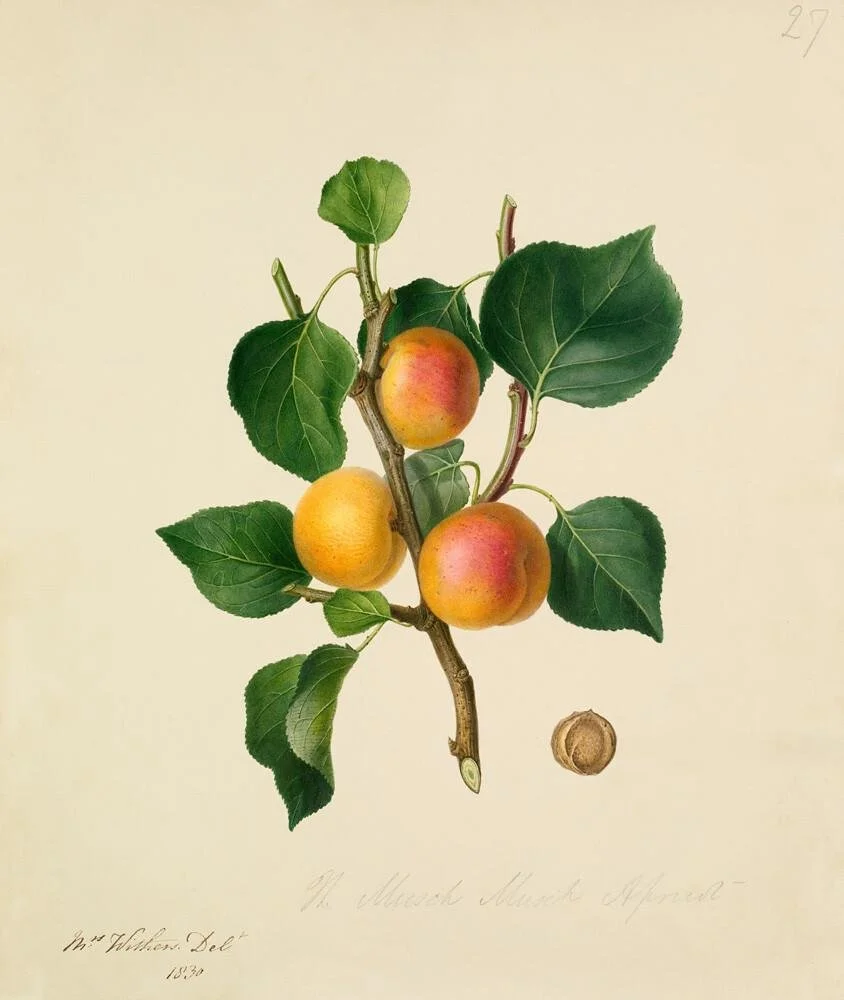
Artist Augusta Innes Withers
Then, she was appointed flower painter to Queen Adelaide…
Adelaide was the wife of William IV, who ascended the throne in June 1830 after his brother George IV died.
Augusta's appointment as flower painter placed her work within the royal household—an impressive distinction for an artist who had already spent years building her reputation.
There was plenty of work for a talented botanical painter in London during these years. The Horticultural Society was collecting plants from Britain and abroad, and its gardens at Chiswick were becoming an important center for horticultural research. Gardeners were experimenting with new varieties of fruit, while collectors competed to grow unfamiliar flowers brought back from overseas.
The Horticultural Society established experimental gardens at Chiswick, just west of London, where gardeners cultivated unfamiliar plants, tested new fruit varieties, and supplied specimens for botanical artists to record.
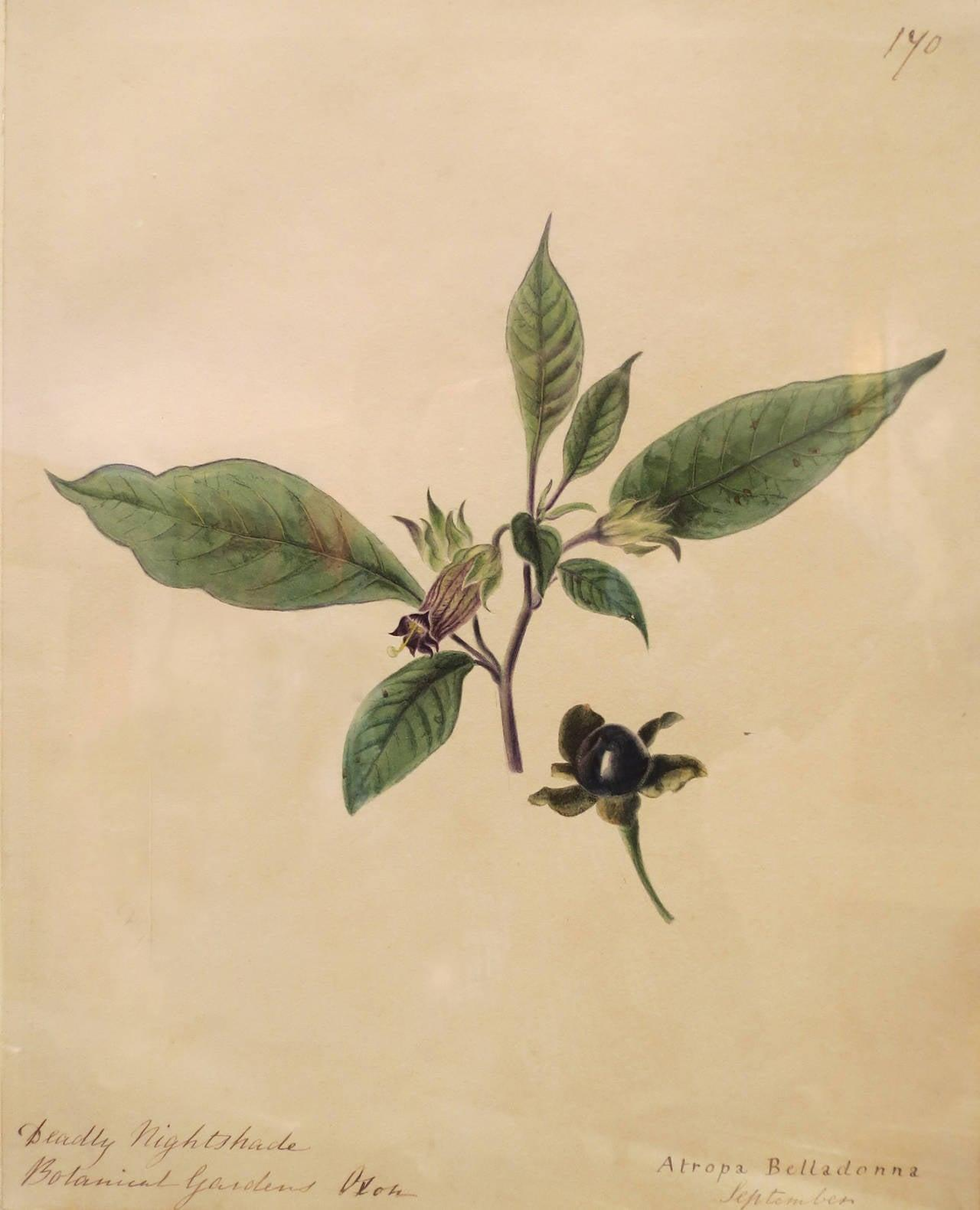
Artist Emily Stackhouse
Emily was a remarkable Victorian botanical artist and naturalist who spent decades studying Britain's wildflowers. She produced more than 620 delicate botanical watercolors, often noting exactly where and when she found her specimens.
Her illustrations appeared in Charles Alexander Johns's popular Flowers of the Field (1851). She earned botanical awards, quietly building an extraordinary scientific and artistic legacy. Emily lived until 1870, leaving behind a beautiful, vast record of Britain's natural botany.
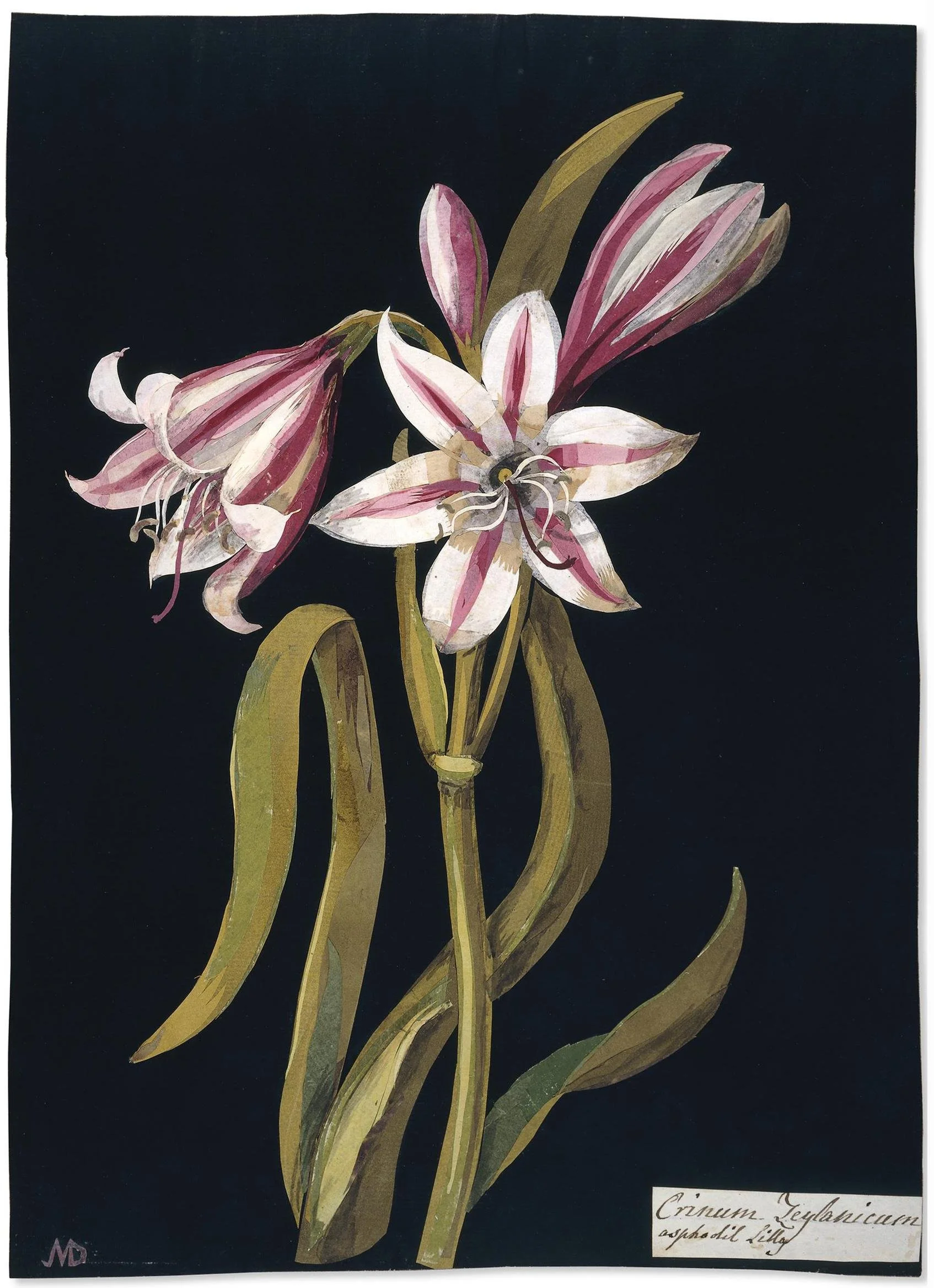
Artist Mary Delany
Mary’s projected future was tied to that network: they were preparing her to serve Queen Anne.
She was not raised to become an artist.
She was being prepared for court…
At about six, Mary was sent to a small school run by Mademoiselle Puelle, a French refugee who apparently kept it deliberately small. Mary later remembered her as a kind, good teacher. Her education there included French and music.
Then, at about eight, Mary’s life changed again; she went to live with her father’s sister Anne Stanley, usually called Lady Stanley, at Whitehall. It was part of a deliberate plan for her future, not because she had been orphaned or displaced. Lady Stanley was childless and had court experience herself; she had been a maid of honor to Queen Mary.
The plan was for Mary to enter Queen Anne's household. Mary’s education had a purpose.
She needed the skills expected of a young gentlewoman who might live at court.
There, she learned French, English, history, music, dancing, and needlework.
Her hands were already being trained.