Women Floral Artists Under The Scope
The French Revolution was already underway when Augusta was born in July 1793. Britain’s Industrial Revolution was steadily transforming towns, industries, and everyday life around her.
She was Augusta Hanna Elizabeth Innes Baker, raised in Gloucestershire, England—her father was Reverend William Baker, and her mother was Joanna Cave.
Augusta’s family was closely tied to the Church of England through her father’s work. He served as a chaplain to the Prince Regent, the future George IV. His position brought the family close to both the Church and the monarchy.
How she learned to paint is a little mysterious, but I have found some connections.
The evidence places Augusta within an educated clerical family with connections to Bristol merchants, landowners, and scientific publishers. That background may have provided opportunities for artistic education.
The Innes family were patrons of artists and architects in eighteenth-century Bristol. Augusta seemingly grew up within a family network already familiar with commissioning art, collecting pictures, and dealing with publishers.
My genuine discovery
Augusta descended from a family connected to publishing scientific books, including illustrated natural history, decades before she became a botanical artist.
A genealogical compilation identifies William Innes (d. 1756) and John Innes (d. 1778) as brothers of Augusta's great-grandfather Jeremy Innes. Both were booksellers in London. They died before Augusta was born, so neither could have trained her, but their publishing connections might have continued through descendants, business associates, or family papers.
Her immediate family has property connections to Redland, a historic district of Bristol, in southwest England, roughly a mile and a half north of the city's old center. Today it's a leafy residential neighborhood, but in Augusta Innes Withers's family history, it represents something quite different: wealth, property ownership, and connections to eighteenth-century Bristol society.
The Biodiversity Heritage Library identifies Augusta’s great-uncles William and John Innys as the publishers of Stephen Hales's Vegetable Staticks (1727), a pioneering study of how plants function!
This book examined the movement of water and air in plants. Its publication places the Innys brothers directly within the eighteenth-century scientific world from which botanical illustration developed. The Biodiversity Heritage Library also lists William Innys in connection with Mark Catesby's richly illustrated Natural History of Carolina, Florida and the Bahama Islands.
This is particularly exciting because Catesby's publication combined precisely observed plants and birds—the same subjects Augusta would later paint professionally!
I also have evidence that the brothers published correspondence involving naturalists John Ray and Francis Willoughby, including discussions of plants, birds, insects, and other subjects.
The connection is real at the level of publishing history. What remains unproven is whether Augusta's immediate family retained any of those books, knew the publishers' successors, or used their connections to arrange her artistic education.
On June 23rd, 1822, Augusta married Theodore Gibson Withers, an accountant, at St Marylebone Church in London. She was twenty-eight years old. She gave birth to her first child, a son named Theodore Innes Baker Withers, in 1823. Two years later, in 1825, she welcomed a daughter, also named Augusta.
By then, she was also producing botanical paintings for the Horticultural Society of London. With two small children at home, Augusta was beginning to establish herself as a professional artist, managing painting commissions alongside motherhood.
By 1830, she established herself among London’s respected botanical artists. Her paintings of flowers and fruit were admired for their accuracy, and the Horticultural Society of London had been commissioning her work for several years.
University of Glasgow's Special Collections does indeed state that Augusta applied for a botanical flower-painter position at Kew and was rejected because of her gender.
Another account specifically names Joseph Dalton Hooker as the person who rejected Augusta's application. If Joseph personally made the decision in an official capacity, the most plausible period for this rejection would have been 1855–1876, with the later part of that range corresponding to his directorship.
Then, she was appointed flower painter to Queen Adelaide…
Adelaide was the wife of William IV, who ascended the throne in June 1830 after his brother George IV died.
Augusta's appointment as flower painter placed her work within the royal household—an impressive distinction for an artist who had already spent years building her reputation.
There was plenty of work for a talented botanical painter in London during these years. The Horticultural Society was collecting plants from Britain and abroad, and its gardens at Chiswick were becoming an important center for horticultural research. Gardeners were experimenting with new varieties of fruit, while collectors competed to grow unfamiliar flowers brought back from overseas.
The Horticultural Society established experimental gardens at Chiswick, just west of London, where gardeners cultivated unfamiliar plants, tested new fruit varieties, and supplied specimens for botanical artists to record.
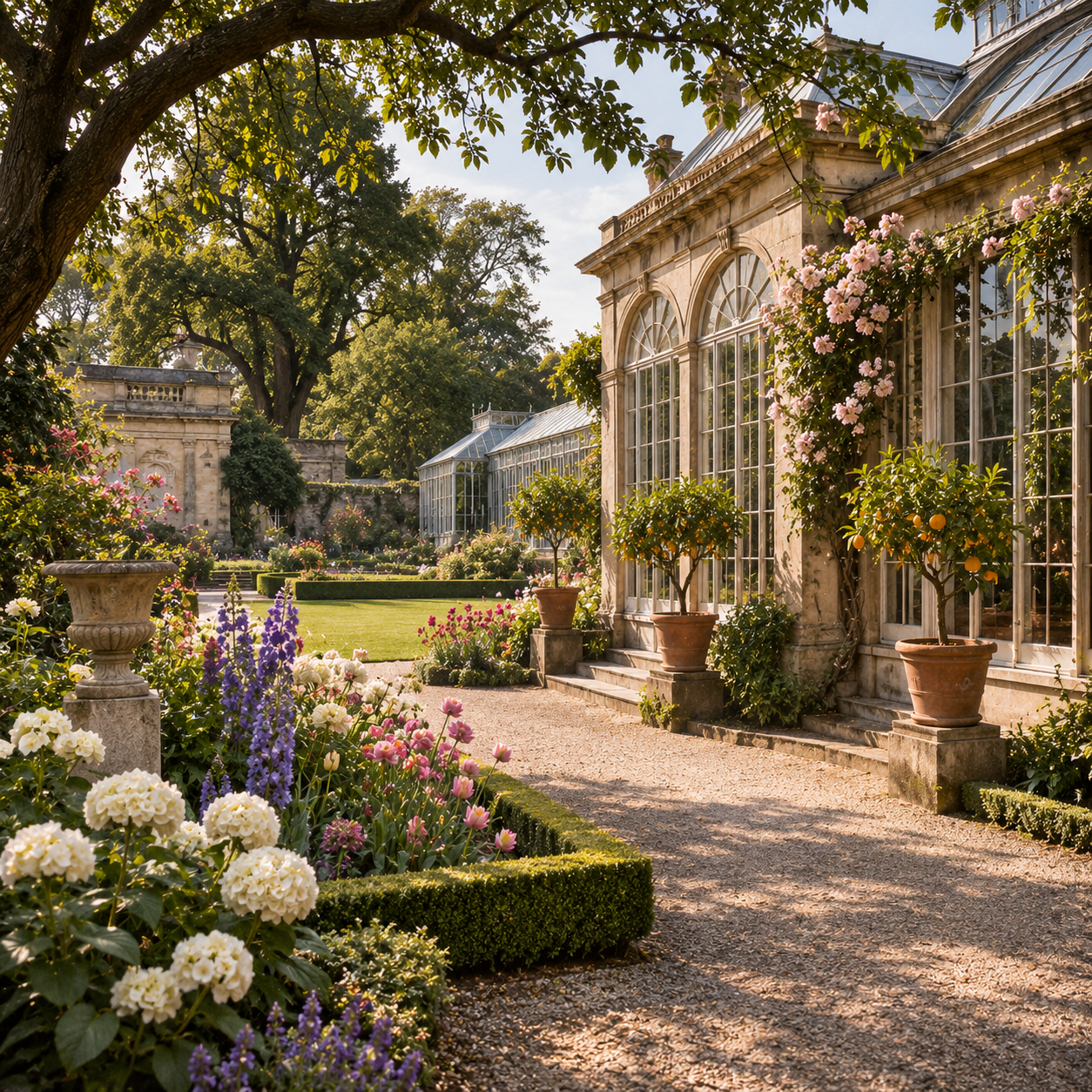
Horticultural Society's experimental garden at Chiswick, established in 1822.
Before photography could reliably record the colors and details of a living plant, artists like Augusta were essential. A painting might preserve the appearance of a flower that bloomed for only a few days or record a new fruit variety for gardeners who would never see the original specimen.
Accuracy mattered. The shape of a leaf, the arrangement of petals, and the color of ripening fruit all had to be carefully observed. Augusta was particularly accomplished at this kind of work, and her paintings found an appreciative audience among the Society's members.
But the Society also had to pay for them.
Augusta's commissions were a professional arrangement, and the cost of her paintings became a matter of concern within the Society. The Oxford Dictionary of National Biography specifically states that the Horticultural Society's council considered Augusta's fees excessively high, and that her relationship with the Society was sometimes uneasy. Yet she continued to receive commissions, and her artistic abilities were publicly praised. She obviously knew her worth! I would love to hear her words in defense of her fees. I have only found society’s mentions of her shamelessly high prices.
A woman’s paintings were admired enough to attract royal patronage, yet her fees still became a subject of discussion among the gentlemen who commissioned her work.
Go, Augusta. Get that money.
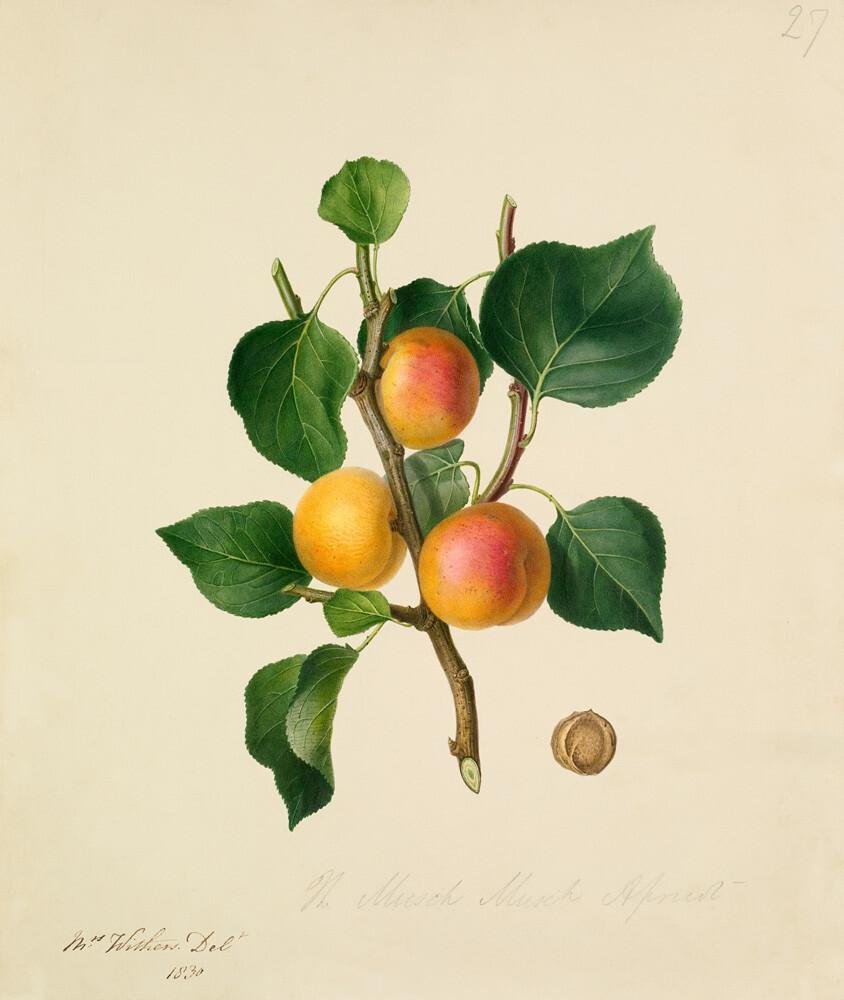
The Musch Musch Apricot (1830)
The family lived in Marylebone, London, at 16 Grove Terrace, Lisson Grove. It was a busy part of the expanding capital, where new streets and houses were gradually replacing older fields and gardens.
I haven't found any surviving diaries or letters describing her daily routine. But her paintings continued to appear in important horticultural publications, and she was also teaching botanical drawing.
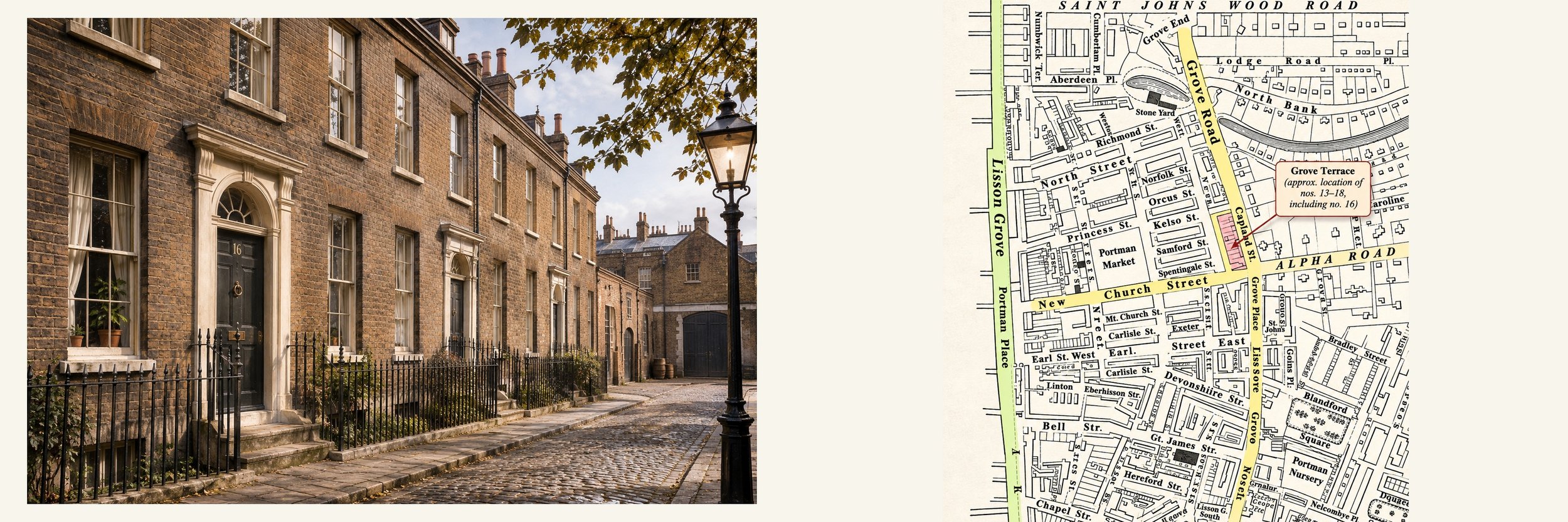
Augusta’s reported home at 16 Grove Terrace was part of a documented group of six houses, numbered 13–18, adjoining properties on Capland Street. A historical property reference mentions the houses together with stables, mews, and shops.
In 1831, the Scottish horticultural writer John Claudius Loudon praised Augusta's teaching abilities in The Gardener's Magazine. His endorsement suggests that her reputation extended beyond the paintings she produced for the Horticultural Society.
Teaching offered another source of income. Wealthy women were increasingly interested in botanical drawing, and private lessons gave accomplished artists opportunities to share their skills.
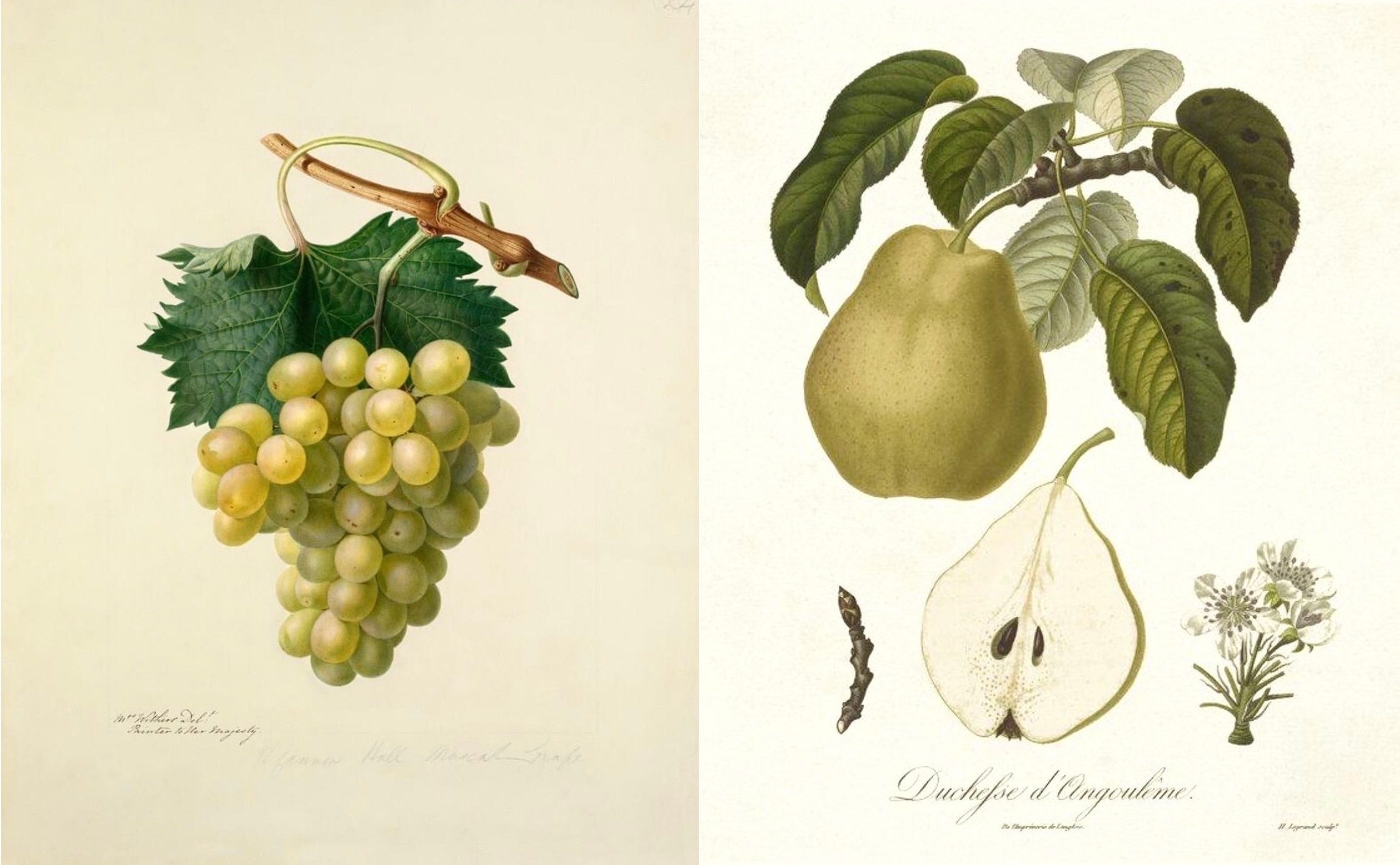
Muscat Grapes (left), botanical watercolor, and Duchesse d’Angoulême Pear (right), hand-colored botanical engraving after the original artwork.
Augusta also exhibited at the Royal Academy, where visitors could see her work alongside paintings by other professional artists. Exhibiting there was an important opportunity for recognition, particularly for women whose artistic careers were often restricted by limited access to formal training and professional institutions.
Her work was remarkably varied. Alongside the detailed studies of fruits and flowers commissioned by horticultural institutions, Augusta painted more elaborate compositions combining fruit, flowers, and occasionally birds.
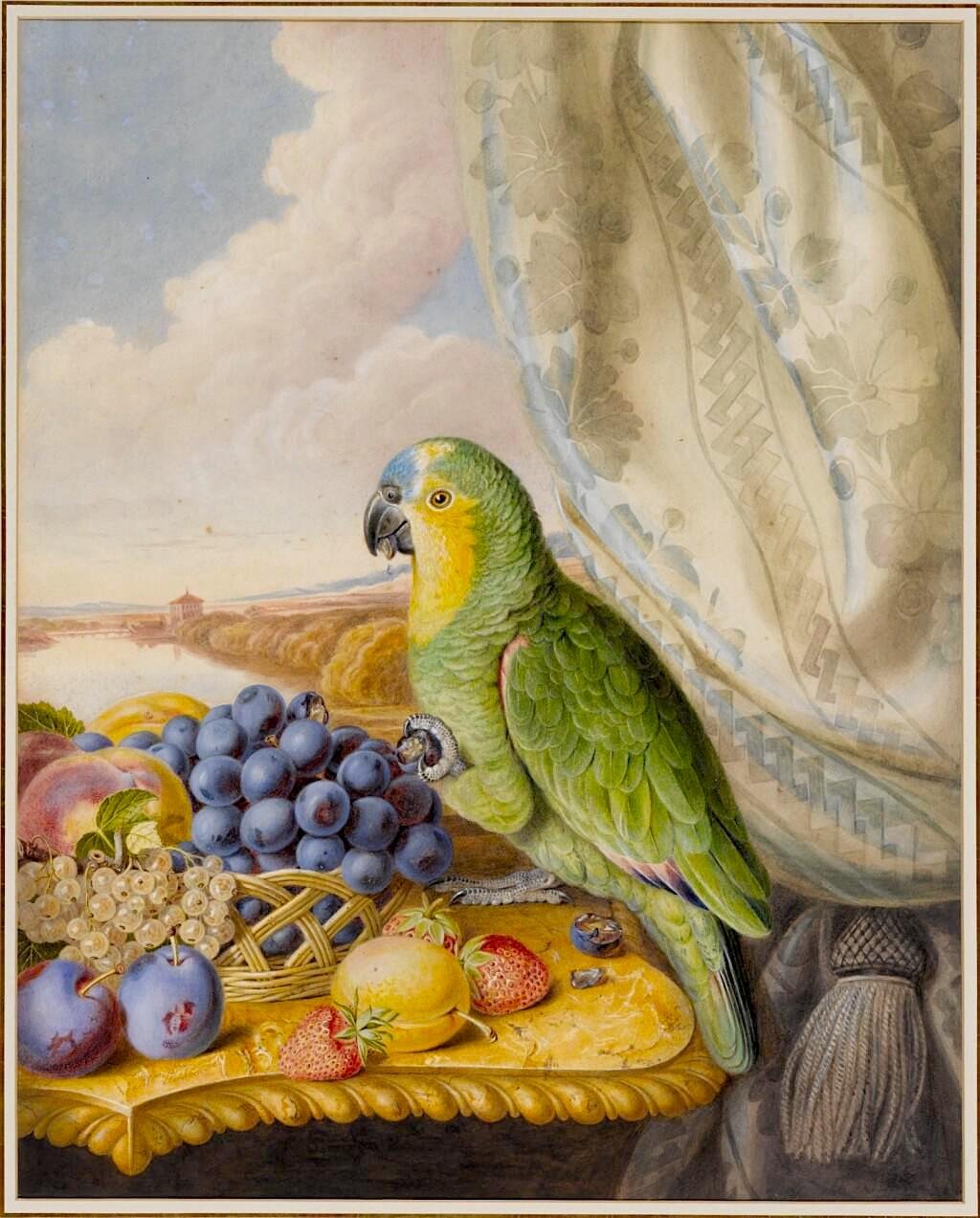
A Parrot Eating from a Bowl of Grapes, Plums, Peaches and Strawberries (undated)
One particularly beautiful example is her painting of a green parrot surrounded by grapes, plums, peaches, and strawberries. The bird is perched beside a richly decorated table, with a landscape visible beyond the window. It shows a different side of Augusta's abilities, bringing together the careful observation required of botanical illustration with the color and composition of still-life painting.
By this point in her career, Augusta had established several ways of earning a living from her art. She accepted commissions, exhibited paintings, and taught students.
Yet we still don't know much about the woman herself. Her surviving paintings show what she could do, but they reveal little microhistory about how she lived, what she thought of her success, or how she managed the demands of her household and professional work.
As Augusta's reputation grew, her paintings began appearing in some of Britain's most respected botanical publications.
She contributed illustrations to Benjamin Maund's The Botanist, Curtis's Botanical Magazine, and James Bateman's magnificent Orchidaceae of Mexico and Guatemala, published between 1837 and 1843.
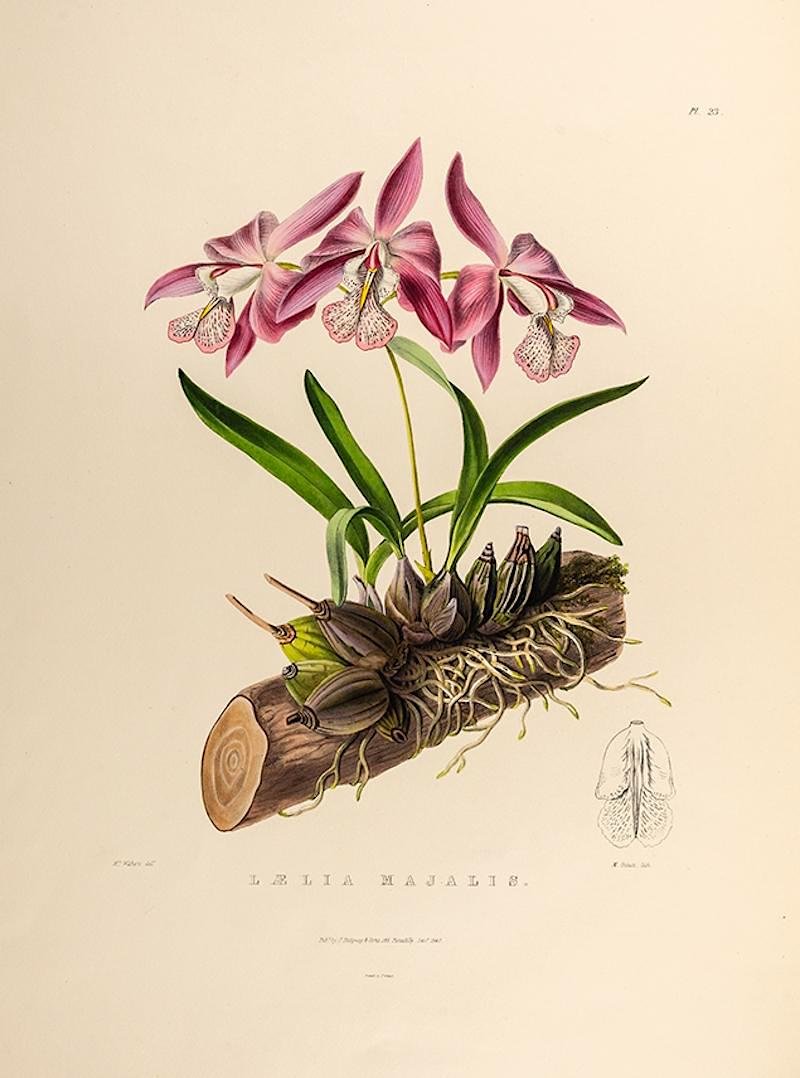
Laelia majalis (1840). Hand-colored lithographs by Maxim Gauci after Withers's original illustrations, published in James Bateman's The Orchidaceae of Mexico and Guatemala. Courtesy of the Royal Society collections.
Bateman's publication was particularly ambitious. Its enormous hand-coloured plates introduced readers to exotic orchids collected in Mexico and Guatemala, at a time when wealthy British gardeners were becoming fascinated with growing tropical plants in their glasshouses.
Another woman contributing to the same publication was Sarah Anne Drake, a talented botanical artist who worked closely with botanist John Lindley.
I find it interesting that these two women were illustrating plants for the same publication. Did Augusta and Sarah ever meet? Did they know each other's work? They were both working within London's relatively small botanical and horticultural circles, so it's certainly possible. Unfortunately, I haven't found correspondence or other evidence establishing a personal connection.
Augusta's professional life extended well beyond botanical publishing.
Between 1832 and 1865, she exhibited sixty-eight paintings with the Society of British Artists, an important London exhibition venue that offered artists another opportunity to display and sell their work. A respected art organization founded in 1823 as the ‘Society of British Artists’ to provide an alternative exhibition space to the Royal Academy.
Queen Victoria granted the society its "Royal" title in 1887. That’s hot.
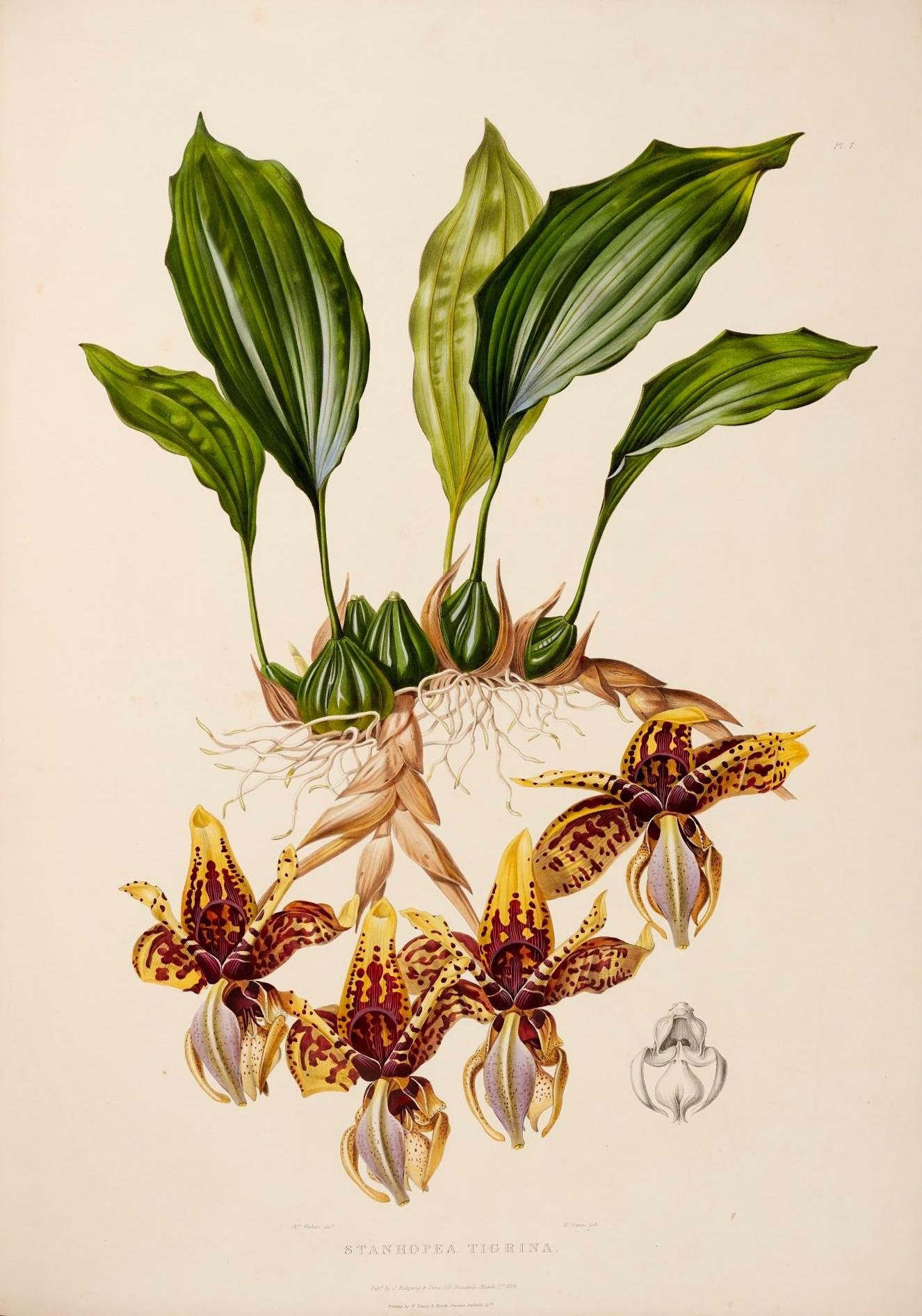
Stanhopea tigrina (1837–1843). Hand-colored lithographs by Maxim Gauci after Withers's original illustrations, published in James Bateman's The Orchidaceae of Mexico and Guatemala. Courtesy of the Royal Society collections.
Then, in 1857, she began exhibiting with the Society of Female Artists, an organization established to give women more opportunities to show their paintings publicly.
Augusta was already in her sixties when she joined its exhibitions.
She would go on to exhibit forty-three works with the Society between 1857 and 1875. Her continued participation suggests that she remained professionally active long after many of her contemporaries had retired.
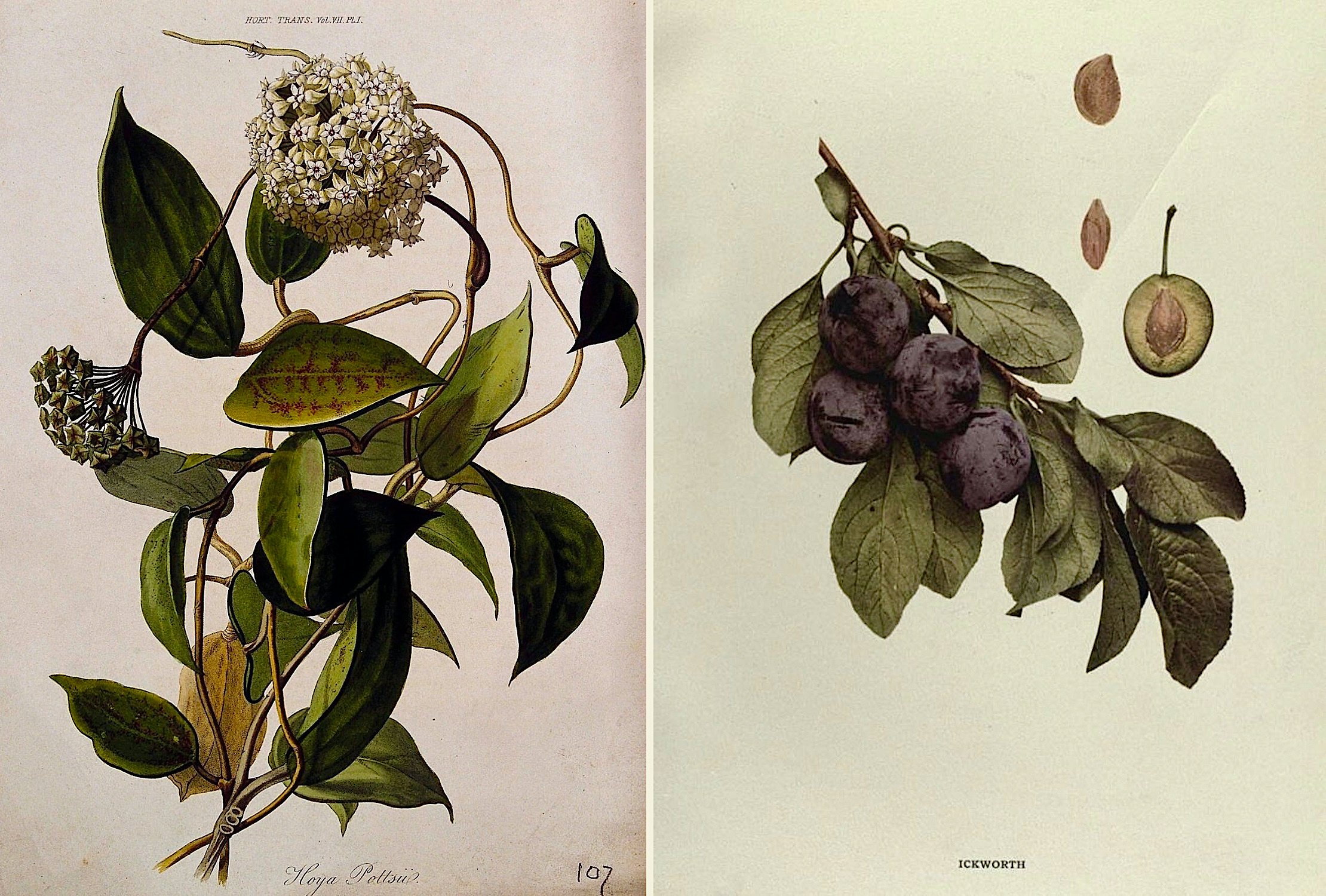
Hoya pottsii and Study of Plums. Botanical illustrations, nineteenth century. Hoya pottsii published in Transactions of the Horticultural Society of London, Vol. VII, Plate I. Plums illustration marked “Ickworth.”
By this time, Britain had changed enormously since Augusta's childhood in Gloucestershire. Railways connected cities and towns, London had expanded dramatically, and advances in printing made illustrated botanical publications increasingly accessible.
Through all these changes, Augusta continued painting.
And in 1864, more than thirty years after her appointment to Queen Adelaide, another queen recognized her work…
Queen Victoria appointed Augusta Flower and Fruit Painter in Ordinary.
Augusta was seventy-one years old.
And I wonder: an important microhistory question is who originally brought her work to royal attention.
Several routes were possible: a recommendation from an established patron, a horticultural society's professional network, a court official, or a painting already in royal hands. A formal appointment could then be arranged through the royal household.
The Royal Horticultural Society's historian Brent Elliott identifies artwork Augusta made for the Society: an elaborately decorated royal autograph for King William IV, then Duke of Clarence.
Elliott describes oak-leaf garlands surrounding spaces for royal inscriptions, with the Order of the Garter represented below. He explicitly raises the possibility that this earlier artwork initially brought Augusta to Queen Adelaide's attention.
A historical account describes Augusta's position as both flower painter and teacher of botanical drawing to Queen Adelaide. It suggests a more personal working relationship than simply supplying paintings.
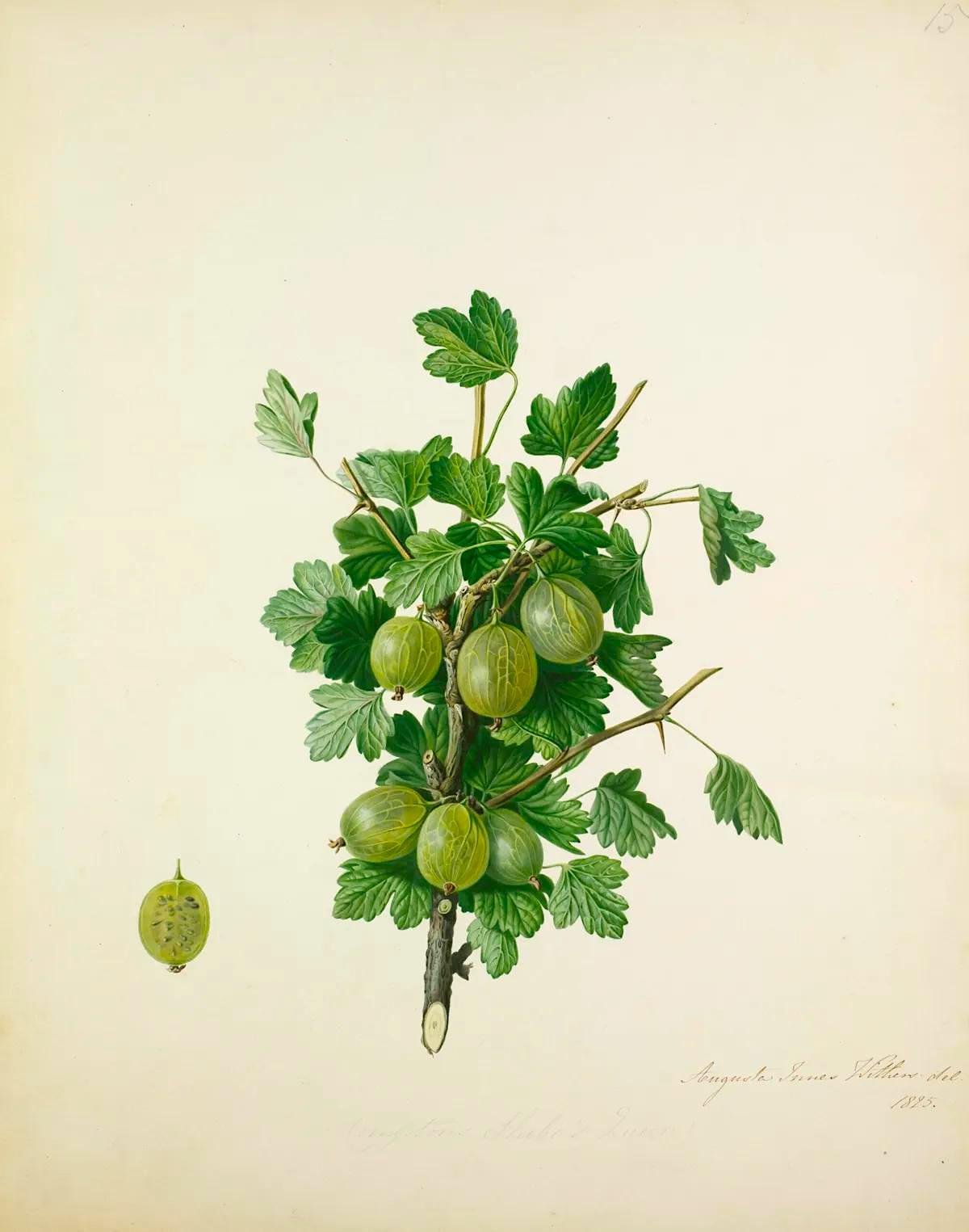
Study of Gooseberries (1825)
In 1869, Augusta Innes Withers lost her husband, Theodore Gibson Withers. They had been married for forty-seven years.
I wonder whether Augusta remained at the family's longtime address of 16 Grove Terrace, Lisson Grove, after Theodore's death. It was the address associated with so much of her professional life, yet I haven't established where she spent her final years.
The surviving records tell us considerably more about Augusta's paintings than about her household. We can follow her work through exhibition catalogs and botanical publications, but finding the woman behind those paintings is another matter.
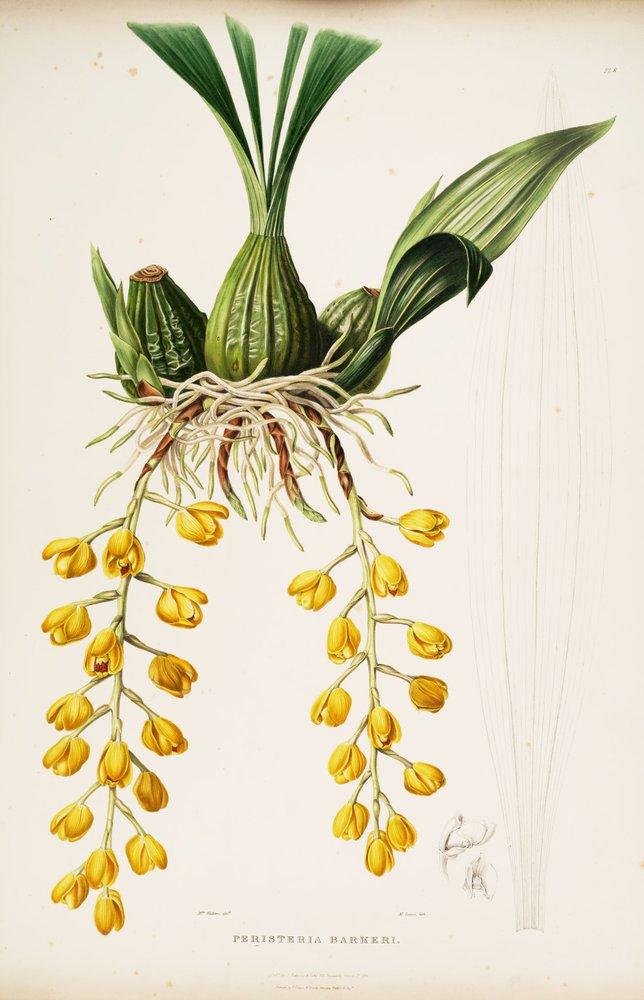
Peristeria barkeri (now Acineta barkeri), c. 1838. Botanical illustration published in James Bateman's The Orchidaceae of Mexico and Guatemala (1837–1843).
Augusta died in London in 1876, aged approximately eighty-three.
She is reported to have been buried on August 14th 1876, in the Withers family grave on the western side of Highgate Cemetery. I haven't yet examined the original burial register, so the precise burial details still need confirmation.
Highgate opened in 1839, during the early years of Queen Victoria's reign. By the time Augusta was buried there, its winding paths, elaborate monuments, and landscaped grounds had become a familiar part of Victorian London's approach to remembering the dead.
Today, Augusta's botanical paintings survive in collections and publications, preserving the extraordinary detail of flowers and fruit she studied nearly two centuries ago.
There are still questions I would love to answer. Did she leave a will? Did her children preserve any of her drawings or personal papers? And might there be a letter somewhere that tells us something about Augusta in her own words?
For now, much of her private life remains out of reach.
But I find it remarkable that a woman born in a Gloucestershire village in 1793 went on to spend more than half a century painting professionally, working for horticultural societies, contributing to important botanical publications, and receiving appointments from two British queens.
Her paintings have outlived the people who commissioned them.
Augusta was damn good. And she knew it. ;)
For Your Reference;M. C. Curthoys, “Withers, née Baker, Augusta Joanna Elizabeth Innes (1793–1876),” Oxford Dictionary of National Biography, Oxford University Press. Oxford DNB.Nicholas Kingsley, “Baker (later Lloyd-Baker) of Waresley Park, Ramsden House, Stouts Hill and Hardwicke Court,” Landed Families of Britain and Ireland (2018). Family genealogy.Peter Malpass, “The Redland Estates of John Cossins, and What Happened to Them,” Transactions of the Bristol and Gloucestershire Archaeological Society, vol. 130 (2012), pp. 225–240. Historical study.University of Glasgow, Special Collections, “Illustrated by Women.” Historical botanical illustration and Augusta's Kew application.Stephen Hales, Vegetable Staticks (1727), published by W. and J. Innys. Historical edition catalogued by the Biodiversity Heritage Library.John Lindley, The Pomological Magazine (1827–1830), featuring botanical and fruit illustrations associated with Augusta Innes Withers.James Bateman, The Orchidaceae of Mexico and Guatemala (1837–1843), including botanical illustrations after Augusta Innes Withers.Researched & Written by author Krysta Abesamis