6th of Holmains
George Carruthers — Sixth Laird of Holmains, Second Baron
George Carruthers inherited a very different Holmains from the estate Roger de Carruthers had begun two centuries earlier. By George's lifetime, generations of Carruthers had expanded the original holdings into a substantial Border estate, and his father, John Carruthers, 5th of Holmains, had formally consolidated those lands into the Barony of Holmains in 1542. George was therefore heir not simply to a landed estate but to a house that had become the senior surviving Carruthers line following the extinction of the male line of Mouswald.
George was a son of John Carruthers, 5th of Holmains and 1st Baron. He was not originally first in the succession. His elder brother John ‘heir apparent’ stood before him but died without issue before inheriting, leaving George as the eventual heir. The 1542 charter establishing the Barony of Holmains is particularly valuable because the entail identifies the sons of the 5th Laird as John, George, William, Archibald, Patrick, Robert and Simon. George's birth date has not been securely established, but he was certainly an adult by the middle decades of the sixteenth century.
Growing Up on a Violent Border
George came of age during one of the most unstable periods in Scottish history. James V died in December 1542, leaving the crown to the infant Mary Queen of Scots, while Henry VIII attempted to force a marriage between Mary and his son Edward. The resulting conflict, later called the Rough Wooing, brought repeated English invasions into southern Scotland. Annandale lay directly within this military frontier, meaning that the political crises surrounding the Scottish Crown were immediate realities for families such as the Carruthers.
George entered that world long before becoming Laird. On 19 May 1563, John Carruthers of Holmains and his sons George and William, together with Edward Irving of Bonshaw, David Irving of Robgill and others, were indicted in connection with the wounding of Kirkpatrick of Closeburn and the deaths of several men. The prosecution was later abandoned, but the record places George directly beside his father and brother within the armed kinship network of Annandale. It also demonstrates the close Carruthers relationship with the Irvings, a connection that would become even more important through George's marriage.
George's Marriage and Family
The marriage evidence requires some care. Records of the Carruthers Family indicates that George appears to have married twice. The identity of his first wife has not been established, while Margaret Irving is securely recorded as his later wife and surviving widow. We should therefore retain the distinction rather than assigning Margaret automatically as mother of every known child.
George's known children included John, George, Thomas, James, Symon, Charles and Janet Carruthers. His eldest surviving heir, John, was established on Carruthers property before George himself inherited Holmains. In 1573, John's grandfather granted him the six-merk lands of Little Dalton and the £4 lands of Ecclefechan called Castlebank, and John subsequently became known as John Carruthers of Harthwat. George's son Symon later became associated with Isle and founded that Carruthers branch, while Charles Carruthers was serving by 1585 as a cornet in the mounted garrison at Threave Castle. George's daughter Janet married John Johnstone in Lochmaben and was already his widow and executor by 1578.
Sixth of Holmains
George's father survived until 19 August 1580, meaning George waited unusually late in life to inherit. When he finally succeeded, he became 6th Laird of Holmains and 2nd Baron. He came to the estate as an experienced Border gentleman who had already spent decades participating in family affairs, establishing his children and navigating the complicated relationships between the great houses of southwestern Scotland.
Among those relationships, none was more important than the Carruthers connection with the Maxwells. The Maxwells were one of the dominant powers of the West March, with strongholds including Caerlaverock and Threave. Carruthers sources identify George as Captain of Threave Castle, while his son Charles served in its mounted garrison. Whether every later description of George's command can ultimately be traced to a contemporary appointment deserves continued scrutiny, but the broader Carruthers-Maxwell military relationship is well established in the family record.
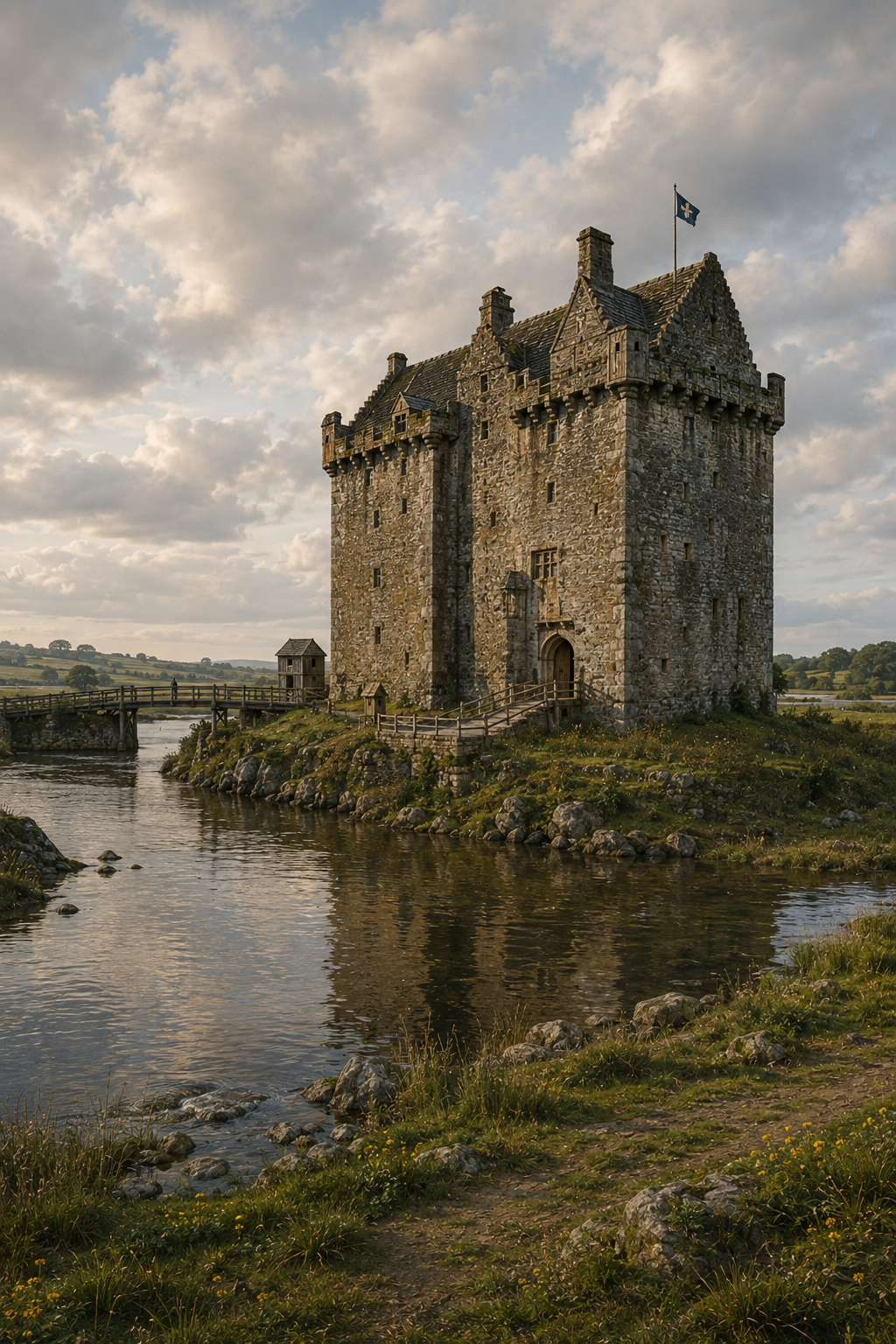
Threave Castle is situated on an island in the River Dee, 2.5 kilometres west of Castle Douglas in the historical county of Kirkcudbrightshire in the Dumfries and Galloway region of Scotland.
The Stirling Rising — 1585
George's loyalty to the Maxwell interest placed him in serious political danger in 1585. Scotland was then ruled by the young James VI, who was attempting to establish his authority after years of factional government during his minority. In November, a coalition of exiled and disaffected nobles advanced upon Stirling, where the king was residing. Lord Maxwell joined the rising, and George Carruthers went with him.
Later reconstructions of the campaign place George at the head of approximately fifty mounted men from Annandale, with his force including Carruthers and members of neighboring Border families. His sons were also associated with the mobilization. The episode gives us one of the clearest pictures of George's position in Border society: he was a landed baron capable of bringing armed horsemen into the field in support of a powerful regional lord.
The rising succeeded without a major battle at Stirling, but participation was dangerous because armed nobles had effectively confronted their own king. George's decision illustrates the layered loyalties of the sixteenth-century Border. Allegiance to the Crown existed alongside obligations to family, locality and powerful regional patrons. For the Carruthers of Holmains, the Maxwell relationship was strong enough that George followed that interest into a national political confrontation.
A Changing Scotland
George's relatively short tenure at Holmains coincided with enormous events beyond Annandale. Mary Queen of Scots was executed in England in 1587, and the Spanish Armada sailed against England in 1588. James VI, Mary's Protestant son, was increasingly looking south toward the possibility that he might eventually succeed Elizabeth I. Within fifteen years of George's death, that possibility would become reality and the crowns of Scotland and England would be united under James.
Yet daily life at Holmains still belonged to the older Border world. Land, tenants, livestock, marriages, military service and alliances remained the foundation of a laird's authority. George's own life demonstrates this particularly well: he appears beside his father in a violent regional dispute, married into the Irving network, established sons on family lands, maintained a close relationship with Maxwell and eventually rode with armed Borderers during the political crisis of 1585.
George's Death and Succession
George held Holmains for only about twelve years. He was dead by approximately 1592, leaving Margaret Irving as his widow. His precise death date and burial place have not yet been securely established. Holmains passed to his son John Carruthers, previously of Harthwat, who became 7th Laird of Holmains and 3rd Baron.
George's significance lies in the position Holmains had reached by his generation. Roger had begun the house in 1375 with a comparatively modest collection of lands. Two centuries later, George inherited a barony, commanded men within the military society of the West March, maintained close connections with one of southern Scotland's most powerful magnates and produced sons who spread into additional Carruthers branches and military service. His tenure was brief, but his life shows clearly how far the House of Holmains had risen.
For Your Reference;
Born: date unknown · probably Dumfriesshire, Scotland
Father: John Carruthers, 5th of Holmains and 1st Baron
Position: 6th Laird of Holmains and 2nd Baron
Succeeded: 1580
First Wife: unknown
Later Wife / Widow: Margaret Irving
Known Children: John, George, Thomas, James, Symon, Charles and Janet Carruthers
Political / Military Association: closely connected with the Maxwell interest; associated with Threave Castle and the 1585 Stirling rising
Death: approximately 1592
Burial: unknown
Successor: John Carruthers, 7th of Holmains and 3rd Baron
Arthur Stanley Carruthers & R. C. Reid, Records of the Carruthers Family (1934), Chapter V, “Holmains.” Original volume at Internet Archive
Calendar of Holmains Writs and related Carruthers family records concerning George, his children and the succession to Holmains.
Scottish records concerning Lord Maxwell, Threave Castle and the political rising of 1585, used alongside the Holmains material to reconstruct George's wider political setting.
13th Great Grandfather of author Krysta Abesamis
*Note on Historical Images
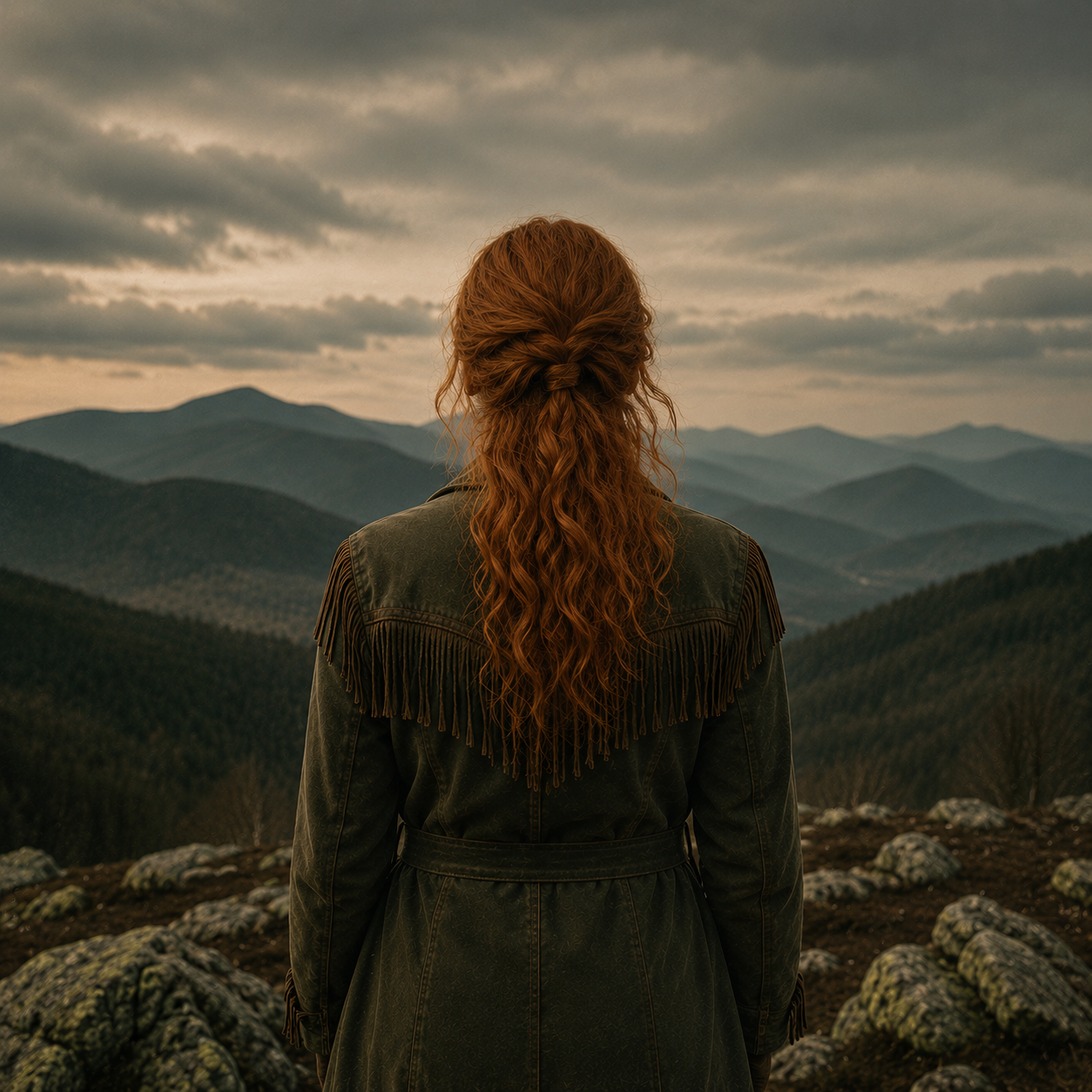
Some images used in this article are AI-assisted historical reconstructions, created to help visualize people, places, buildings, and events for which no surviving photograph or contemporary image exists. These images are interpretive illustrations, not historical photographs or authenticated portraits. Where possible, reconstructions are informed by surviving records, period architecture, clothing, landscapes, heraldry, and other historical references. They are included for visual context and storytelling and should not be considered documentary evidence.