Women Floral Artists Under The Scope
Ann grew up in Hammersmith, west of London, where her father, James Lee, ran the Vineyard Nursery.
Born in 1753, living in a household where plants were not merely admired — they cultivated, studied, bought, and sold them. Her Scottish-born father had established himself as a knowledgeable nurseryman in an increasingly competitive trade. He developed a nursery known for introducing unusual plants into English gardens. Some arrived from distant parts of the world, brought into cultivation through the expanding networks of botanical collectors, merchants, and naturalists.
For a young girl interested in drawing, it was an extraordinary place to grow up.
The nursery offered something many aspiring botanical artists lacked: access to living specimens. Flowers could be observed as they opened, leaves examined closely, and plants studied at different stages of growth. I cannot say exactly when Ann first began drawing them, but her surroundings gave her opportunities that would later prove valuable. James Lee also moved in scientific circles. His botanical interests connected him with prominent naturalists whose system of plant classification was transforming botany.
Ann’s artistic education eventually brought her into the orbit of Sydney Parkinson, a talented young natural-history illustrator and Scottish artist who taught Ann Lee to draw. Ann was only fifteen then.
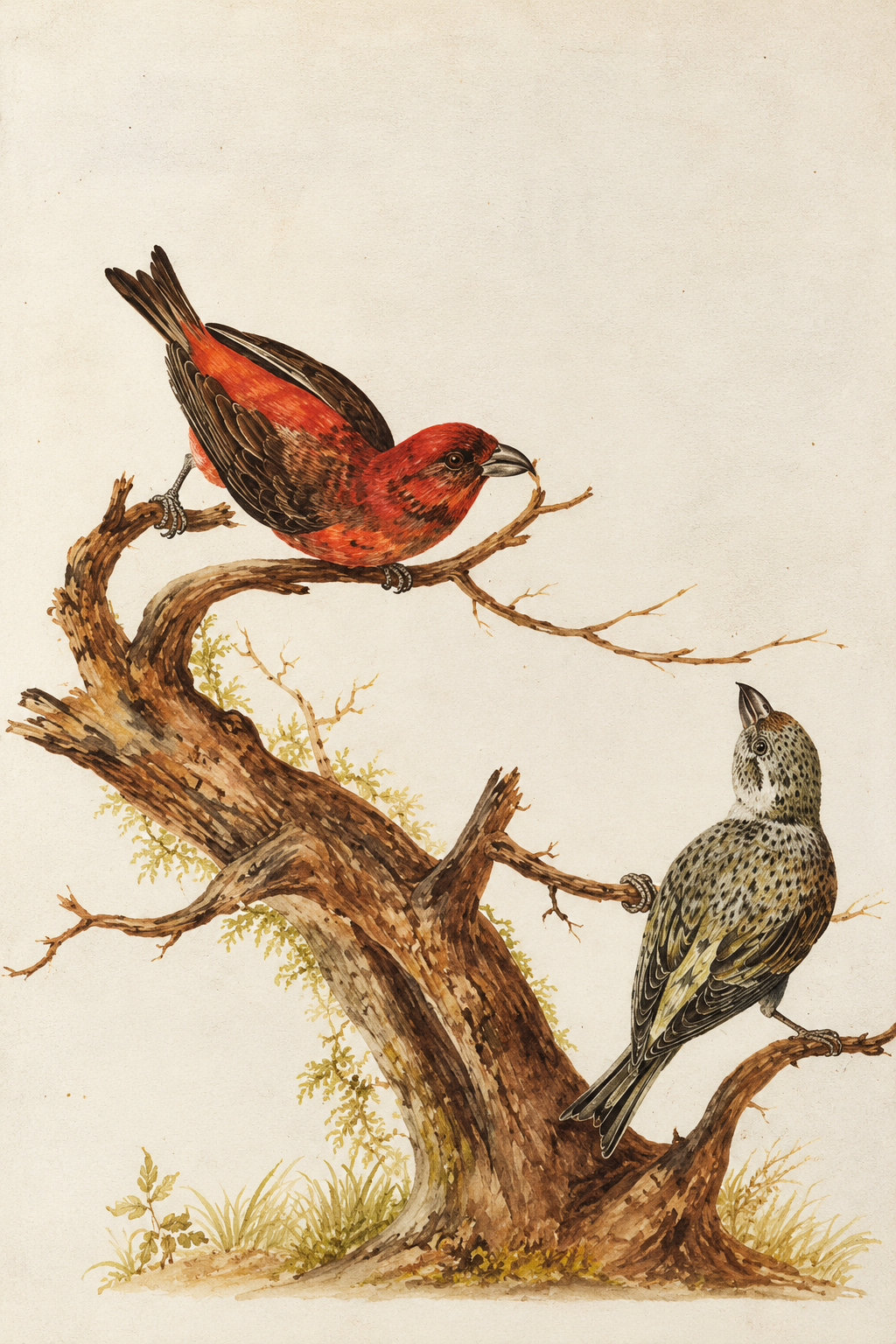
Two Finches Perched on a Gnarled Tree with Pale Blue Buttercups Below, 1771 - Ann Lee
In August 1768, Captain James Cook commanded the Endeavor as it sailed from Plymouth. Among the crew was Ann’s teacher, Sydney Parkinson.
The voyage took place during an extraordinary period in British scientific exploration.
Ships carried astronomers, naturalists, and artists across oceans, returning with observations and specimens that could reshape Europeans’ understanding of the natural world. Joseph Banks, a wealthy young naturalist, had financed much of the scientific work aboard the Endeavor. Sydney drew the plants and animals they encountered, often before the tropical heat degraded delicate specimens.
Sadly, Sydney Parkinson never returned to England. He died at sea of illness in January 1771, during the Endeavor’s homeward journey. His will reportedly named Ann as his pupil and left her drawing and painting materials. By then she was eighteen. His reported decision to leave her drawing and painting materials suggests he valued her promise as an artist. He was only twenty-five. The news of his death must have been painful for those who knew him.
She had lost a teacher whose career was just beginning.
And Ann had already begun producing the carefully observed botanical watercolors that would preserve her name.
Ann lived much closer to this expanding world than most young women her age. Her father’s nursery received plants from overseas, and the men who collected, classified, and exchanged them were part of the family’s professional surroundings. While Parkinson recorded unfamiliar species in the Pacific, Ann had living botanical subjects in England.
Women’s professional ambitions, however, faced considerable limits. Drawing flowers was considered a suitable feminine accomplishment, something a young lady might learn alongside music or needlework. Producing scientifically accurate illustrations for collectors required another level of skill.
An endearing biographical account says her father, James Lee, sent examples of his young daughter's drawings to Carl Linnaeus and discussed lending her work.
So we know Dad was her biggest fan.
Her paintings preserved evidence of the plants cultivated at the vineyard. A painter needed to observe a flower’s shape, the arrangement of its leaves, and the characteristics that distinguished one species from another. Ann’s surviving work suggests she took those demands seriously.
The 1969 Kew Guild Journal records the acquisition of about 100 drawings by Ann Lee and describes them as a historical record of plants grown in her father’s nursery, including introductions from North America and southern Africa.
And I have not found any evidence that Ann ever exhibited at the Royal Academy of Art.
Unlike Mary Moser and Margaret Meen, whose Academy exhibition histories are documented, Ann Lee appears to have worked primarily within botanical and scientific circles. Ann Lee's professional recognition may have come through scientific patronage rather than public art exhibitions.
Exhibiting at the Royal Academy did not mean being elected a Royal Academician or having equal access to its training. Those women publicly demonstrated their talent while still facing institutional restrictions. Ugh.
Ann Lee likely earned money through private botanical illustration commissions.
Her 1771 work includes Asclepias curassavica and Anagallis monelli.
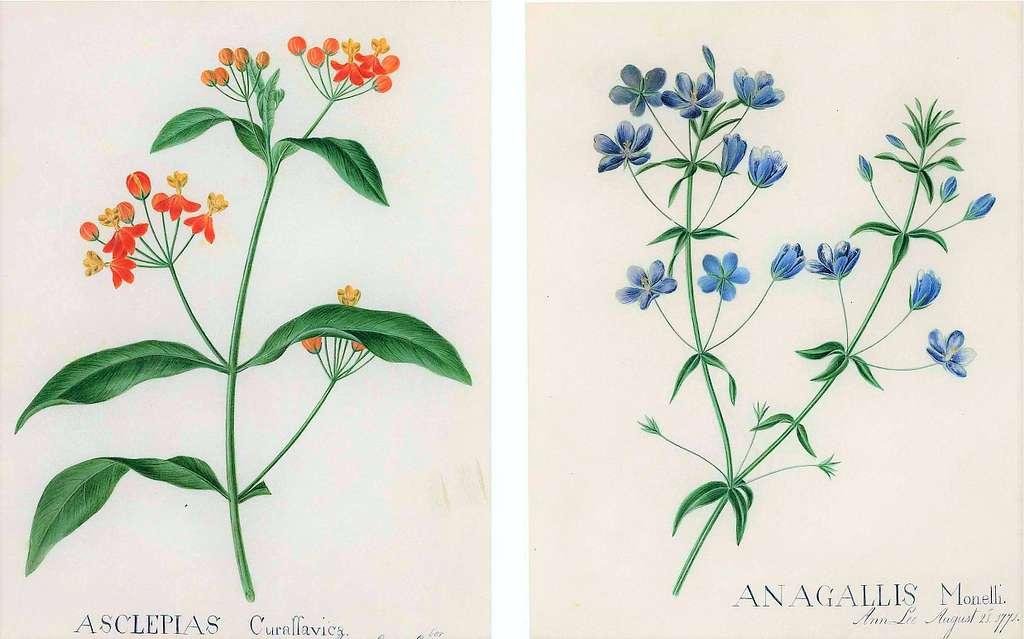
Asclepias curassavica 1771
We can see that Ann was working on a flowering plant sometimes called bastard balm. She also created a watercolor of Melittis melissophyllum.The Melittis drawing, signed and dated 25 March 1771, survives today at the Morgan Library & Museum in New York.
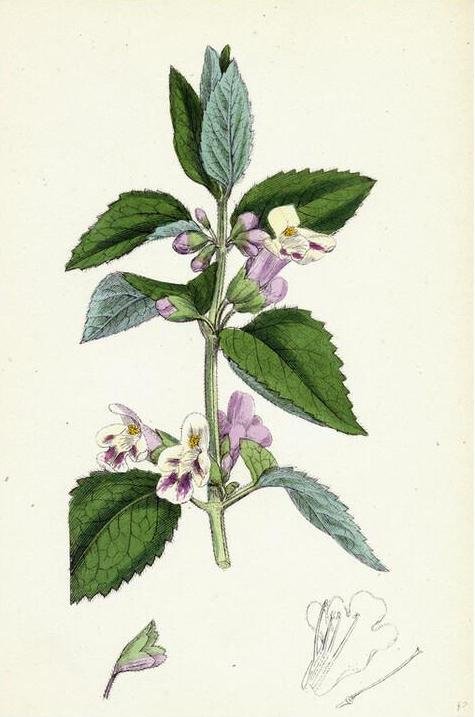
Melittis melissophyllum 1771
Ann Lee’s botanical paintings also entered the remarkable collection of Margaret Cavendish Bentinck, Duchess of Portland (1715–1785), one of eighteenth-century Britain’s most enthusiastic natural history collectors. Margaret Cavendish Bentinck was a renowned botanical collector and close friend of artist Mary Delany!
That gives us a genuine historical connection between Ann Lee's artwork and Mary Delany's circle, though it doesn’t prove the two artists ever met. SIGH.
Whether she purchased Ann’s painting directly, commissioned it, or acquired it through another collector remains unknown. I can establish only that Ann’s work entered a collection of considerable importance, placing the young Hammersmith artist within the wider world of aristocratic botanical collecting!
At eighteen, she was no longer a nurseryman’s daughter learning to draw. She was producing botanical illustrations accomplished enough to survive in important collections more than two centuries later. Collectors were willing to pay for precisely this kind of work.
In the 1770s, botanical illustration had become such an important part of scientific collecting in Britain. Wealthy naturalists wanted accurate depictions of plants, especially rare, newly introduced, or difficult-to-preserve ones. A living flower might last only a few days, but a carefully executed watercolor could preserve its appearance for generations.
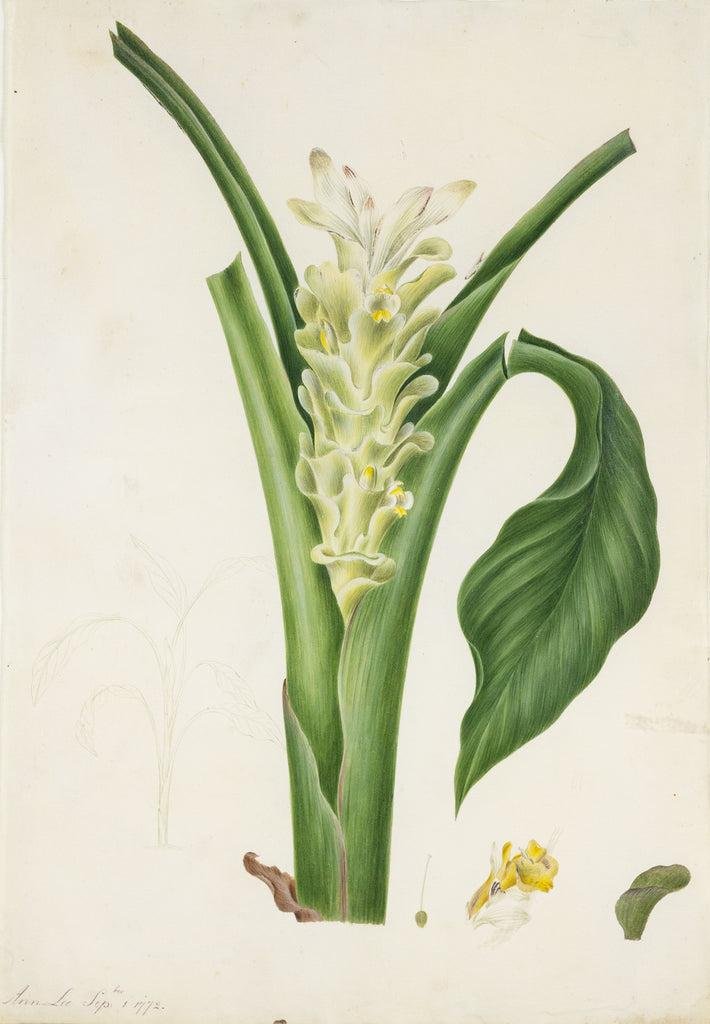
Curcuma longa (Turmeric) 1772
Dr. John Fothergill, a London physician and enthusiastic botanist, was willing to pay for such brilliant work.
At his estate in Upton, Essex, he cultivated an impressive plant collection gathered through international networks of collectors and correspondents. He employed artists to record unusual specimens as they matured and flowered. Ann Lee was among this collective. This was a significant distinction. Although flower painting was encouraged as a genteel accomplishment for women, Ann’s work was part of a professional enterprise in which botanical accuracy had scientific and financial value.
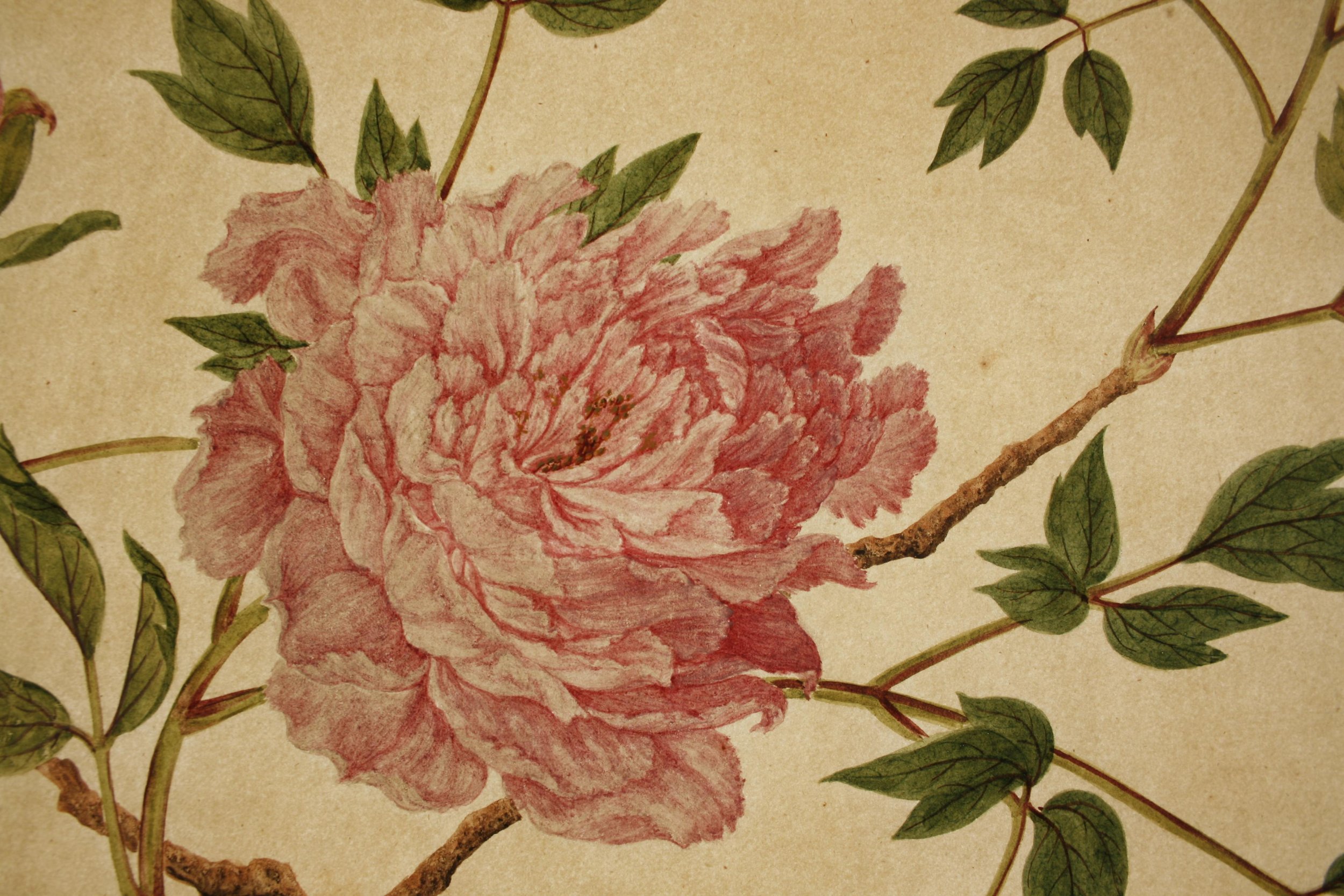
‘Untitled’ Botanical Watercolor on vellum, 1775 . Royal Botanic Gardens, Kew, Ann Lee Collection
Fothergill, died in December 1780.
The following year, his sister, Ann Fothergill, corresponded with Joseph Banks about the botanical drawings left behind. Ann Fothergill reported that 1,184 botanical drawings remained in her brother's collection and estimated that their original production had cost more than £3,306. These figures concerned the collection as a whole, not Ann Lee's individual output.
It was an extraordinary investment in botanical drawings!
The collection attracted the attention of Catherine the Great, Empress of Russia. Through negotiations involving Banks and others, the imperial collection acquired the drawings.
Ann’s work was among the drawings acquired in this purchase.
A memoir of Fothergill, published in 1782, specifically named “Miss Ann Lee” among the artists whose drawings had been collected. It is a small but important surviving acknowledgment of her professional contribution. Imagine what that meant for a young woman whose artistic education began among the plants at a Hammersmith nursery.
Her drawings became valuable enough to enter the collection of one of Europe’s most powerful rulers.
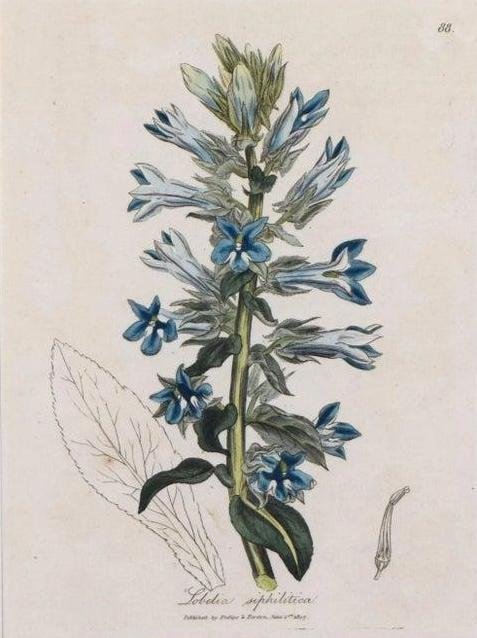
Lobelia siphilitica 1771
Evidence shows Ann continued living in Hammersmith, painting, and working within John Fothergill's botanical network, and was named as one of the artists responsible for his collection.
Hammersmith was living through a particularly unsettled moment in British history. The family nursery introduced fuchsias to British customers around 1788, reportedly selling them for one guinea apiece. Imagine that, while the family business was still bringing striking new flowers into English gardens!
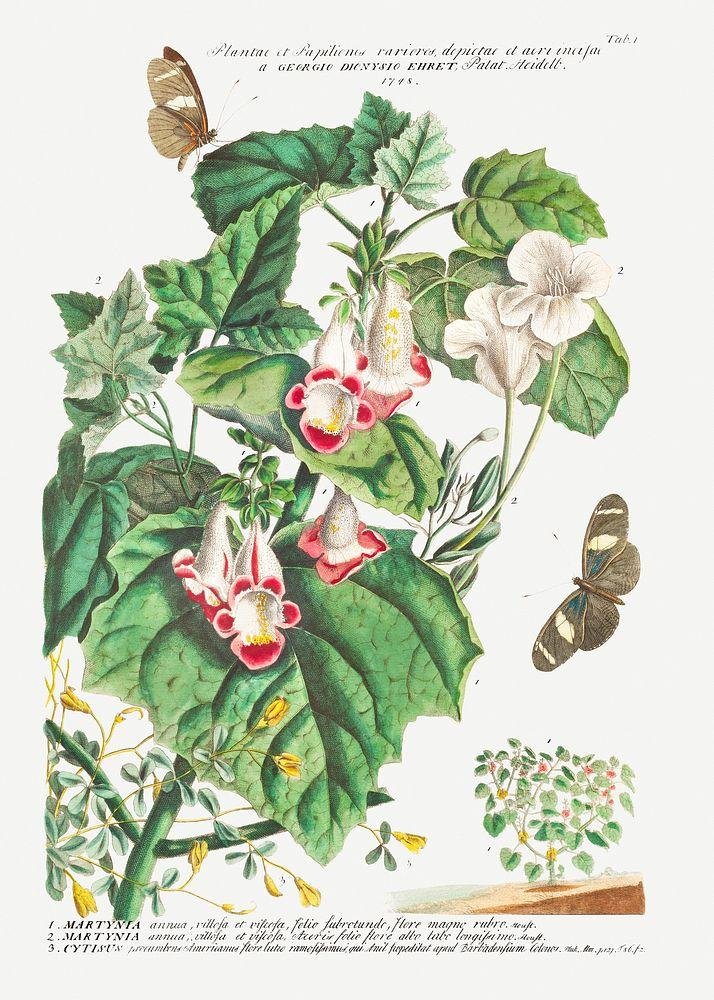
Martynia perennis 1771
Eighteenth-century collectors carefully preserved plant names and appearances, while the personal histories of some of the artists who painted them faded. Her watercolors preserve evidence of a working artist whose contribution to botanical science deserves to be remembered.
Her documentary trail grows quieter as her life nears its end.
The Vineyard Nursery was still thriving. Her father, James Lee, was alive and working, and the family business was becoming famous for introducing plants from abroad.
Sadly, Ann died in 1790. She was only 37.
Several possibilities exist for a woman dying in her thirties in eighteenth-century London.
Biographical accounts state that Ann Lee (1753–1790) was buried in Hammersmith.
Take Aways
One of the loveliest discoveries I've made while researching England’s female floral artists is how their lives overlapped…
Ann Lee (1753–1790) and Margaret Meen (1751–1834) were almost exactly the same age, both immersed in London's botanical and flower-painting circles. Could they have met, exchanged ideas, or admired one another's work?
One interesting connection I found is that Ann Lee's father's Vineyard Nursery supplied plants illustrated in Curtis's Botanical Magazine. And in 1781, the botanist Thomas Jenkinson Woodward (1745–1820) gave Margaret Meen a letter of introduction to William Curtis, who had established a botanical garden in London. It is another small overlap in the botanical circles these two women moved through, although I've YET to find evidence that Ann and Margaret actually knew one another.
But I have an itchy feeling that their world was too small not to know each other.
Mary Delany (1700–1788) was still alive when Clara Maria Pope (c. 1767–1838) was a young woman, and both had connections to Queen Charlotte's world, although at different times. I wonder if Pope ever heard stories about Delany's extraordinary paper flowers! Clara was only in her late 30s when a senior Mary peaked in artistry.
Mary Moser (1744–1819) was exhibiting at the Royal Academy while these women were building their careers, and Mary Lawrance (1781–1845) was just a little girl when Delany died.
I love imagining these tiny connections: women walking the same streets, visiting the same exhibitions, perhaps even standing before the same flowers. We may never know whether their paths actually crossed, but their lives were unfolding in the same world, sometimes only a few streets or years apart.
More than two centuries later, people still admire their flowers.
As for me
I’ve fallen down a rabbit hole of flowers 💐 I can’t escape from.
At the same time, all my awesome research is simultaneously being spun into a sweet coffee table book.📙
For Your Reference;A fascinating Cambridge dissertation, The Structure and Development of Commercial Gardening Businesses in Fulham and Hammersmith, Middlesex, c. 1680–1861, examines gardening families using parish records, financial documents, apprenticeships, and other historical sources.Royal Botanic Gardens, Kew — Passionate Pioneers: Increasing Access to Botanical Artwork by Women Artists — Ann Lee's life, her father's nursery, and the surviving collection of her botanical illustrations.The Morgan Library & Museum — Ann Lee, Melittis melissophyllum (1771) — Her signed watercolor and its documented provenance from the Duchess of Portland's collection.Christie's — Seven Botanical Studies by Ann Lee (1771) — Original artwork, dates, inscriptions, her education under Sydney Parkinson, and the Vineyard Nursery.The Kew Guild Journal, 1969, Vol. VIII, No. 74 — Historical account of Kew's acquisition of Ann Lee's drawings and their importance as records of plants cultivated at her father's nursery.Researched & Written by author Krysta Abesamis