Women Floral Artists Under The Scope
Before she became known for painting flowers, Clara Maria Pope had already lived much of her life under other names. Born Clara Leigh in London 1767 as the daughter of Jared & Elizabeth Leigh.
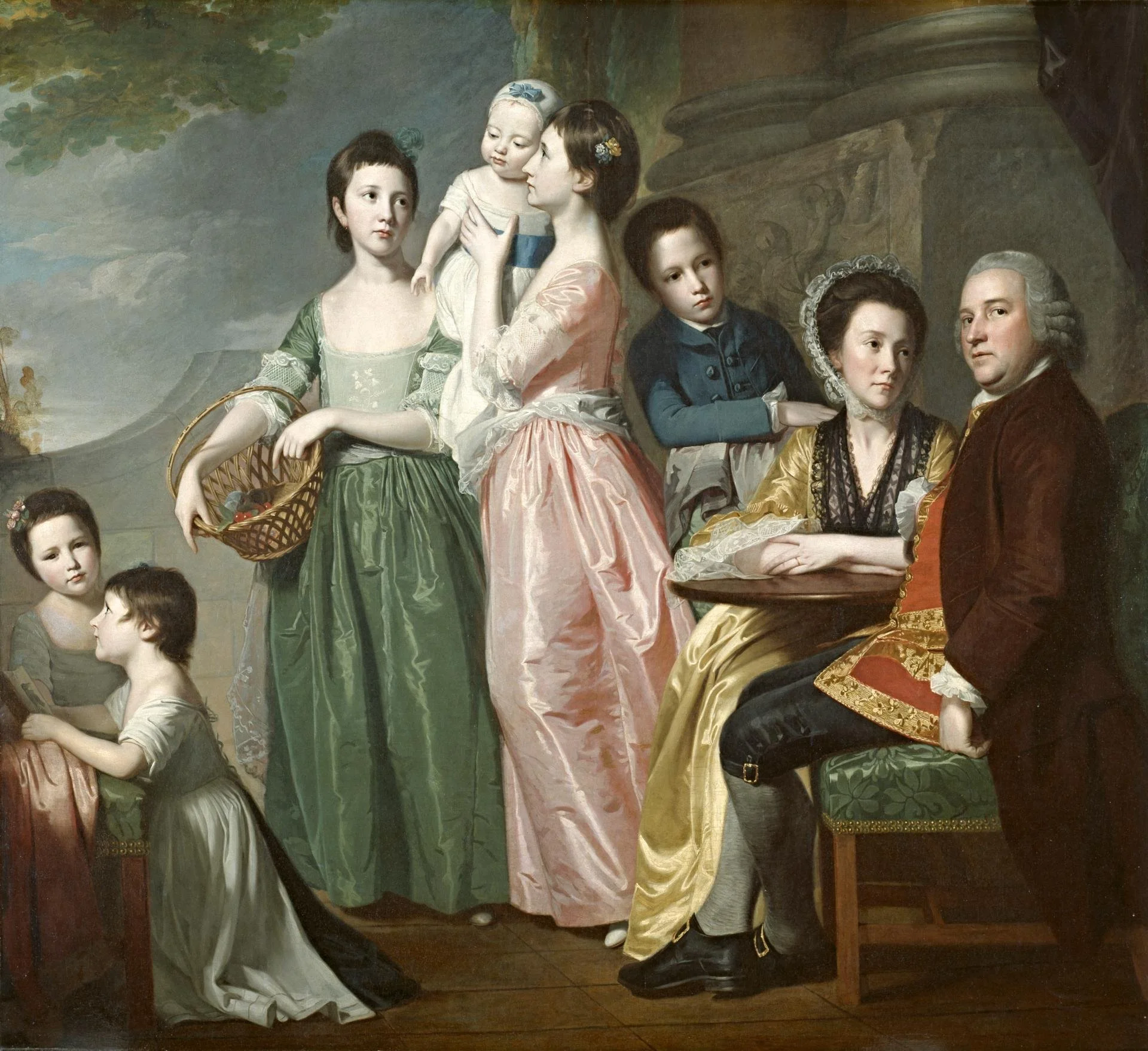
By 1768, emerging artist & friend George Romney painted a remarkable portrait of the Leigh family, capturing Clara as an infant.
Their family painting hangs at the National Gallery of Victoria in Melbourne, Australia, for all the world to see...
As a young woman, she entered London’s artistic circles, and she became a model for artist Francis Wheatley. Francis had built a reputation as a portraitist.
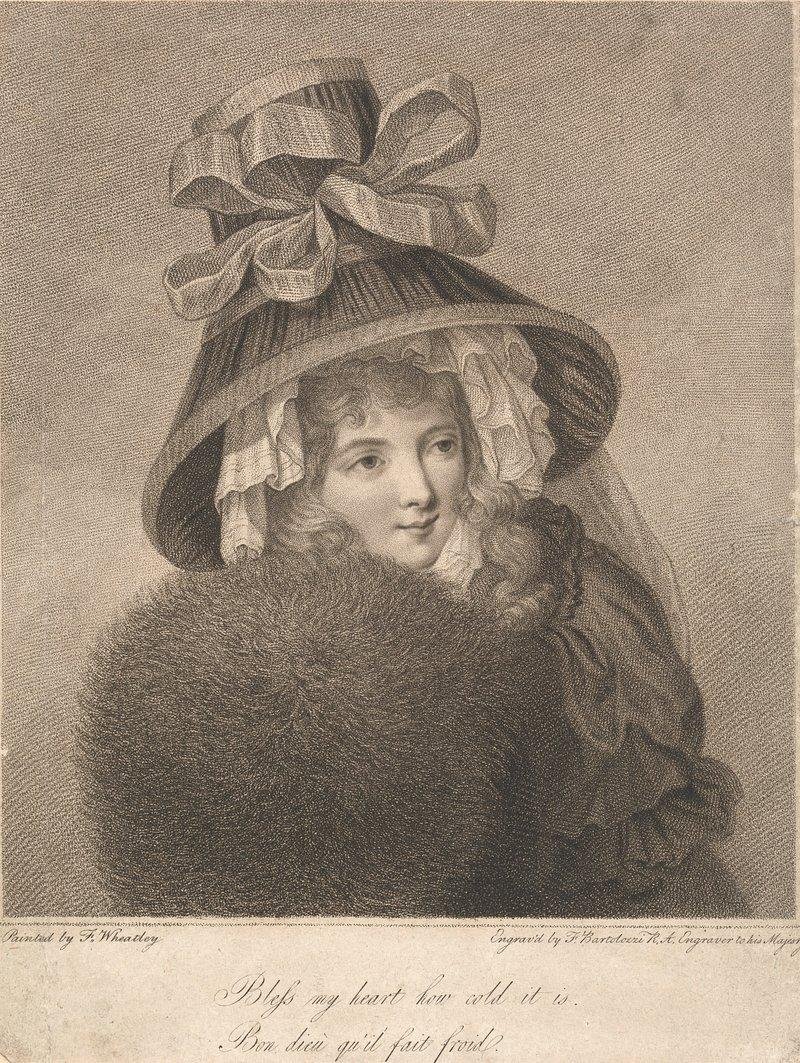
‘Winter — Bless My Heart How Cold It Is’ by Artist Francis Wheatley | Model · Clara Maria Leigh-Wheatley
Francis was a painter whose work often depicted ordinary people in carefully arranged everyday scenes. He built a reputation for sentimental genre paintings, including families, working people, and street sellers. He was a real artist.
Their relationship turned romantic and eventually became a marriage around 1786. Clara was still young, and Wheatley considerably older. The marriage placed Clara within an established artistic household.
It also gave her another name: Clara Wheatley.
For a woman hoping to become an artist, marriage to a successful painter offered opportunities as well as complications. Clara lived close to the practical business of painting: commissions, materials, customers, exhibitions, and the uncertain income that came with an artistic profession.
Of course, Wheatley influenced her; she was certainly familiar with the world professional painters worked in.
Behind the fashionable paintings and public exhibitions, Wheatley’s circumstances grew increasingly difficult.
His financial troubles would eventually affect the household Clara helped establish. Records of those difficulties offer valuable insight into how Clara built her own career, rather than treating her simply as the wife of a better-known artist.
By the 1790s, exhibition records began to list her as an artist in her own right.
Exhibiting because she probably had to.
Yet the woman who had once sat for a painter was now producing work judged under her own name.
Francis may have been an established painter whose work appeared at the Royal Academy, but recognition did not always translate into financial security.
He enjoyed considerable success painting portraits and everyday scenes. His popular Cries of London series depicted street sellers offering flowers, fruit, fish, and other goods to the capital’s inhabitants. The paintings appealed to fashionable audiences, presenting working Londoners in carefully arranged, often sentimental scenes.
Yet behind his public reputation, Francis struggled with debt.
In 1793, he was forced to sell the house and his possessions. Three years later, in 1796, his financial difficulties reportedly led to his arrest for debt. For Clara, these were not merely setbacks in her husband’s professional career. They threatened the stability of the household where she raised their children.
Clara began seriously building her own artistic reputation.
In 1796, Clara exhibited miniatures at the Royal Academy as Mrs. Wheatley.
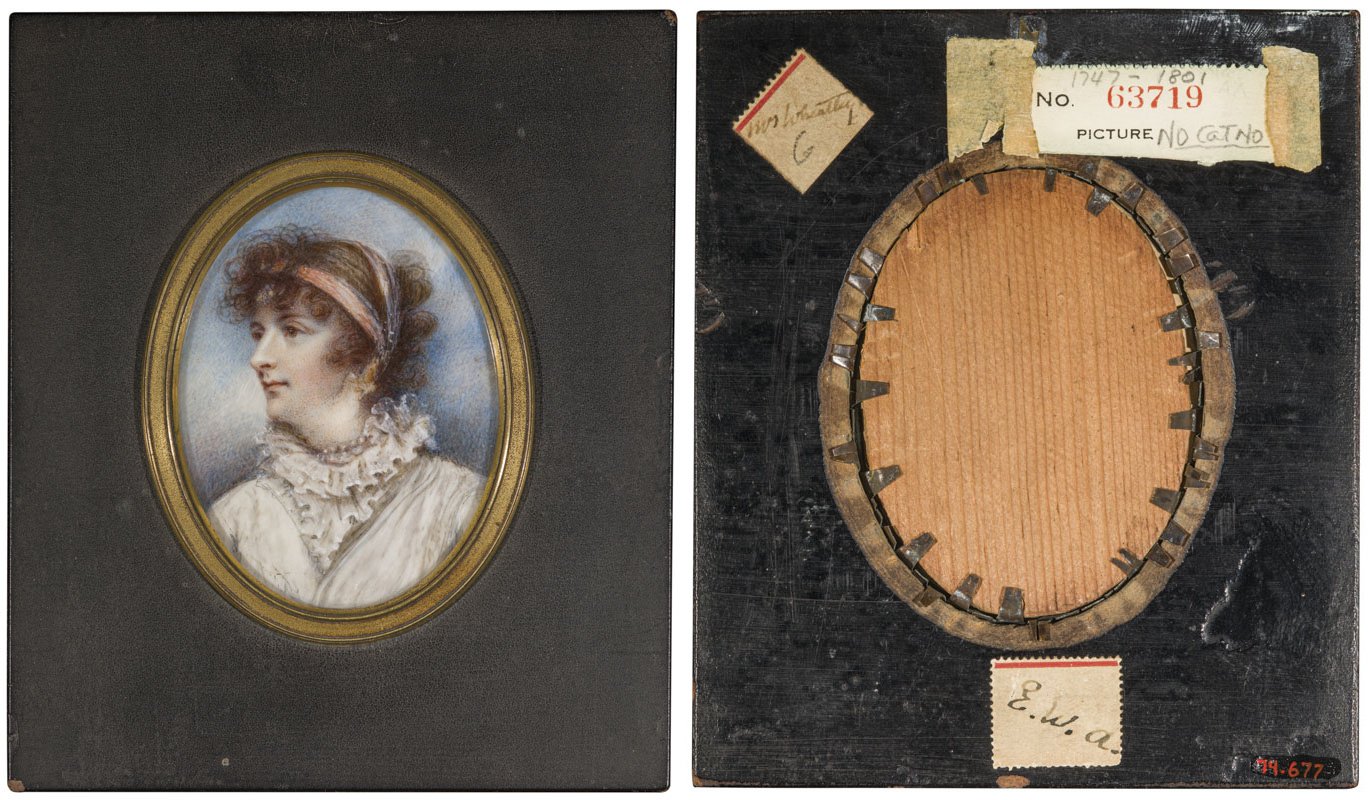
Portrait of a Woman in a White Dress. 1800 - The Latter-Schlesinger Collection, Gift of Shirley Latter Kaufmann in memory of Harry and Anna Latter
That detail deserves attention. The Royal Academy was one of Britain’s most important institutions for artists. Its annual exhibitions brought paintings before critics, patrons, collectors, and the paying public. For a woman whose artistic identity had long been tied to her husband, exhibiting her own work was an important professional step!
The exhibition catalog still listed her married name, but the work was Clara’s.
Clara stepped up.
Like other female artists I have documented struggling at home, she was a mother with a broke husband, willing to do what it took to survive.
Her husband’s difficulties continued.
In 1801, Britain was exhausted by war with France. Bread had become painfully expensive, political uncertainty filled London, and families were struggling to make ends meet. For Clara, already familiar with the consequences of debt, the nation's troubles formed the backdrop to a far more personal loss.
Francis Wheatley died in June 1801, leaving Clara a widow with children to support. The family was in such difficult circumstances that the Royal Academy subsequently provided financial assistance. What a terrible feeling for her to be in such a desperate situation.
This is where Clara’s story becomes especially interesting…
The institution that had exhibited her husband’s paintings and had begun exhibiting hers was now also connected to the family’s survival. Clara’s position as an artist could not be separated from the practical questions of earning money, caring for children, and maintaining a household.
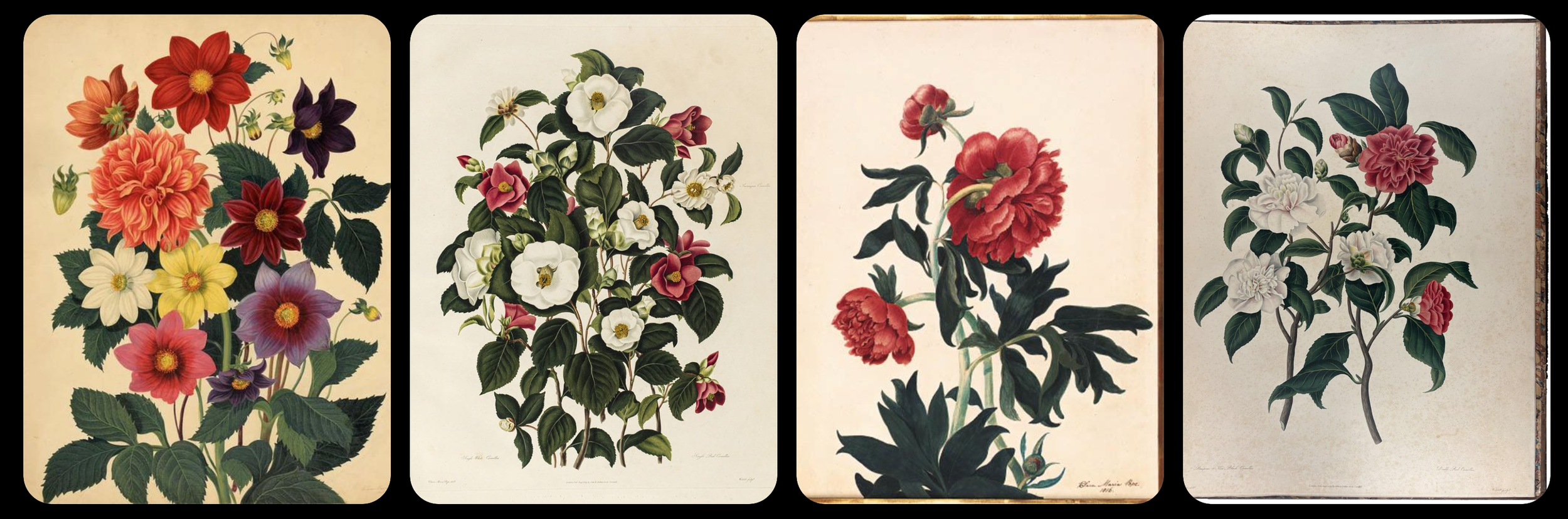
Mixed Dahlias; White and Red Camellias; Red Peony (Paeonia lactiflora), 1816; and Pink and White Camellias
In the years that followed, Clara’s artistic career grew. She worked as a portrait painter and teacher and eventually became particularly admired for her flower paintings. Her art was becoming an established part of her professional life.
In June 1807, Clara married again.
Her second husband was Alexander Pope, an actor and painter associated with London’s theatrical world. He was a well-known English stage actor, especially in Shakespearean roles.
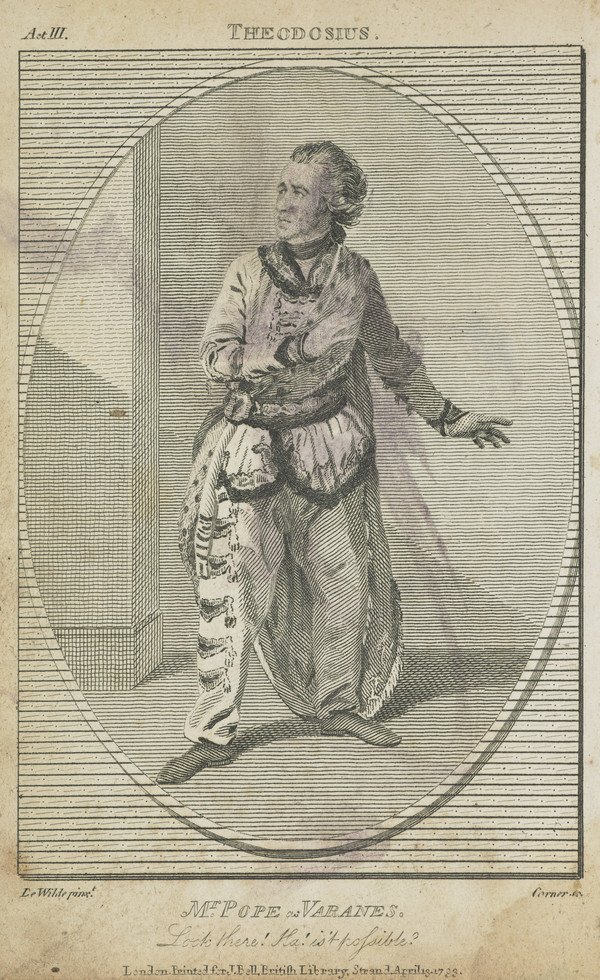
Clara’s second husband - Shakespearean actor Alexander Pope. Playing Castalio in The Orphan, 1793
With this marriage, Clara would become best known as Clara Maria Pope.
She began her adult life as Clara Leigh, appeared in exhibition records as Mrs. Wheatley, and would now continue her career as Mrs. Pope. Three names, one artist.
Under this final name, Clara produced some of the remarkable floral watercolors for which she is remembered today.
She was already an experienced artist. She had exhibited at the Royal Academy, worked in portraiture, and endured years of financial uncertainty. Her second marriage brought her into another artistic household, this time with Alexander Pope, whose acting career connected the couple to London’s theatrical world.
An especially interesting connection involves Princess Sophia, daughter of King George III and Queen Charlotte.
In 1815, Clara published an engraving of the princess, evidence that their association extended beyond painting lessons.
For Clara, whose first husband's financial difficulties had once threatened the family's security, these aristocratic connections reveal another important dimension of her working life. She was a professional woman whose skills as a painter, miniaturist, and instructor earned her recognition in circles where women were often encouraged to practice art as an accomplishment rather than a livelihood.
Clara’s flower paintings became her most distinctive contribution. She was self-made.
In early nineteenth-century Britain, appetite for botanical art grew. Wealthy collectors filled their gardens and greenhouses with plants bought from nurseries and imported through international trade.
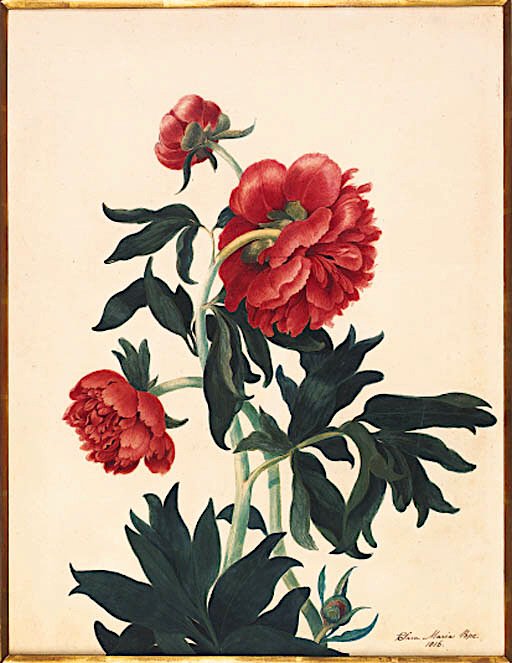
Red Peony 1816 · Clara Maria Pope
Camellias, peonies, and other ornamental flowers drew particular attention. Their beauty mattered, but so did their novelty. Some required expensive glasshouses, skilled gardeners, and considerable patience before they produced a single bloom.
For an artist, these plants offered both opportunity and difficulty.
A flower might change noticeably between morning and evening. Petals opened, faded, or fell, and an unfamiliar specimen might not bloom again for months. Painting it required careful observation, a practiced hand, and enough botanical knowledge to capture its distinguishing features.
Clara became particularly accomplished at this work.
In 1816, she signed and dated a watercolor of Paeonia lactiflora, a peony whose elaborate petals offered ample opportunity to demonstrate her skill. The painting survives as an example of the richly colored botanical studies for which she became known.
Three years later, Clara’s illustrations appeared in one of the period’s most beautiful horticultural publications.
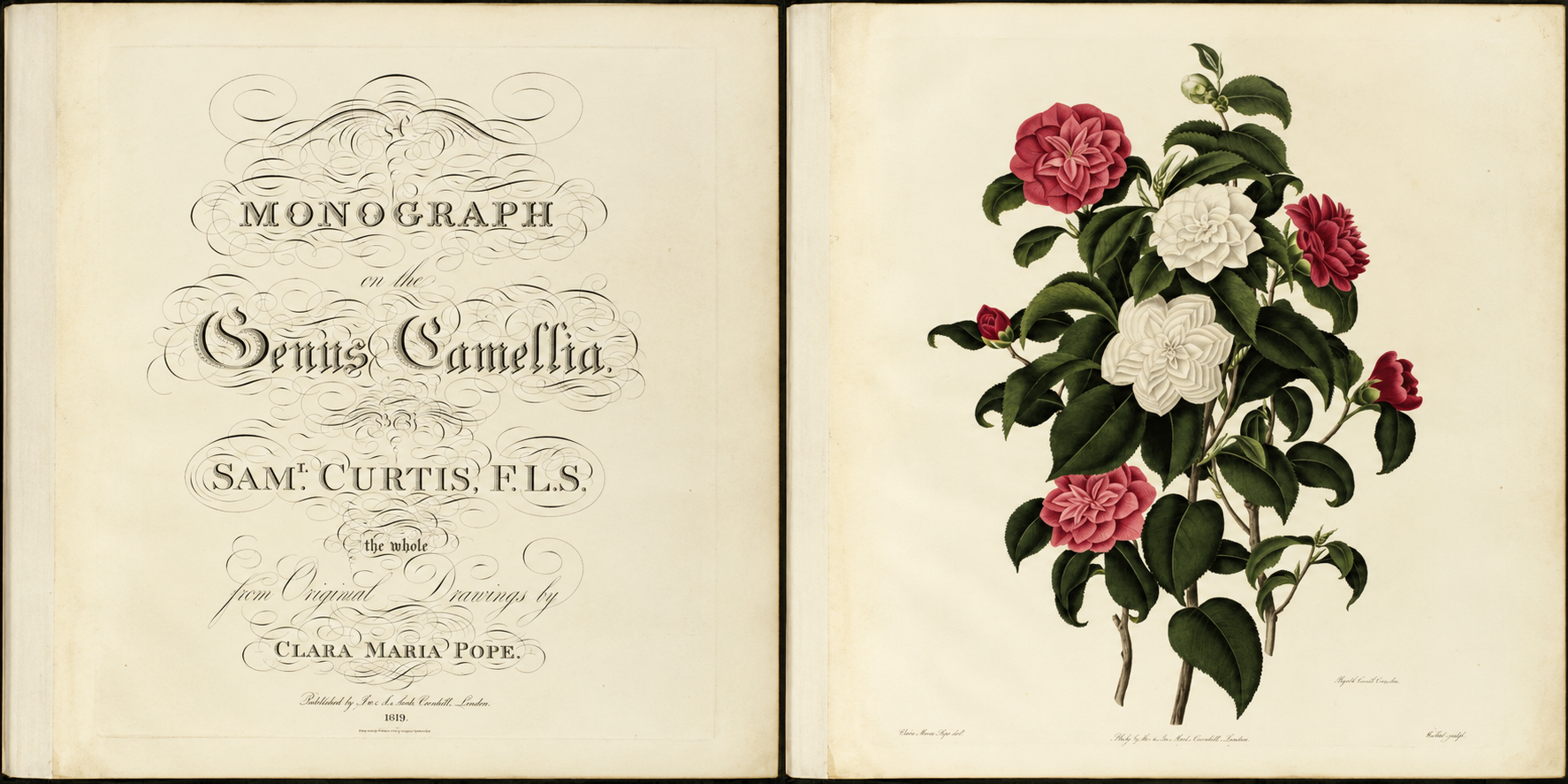
Clara Maria Pope (1767–1838), original botanical illustration of camellias, reproduced alongside the title page of Samuel Curtis, A Monograph on the Genus Camellia (London: John and Arthur Arch, 1819) Historical publication digitized by the Huntington Library, San Marino, California
In 1819, the nurseryman Samuel Curtis published A Monograph on the Genus Camellia, featuring illustrations based on Clara’s original drawings. Camellias had become desirable additions to British collections, admired for their glossy evergreen leaves and extraordinary flowers. Curtis’s publication presented different varieties in carefully colored plates, allowing readers to compare plants they might never see in their own gardens.
Clara’s contribution was not merely decorative. Her paintings helped give these cultivated flowers a recognizable visual identity.
The publication also reached a different audience. A privately commissioned watercolor might remain in a collector’s portfolio, seen by relatively few people. A printed botanical illustration could circulate among gardeners, nurserymen, naturalists, and readers interested in fashionable plants.
And the artist’s name could travel with it.
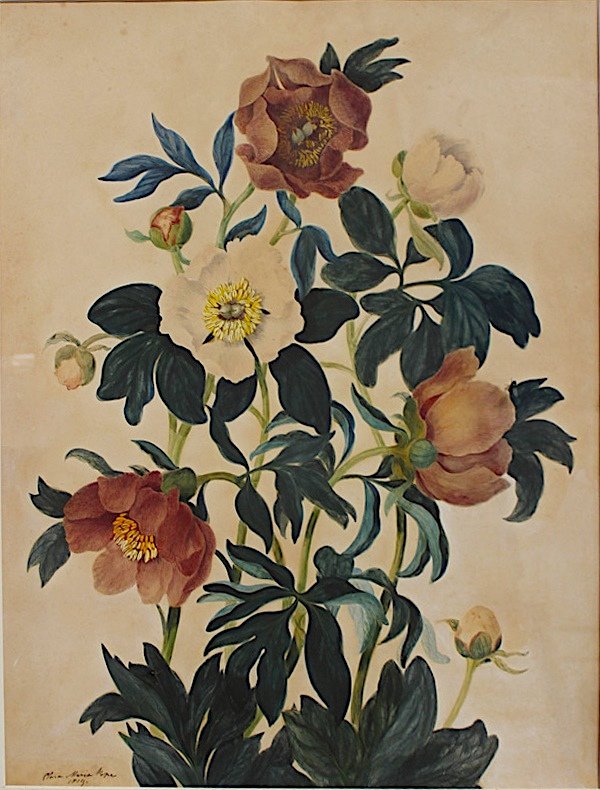
Botanical Study of Peonies, watercolor, signed and dated 1819, approx 53cm x 42cm
Clara continued painting flowers in the years that followed. The Natural History Museum in London preserves eleven peony watercolors dating from 1821 to 1822. Together, they reveal her sustained interest in a flower whose many cultivated forms challenged artists to capture subtle differences in color, shape, and arrangement.
These were not quick sketches made to pass an afternoon. The surviving paintings demonstrate considerable labor, especially in the delicate handling of overlapping petals and the careful distinction between foliage and flower.
We still cannot determine how Clara arranged access to every specimen she painted. Did collectors send flowers to her? Did she visit private gardens or nurseries? Did she work directly from plants cultivated by particular patrons? Those questions merit further investigation, especially because the answers could reveal the practical arrangements behind her professional career.
By this stage, Clara was working in a world where a successful flower painting could serve several purposes. It might be a collector’s prized possession, a model for an engraved plate, or a record of an unusual plant grown in a private garden. Each purpose placed different demands on the artist.
And each offered a possible source of income.
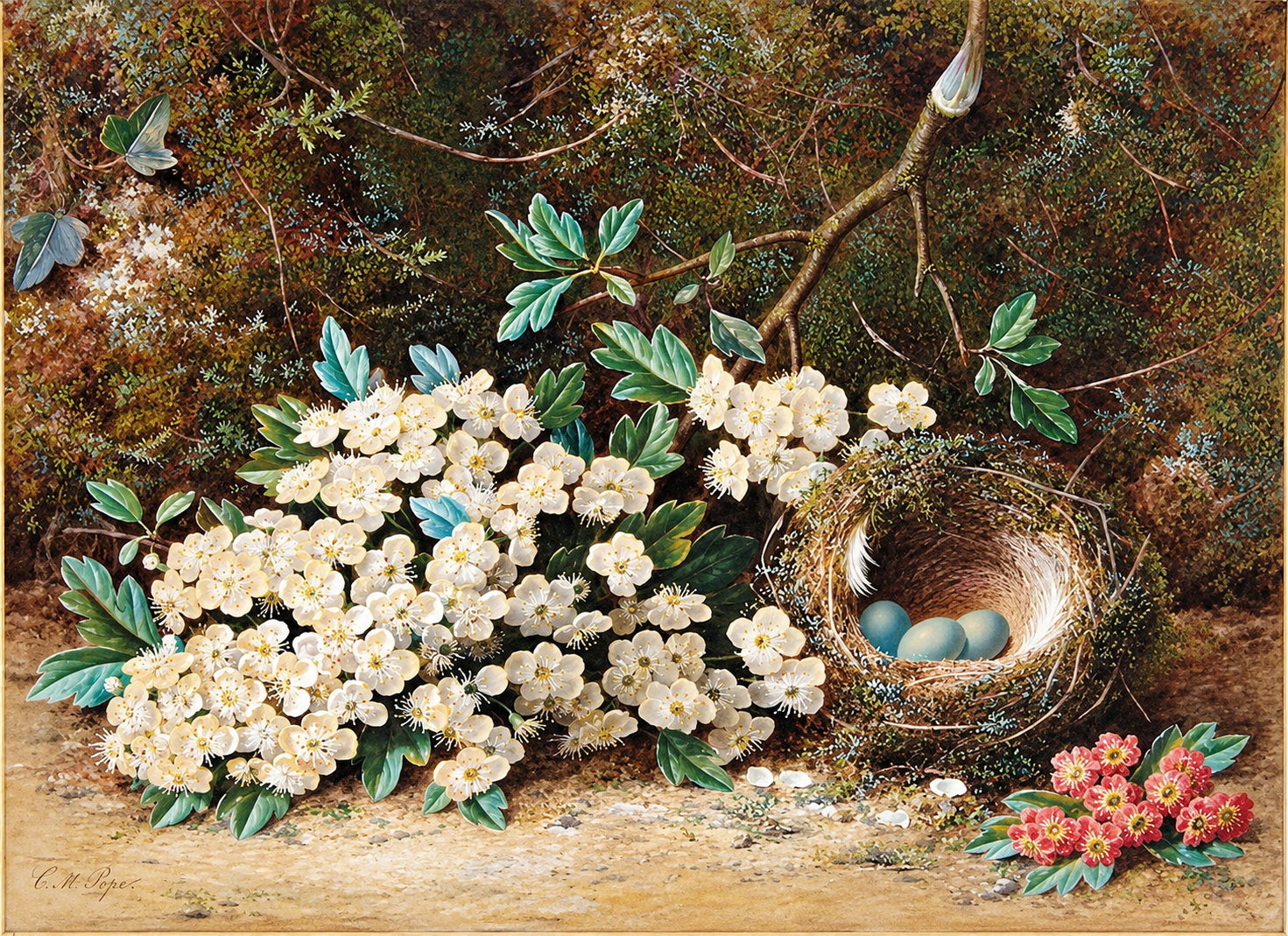
Still Life of Flowers with a Bird's Nest 1820
She witnessed the collapse of her first husband’s finances, supported a household as a widow, and established herself as an exhibiting artist. We should not assume she painted every flower out of financial necessity, but we should not overlook that patrons and publishers were willing to pay for skilled botanical art.
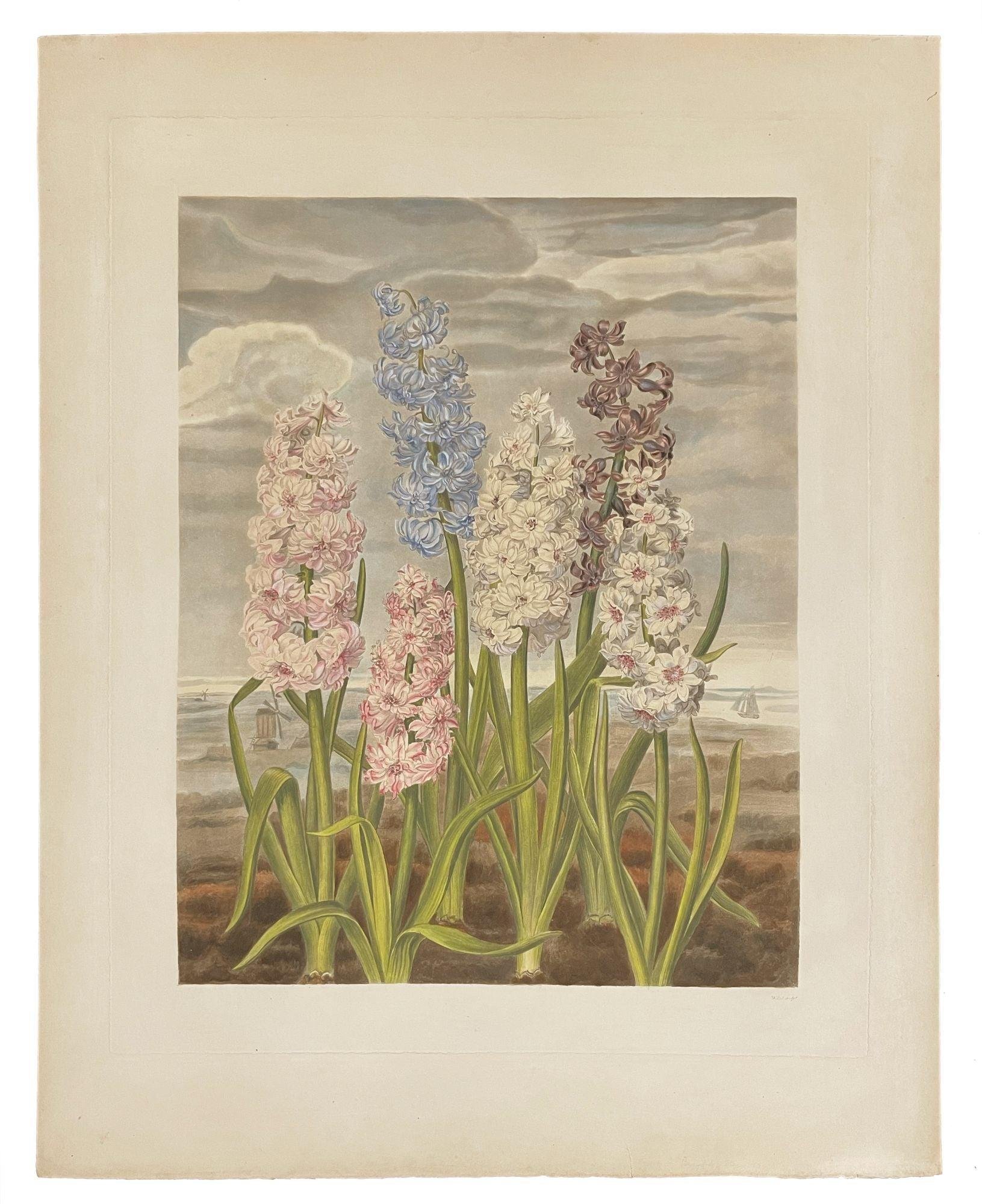
Title page of Samuel Curtis's The Beauties of Flora (1820), the botanical publication illustrated by Clara
Her paintings were beautiful. They were also products of a profession.
By the 1830s, Clara had spent decades navigating London’s artistic world under three different names. She was no longer simply the young woman who had once modeled for Francis Wheatley, nor merely the widow who had needed to support her family.
She was an artist whose work could command attention on its own.
In 1835, one particularly unusual commission left us something rare in her surviving record: not just a painting, but also evidence of its price and a handwritten explanation of the flowers she chose.
That year, she produced one of her most intriguing works, Shakespeare’s Flowers, which the architect and collector Sir John Soane acquired.
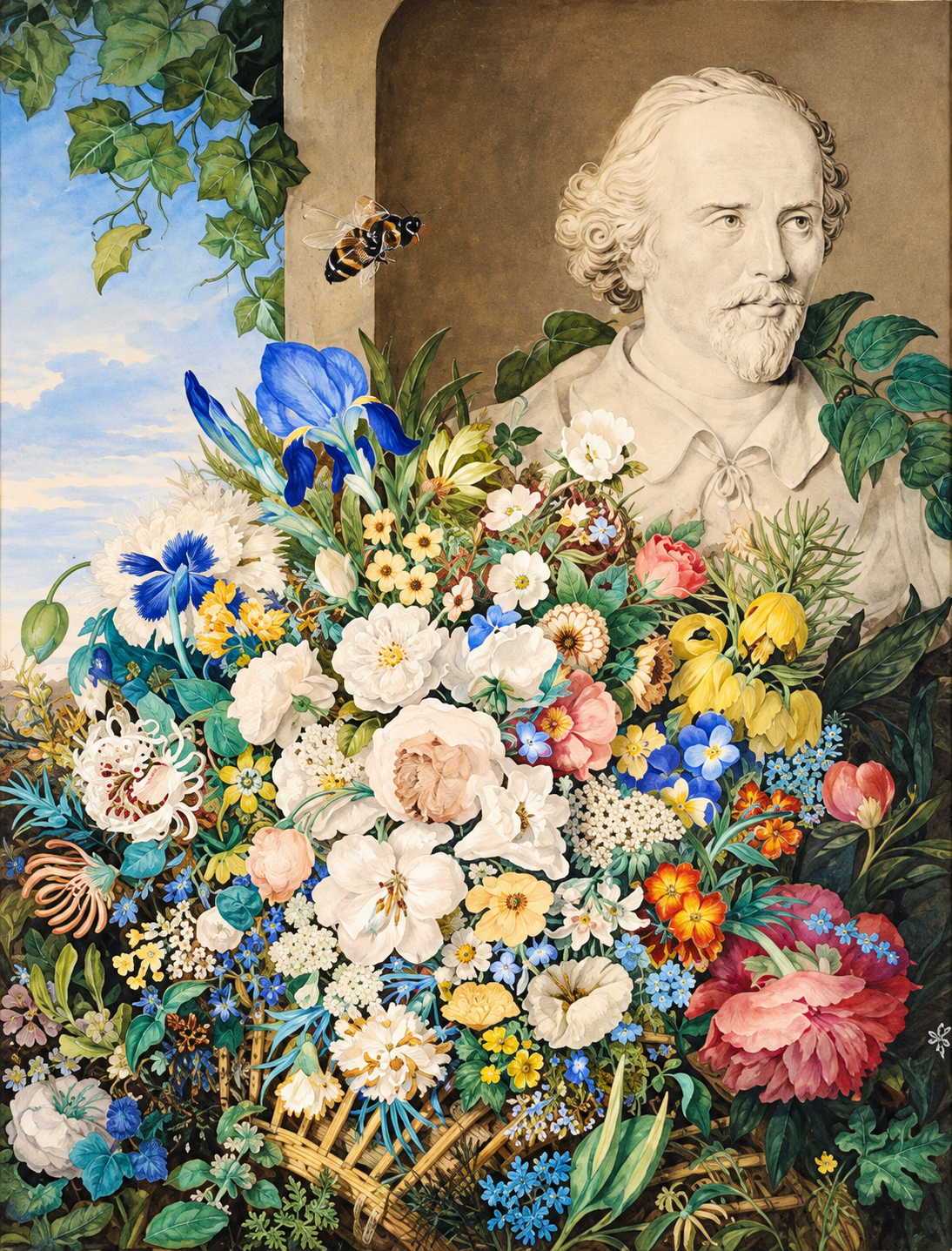
Shakespeare’s Flowers 1835
Rather than depicting a single botanical specimen, Clara brought together flowers and herbs associated with William Shakespeare’s plays. The composition required more than a painter’s eye. Someone had to identify the plants mentioned in the plays, select those best suited to the arrangement, and consider how they might be represented together.
Among the papers preserved at Sir John Soane’s Museum is a handwritten list, signed by Clara, identifying the flowers and herbs in her painting and the Shakespeare plays in which they appear!
On 22 July 1835, Soane’s office daybook recorded a payment of £31 10s to Mrs. Pope for a flower drawing. The museum associates the payment with Shakespeare’s Flowers.
That is an unusually precise detail to recover from an artist’s working life. We can identify the painting, the purchaser, the payment, and the date. The sum was substantial enough to remind us that Clara’s botanical paintings were not merely attractive accomplishments made for the pleasure of friends.
They were works of art with commercial value.
Clara first entered the London art world as Clara Leigh, worked as a model, and later exhibited as Mrs. Wheatley. People bought her paintings under the name she adopted after her second marriage.
The name changed, but the professional career continued.
Together, they offer a remarkably clear picture of a professional transaction between an established woman artist and one of London’s best-known collectors.
Clara spent her final years in a city that had changed considerably since her youth. London had expanded, its streets had grown busier, and its artistic institutions had become increasingly important to painters’ reputations. The Royal Academy, where she had exhibited under different married names, remained central to the world in which artists sought recognition and customers.
She died on December 24, 1838, at 29 Store Street, London.
She was seventy-one.
Clara left us her address, but far less about the household around her during those final days.

Historical reconstruction of 29 Store Street, Bloomsbury, London, around 1838
Clara lived through financial insecurity, widowhood, remarriage, and the demands of earning a living in a profession where women’s contributions were often recorded under their husbands’ names. Yet her paintings survived.
Today, her peonies and camellias preserve the delicate colors and forms of flowers cultivated more than two centuries ago. They also preserve something of the woman who observed them and turned them into enduring works of art.
I find the handwritten list accompanying Shakespeare’s Flowers especially revealing.
After all the changes in her name, it is particularly satisfying to find her signature.
Clara Leigh, Clara Wheatley, Clara Pope.
Three names, one artist.
For Your Reference;National Portrait Gallery — Clara Maria Pope. Biographical history, marriages, artistic career, and connections with Princess Sophia.Sir John Soane's Museum — Shakespeare's Flowers (1835). Original artwork, signed handwritten botanical list, and documented payment of £31 10s.The Huntington Library — A Monograph on the Genus Camellia (1819). Clara's botanical illustrations, professional career, and contribution to nineteenth-century horticultural publishing.Researched & Written by author Krysta Abesamis