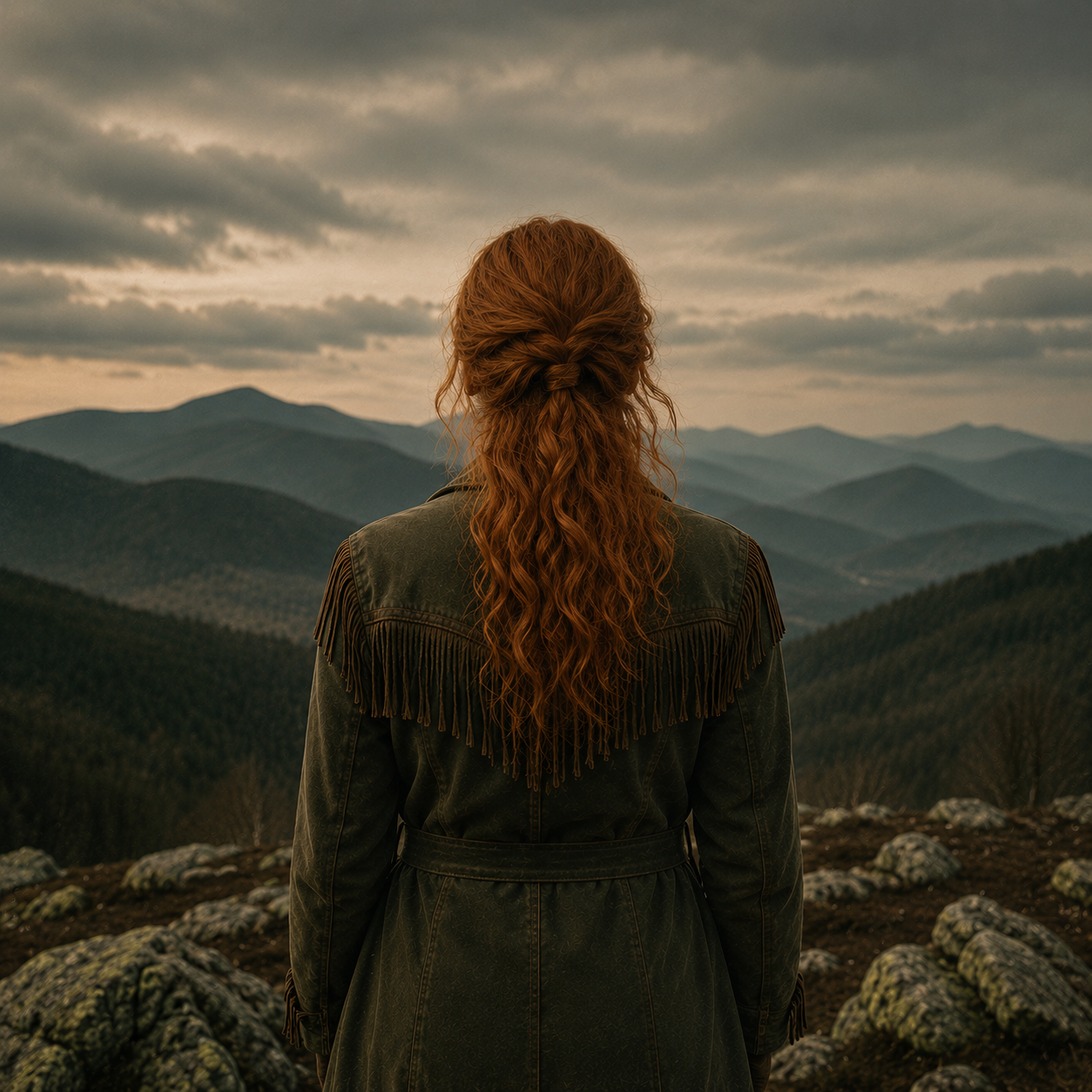
Border Tower House
Inside Life Within Stone Walls 1700
Across the western Borders of Scotland, tower houses once rose from the valleys of Annandale and Dumfriesshire like watchful stone sentinels. Built during centuries of instability along the Anglo-Scottish frontier, these structures were not castles in the romantic sense imagined today. They were defensive homes — built for endurance, vigilance, and survival. And among the families who lived within this world were the Carruthers of Holmains.
From the outside, a Border tower projected strength. Thick stone walls, narrow windows, iron gates, elevated entrances, and spiral staircases all reflected the dangers of frontier life. But inside these towers, daily life unfolded in ways both ordinary and deeply shaped by the instability surrounding the Borders. At the center of tower life stood the hearth. The great fireplace provided heat, light, cooking space, and gathering place all at once. Peat smoke drifted upward into timbered rafters darkened by generations of fire.
Iron pots hung over open flames while women prepared oat bread, pottage, stewed meats, or whatever could be preserved through difficult seasons. Salted beef, dried fish, oats, barley, cheese, and root vegetables formed much of the daily diet across the western marches.
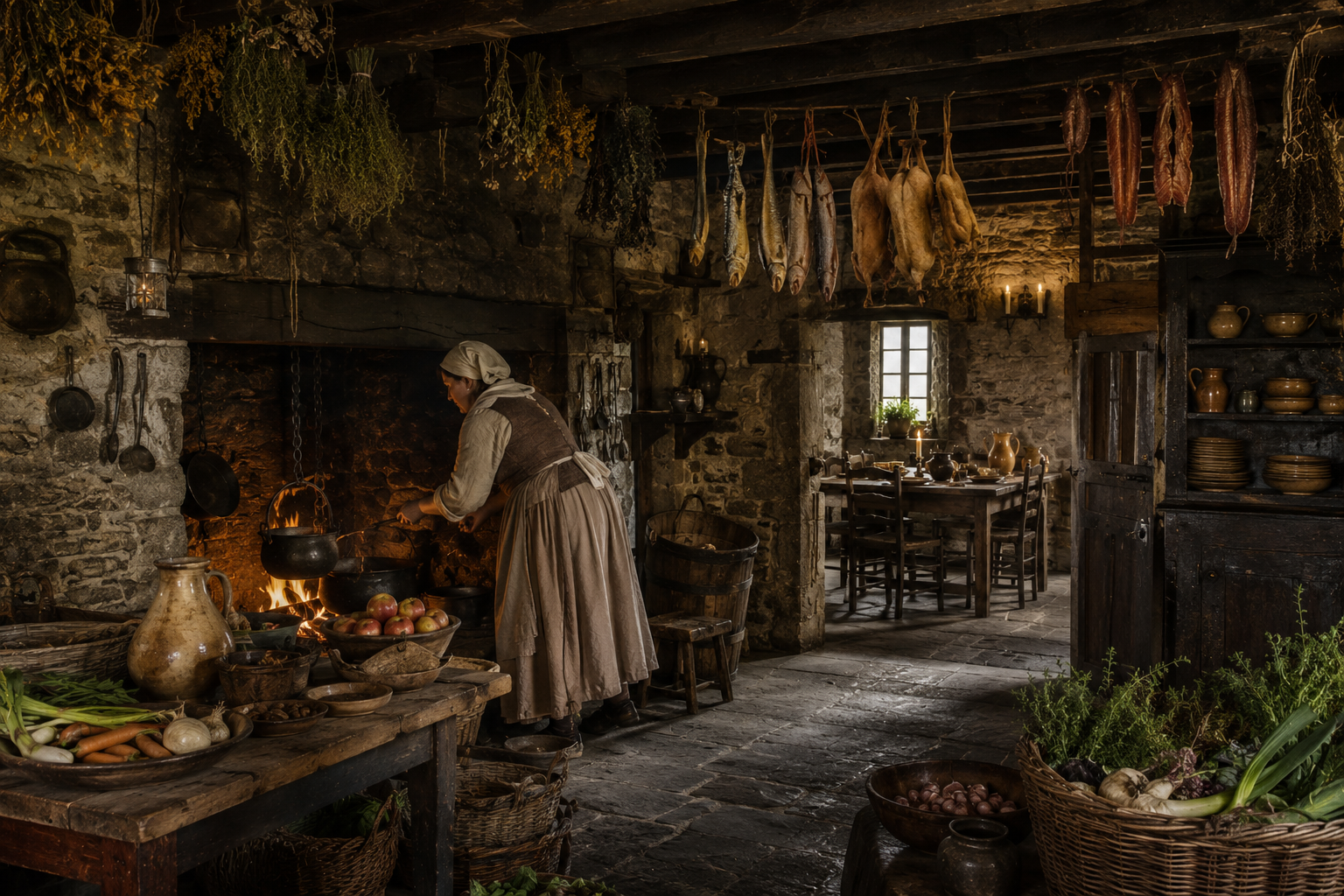
The air inside a tower was rarely still. Smoke lingered. Candles flickered against stone walls. Damp wool cloaks dried near the fire after long rides through rain or mist. Dogs slept near the warmth while servants moved between storage rooms, kitchens, and courtyards carrying water, firewood, or grain. Outside, livestock remained close. Cattle, sheep, horses, and poultry represented survival itself. Many tower houses maintained enclosed courtyards or nearby byres where animals could be protected at night from raiders moving through the countryside. During dangerous periods, livestock might even be driven directly inside defensive enclosures before darkness fell.
Cheviot sheep grazed the uplands surrounding many Border properties. Their wool became part of the economic backbone of the region, woven into trade networks extending beyond the marches themselves. The rough hills surrounding places like Breconside and Holmains were well suited to sheep raising, and generations of Border families relied upon both livestock and wool production for survival. Women carried enormous responsibility within these households. While Border warfare and riding culture often dominate later legends, much of daily survival depended upon the management of tower homes themselves.
Women oversaw food stores, household labor, textile work, childbirth, candle making, preservation, servants, and the constant rhythm of maintaining life inside stone walls exposed to harsh weather and uncertainty. In periods of absence or conflict, they also protected the household. Children grew up within this atmosphere from birth.
A tower child learned quickly how to climb narrow staircases, carry water, tend fires, and recognize the names of neighboring families. Stories of feuds, raids, and alliances passed from one generation to another beside the hearth itself. Nights brought the sound of wind across the hills, barking dogs in distant courtyards, and occasionally the sudden arrival of mounted riders carrying news from neighboring kin.
The architecture reflected the realities of the Borders. Spiral staircases were intentionally narrow and defensive. Doors were reinforced. Windows remained small on lower levels. Upper halls served both domestic and protective purposes. Valuable goods, weapons, food supplies, and records all remained guarded within thick stone walls built to withstand attack. Yet life was not lived entirely in fear. Music still filled halls during gatherings. Marriages united neighboring families.
Children played within courtyards. Seasonal routines continued through planting, shearing, harvest, and winter preparation. The tower house functioned not simply as a military structure, but as the center of family identity itself. Properties such as Holmains existed within a wider landscape of neighboring towers, riding routes, marshlands, and upland farms stretching across the western marches. The extended families documented in books ‘The Carruthers Men’ and ‘The Housewives of Holmains’ by Krysta Abesamis, lived inside this deeply interconnected frontier world where kinship, land, and survival remained inseparable. Even today, the surviving ruins of Border towers still carry traces of that atmosphere. The thick walls remain cool and silent. Narrow windows frame the same hills once watched for riders approaching across the valleys.
Fireplaces stand empty where generations once gathered against the uncertainty of the marches. And though centuries have passed since the height of the reiving years, the old towers of Dumfriesshire continue to preserve something larger than architecture alone. They preserve the memory of how Border families lived.