
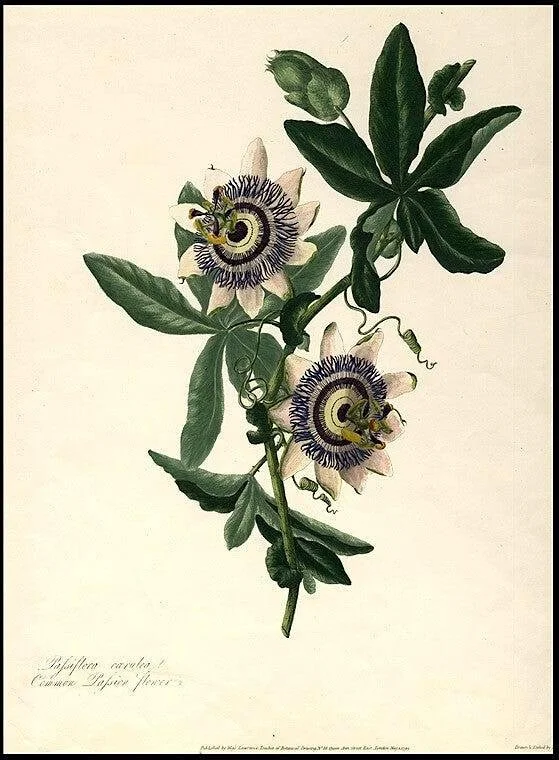
Artist Mary Lawrance
In the 19th century, London’s vineyards and nurseries supplied lush gardens for rich aristocrats and prosperous merchants. Botanical publications introduced readers to new plants they might never see growing in England. And floral collectors paid considerable sums for these rare specimens, while artists worked to capture their colors and structures before the flowers faded.
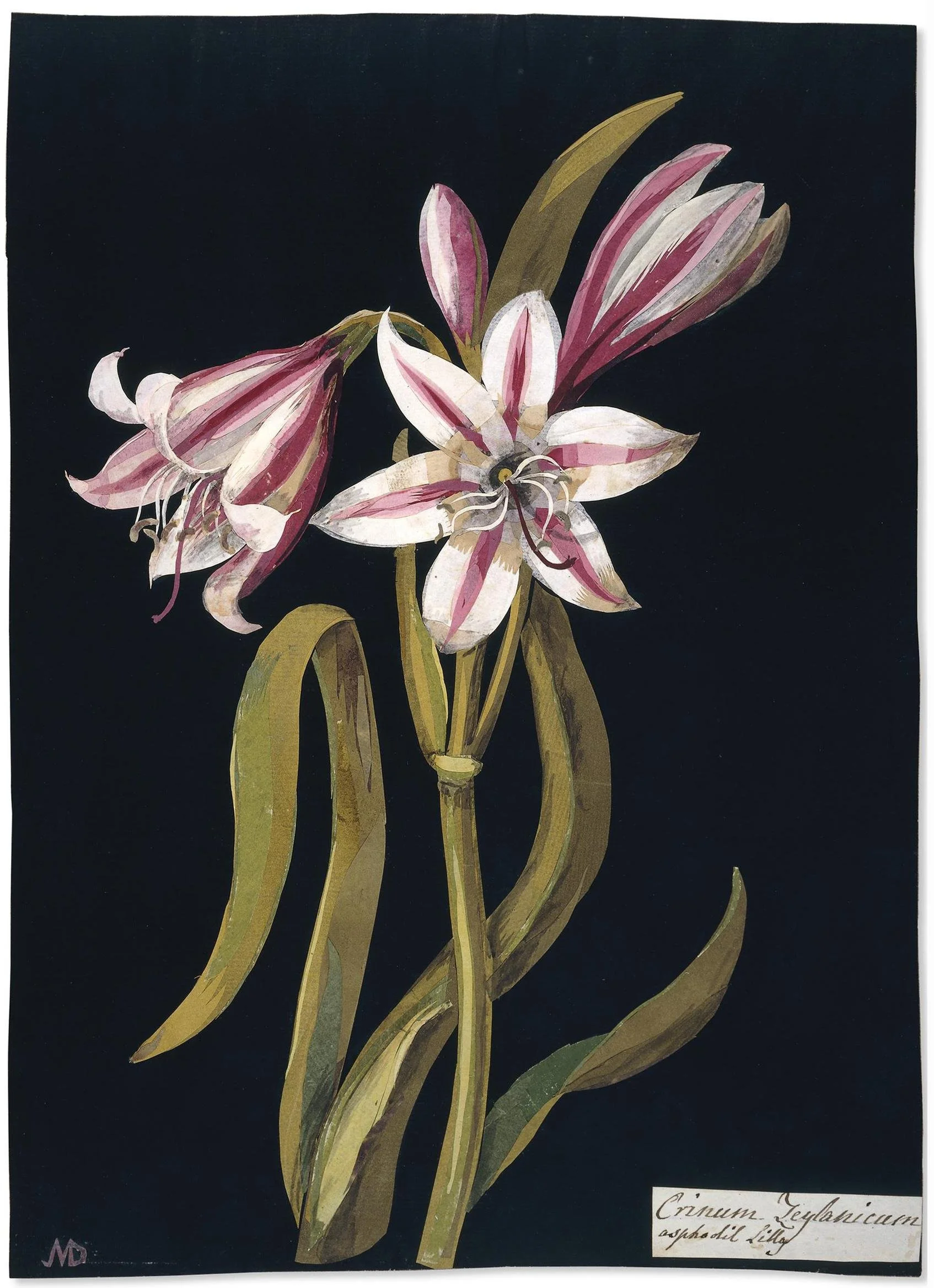
Artist Mary Delany
Mary’s projected future was tied to that network: they were preparing her to serve Queen Anne.
She was not raised to become an artist.
She was being prepared for court…
At about six, Mary was sent to a small school run by Mademoiselle Puelle, a French refugee who apparently kept it deliberately small. Mary later remembered her as a kind, good teacher. Her education there included French and music.
Then, at about eight, Mary’s life changed again; she went to live with her father’s sister Anne Stanley, usually called Lady Stanley, at Whitehall. It was part of a deliberate plan for her future, not because she had been orphaned or displaced. Lady Stanley was childless and had court experience herself; she had been a maid of honor to Queen Mary.
The plan was for Mary to enter Queen Anne's household. Mary’s education had a purpose.
She needed the skills expected of a young gentlewoman who might live at court.
There, she learned French, English, history, music, dancing, and needlework.
Her hands were already being trained.

Hello from Christie’s Close
Christie’s Close stood in a neighborhood on the verge of an extraordinary transformation.
By the early nineteenth century, Edinburgh’s authorities were determined to improve movement through the Old Town. Traveling between the Lawnmarket and the southern districts meant negotiating steep, narrow streets and crowded passages.
Their solution was ambitious: build a great new bridge across the Cowgate valley.
They laid the foundation stone for George IV Bridge on August 15, 1827. Construction continued through the early 1830s, creating an elevated thoroughfare designed by architect Thomas Hamilton. But the new bridge required space.
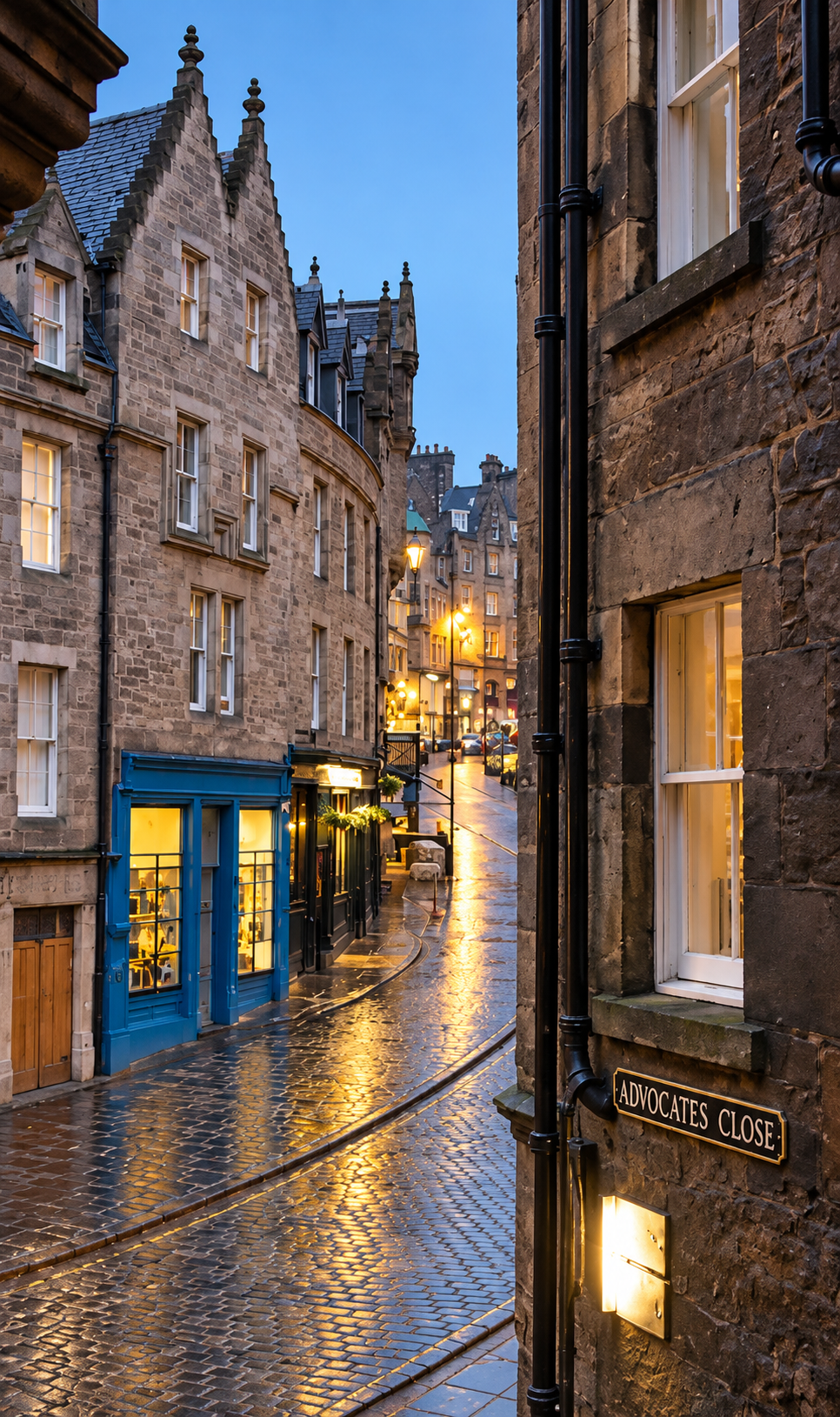
Hello from Advocates Close
I ducked into one of the closes off the Royal Mile to shake off the rain. Over my shoulder, a little sign read: ADVOCATES CLOSE.
Many of these skinny alleys run north from Edinburgh’s High Street, dropping steeply through the Old Town. Edinburgh Castle is only a few blocks away. Today, we tend to think of these closes as passageways, shortcuts between streets, or wonderfully atmospheric places to photograph. Historically, the closes were much more than that. They date back to at least 1562. Houses rose along them. Families lived above shops, workshops, cellars, and stables.
Advocate’s Close has a documented history stretching back centuries…

Microhistory Explained
Traditional genealogy can establish the framework: Who were this person’s parents? Whom did they marry? When were they born? Where did they live? Who were their children? Those questions build the family tree. My interest begins with what we can discover beyond the tree.
I am trying to figure out what it was like to be them and to be there. That is a big part of the attraction for me.
For example, I can write about the life of one cotton-mill worker in Lanett, Alabama
(The Girl, Bacon Level and the Chattahoochee), from census records, employment evidence, maps, photographs, and accounts of mill conditions. That reconstruction tells us about one person. But when you use her life to explore how mill work, company housing, wages, family labor, and industrialization changed life for working families in the South, the small story becomes microhistory. Investigating her is recovering a community that has largely disappeared.
I feel that being a historian means bringing those pieces to life without claiming more than the evidence allows.