
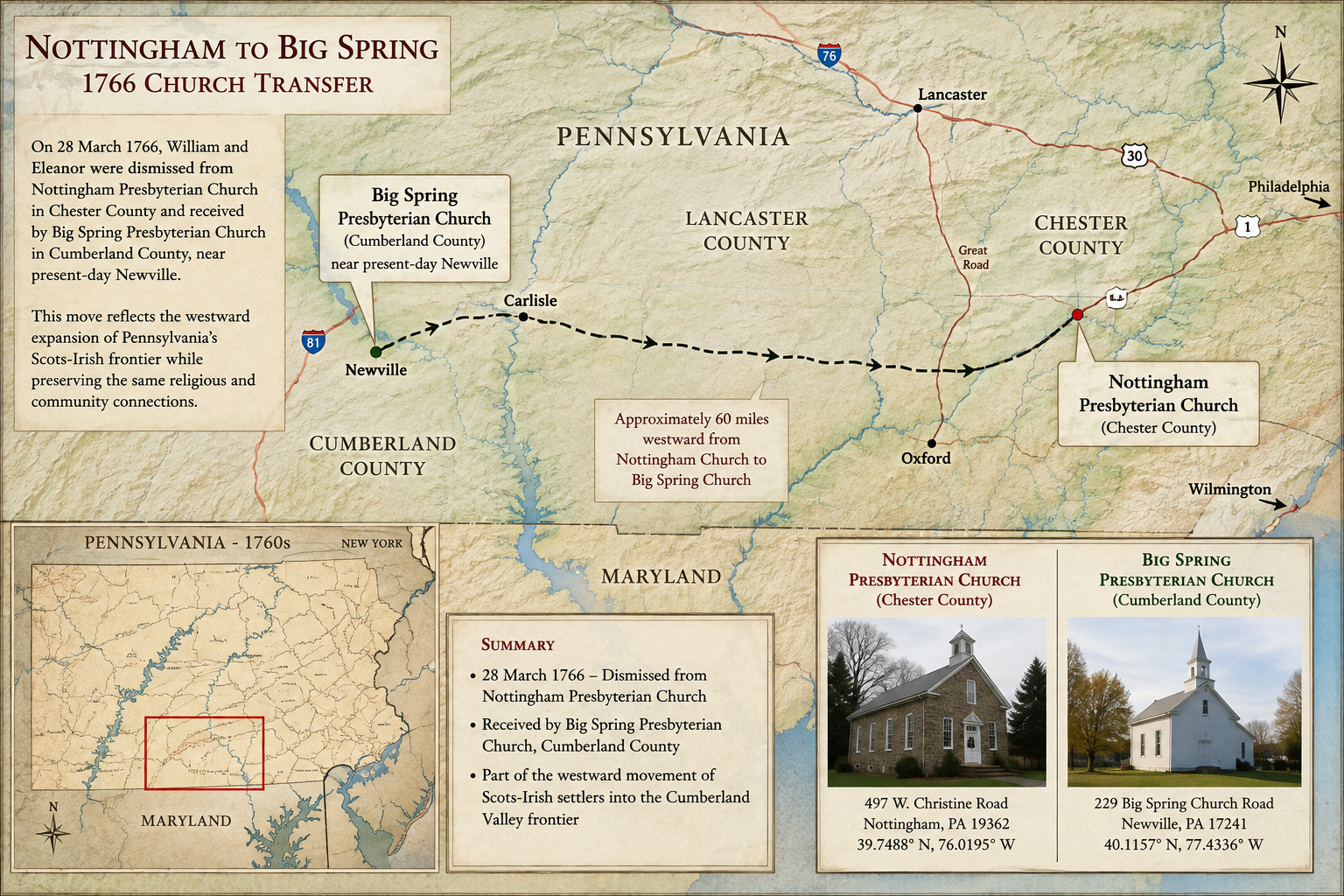
The Gillespie Footprint
The surviving records presently identify several adult Gillespie men living within or directly connected to the southern Lancaster County–northern Cecil County frontier during the decades surrounding the 18th century (1710-1770).
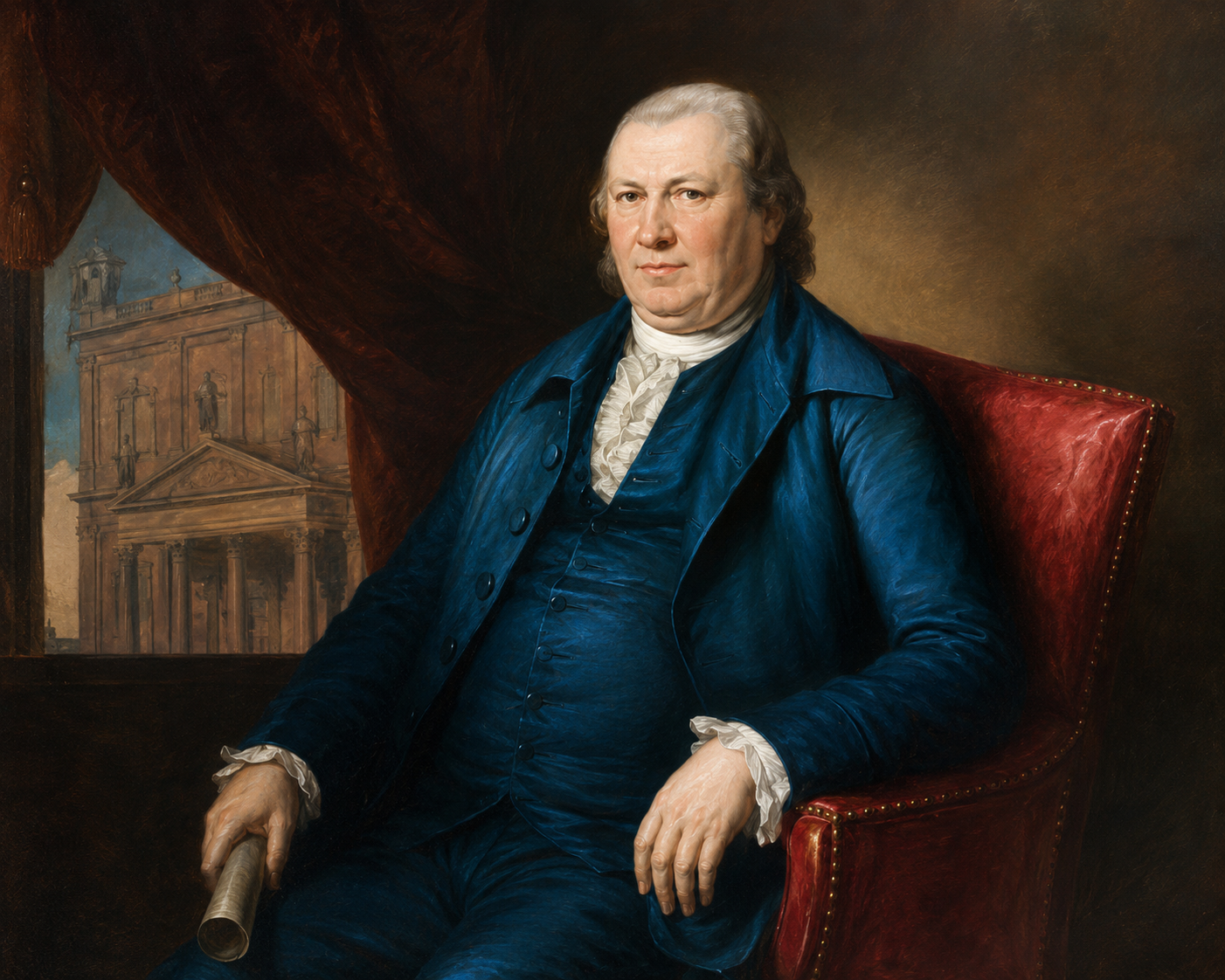
Robert Morris
His prosperity arrived during a period when the British Empire itself stood at the height of its power. The conclusion of the French and Indian War in 1763 left Britain victorious but heavily indebted.
Parliament attempted to recover those costs by taxing the American colonies through measures such as the Sugar Act, Stamp Act, and Townshend Duties. Morris initially hoped reconciliation remained possible, believing that continued trade with Britain benefited both sides of the Atlantic.
Yet as imperial policy grew increasingly rigid, he gradually concluded that economic freedom and political independence had become inseparable.
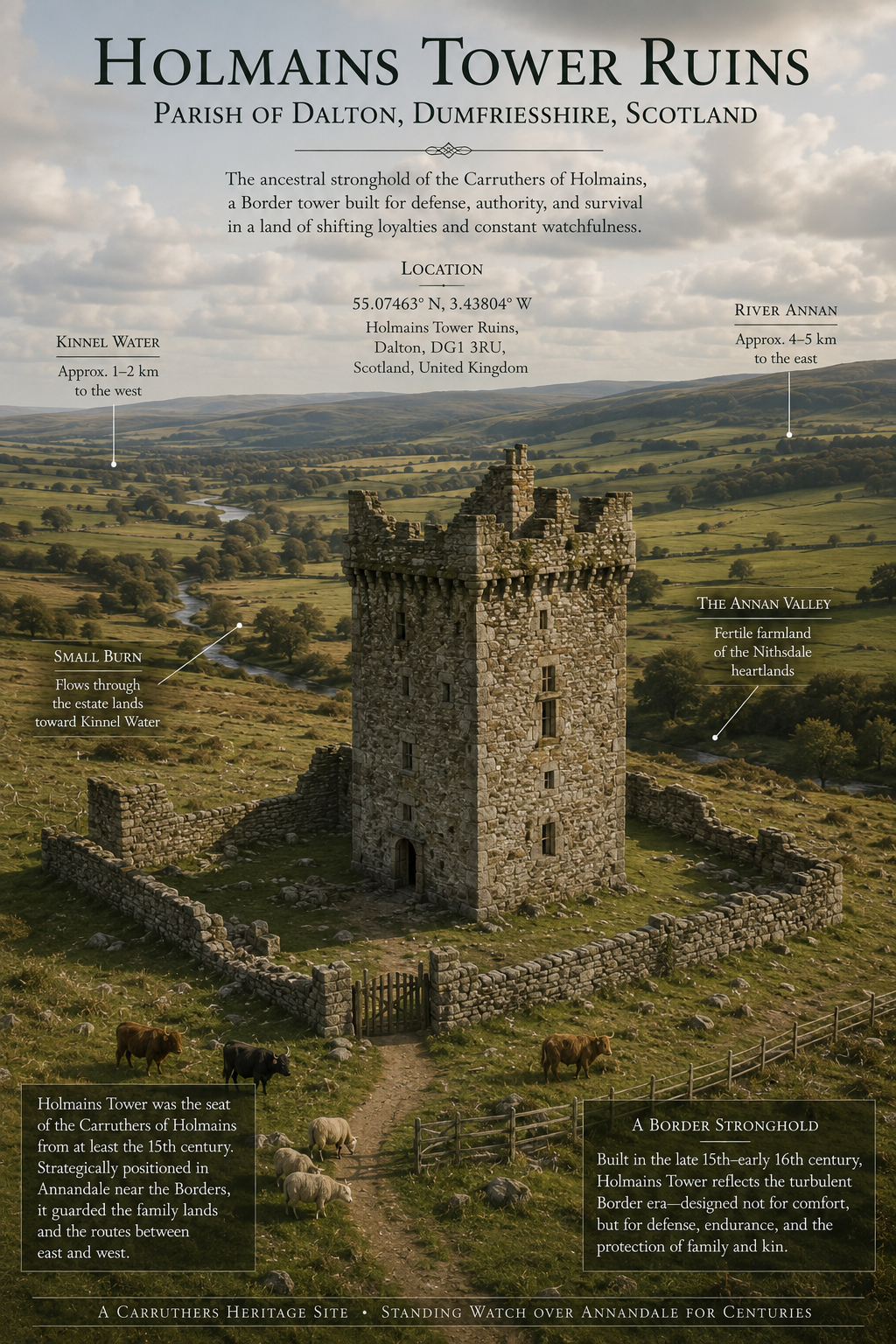
William Carruthers of Breconside
Who was William Carruthers of Breconside?
No surviving document has yet identified his parents.
No surviving charter places him within the principal Carruthers line.
Yet, just as importantly, no surviving record places him within any other Carruthers family.
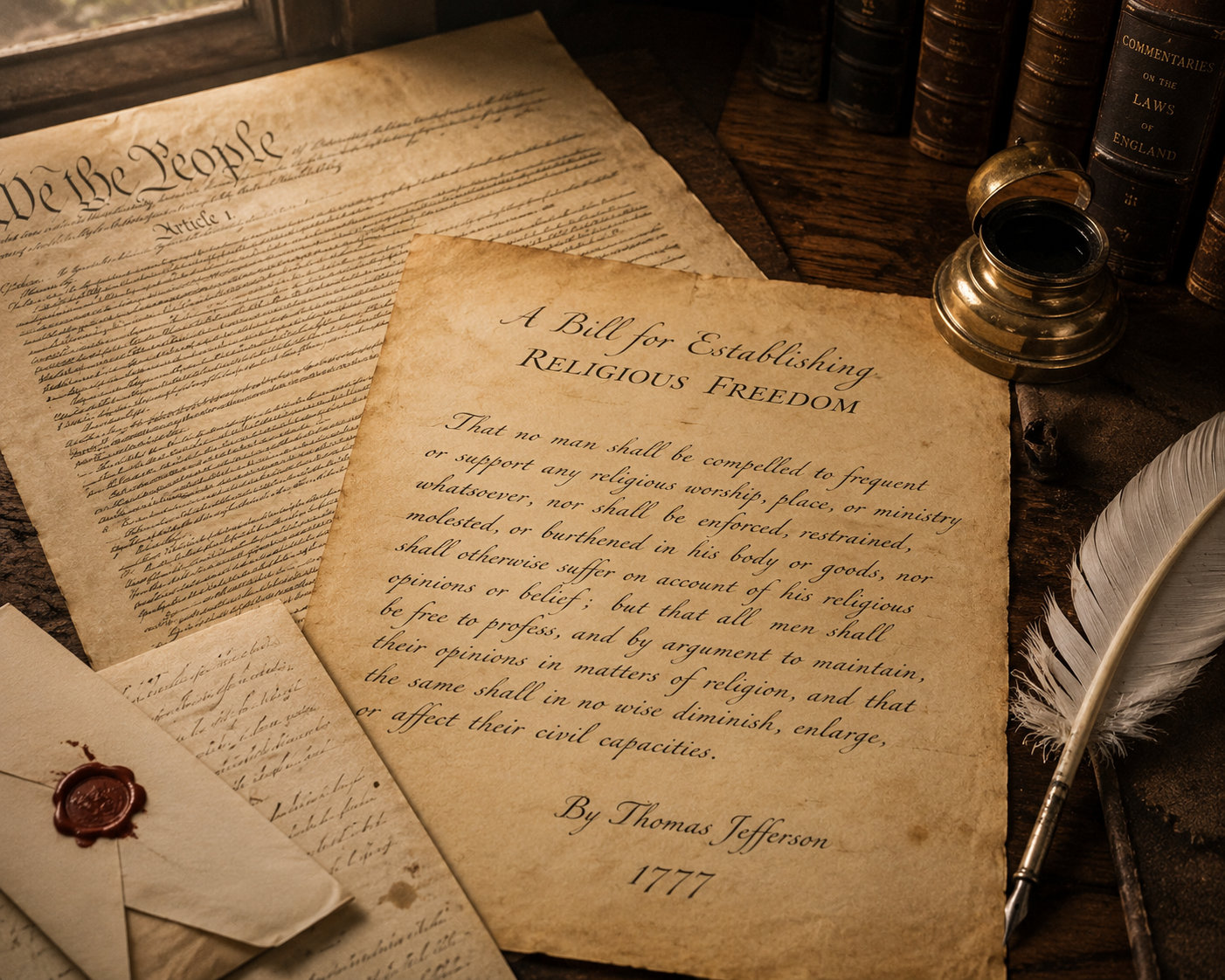
The Separation of Church and State
The concept survived because it addressed one of the central questions of the modern world: how people with different beliefs can live together under a single government while preserving liberty for all. For the immigrants who helped build the American South, that question was not merely philosophical—it shaped the communities, churches, and institutions they passed down to future generations.
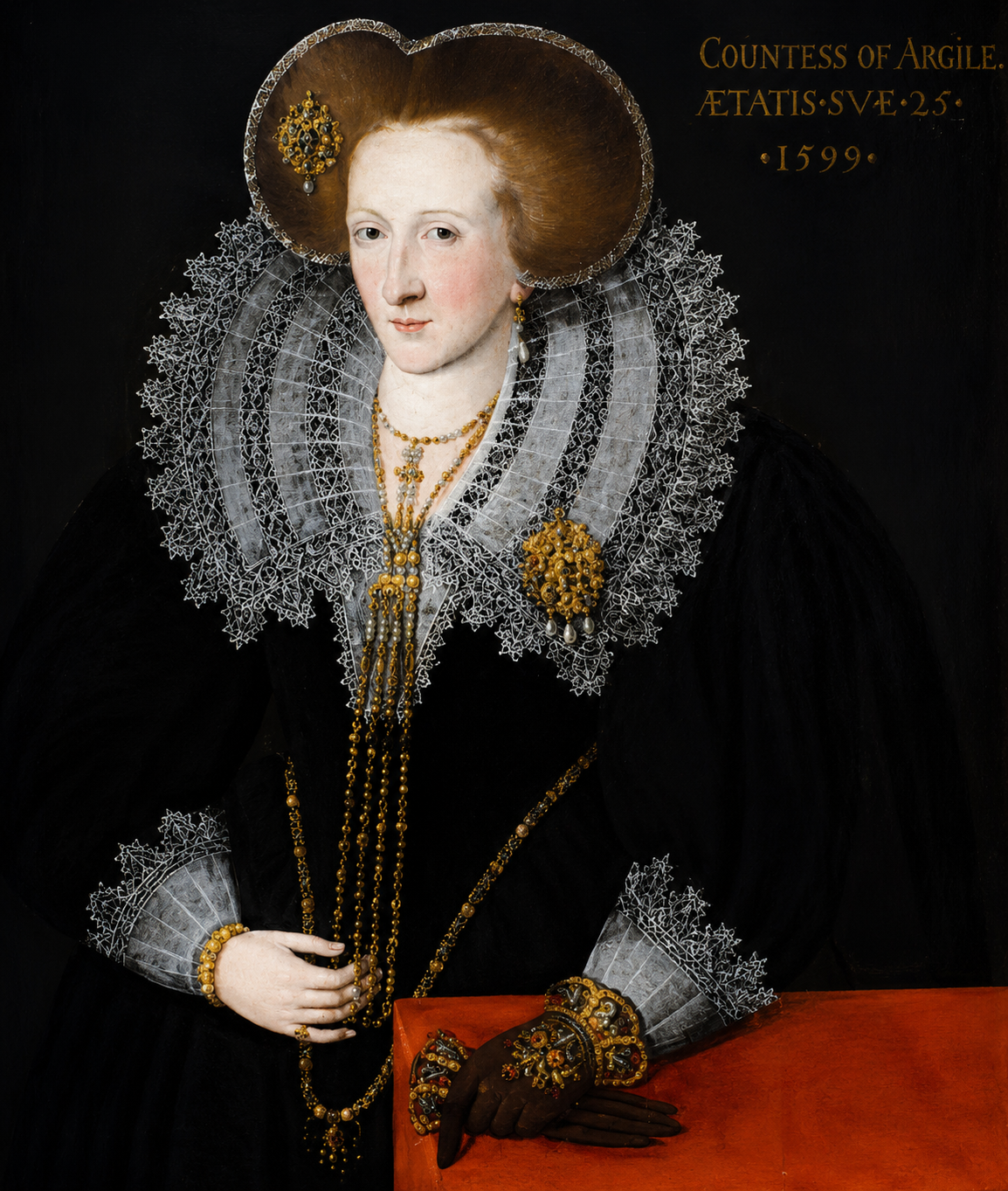
The Pearls of Lochleven
“Known throughout Scotland as the “Pearls of Lochleven,” Agnes Douglas Countess of Argyll and her sisters became renowned for their beauty, noble bearing, and powerful family connections during the late 16th century. The name emerged from the Douglas court surrounding Lochleven Castle and the Earls of Morton, where the daughters of the house were admired among Scotland’s noble circles and royal society. In a world where reputation traveled through court correspondence, noble marriages, royal visits, heraldic alliances, and word carried between castles and estates, the title spread far beyond Lochleven itself.”
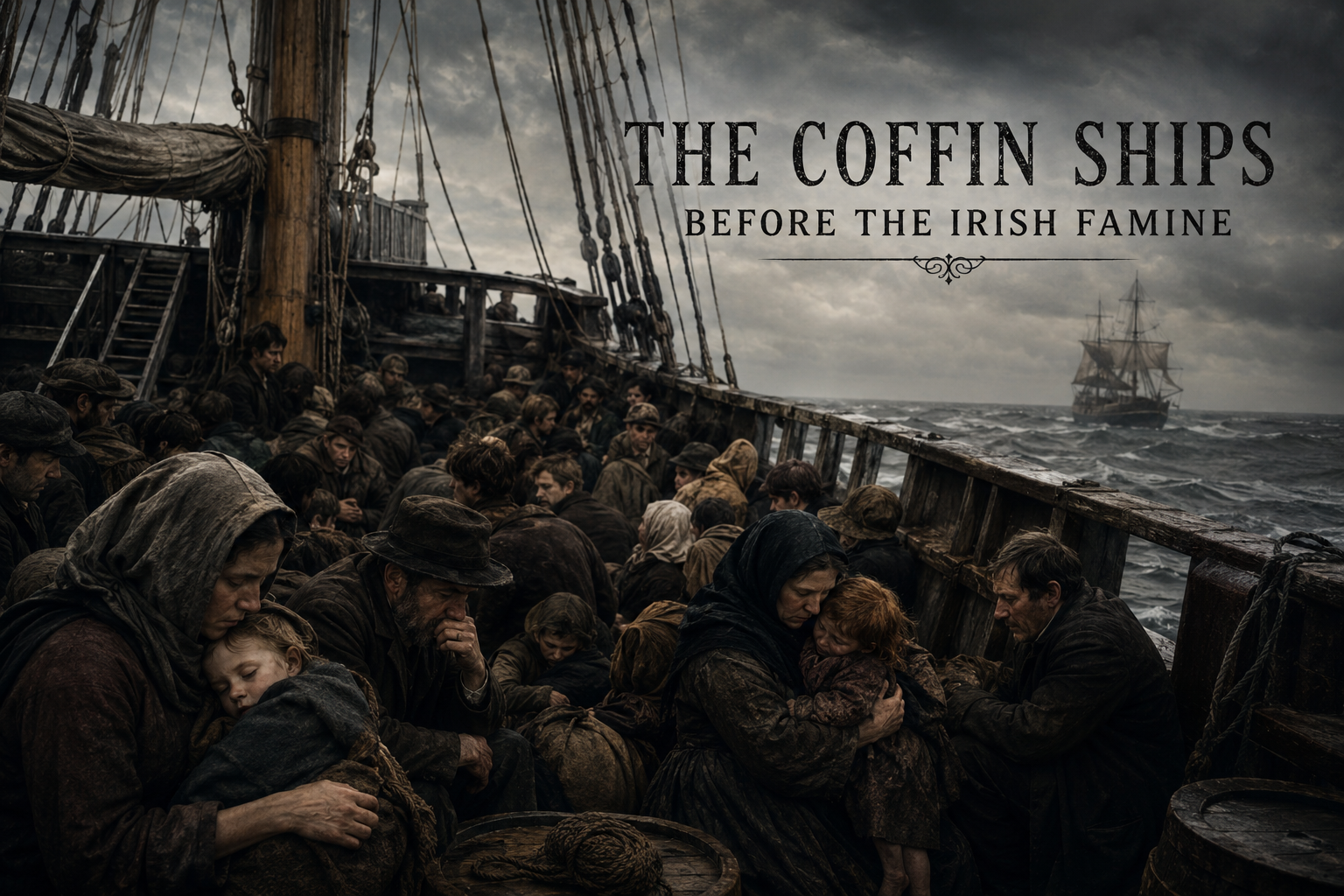
The Coffin Ships
During & After the Irish Famine (1845–1855) The famine-era coffin ships became infamous because conditions collapsed into humanitarian catastrophe. These ships were carrying people fleeing: starvation, eviction, disease, total economic collapse. Many boarded already severely weakened from: malnutrition, typhus, fever, dysentery. Shipowners often packed vessels beyond safe limits to maximize profit. Some ships became floating disease environments with almost no medical care. Mortality rates exploded.
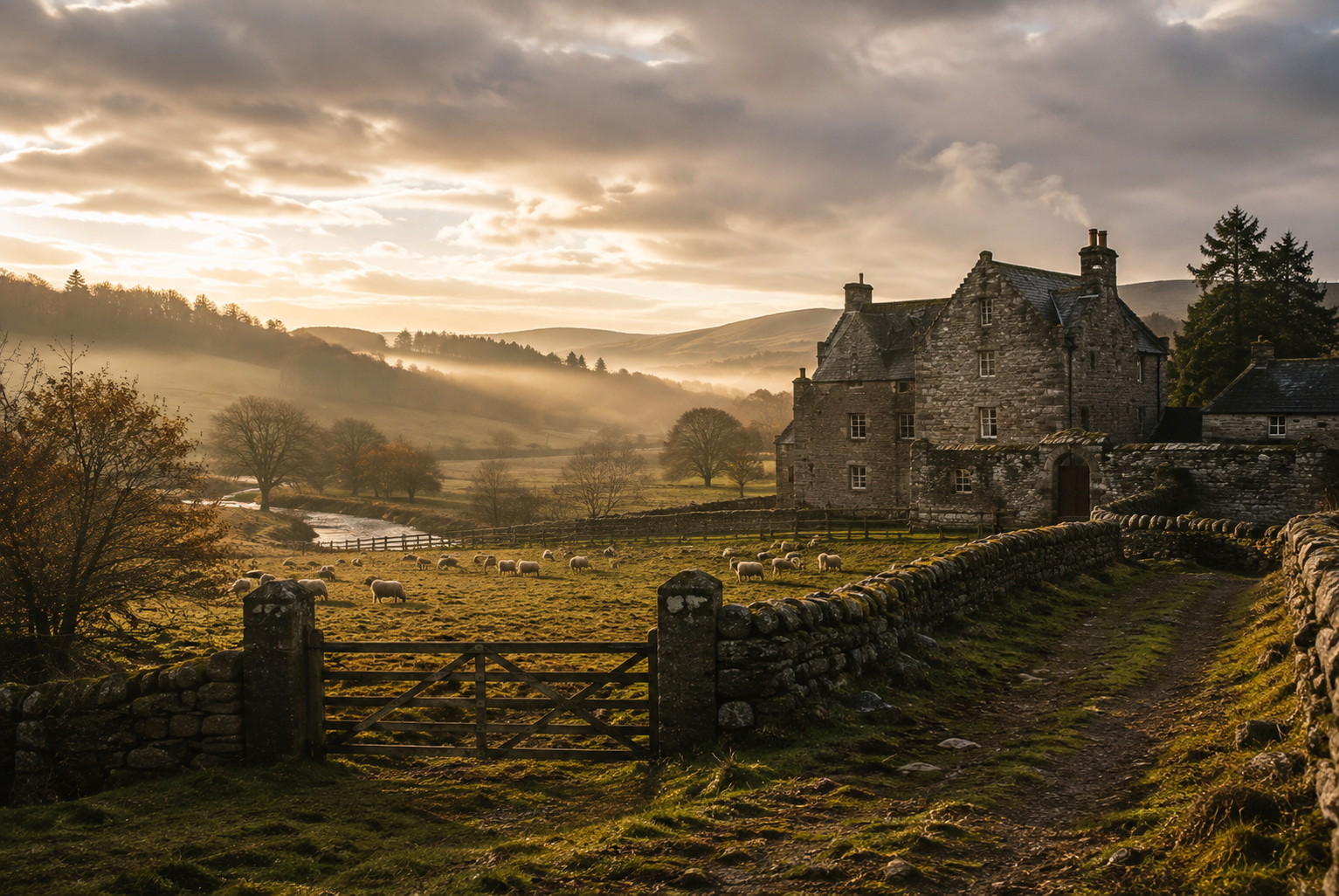
The Estate of Dam
Where one strategic marriage connected the Chalmers family to the Johnstones, the Douglases, the Lockharts, and ultimately to Scotland's royal bloodlines.
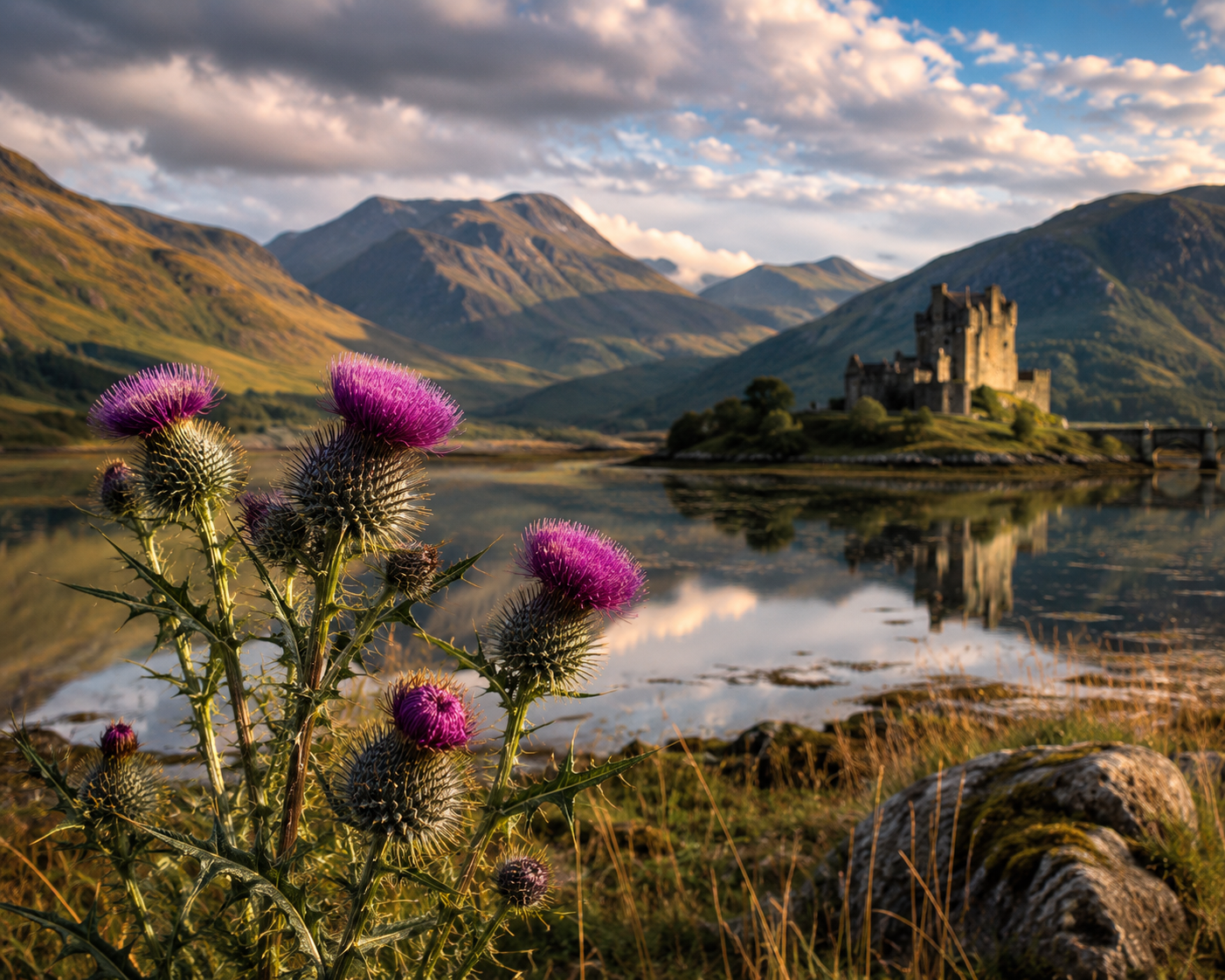
The Scottish Thistle
“Among the many familiar plants they encountered in America were native and they introduced the species of thistle. The Appalachian Mountains often reminded settlers of the landscapes they had left behind. The ridges, valleys, rocky hillsides, and cool mountain climate felt strangely familiar to people whose ancestors had lived among the hills of Scotland and Ulster. Thistles grew readily in disturbed fields, along roadsides, in mountain meadows, and around newly cleared settlements. The sight of a thistle may have served as an unexpected reminder of home. The connection became symbolic rather than botanical. The thistles growing in Appalachia were not always the same species found in Scotland, but the meaning endured.”
Scotland’s sheep
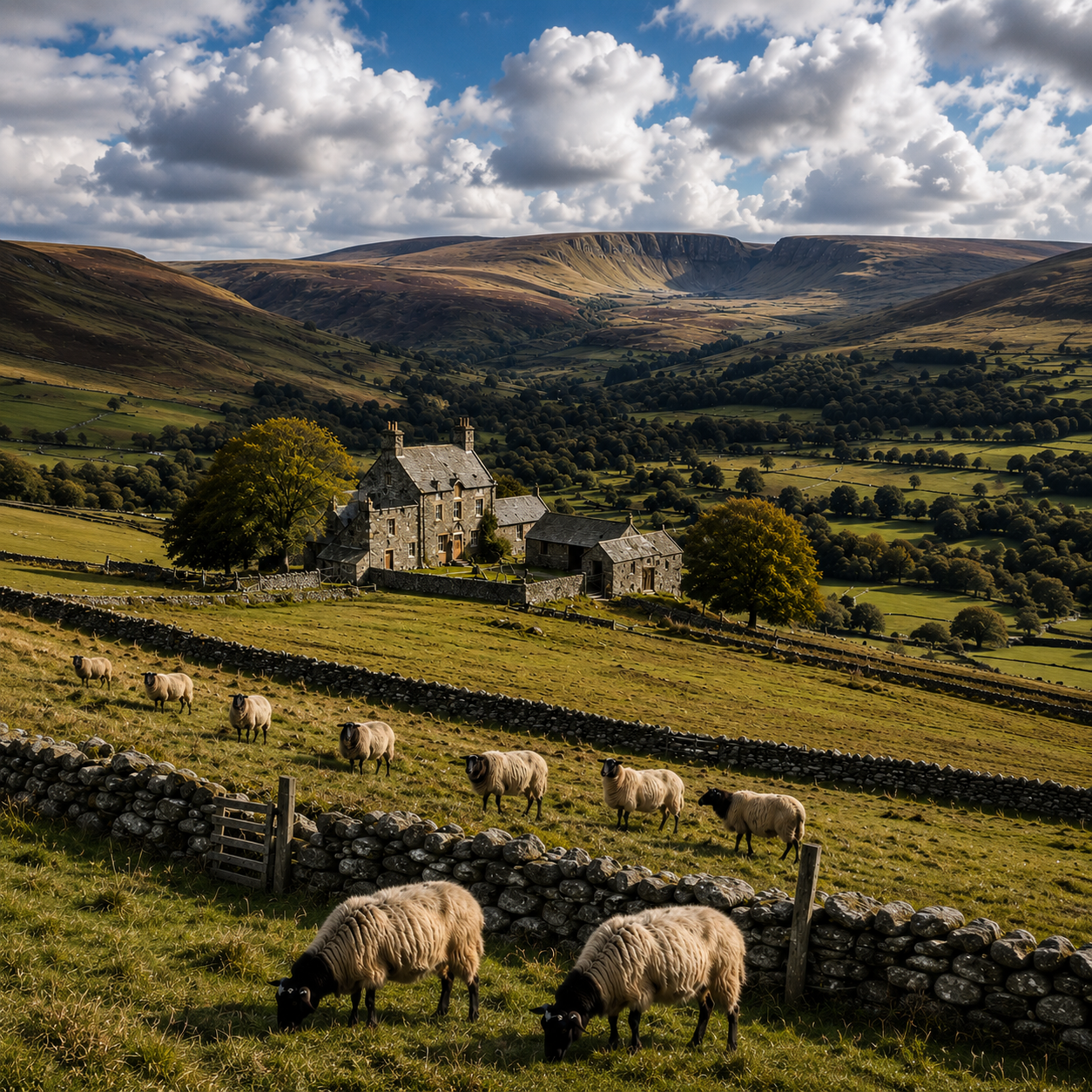
“The lands surrounding Breconside derived much of their value from sheep husbandry and wool production. The upland pastures above Annandale were ideally suited to grazing, and generations of families relied upon sheep, cattle, and smaller agricultural holdings for their livelihood. Wool from the district moved through regional markets centered around Moffat, which became known throughout southern Scotland as a wool-trading town. Alongside livestock, tenants and estate households cultivated oats and other subsistence crops while managing the challenging conditions of the Southern Uplands.”
Northern Wales
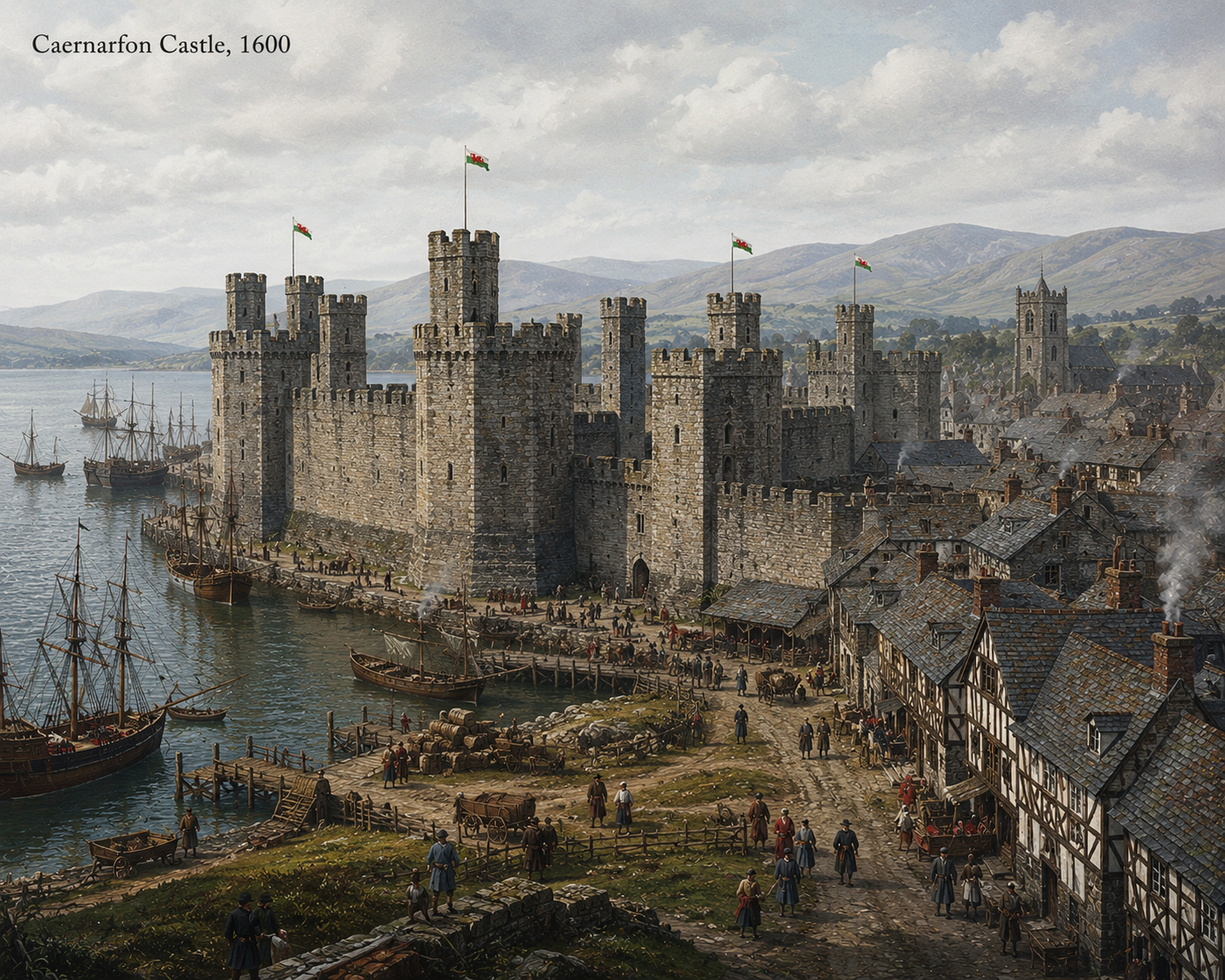
The Welsh language itself is among the oldest continuously spoken languages in Europe. Known as Cymraeg, it evolved from the Brythonic language spoken throughout much of Roman Britain nearly two thousand years ago. While English emerged from Anglo-Saxon Germanic roots, Welsh preserved elements of the ancient Celtic language spoken long before the English language existed.
Border Tower House
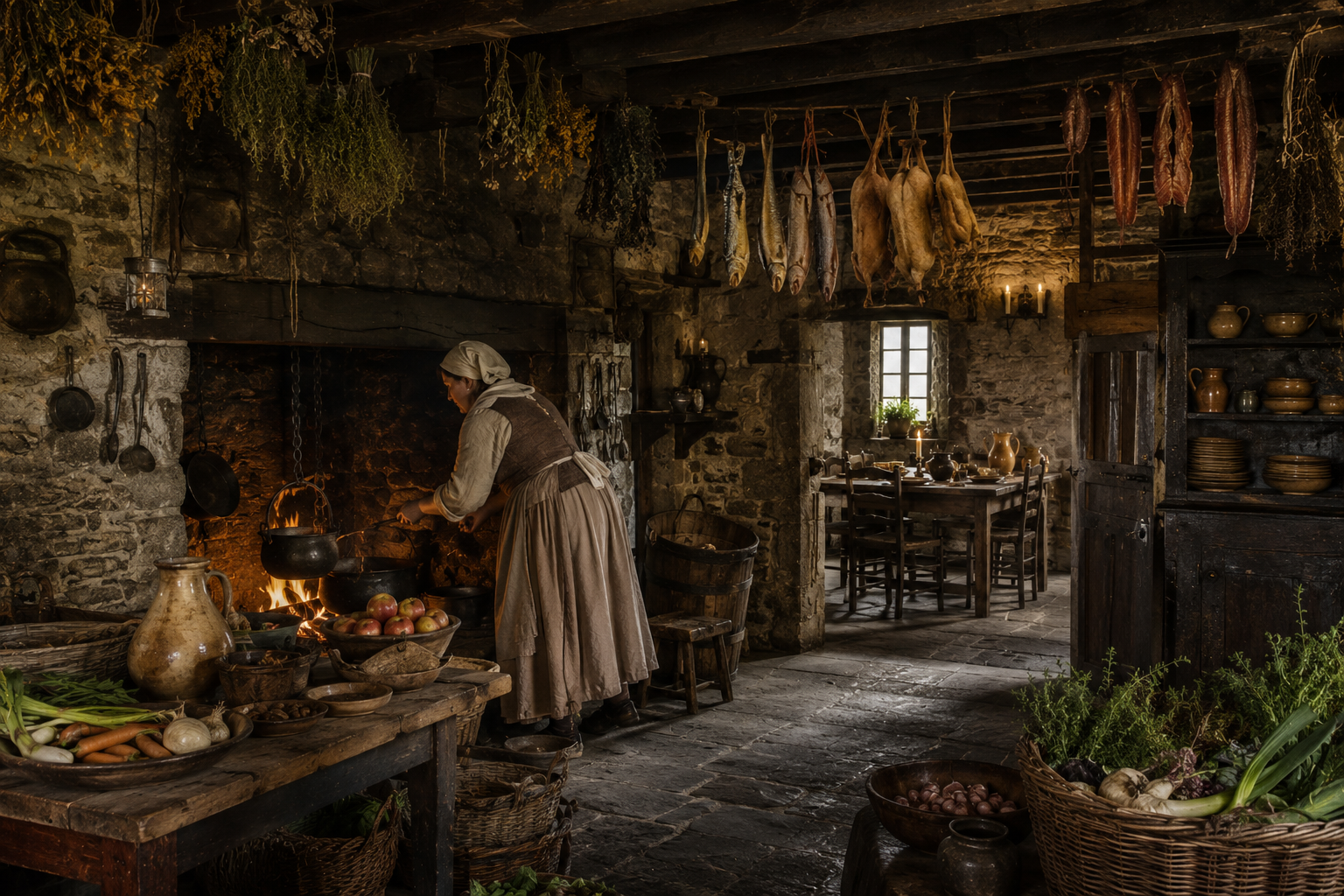
“But inside these towers, daily life unfolded in ways both ordinary and deeply shaped by the instability surrounding the Borders. At the center of tower life stood the hearth. The great fireplace provided heat, light, cooking space, and gathering place all at once. Peat smoke drifted upward into timbered rafters darkened by generations of fire. Iron pots hung over open flames while women prepared oat bread, pottage, stewed meats, or whatever could be preserved through difficult seasons.”
Seven Ill Years
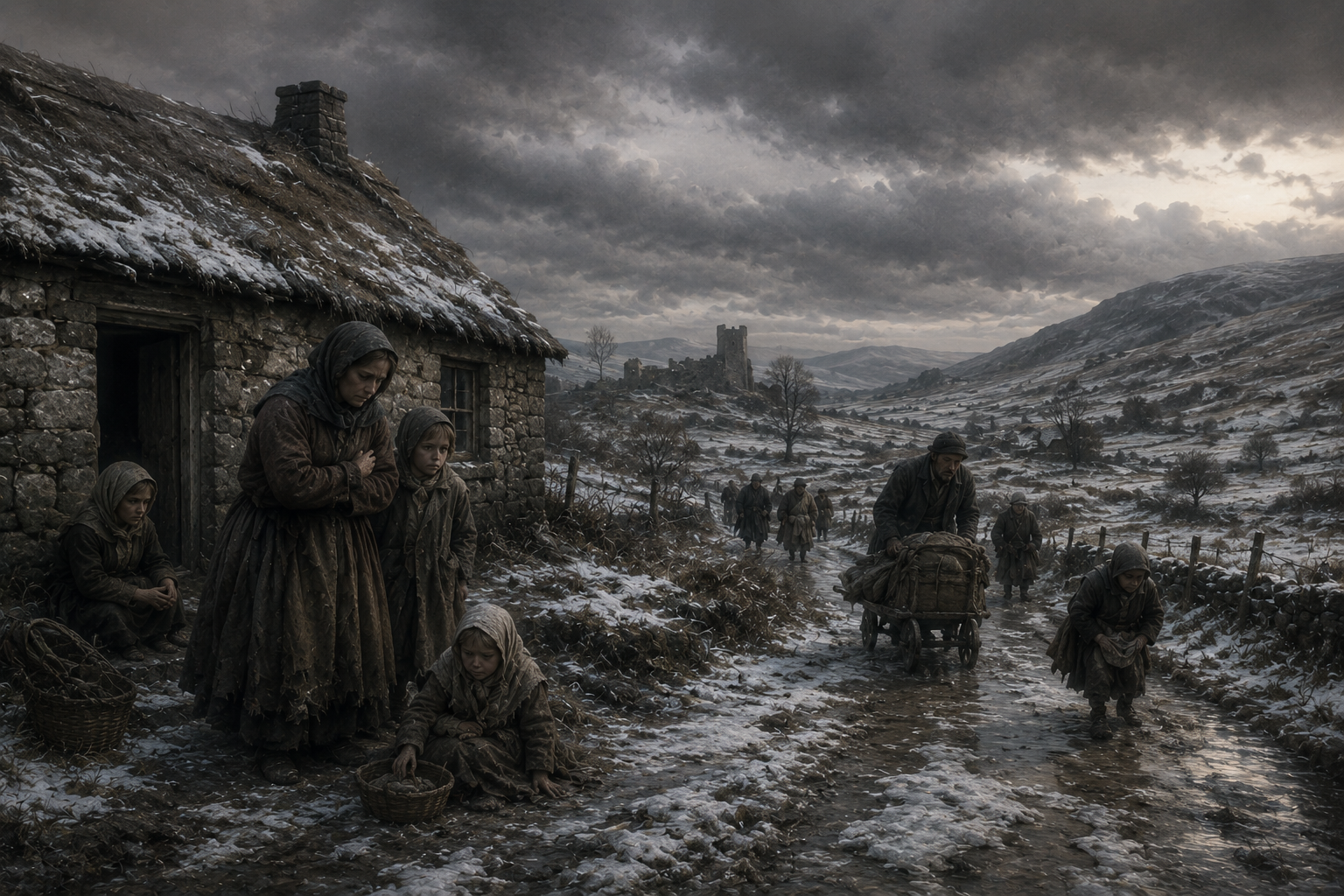
“For families living in the southwest Border country — particularly in Dumfriesshire and the old Marches — the suffering carried a different texture than it did in the crowded burghs of Edinburgh or Aberdeen. Here, survival depended almost entirely on the land itself. Crops failed. Livestock weakened. Trade slowed. Entire communities found themselves trapped between old feudal obligations, political uncertainty, and the harsh realities of subsistence living. For Border families such as the Carruthers of Holmains and their surrounding kin networks, the crisis arrived during a time when the region was already carrying centuries of instability behind it.”
The Devil’s Beef Tub
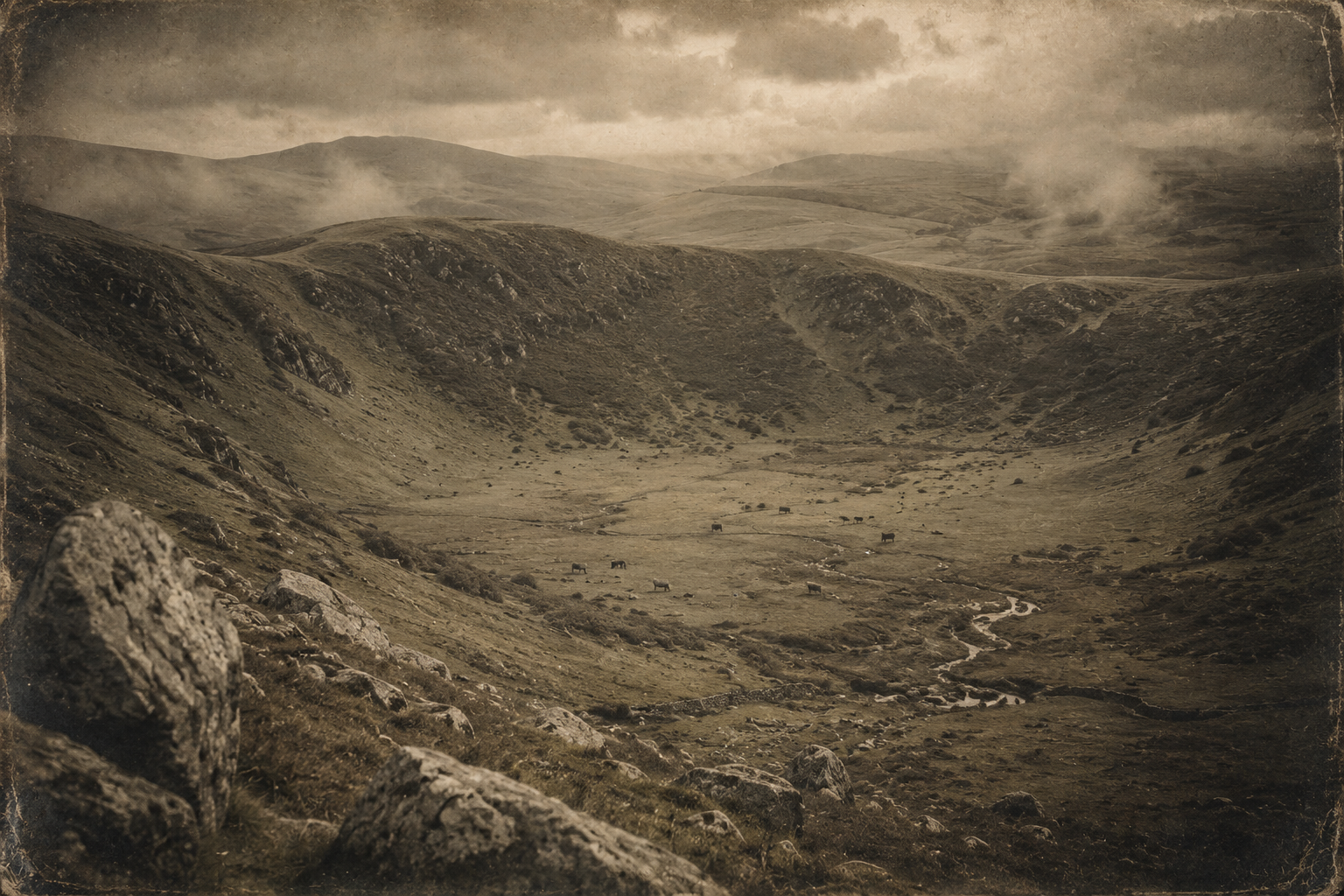
“The name “Devil’s Beef Tub” is believed to have emerged during the violent frontier years of the sixteenth and early seventeenth centuries, when reiving families used the hollow as a temporary hiding place for stolen cattle. Raiding parties moving through the Borders could drive livestock into the concealed basin where the animals remained hidden among the hills until pursuit faded. In Border country, cattle were wealth. A successful raid could determine whether a family survived winter or collapsed into poverty. Livestock theft became deeply embedded within frontier life along the Anglo-Scottish marches where centralized authority remained weak and survival often depended upon kinship alliances, mounted mobility, and retaliation.”
What Is Celtic and Gaelic?
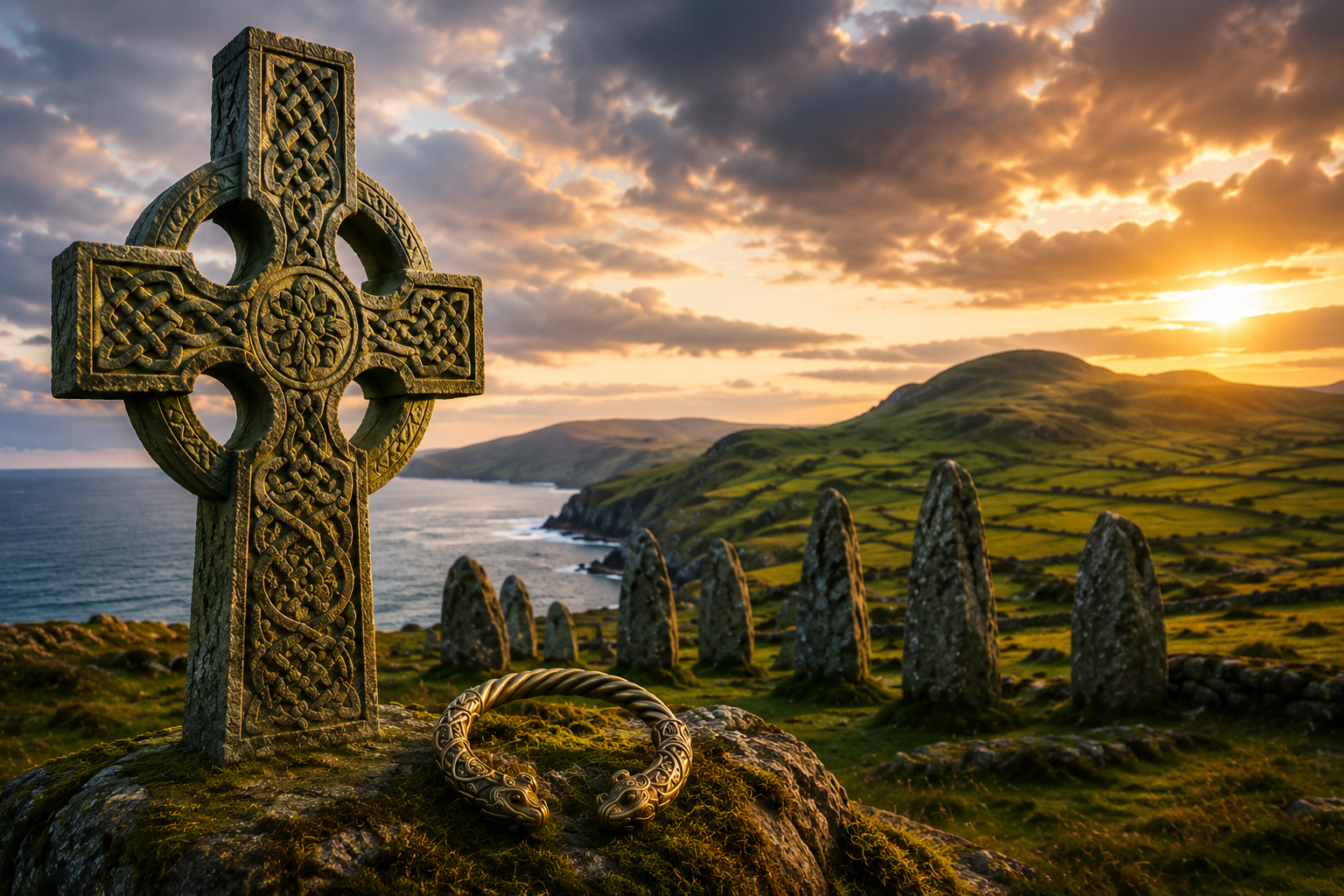
“Norse settlers mixed with older Gaelic populations to create a distinct Norse-Gaelic culture still visible today in place names, language, folklore, and maritime tradition. Similar blending occurred throughout coastal Scotland and Ireland where Viking influence merged into existing Celtic societies. By the seventeenth and eighteenth centuries, many families connected to the Scots-Irish migrations carried these layered inheritances into Ulster and eventually America. Some ancestors spoke dialects influenced by Gaelic rhythms even if they no longer spoke the language fluently itself. Others carried inherited customs rooted in older Celtic seasonal traditions, music, storytelling, kinship systems, and frontier survival patterns that stretched back far beyond modern national identity.”
Johnstone of Coreheid
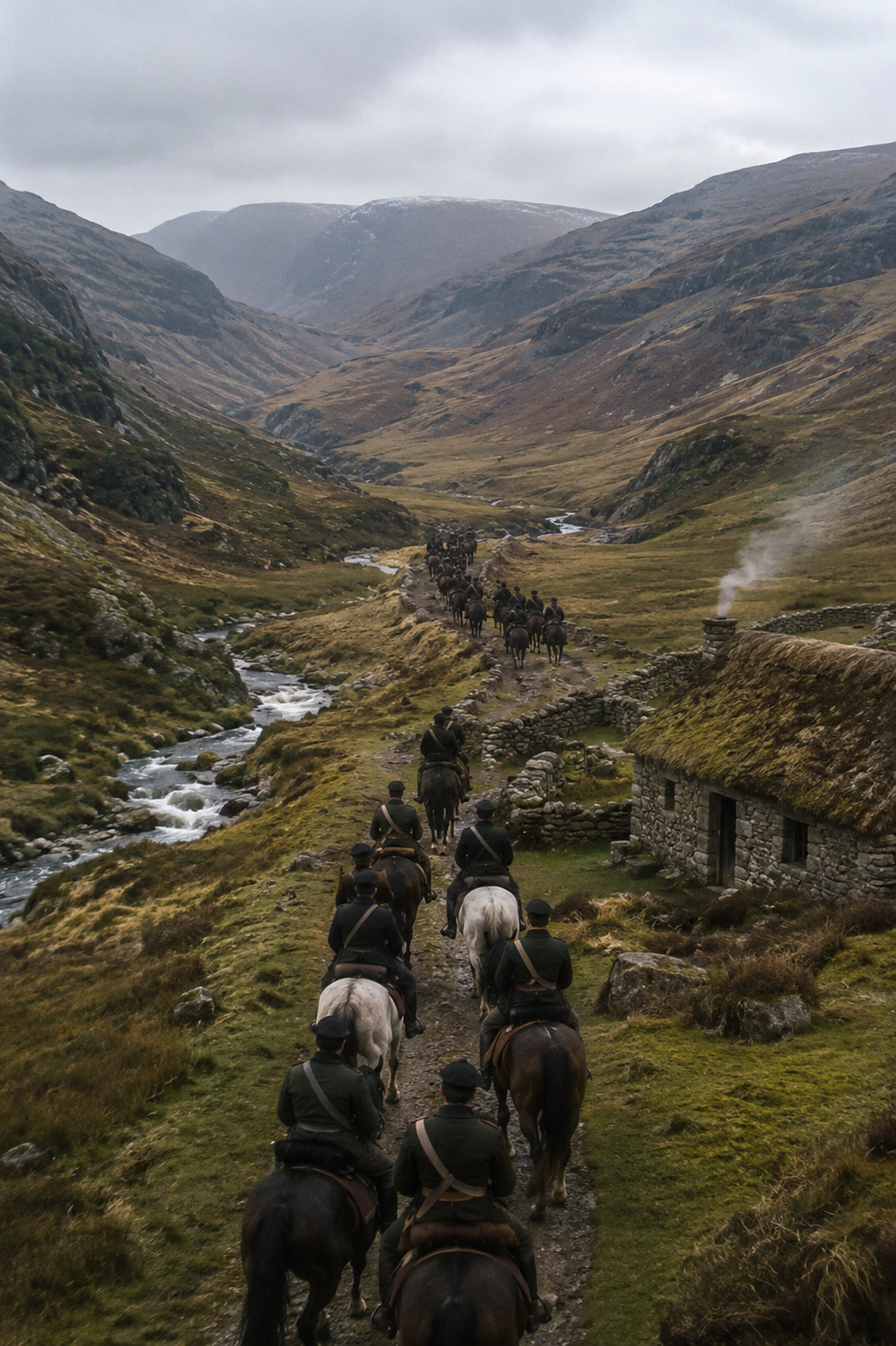
This was Corehead, home of James Johnstone of Corehead and his wife Janet Douglas—a couple whose resilience, political judgment, and noble alliances helped shape generations of descendants.
Far removed from the bustling royal court of Edinburgh, Corehead occupied one of Scotland's great natural gateways. Every traveler moving between the Borders and the capital passed through these rugged valleys. Whoever controlled this high country controlled more than sheep pastures; they watched over the northern entrance into Annandale itself.
Crossing Over to Ulster
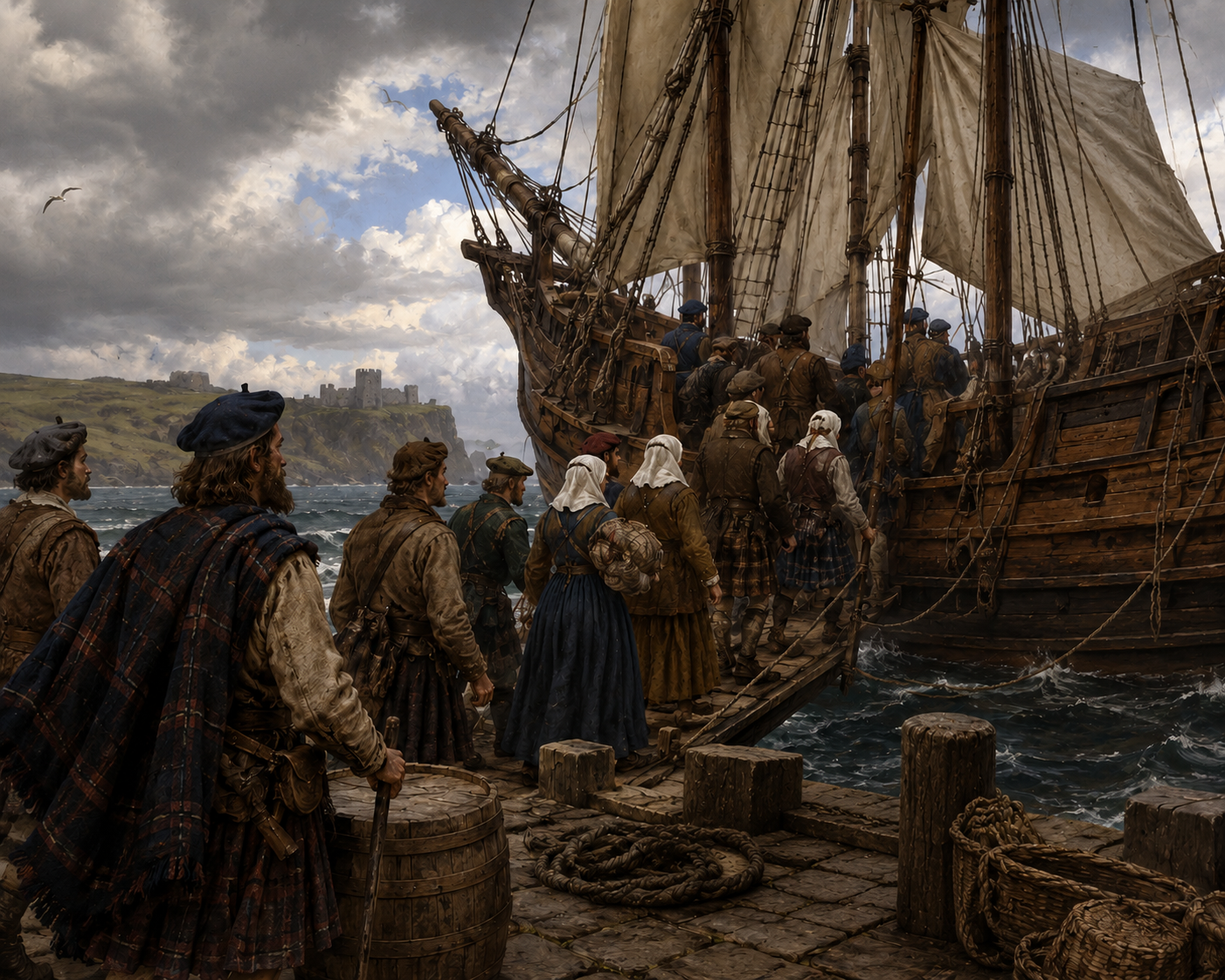
“It began with Scotland looking westward toward Ulster. The movement had deep roots stretching back into the medieval period. Scottish warriors, merchants, churchmen, and settlers had crossed into Ireland for centuries, particularly along the northeastern coast. The sea routes between Galloway, Ayrshire, the Hebrides, and Ulster formed part of an interconnected maritime world where movement was common and identities often overlapped.”
Moffat 1690
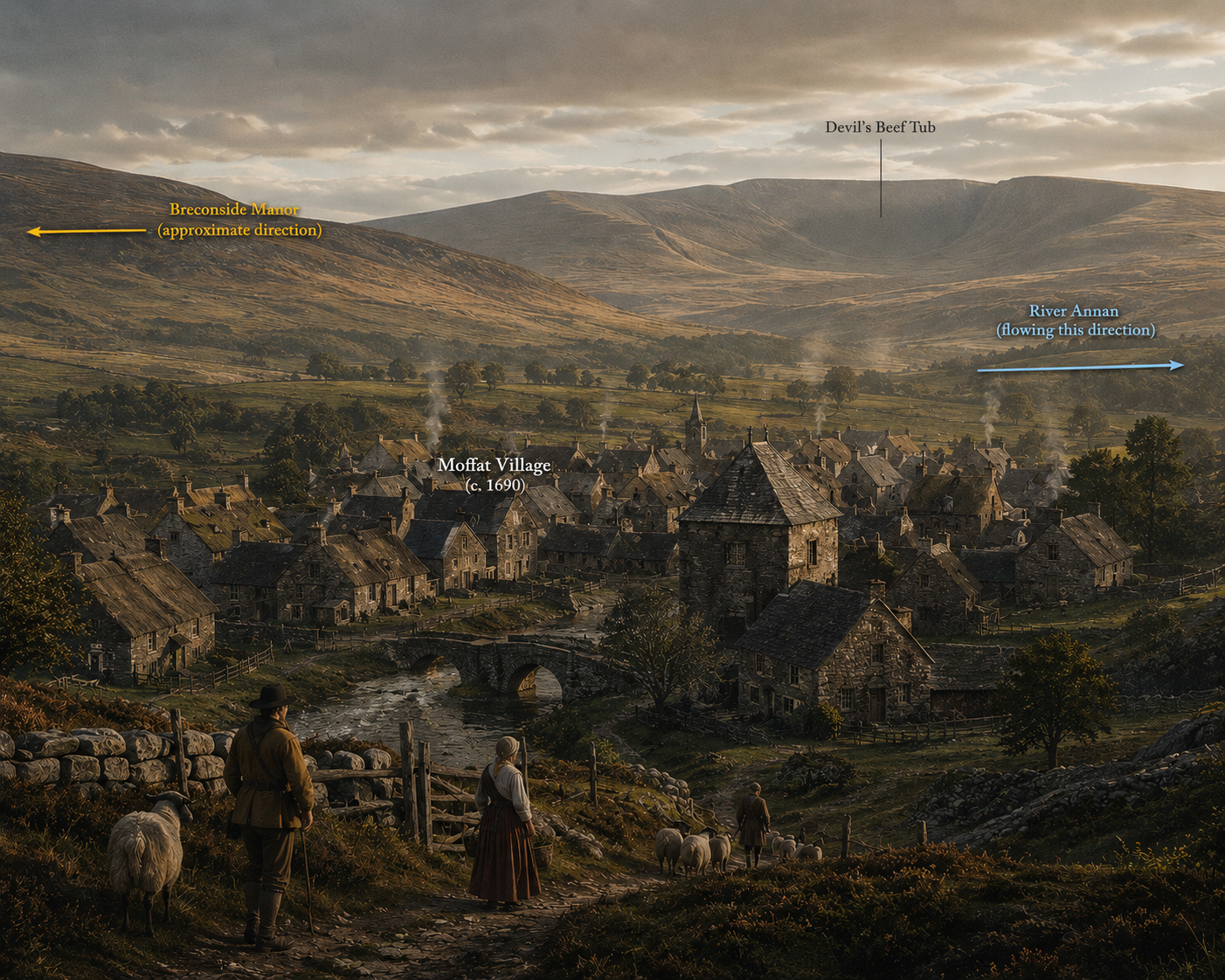
“Moffat did not begin as a planned town. Like many settlements in southern Scotland, its origins stretch deep into the medieval period. The name is believed to derive from the Gaelic Magh Fada—meaning "long plain"—a fitting description for the broad valley lying beneath the surrounding hills. The area had been occupied for centuries before written records appeared. Ancient Britons, Romans, and early medieval peoples all moved through Annandale, using the natural passes that connected Scotland to northern England. The nearby Annan Water carved a route through the hills that travelers, traders, soldiers, and drovers followed for generations.”
The Isle of Man
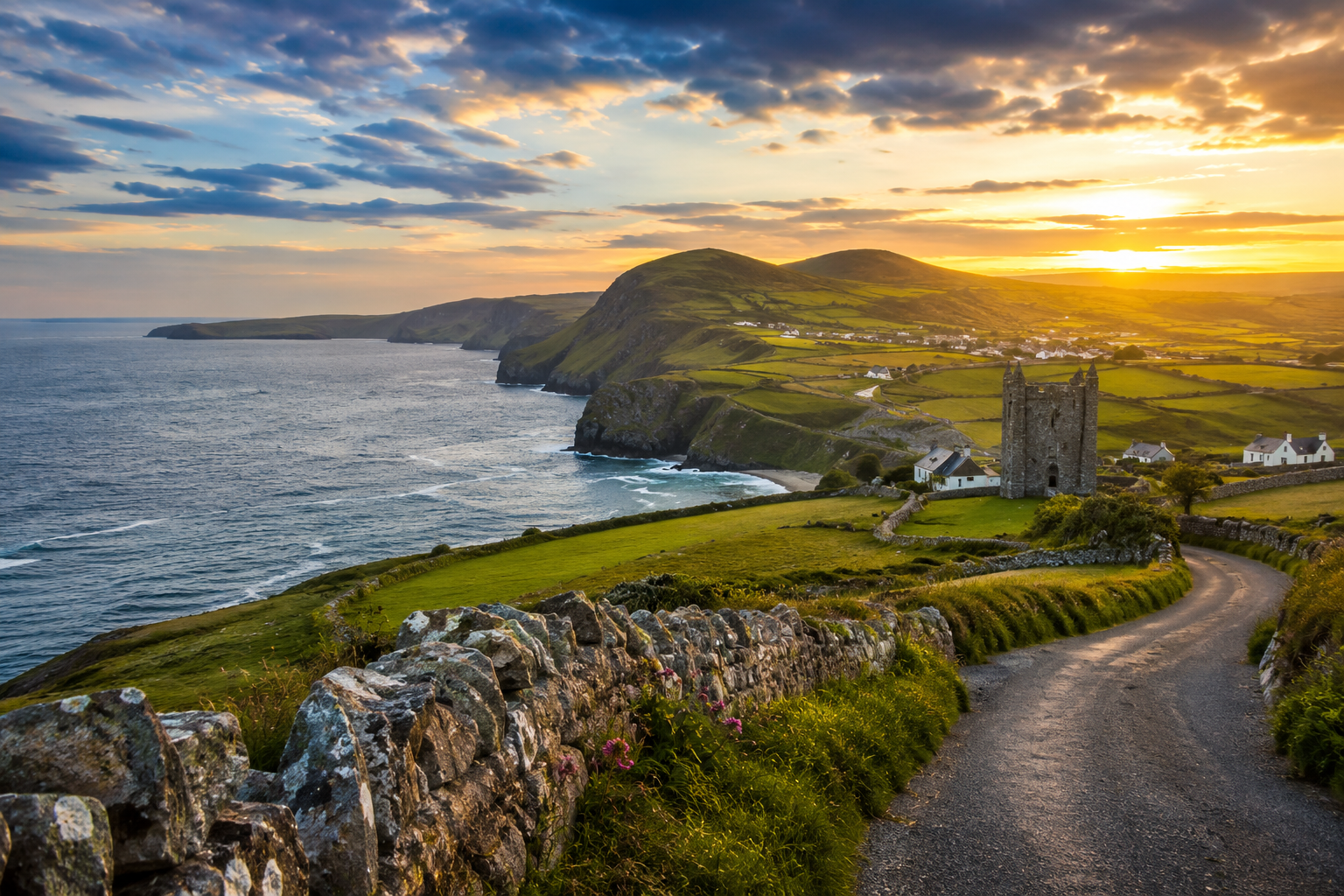
For Border and Ulster families later connected to The Carruthers Men, The Royal Branch, and the wider Scots-Irish migrations, the Isle of Man existed within the same maritime world linking southwestern Scotland to northern Ireland and eventually to America itself. “Ships sailing between Dumfriesshire ports, Ulster settlements, and English harbors frequently moved through waters surrounding the island. Mariners navigating the Irish Sea relied upon familiar coastal routes shaped by wind, tide, and dangerous weather. Storms could rise quickly across the open water. Fog obscured coastlines. Wrecks were common.”
Chattahoochee River
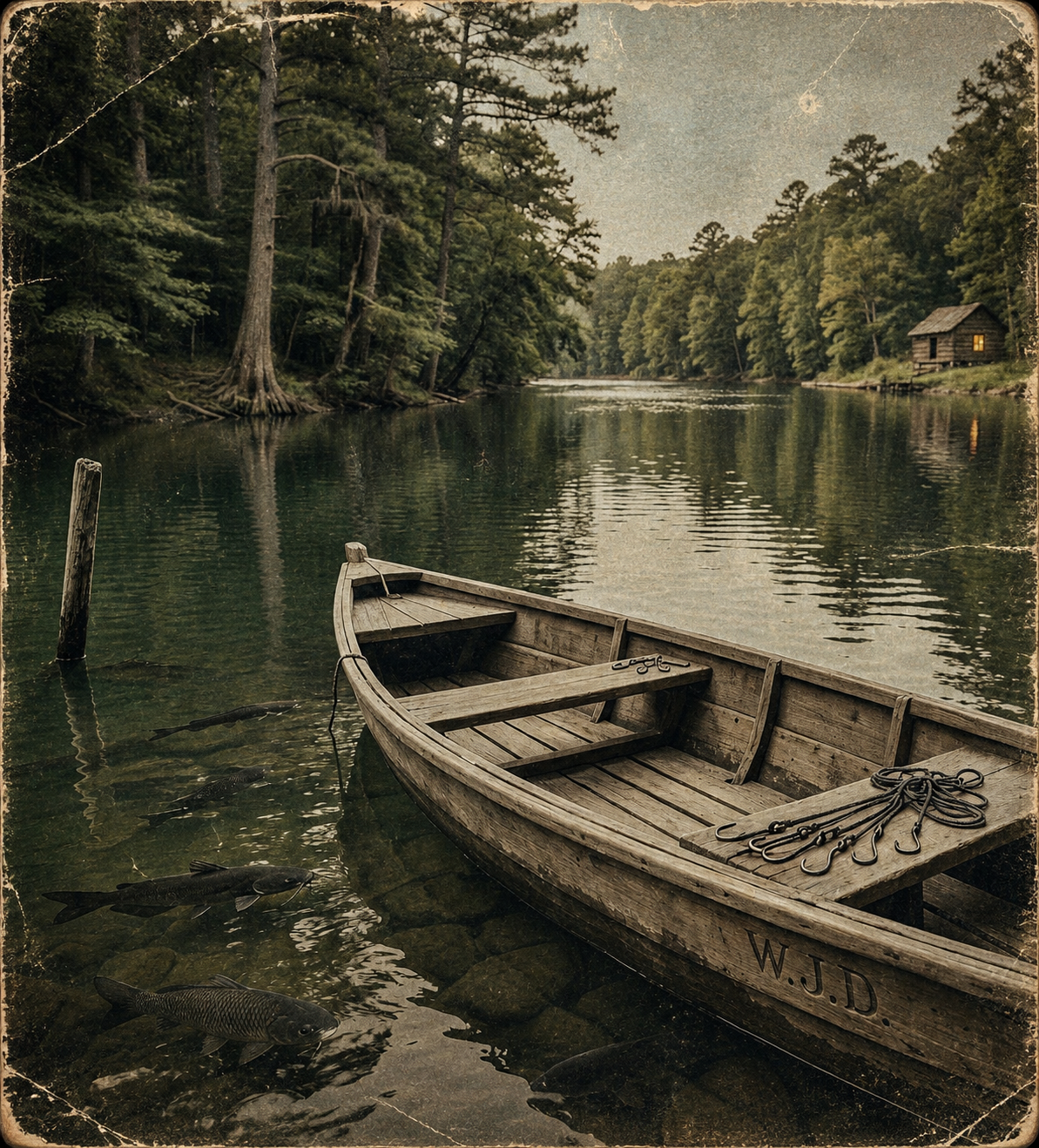
The 1900 Federal Census places William John Dean, his wife Mattie, and their growing family in the Huguley Mill community of Chambers County, Alabama.
Their home stood only a short distance from the Chattahoochee River, where the textile industry had transformed a once-rural landscape into one of the South's busiest manufacturing centers.
As the Dean children came of age, many would eventually find employment in the same mills whose existence depended upon the river's waters.
Breconside Tower
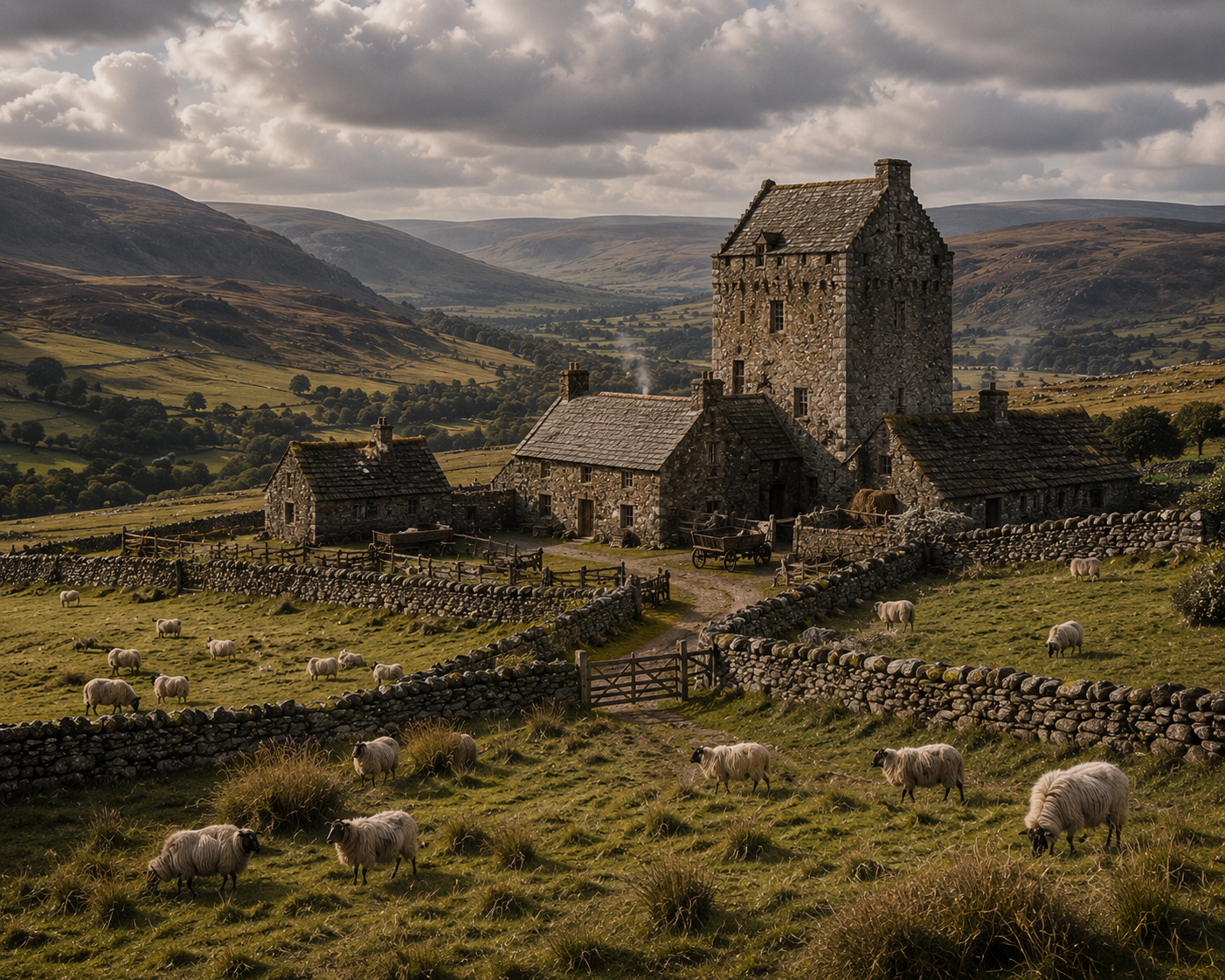
Historic Environment Scotland identifies the central structure as the original late sixteenth-century tower, although later owners altered it extensively. During the eighteenth century a semi-octagonal stair tower was added, Victorian owners inserted larger windows and domestic wings, and the roofline was lowered from its original height. Even so, the north and east walls preserve much of the original tower built by the Johnstones over four centuries ago.